Puffins in the morning, whales in the afternoon. This two-in-one combo from Reykjavik pairs a 1-hour puffin cruise up to the Lundey islands with a 3-hour whale search in Faxaflói Bay. It’s built for real wildlife watching—binoculars, indoor viewing, and live English commentary—so you can focus on spotting instead of figuring things out.
I especially like the heated indoor saloon with big windows (a lifesaver in Iceland wind), and the whale re-try guarantee if cetaceans don’t show on your day. The one thing to keep your expectations grounded: puffins are small and fast, and you’re often viewing them from the water with binoculars rather than getting an up-close encounter.
In This Review
- Key points that matter before you go
- Why this Reykjavik combo makes sense (and how to use it well)
- Lundey puffin time: what you’re really aiming to see
- Old Harbour break: your built-in lunch and walking window
- Faxaflói Bay whale watching: comfort plus a practical re-try
- Onboard comfort: protective gear, heated windows, and WiFi
- Wildlife spotting tips that actually help you
- Price and value: what you’re paying for at $140 per person
- Who this tour suits best (and who should adjust expectations)
- Should you book it?
- FAQ
- How long is the two-in-one puffin and whale tour?
- What’s included in the tour price?
- Is food and drink included?
- Where do I meet, and where does the tour end?
- What animals are you looking for on the whale watching portion?
- What happens if you don’t see whales?
- Do children need life vests?
- What’s the cancellation rule if weather is bad?
Key points that matter before you go
- Two separate boat legs: a smaller boat for puffins near Lundey, then a larger boat for whales in Faxaflói Bay
- Warm, windowed indoor space: protective clothing and a heated saloon help you stay comfortable
- Marine-focused live commentary in English that explains what you’re seeing (and how to spot it)
- Whale sighting guarantee: if no whales or dolphins show, you can go again another day
- Real-world wildlife expectations: puffins can be distant, fast, and tricky to photograph
Why this Reykjavik combo makes sense (and how to use it well)
This is one of those tours that feels efficient because it’s actually two different experiences stitched together cleanly. You get puffins first—usually the more visually frantic birds—and then you shift gears to whales in deeper water where patterns matter. The total time lands around 4 to 6 hours, depending on how quickly you board, move between areas, and what the sea is doing.
For me, the value is in what’s included, not just the animal checklist. You’re getting two boat rides, protective gear, binoculars, heated indoor viewing, onboard WiFi, and live English commentary. Add the fact you can try again for cetaceans if your whale watching leg doesn’t produce, and the price starts to feel less like “pay and hope” and more like “pay and get time on the water.”
One practical note: this isn’t one continuous cruise. If anything changes (weather, rescheduling), you’ll still be doing two separate outings on different boats, with time in between. That can be great if you plan for lunch and a short walk—just don’t treat this like a single unbroken journey.
You can also read our reviews of more whale watching tours in Reykjavik

Lundey puffin time: what you’re really aiming to see
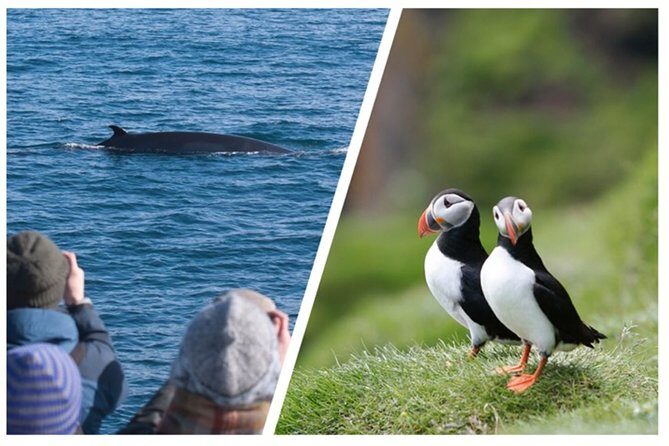
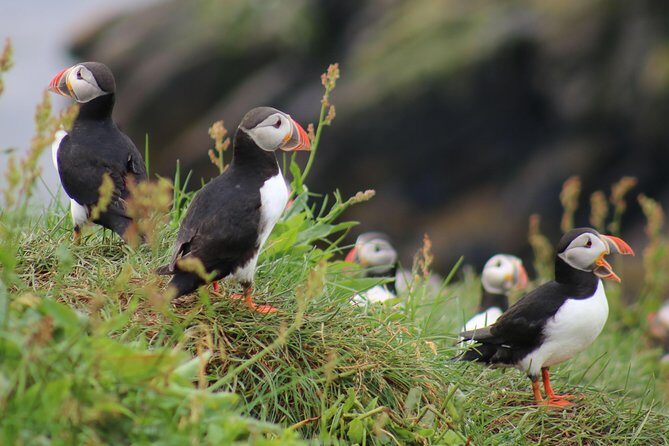
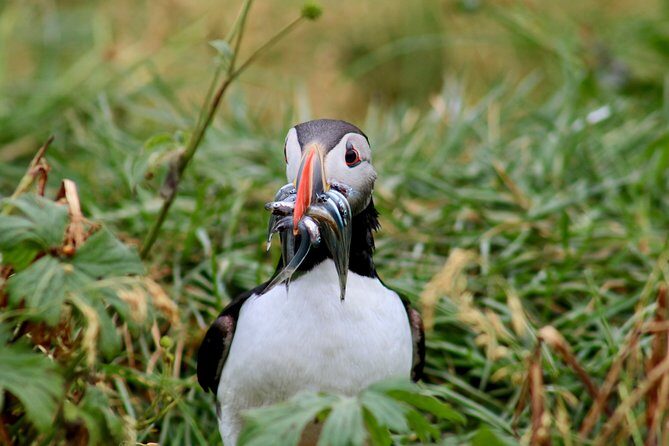
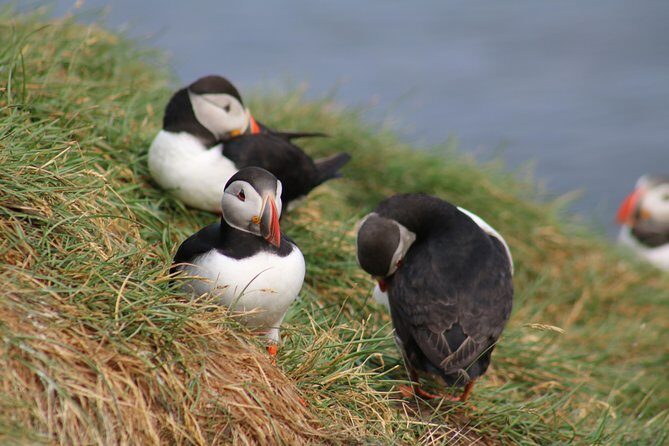
The puffin portion runs about 1 hour and takes you on a smaller passenger boat toward one to three islands connected to Lundey during breeding season. The goal is spotting lots of puffins in their natural habitat, often with birds riding the wind and popping in and out of sight.
Here’s the key expectation-setting detail: you’re watching from the water, not stepping onto land where you can approach birds closely. A few people found puffins can be farther out than the photos suggest, and they can be hard to frame because they’re small and quick. If you want crisp shots, plan to bring your own camera/zoom if you have one; the provided binoculars are helpful, but they won’t replace your own glass.
You’ll also want to think about the boat comfort and viewing layout. On crowded days, it can be harder to get a seat with the best sightlines, and some seats indoors may not have the same window view. If puffins are your main mission, arrive ready to claim a comfortable, forward-looking spot and be flexible when birds dart.
If the sea stays manageable, this is still a fun, energetic segment. Puffins are “tiny drama machines”—you look down, look up, and suddenly you’re tracking movement everywhere.
Old Harbour break: your built-in lunch and walking window
Between the two boats, you get a couple of hours in/near Reykjavik’s Old Harbour area. This isn’t random downtime; it’s your chance to reset your brain after the puffin search and warm up with food before the longer whale leg.
I like this structure because it prevents tour fatigue. You can grab lunch at one of the harbour restaurants, use the time to get a drink you actually want (the boats have snacks/food options, but lunch ashore tends to feel better), and take a short stroll to see the city’s working-waterfront vibe.
If you’re traveling in peak season, this break also gives you a buffer. Boarding times and weather can shift, and having a short window to re-check your meeting point and get organized helps keep the day smooth.
Faxaflói Bay whale watching: comfort plus a practical re-try
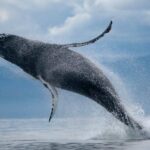
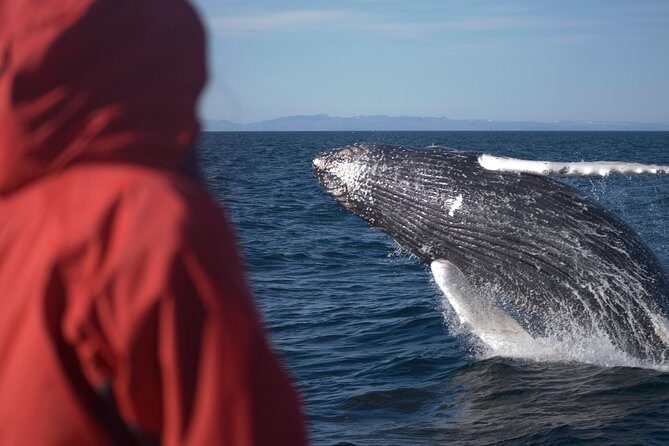
The whale watching portion is about 3 hours and sails out into Faxaflói Bay, one of Iceland’s biggest bays. This is where you’re searching for minke whales, humpback whales, and other marine life like porpoises and dolphins. The tour also includes a sighting guarantee: if you don’t see cetaceans during your whale trip, you can try again another day free of charge.
That guarantee matters because whale watching is wildlife math, not theme-park math. Even with a good crew, animals don’t follow schedules. The re-try turns your purchase from a gamble into a second chance, and it’s a big reason this combo works for visitors who have limited time in Reykjavik.
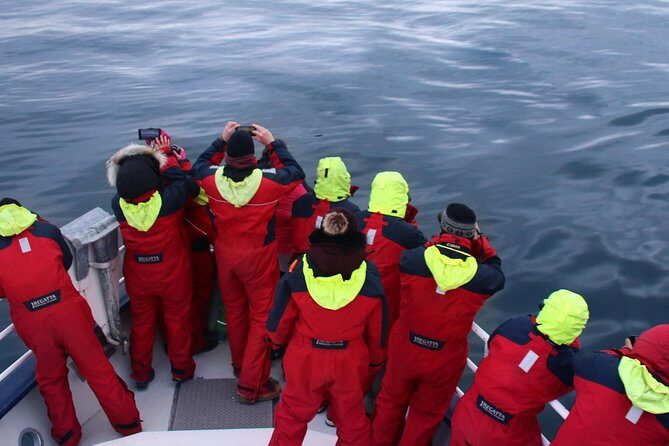
Also, the boat setup is designed for weather. You’ve got a heated indoor area with large viewing windows, plus protective clothing. Reviews and day-to-day experience point to the same reality: when it’s windy, you’ll appreciate being able to move between warm indoor viewing and bracing outdoor spotting without committing to the cold for hours.
What about the whales themselves? Sometimes you get long, satisfying sightings. Other times whales are quick—barely visible before they vanish. Plan for that. If you spot something, don’t freeze in one spot. Follow the guide’s cues and keep your eyes scanning, because whales can surface briefly and then move on fast.
Onboard comfort: protective gear, heated windows, and WiFi
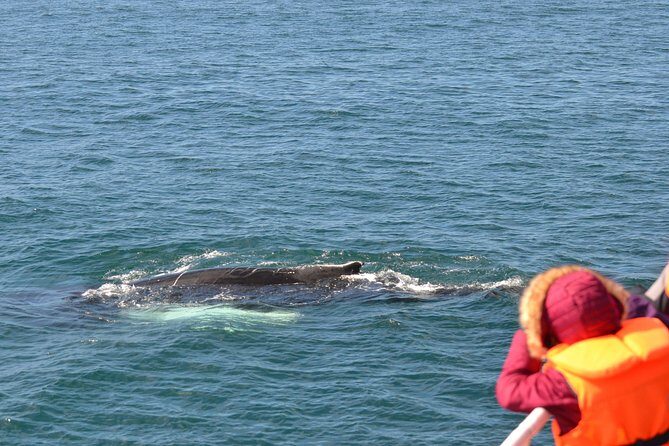
Iceland boat days can feel like a negotiation with wind. This tour takes that seriously with protective gear and a heated indoor saloon. That’s not just a nice-to-have; it affects how long you can stay focused on wildlife without feeling miserable.
You also get binoculars, plus onboard WiFi. WiFi is a small thing, but it’s handy when you want to check camera settings, upload a quick message, or keep kids occupied while you wait for a sighting.
One more comfort detail worth knowing: food and drinks aren’t included, but they’re available for purchase onboard. Some people noted they had hot coffee and snacks on the whale boat, which helps if you’re trying to warm up during a windy afternoon.




Wildlife spotting tips that actually help you
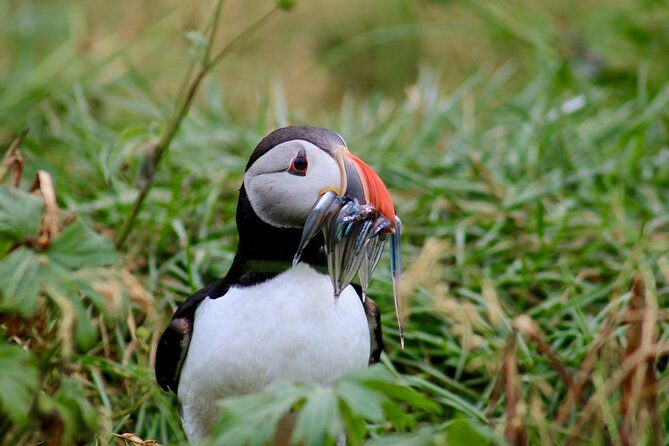
I’ll be straight with you: puffins and whales are not “stand here and watch” wildlife. You need a strategy.
For puffins:
- Use your eyes first, then your binoculars. Puffins can appear suddenly near the boat’s area and then pop away.
- Try not to lock into one pose. Birds change direction fast, especially when they’re flying.
- If photography matters, bring a camera you can zoom with quickly. Puffins can be far out and move constantly.
For whales:
- Keep your gaze moving. Whale surfaces are often brief, and it’s easy to miss them if you stare too long in one place.
- Pay attention to the guide’s direction about where to look. Guides on these trips typically manage search patterns and timing, and it helps a lot when the sea is busy.
- Dress for wind, not just cold. Waterproof layers plus the provided gear makes a difference.
And a simple mental trick: treat it like hunting for a moment, not waiting for a movie scene. When an animal appears, you’ll get more enjoyment if you’re ready to react.
Price and value: what you’re paying for at $140 per person
At about $140 per person, this combo isn’t bargain-basement, but it also isn’t paying for one short cruise and hoping for magic. You’re buying two separate outings on the water, and the inclusions make the day more comfortable and more productive.
Here’s how I’d frame the value:
- Two boat trips (puffins + whales) instead of one
- Protective clothing + binoculars, which saves you the hassle of packing and makes the cold manageable
- Heated indoor viewing on the water, which is a real quality-of-life feature
- Live English commentary that helps you understand what you’re seeing
- A whale re-try if your cetacean sighting doesn’t happen
If you were to do a puffin tour alone and a whale tour later, you’d still pay for two experiences—likely with less comfort and fewer built-in “wins” like the whale re-try. The combo price feels most fair when you treat it as a full day plan: puffins for fun first, whales for a serious wildlife chase after.
Who this tour suits best (and who should adjust expectations)
This is a great pick if you want a full wildlife day without stacking multiple separate reservations. It’s also a good fit for people who like structured guiding: the commentary helps you understand behavior and location, which makes the sightings feel more meaningful.
It’s especially suited for:
- Families who appreciate gear and indoor warmth during a boat day
- First-timers in Reykjavik who want both birds and marine mammals
- Visitors who want a safety net (the whale re-try)
You might want to think twice if:
- You’re counting on extremely close puffins. Even when puffins are abundant, they’re small and can be viewed at a distance from the boat.
- You don’t like crowded boats or tight viewing layouts. Capacity can make it harder to get the best window or deck position.
- You want one uninterrupted experience. This is two outings with time between, which is usually fine, but it isn’t a single continuous cruise.
Should you book it?
If your goal is a practical, high-comfort way to see Iceland’s sea life from Reykjavik, I’d book this. The combination is efficient, and the heated indoor setup plus protective gear makes it a day you can actually enjoy in Iceland weather. The whale sighting guarantee is the deciding factor for many people, because it turns an unpredictable wildlife outing into something with a real second chance.
Just go in with one clear mindset: puffins are fun and often plentiful, but they’re quick and small, and the best views depend on sea conditions and animal behavior. If you can accept that, you’ll get a memorable day at sea.
FAQ
How long is the two-in-one puffin and whale tour?
The combined tour runs about 4 to 6 hours total. The puffin leg is about 1 hour, and the whale watching leg is about 3 hours, with additional time in between for a break.
What’s included in the tour price?
The price includes two tours (3-hour whale watching and 1-hour puffin watching), use of protective clothing and binoculars, a heated indoor saloon with large viewing windows, complimentary WiFi onboard, a whale guarantee (or try again for free), excellent live English commentary, and access to a wildlife exhibition.
Is food and drink included?
No. Food and drinks are available to purchase onboard, but they’re not included in the ticket price.
Where do I meet, and where does the tour end?
You meet at Elding Whale Watching, Ægisgarður 5c, 101 Reykjavík, Iceland. The activity ends back at the meeting point.
What animals are you looking for on the whale watching portion?
On the whale watching trip in Faxaflói Bay, the tour searches for minke whales, humpback whales, porpoises, and dolphins.
What happens if you don’t see whales?
The whale watching portion includes a sighting guarantee. If cetaceans don’t appear on your tour, you can try again another day free of charge.
Do children need life vests?
Yes. Children under 13 are required by law to wear life-vests for the duration of the tour.
What’s the cancellation rule if weather is bad?
This experience requires good weather. If it’s canceled due to poor weather, you’ll be offered a different date or a full refund.