A lava tunnel feels like time travel. On this bus trip from Reykjavik, you walk the path of lava from the Leitahraun eruption about 5,200 years ago, then explore the Raufarhólshellir tube with a live guide. The entrance has collapsed in a way that creates columns of light, so even before you go far, it already looks unreal.
I especially like the helmet-and-flashlight setup—it turns geology into something you can feel and see, not just read about. I also love the mineral color range in the tunnel walls, caused by different rock types, which makes every turn look different. One drawback: the cave walk can be uneven and sometimes slippery, so plan on sturdy shoes and careful steps.
In This Review
- Key Things That Make This Tour Worth It
- Reykjavik to Raufarhólshellir: A Clean, Low-Stress Half-Day
- The Bus Ride: Equipment Time, Comfort, and WiFi
- Suited Up at the Cave Entrance: Helmet Light and Shoe Grip
- Walking the Lava Tube: Ancient Leitahraun and the Columns of Light
- The Sensory Side: Real Darkness, Sound, and a Cave That Feels Alive
- What to Know About Terrain: Slippery Rocks, Steps, and a Cold Cave
- The Noah Connection: Hollywood Filming Where Lava Still Shapes the Scene
- Price and Value: Is $129 Worth It?
- Who Should Book This Lava Tunnel Bus Tour
- Should You Book the Raufarhólshellir Bus Tour?
- FAQ
- Where is the meeting point for this bus tour?
- How long does the whole experience take?
- How long is the guided part inside the lava tube?
- Is the tour guide English-speaking?
- What equipment is included for the cave?
- Is WiFi available during the trip?
- Should I bring food or drinks?
- Do I need to dress warmly and wear sturdy shoes?
- Can I change my plans after booking?
Key Things That Make This Tour Worth It
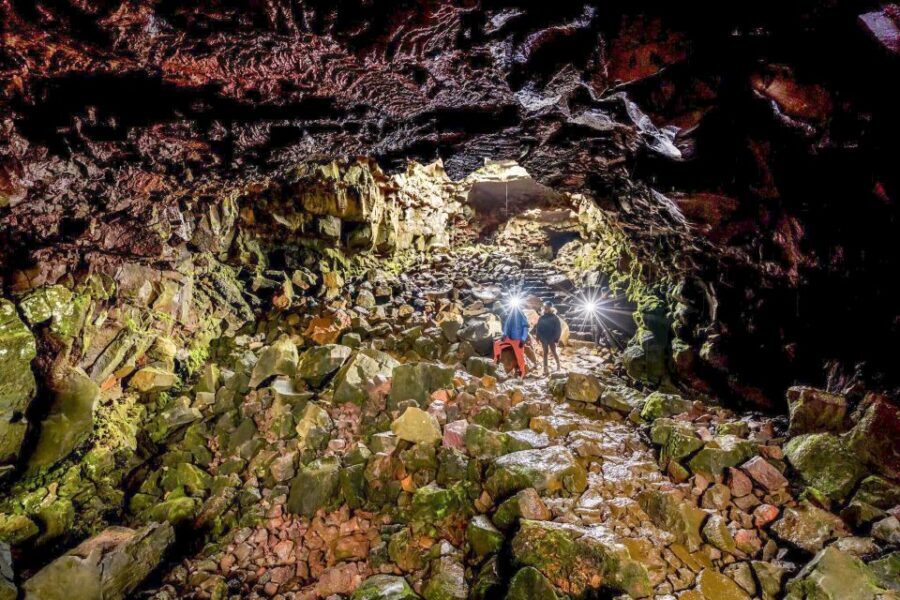
- Raufarhólshellir lava tube: one of Iceland’s larger lava tunnels, reached on a simple bus day plan
- Columns of light near the entrance: a ceiling collapse that creates striking light beams right away
- Mineral color walls: you’ll see multiple shades and textures tied to how the lava cooled and changed
- A short, focused cave tour: about 1 hour in the cave on foot, plus transport
- Pitch-black moments: some guides turn off lights deeper inside so you can experience real darkness
- Guides keep it fun and clear: in recent groups, guides such as Dimitri, Juan, Alex, and Rosi show up in the role and bring humor plus solid explanations
Reykjavik to Raufarhólshellir: A Clean, Low-Stress Half-Day
If your Iceland plan is already packed, this tour is a smart fit. You get out of Reykjavik by bus and reach the lava tube in about 30 minutes, which keeps the whole experience to around 3 hours door-to-what-you-need. There’s no long driving day, no rental car juggling, and you still get a real walk inside an ancient volcanic structure.
The vibe here is practical and hands-on. You’re not just looking at a rock from a viewing platform. You’re walking where lava once flowed, under a ceiling that formed from a flowing, cooling event. That turns it into a “now I get it” kind of stop—fast.
You can also read our reviews of more tours and experiences in Reykjavik.

The Bus Ride: Equipment Time, Comfort, and WiFi
You meet at the BSI Bus Terminal, and you’ll want to arrive about 15 minutes early to stay smooth. The bus is climate-controlled, so you’re not fighting wind chill while you wait to suit up, and there’s complimentary WiFi onboard if you need to plan your next move or update photos.
This is also when you start to mentally shift from Iceland-at-the-surface to Iceland-beneath-your-feet. The driver and guide help keep the group organized so you can move quickly once you arrive. In some recent experiences, the bus driver even dropped people closer to their accommodation after the tour, but don’t bank on it—hotel pickup isn’t listed as included.
The bus segment is short enough that you won’t feel bored. It’s really just the bridge between Reykjavik life and a walk through volcanic time.
Suited Up at the Cave Entrance: Helmet Light and Shoe Grip
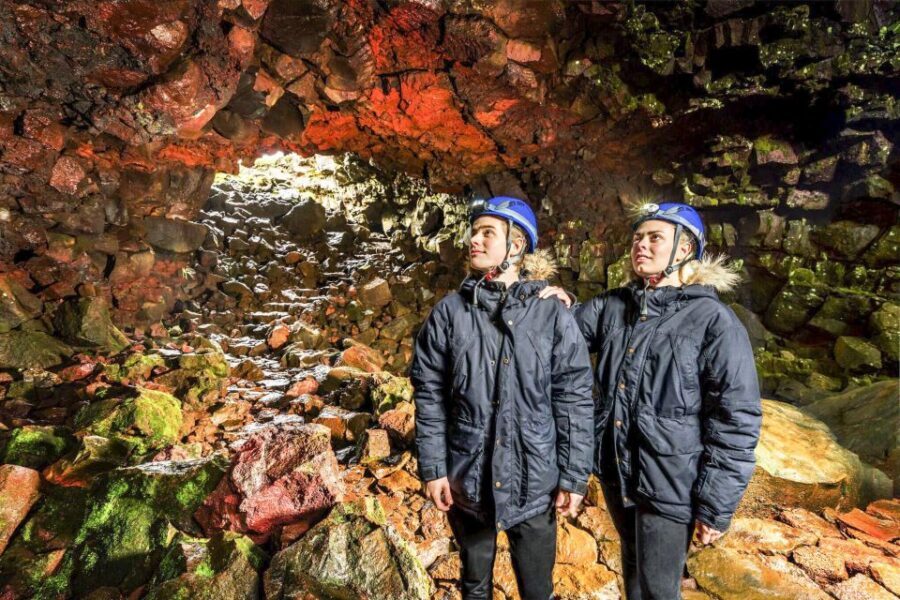
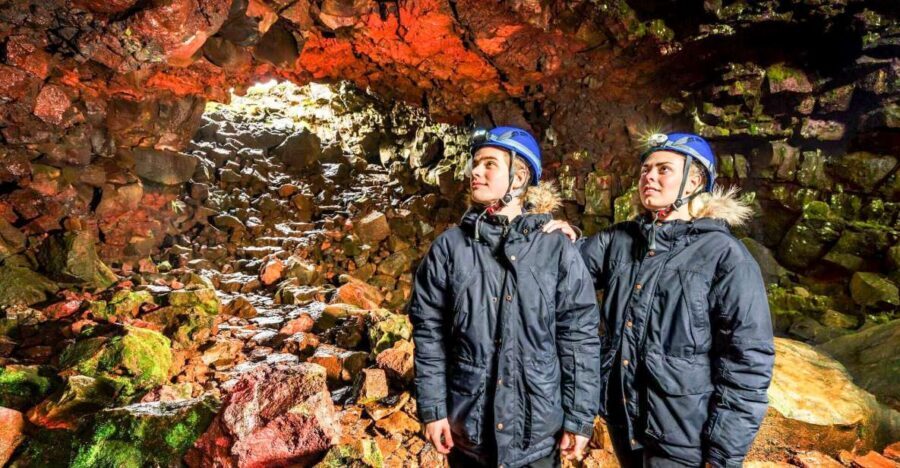
Once you arrive, the main moment is gearing up. You’ll get a helmet and a high-quality flashlight, and that setup matters more than people expect. In a lava tube, the light you bring changes everything: colors pop differently, and texture shows up where you’d otherwise see only rock silhouettes.
Bring this expectation: you’ll likely get help with traction. In recent groups, people mentioned receiving shoe spikes (like crampons) and even walking support such as poles for balance. The tunnel route includes raised metal walkway sections, but it also includes areas where you walk on uneven rock.
So go in prepared to move carefully, not to do a casual stroll. If you’re the kind of person who does fine on a rocky trail at home, you’ll probably be okay—just plan for colder air and slick patches.
Walking the Lava Tube: Ancient Leitahraun and the Columns of Light
Inside Raufarhólshellir, the guided portion gives you a route that feels short on paper but satisfying on your boots. The guided tour is 1 hour, and you’ll walk roughly 500 meters with your group.
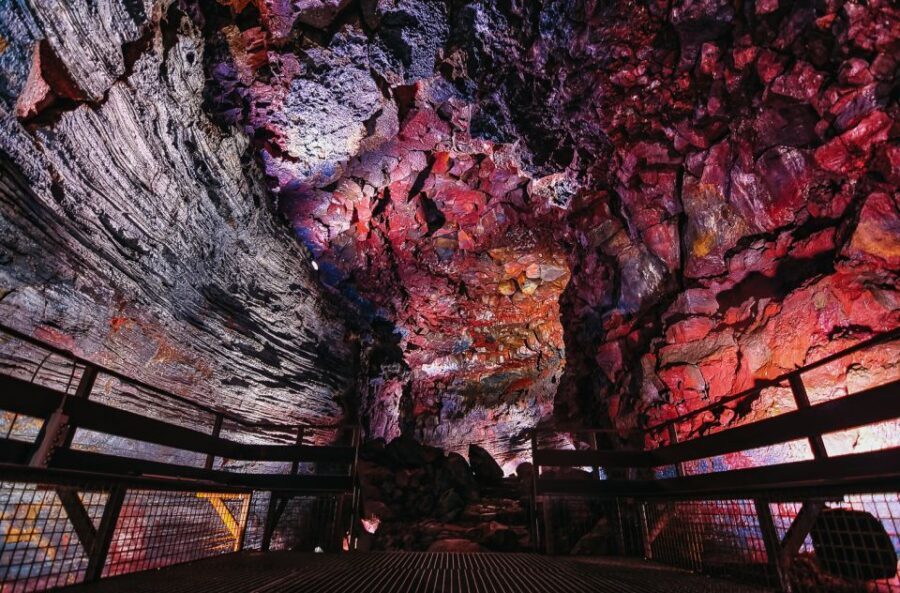
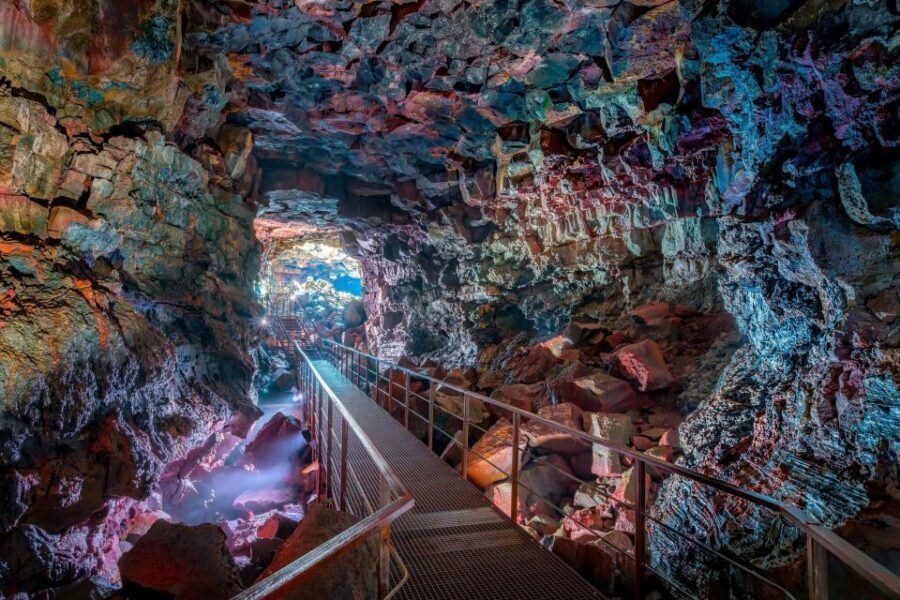
Right near the entrance, the cave has a collapsed ceiling section. That collapse creates those dramatic columns of light, like the tunnel is casting spotlights downward. It’s a great place to slow down and look up, because it shows how the space was shaped after the lava tube formed.
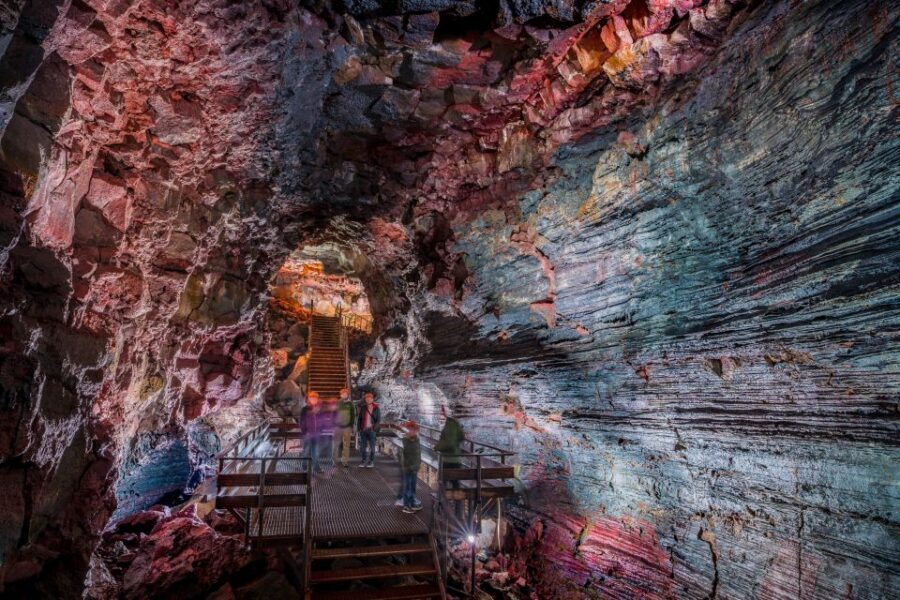
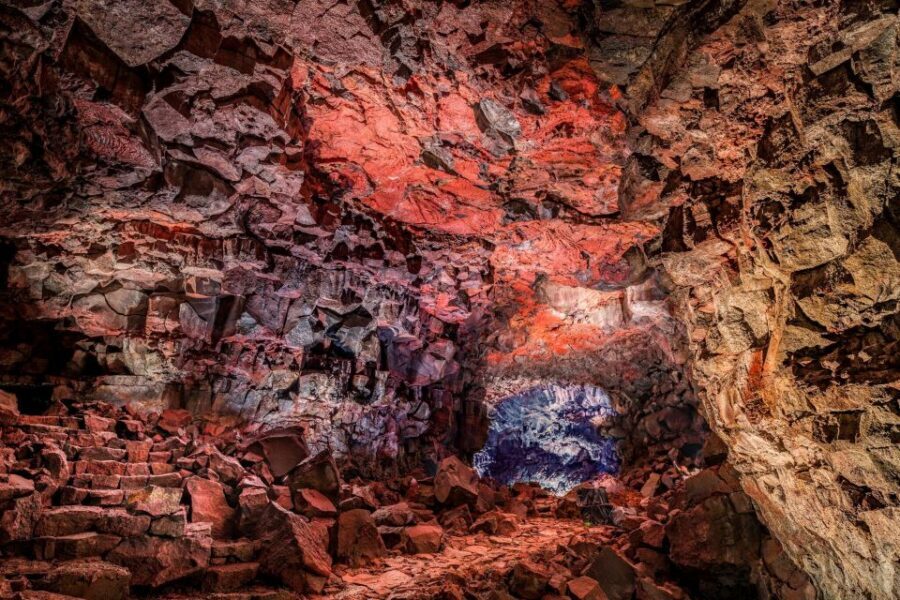
Then you keep going and start seeing the “why does it look like that?” parts of geology. The tunnel walls show a range of colors—reds, browns, grays, and lighter mineral tones—because of different mineral types and how materials reacted as the lava cooled and later altered.
Even better: the guides don’t treat this like a museum lecture. They connect what you’re seeing to how lava moves, how tubes form, and why the rock inside looks the way it does. Guides in recent tours—like Dimitri, Juan, Alex, and Rosi—are repeatedly praised for being funny while staying clear enough that the science clicks.
The Sensory Side: Real Darkness, Sound, and a Cave That Feels Alive
This is the part I’d call the “sensory upgrade.” A lava tube isn’t only about visuals. It’s about how the air feels, how your eyes adjust, and how sound bounces off smooth volcanic surfaces.
One standout detail from recent tours: some guides turn off the lights for a moment deeper inside so you experience the tunnel’s near-total darkness. That’s not just dramatic for photos. It helps your brain understand scale and depth. When you can’t see, you notice the cave in a more physical way—your breathing, your footing, and the echo of the group.
People also mention the tunnel feels like it “talks,” which is basically a poetic way of pointing out echoes and sounds that bounce around the curved rock. It’s not mystical. It’s physics. But it sure feels wild in the moment.

What to Know About Terrain: Slippery Rocks, Steps, and a Cold Cave
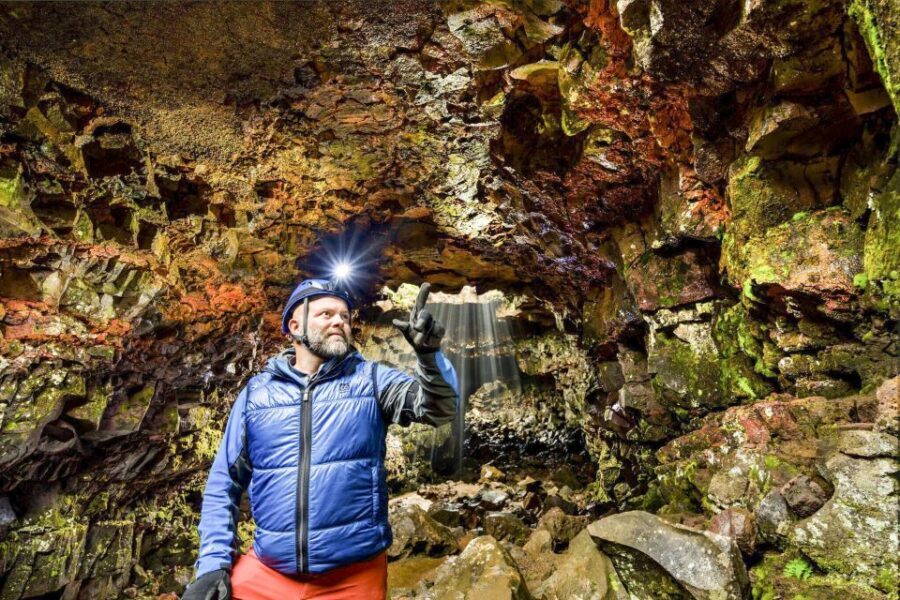
Here’s the honest part: the walk is not perfectly smooth. The cave interior is rocky and uneven, and water can drip from the ceiling. In warmer months, it can still feel very cold inside—one recent tip mentioned you could see your breath even in summer. So dress like you’ll be outside in Iceland, not like you’re visiting a warm indoor attraction.
Plan your footwear carefully. Expect slick spots. A lot of people emphasize sturdy shoes with grip (and mention trekking soles). If you get shoe spikes, use them. If you don’t, still treat the steps and rock sections like they’re holding their own opinions about where your foot should go.
Good news: there’s a raised metal walkway in many areas, which makes the route manageable for most people with reasonable balance. But some groups included older participants who chose to turn back due to insecurity with uneven climbing, so be honest with yourself about your comfort level.
If you want one simple checklist: warm layers, waterproof jacket, and shoes that won’t betray you.
The Noah Connection: Hollywood Filming Where Lava Still Shapes the Scene
If you like fun facts that actually add meaning, this one helps. This site was selected as a filming location for the Hollywood movie Noah, starring Anthony Hopkins.
That doesn’t change the geology, but it changes how you picture the space. It makes the tube feel like more than a science stop. It feels like a real set—because it is. You might even catch yourself looking for how filmmakers would stage light and darkness inside a natural cavern like this.
And honestly, once you’re wearing a helmet light in a tube that has its own built-in light beams, you’ll understand why a crew would want it.
Price and Value: Is $129 Worth It?
At $129 per person (for a 3-hour total experience including transport), the value comes from what’s included, not just the attraction itself.
You’re paying for:
- the bus fare from Reykjavik to the lava tube area
- a guided 1-hour cave tour
- a flashlight and protective helmet
- complimentary WiFi on the bus
That means you don’t need to arrange your own transport, and you don’t need to source basic safety gear. The tour is also short enough that it’s realistic even on tighter itineraries. If your schedule only allows a few hours for something extraordinary, this fits.
It’s a “pay for time saved and safety gear included” kind of purchase. If you were planning a DIY visit with transport, gear, and a guide, the ticket starts to feel less pricey.
Also, this is one of those experiences where quality depends heavily on the live guide. The reviews highlight humor and clear explanations—especially from named guides like Dimitri and Juan—and that matters. A great guide turns a cool cave into a memorable understanding of volcanic process.
Who Should Book This Lava Tunnel Bus Tour
This tour is a great match if:
- you want a Reykjavik day trip that doesn’t eat your whole day
- you love geology but don’t want a long academic format
- you like hands-on experiences: helmet light, walking inside the tube, and seeing mineral colors up close
- you want a controlled group pace with safety gear and a guide on hand
It may be less ideal if:
- you have limited balance or feel uneasy on uneven, slippery rock sections
- you dislike cold environments, since the cave can be noticeably chilly
- you want more than a quick in-and-out—this is deliberately short, not a full-day expedition
If you fall in the middle, I’d still recommend it with the right footwear and an honest look at your comfort level.
Should You Book the Raufarhólshellir Bus Tour?
Yes, if you want a high-impact Iceland experience without long driving or complicated logistics. The standout reasons are simple: helmet-lit walking inside a major lava tube, the visually striking mineral colors, and a guide-led story that makes the tunnel feel understandable—not just impressive.
If you’re unsure because of terrain, don’t panic. The route often includes raised walkway sections, and you’ll be geared up for footing. Just dress warmly, bring grip in your shoes, and accept that the cave asks you to watch your step.
Book it when you want a short, real-deal volcanic experience from Reykjavik. It’s one of those tours where the photos are great, but the feeling of standing inside a lava tube is the real prize.
FAQ
Where is the meeting point for this bus tour?
You meet at the BSI Bus Terminal. Plan to arrive 15 minutes early.
How long does the whole experience take?
The total duration is about 3 hours, including the bus ride and the cave tour.
How long is the guided part inside the lava tube?
The guided cave tour is 1 hour.
Is the tour guide English-speaking?
Yes, the live tour guide is English.
What equipment is included for the cave?
You get a helmet and a high-quality flashlight.
Is WiFi available during the trip?
Yes, there is complimentary WiFi on the climate-controlled bus.
Should I bring food or drinks?
Food and drinks are not included, so you may want to plan snacks or water on your own.
Do I need to dress warmly and wear sturdy shoes?
Yes. You’re advised to dress warmly and wear sturdy footwear.
Can I change my plans after booking?
The activity offers free cancellation up to 24 hours in advance for a full refund, and it also has a reserve and pay later option.