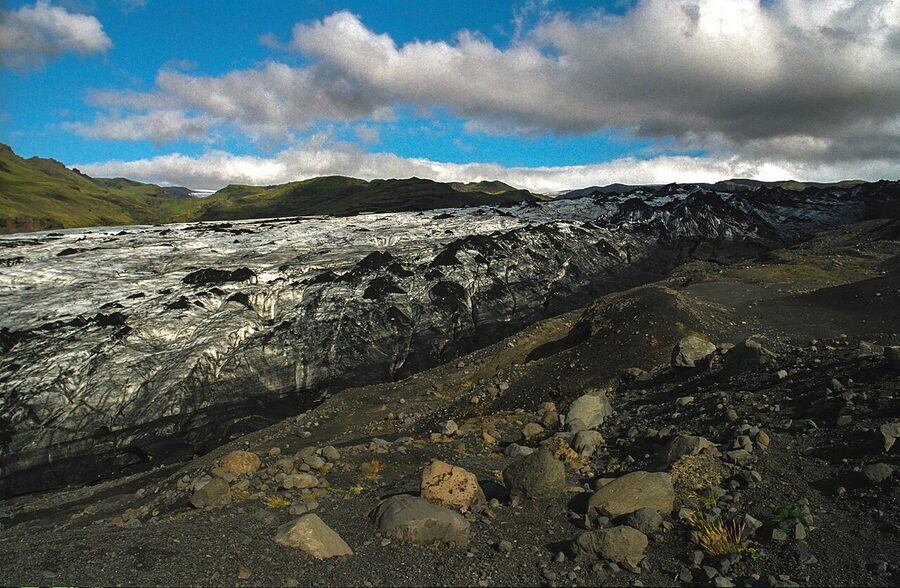
Walking on a glacier is the strangest few hours you can spend in Iceland. Solid ice underfoot, but it gives a little, like trodden snow with a steel core. Crampon spikes bite in with a small crunch, then catch and you step. The surface is grey-blue and ridged where wind and meltwater have worked it into shapes, and every now and then you pass a hole the size of a dinner plate where the water has drained straight down a hundred metres into the dark. The first time you do it your brain refuses to trust the spikes for the first ten minutes. Then it does, and you walk like you’ve always done this.
This is the standalone glacier-hike guide. The wider glaciers and geysers piece covers the Golden Circle and the day-tour add-on; the ice cave guide is the winter combo. Here we go deep on the hike itself, where you can do one, what it costs, what to wear, and which operator I’d actually book if I were you. Year-round on the main glaciers, guide-only because it has to be, and the standard 3 to 4 hour tour starts at around 13,000 ISK.
In This Article
- What a glacier hike actually is
- Where you can hike a glacier in Iceland
- Sólheimajökull, South Coast
- Skaftafell and Vatnajökull, southeast
- Langjökull, west Iceland
- Snæfellsjökull and the rest
- Sólheimajökull or Vatnajökull, the call I’d make
- Difficulty levels and who can go
- Gear: what’s provided, what you bring
- What it actually feels like, hour by hour
- The season: when to go
- How to book and what it costs
- Self-drive plus glacier tour at the meeting point
- Day tour from Reykjavik with transport included
- Multi-day Reykjavik tour to Skaftafell
- Where to stay near the glaciers
- Photography
- Safety: the bit you need to read
- What I’d skip
- The “what I’d do” pick
- One last thing
What a glacier hike actually is
Strip the marketing photos away and the activity is simple. You meet a guide at a glacier-tongue car park or a Reykjavik pickup, you put on crampons (metal spikes that strap onto your boots), you carry an ice axe like a walking stick, you walk single-file behind the guide for an hour and a half to two and a half hours on the ice itself, and then you come back. Total time including approach walk and gear-up is 3 to 5 hours depending on the operator and the glacier. There’s no climbing in the easy tours, no rope, no technical gear. Just walking, slowly and deliberately, on ice that has been there for several centuries.
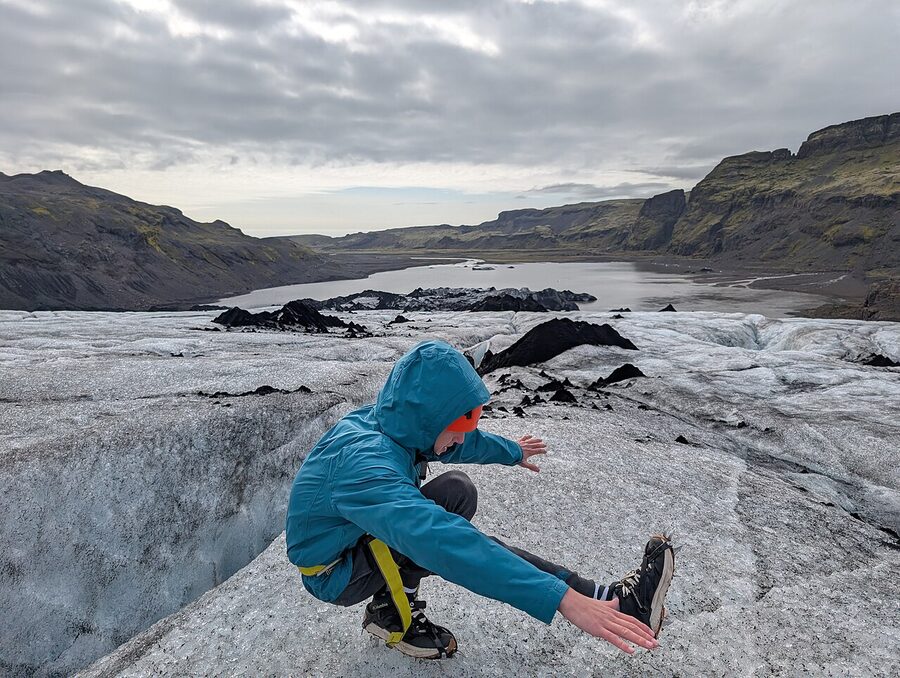
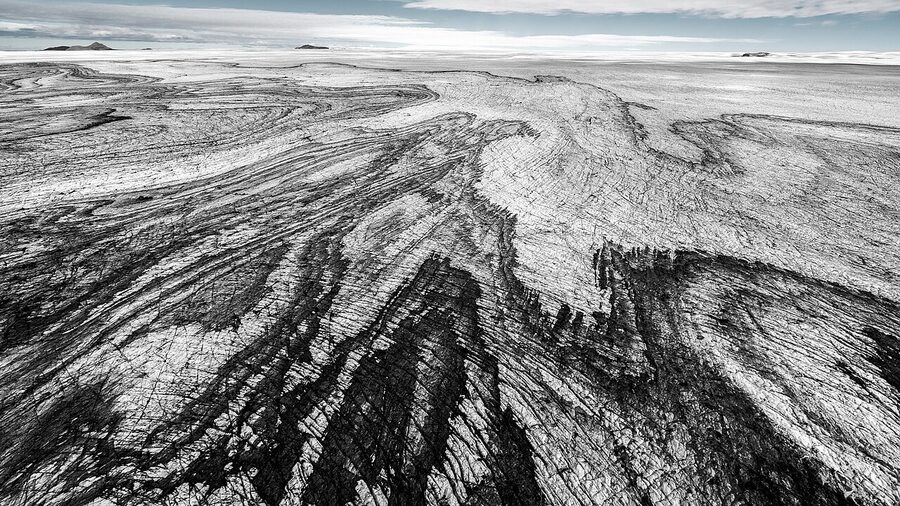
The terrain isn’t flat. Glacier ice is alive (in geological terms it’s flowing downhill at a few centimetres a day), and the surface where you walk is pulled, pushed, and torn into a million small shapes. There are ridges, hollows, surface streams in summer, ash bands from old eruptions, and the occasional crevasse. The guide’s job is to know which bits are safe to walk and which to skirt around, where the ice is thin, where a hole has opened up since the last group came through. They check the route at the start of each day and adjust as needed. You don’t see them doing most of this work, which is the point.
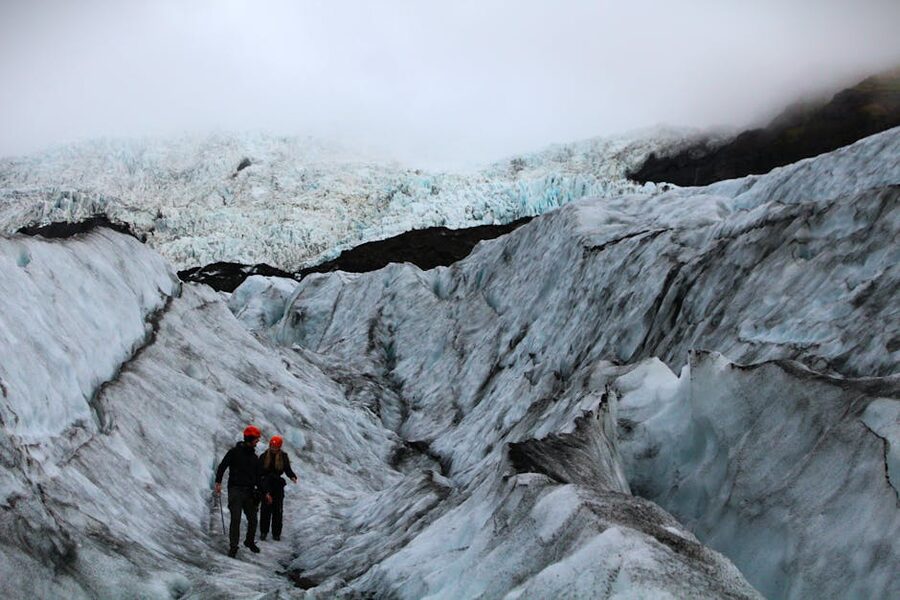
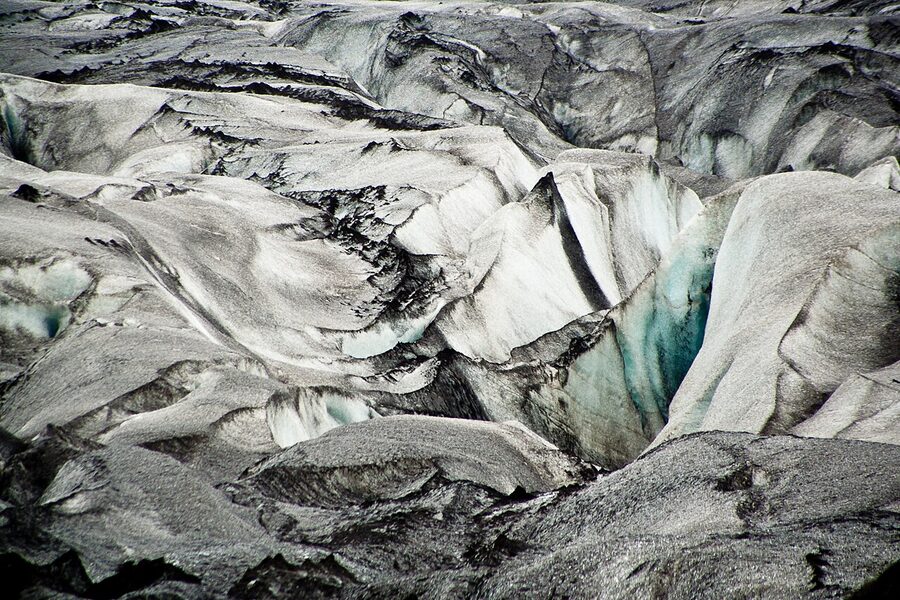
What you will notice: the colour. Glacier ice is grey-blue from a distance and an almost neon turquoise where it’s been freshly exposed by meltwater. The texture changes every few metres. Streams cut shallow channels you step over. Sometimes there’s a moulin, a vertical hole where surface water plunges 50 to 100 metres straight down to the bedrock and out under the glacier. You stand at the edge, the guide makes you stand back a metre further, and you listen to the water hitting the dark. That’s the bit people remember.
Where you can hike a glacier in Iceland
Iceland has glaciers covering about 11% of its land area. Not all of them are walkable, and only a few of the outlet tongues are tour-accessible. Here are the ones you’ll actually choose between.
Sólheimajökull, South Coast
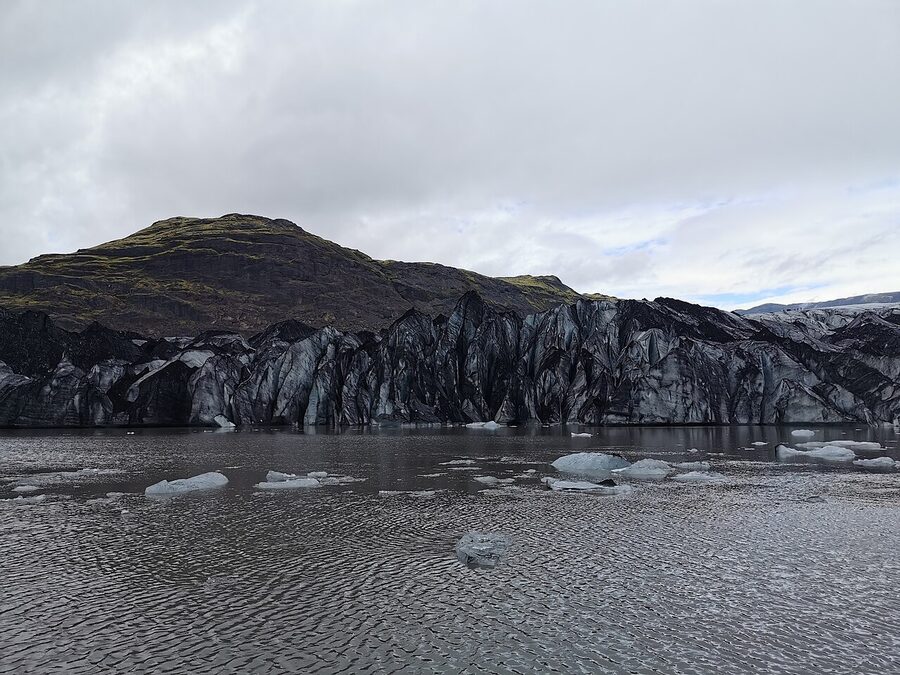
The most popular glacier hike in Iceland and the one most people end up doing. Sólheimajökull is an outlet of Mýrdalsjökull, the smaller cousin to Vatnajökull, and it sits about a 5 minute drive off Route 1 between Skógar and Vík. From Reykjavik you’re looking at 2 hours by car each way, which makes it the only glacier in the country you can realistically hike on a day trip from town.
The standard tour is 3 hours total: a 25-minute walk in to the glacier from the car park, gear-up at a small shed near the snout, an hour and a half on the ice itself, then back the way you came. Most of it is on flat or gently sloping glacier surface, no technical climbing, suitable for anyone reasonably fit. Operators run tours all year. Cost is around 13,000 to 16,000 ISK if you turn up at the meeting point in your own car, or 18,000 to 22,000 ISK if you book a Reykjavik pickup that includes the drive in a minibus.
Operators based at Sólheimajökull include Arctic Adventures (largest, well-rated, multiple slots a day), Troll Expeditions, Icelandic Mountain Guides, and Glacier Guides. Group sizes are 8 to 12 typically, sometimes more in high summer when several minibuses arrive at once.
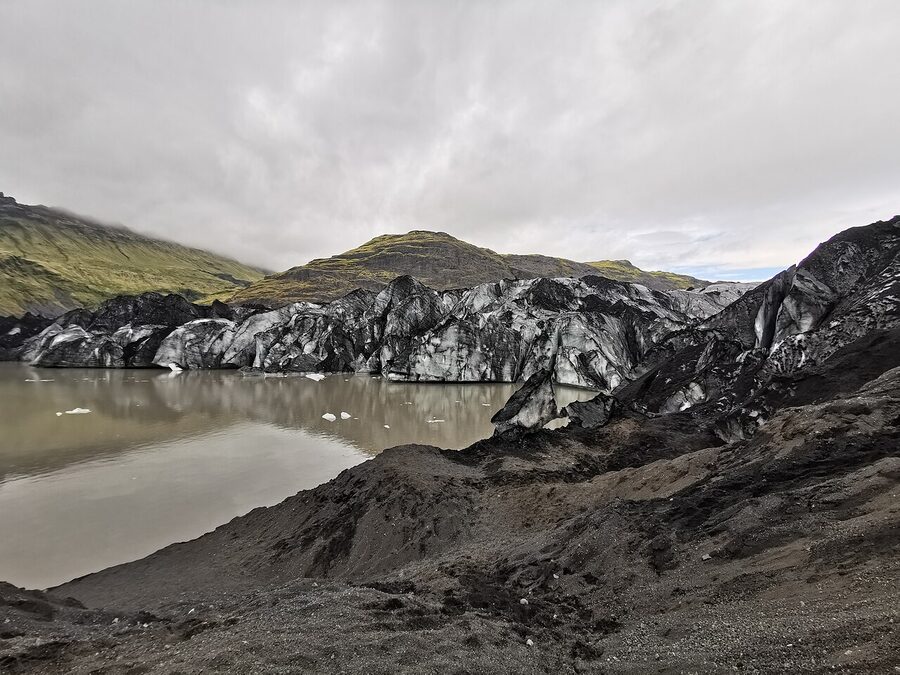
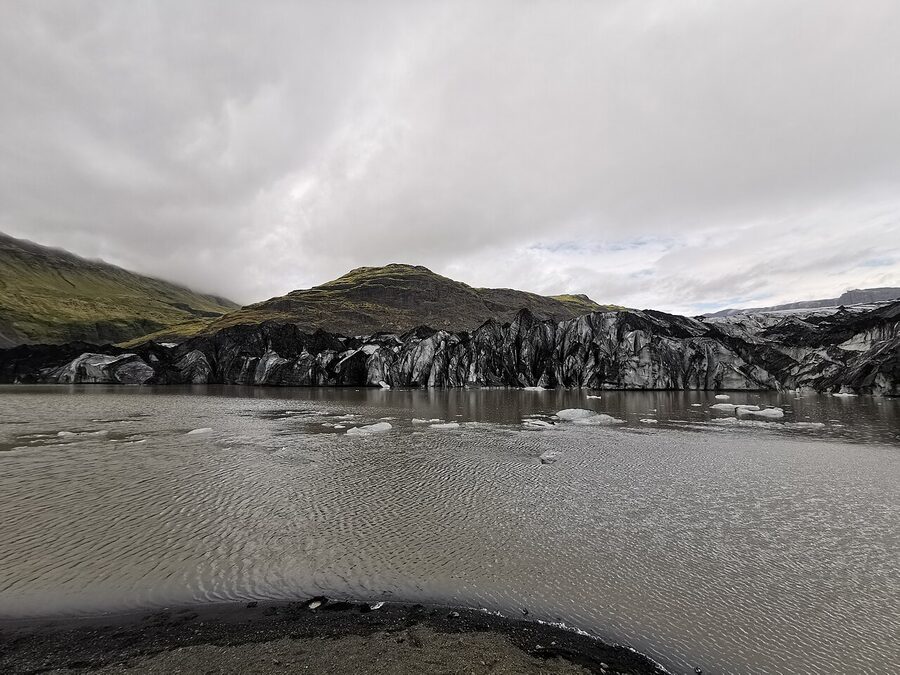
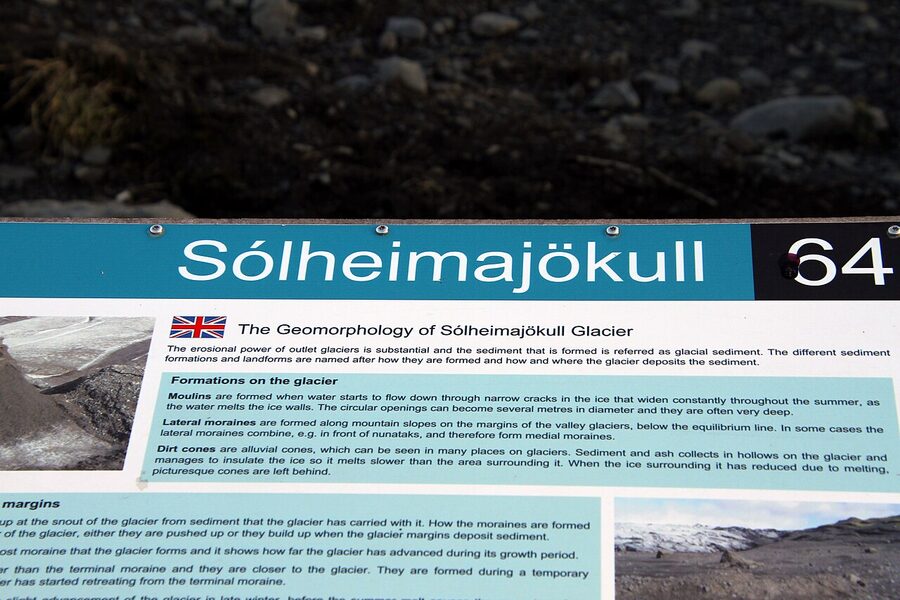
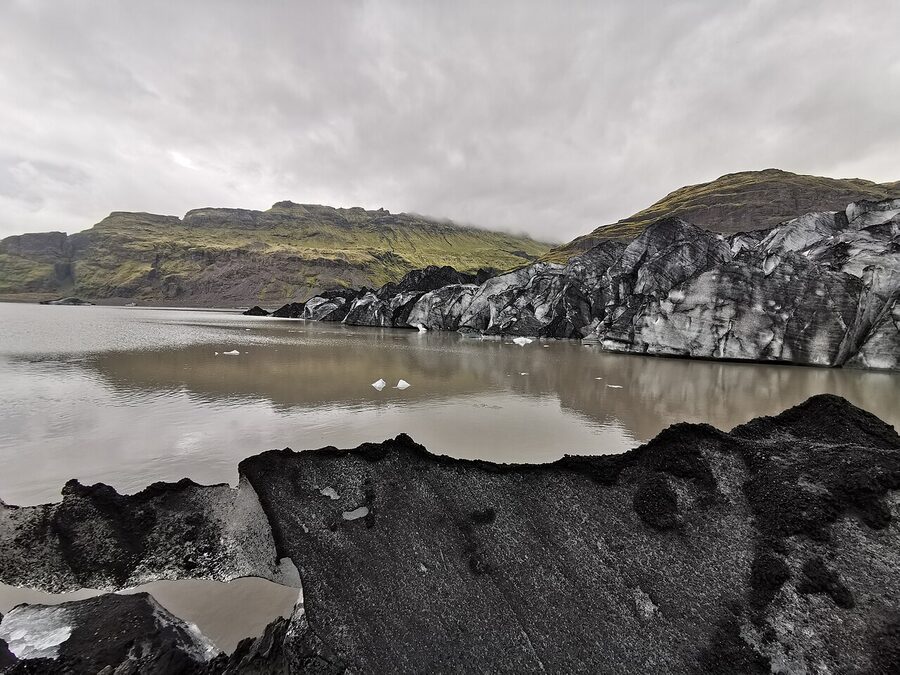
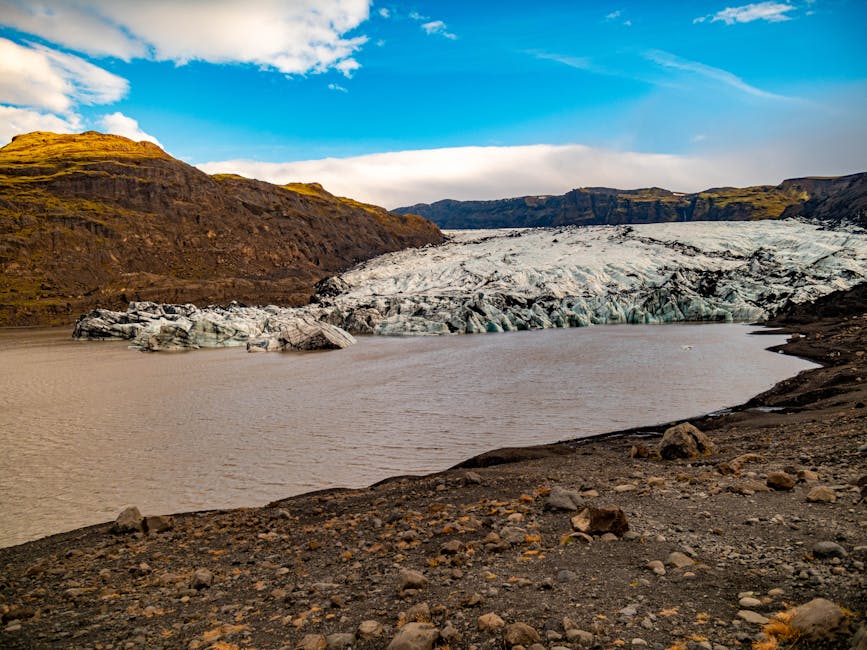
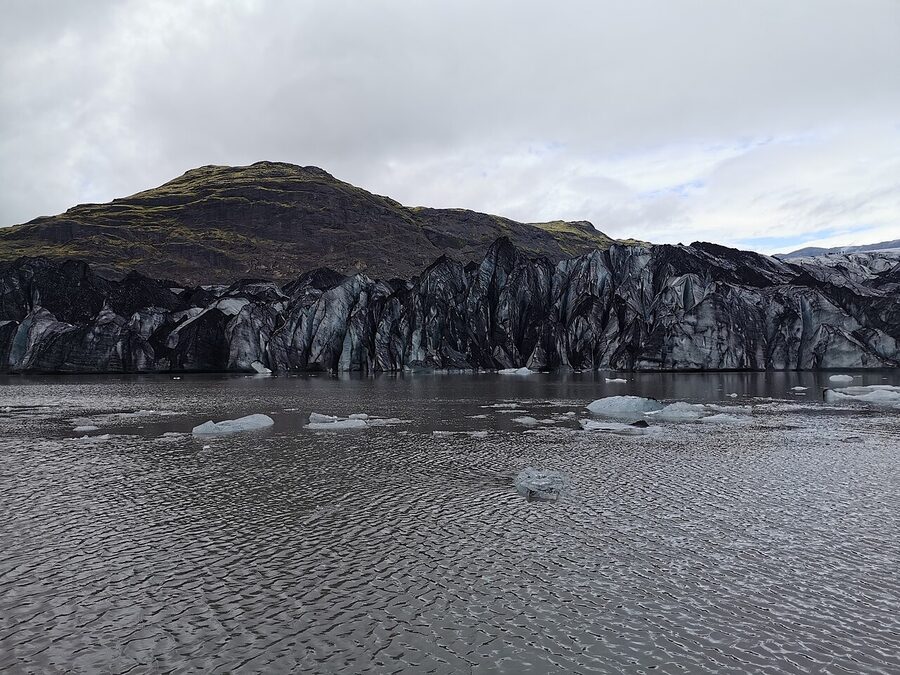
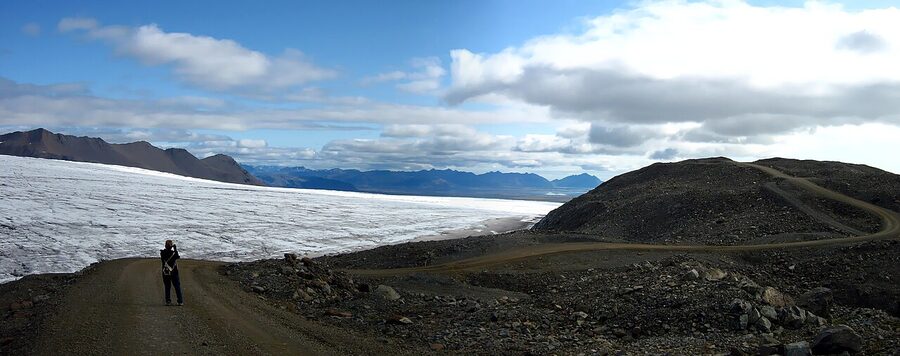
One thing to know about Sólheimajökull: the glacier has retreated significantly in the last 25 years. The visitor information boards by the car park show photos from 1995 with the snout much closer to where you’re standing now. The lagoon between you and the ice is the meltwater that used to be glacier. It’s a living example of what’s happening to the world’s ice. Your guide will probably mention this; it’s not preachy, just the local reality. The walk in to reach the ice now is longer than it was even ten years ago.
Skaftafell and Vatnajökull, southeast
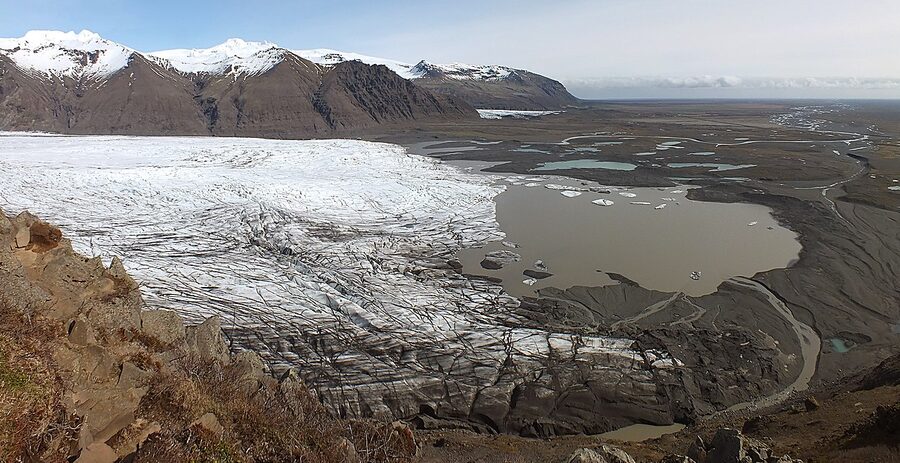
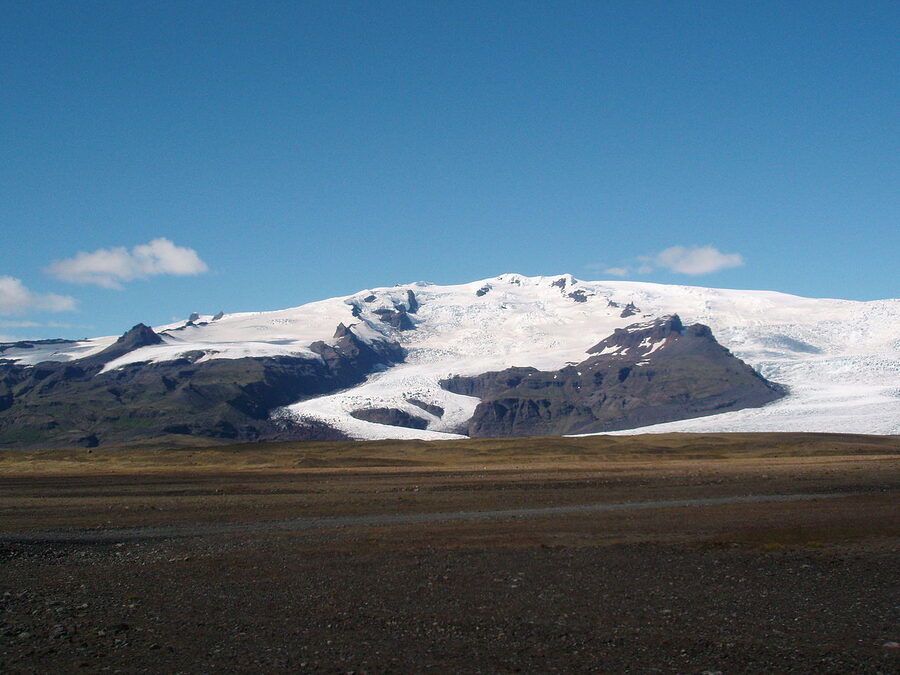
If you have time on a Ring Road trip, this is where I’d send you. Skaftafell is the visitor centre and ranger station inside Vatnajökull National Park, and from here you can hike on three different outlet glaciers depending on which tour you book. It’s a 4 hour drive from Reykjavik down the South Coast, so you’re not doing this as a day trip. Most people stay one or two nights at one of the hotels nearby (more on those below) and book the glacier tour as a half-day from the Skaftafell base.
Skaftafellsjökull
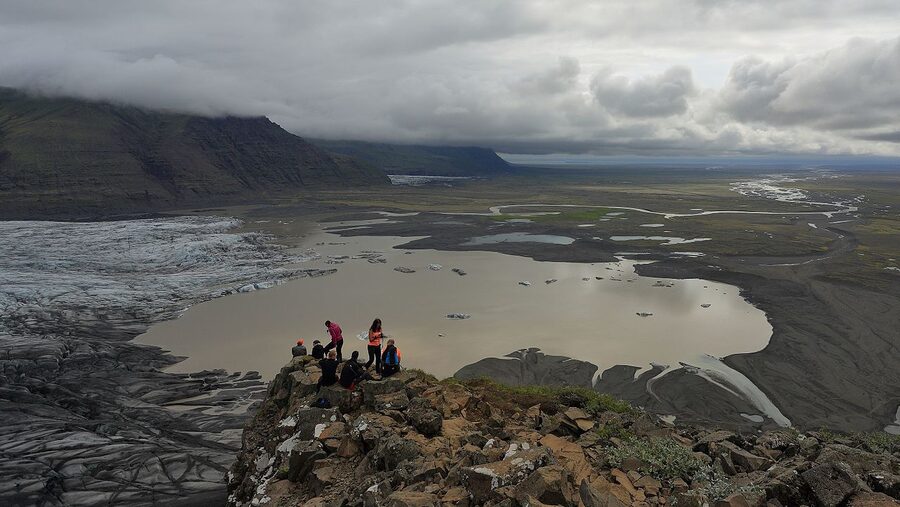
The standard easy hike from Skaftafell. The tour is 3 to 3.5 hours, the terrain is flatter than Sólheimajökull, and the views back toward Hvannadalshnúkur and the Skaftafellsfjöll ridge are some of the most photographed in Iceland. Cost is around 13,000 ISK. Icelandic Mountain Guides are the originals here, having run from Skaftafell since 1994, and they’re the operator I’d default to.
Falljökull
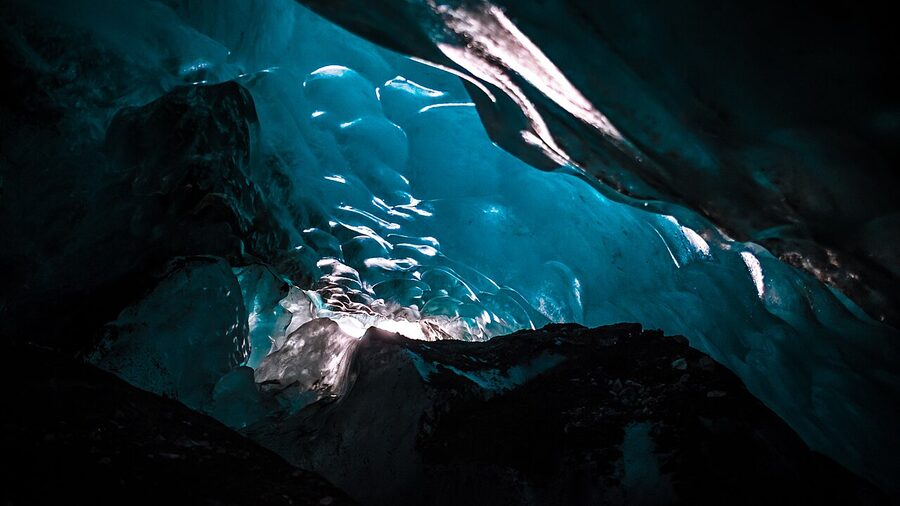
Falljökull (the “falling glacier”) is the steeper, more dramatic option. It’s a medium-difficulty 4 to 5 hour tour, around 14,000 to 16,000 ISK, and it’s IMG’s specialty. You spend more time among the ice features, there’s mild scrambling on a couple of sections, and the upper bit gives you proper crevasse country (still safe, still guided, just visually more impressive than the easy walks). If you’re reasonably fit and you want a step up from the standard tour, this is the one.
Svínafellsjökull
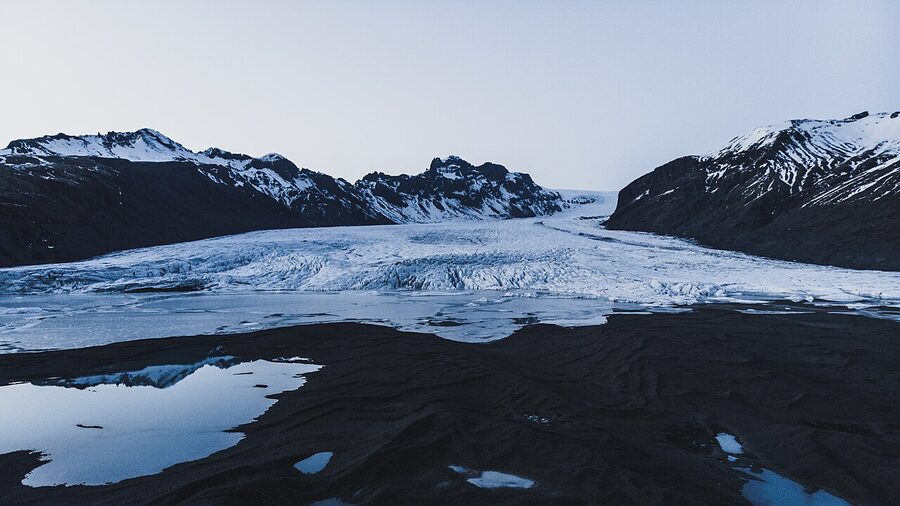
The famous one. Svínafellsjökull is the glacier that gets used as a film location more than any other in Iceland. It plays the area beyond the Wall in Game of Thrones, it stands in for Mann’s planet in Interstellar, and pieces of it have shown up in Batman Begins. The texture is what filmmakers love: chaotic seracs, deep blue meltwater pools, ash bands from the 2010 Eyjafjallajökull eruption layered through the ice. It’s a striking-looking thing.
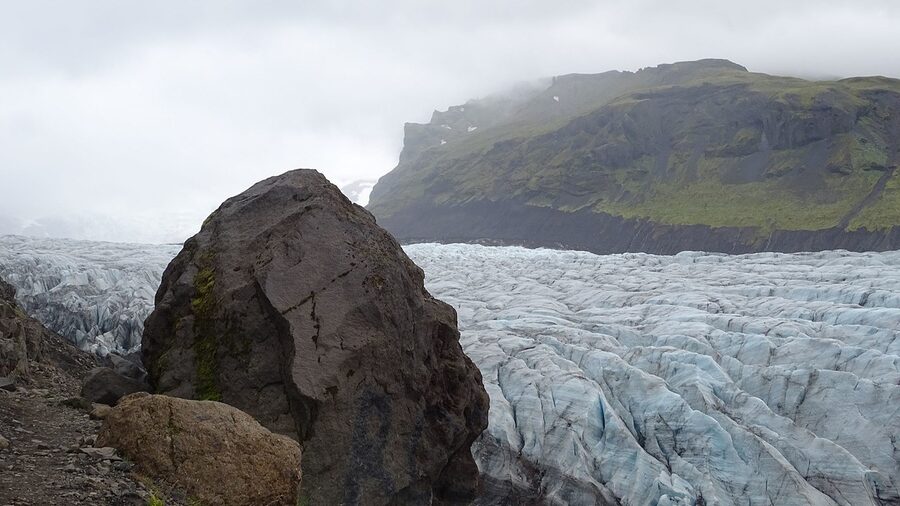
One thing to know: glacier hiking on Svínafellsjökull has been intermittently restricted since 2018 because of a major crack in the headwall above (geologists are watching it, the worry is a piece of mountain calving onto the glacier surface). Some seasons you can hike, some you can’t. Check what your operator is currently offering. The viewpoint walk to the lookout is always open and worth doing even if the glacier hike isn’t, because the view of the seracs is one of the best in Skaftafell.
Langjökull, west Iceland
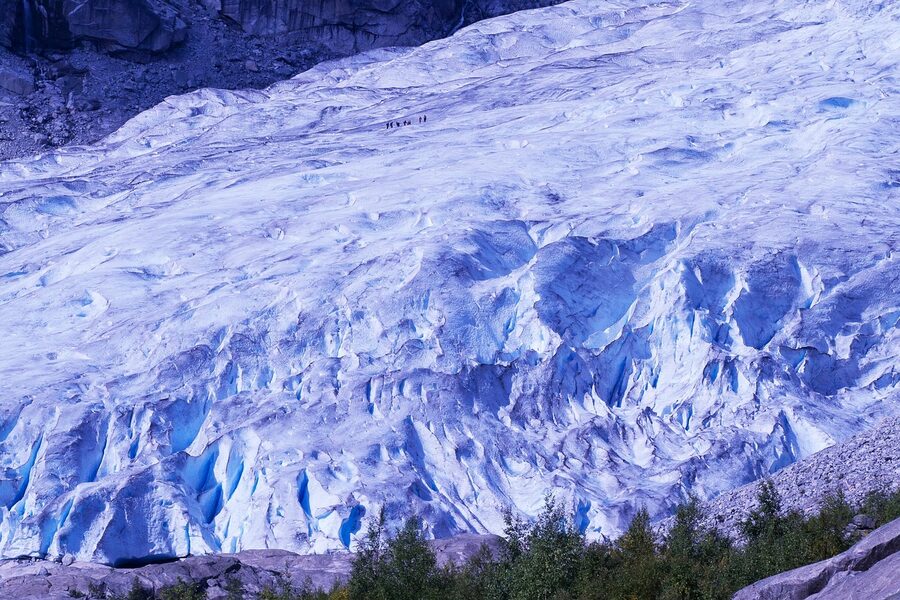
Langjökull is Iceland’s second-largest glacier and a different proposition from the South Coast options. You don’t walk to the ice from a car park, you take a super-jeep with snow tyres up onto the ice cap, and the experience is more “vast white plateau” than “tongue with features.” The standard combo here is the Into the Glacier ice tunnel, which is a 500-metre manmade passage cut into the ice cap, plus a short glacier walk on the surface afterwards. Cost for the combo is around 22,000 to 26,000 ISK from the Húsafell base, more if you add transport from Reykjavik.
It’s a different feel. The natural cave seasons don’t apply (the tunnel runs year-round, the surface walk is more ceremonial than a proper hike), and the journey up onto the ice cap is half the experience. If you’ve already done a Sólheimajökull or Skaftafell hike and you want a second, very different glacier day, Langjökull works for that. If it’s your only glacier visit and you want the postcard glacier-hike experience, pick Sólheimajökull or Skaftafell instead.
Snæfellsjökull and the rest
Two short mentions for completeness. Snæfellsjökull on the Snæfellsnes peninsula can be hiked in summer with a guide; tours are seasonal (June through August mostly) and the glacier sits on top of an ancient volcano, which is a different kind of view to the South Coast tongues. The eastern outlet glaciers of Vatnajökull (Heinabergsjökull, Brúarjökull) are typically multi-day expedition territory and outside the scope of a tourist day-tour.
Sólheimajökull or Vatnajökull, the call I’d make
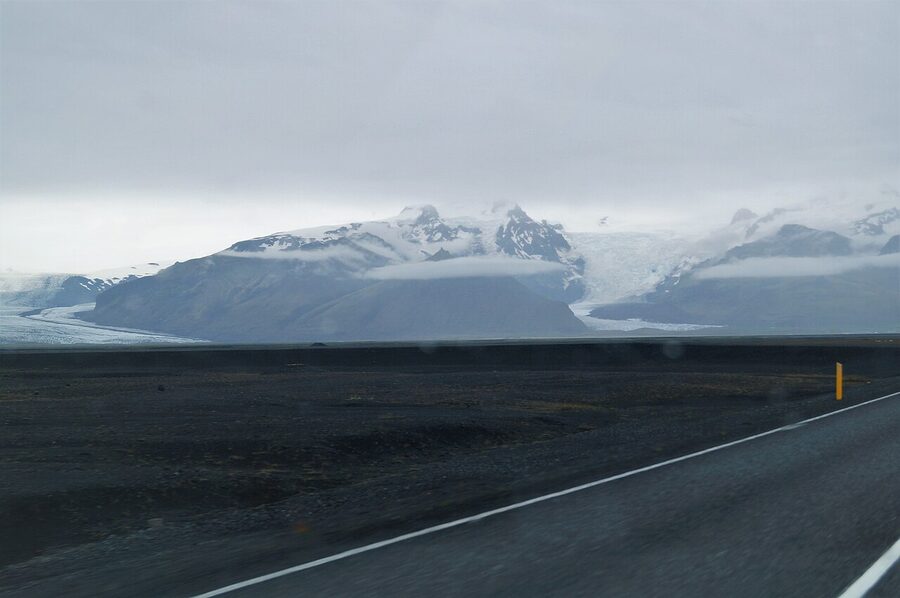
This is the question I get asked the most. Both are good. They’re not the same thing, and the choice mostly depends on the shape of your trip rather than the glacier itself.
Sólheimajökull wins if your Iceland trip is short. If you’re in the country for 3 to 5 days and you’re using Reykjavik as a base, this is the only glacier hike you can plausibly do without rearranging your whole itinerary. You leave Reykjavik at 8am, you’re on the ice by 11, you’re back at your hotel by 6 or 7. It’s also the cheaper option (no extra accommodation cost) and the easier sell to less-fit travellers because the walk in is shorter.
Vatnajökull wins on scale and atmosphere. Skaftafell is inside a national park, the surrounding mountains are taller, the glacier tongue is bigger, and the operators have decades of glacier-specific experience because the place has been a guiding base since the 1990s. The drive down the South Coast on the way is one of the great drives in Iceland (Seljalandsfoss, Skógafoss, Reynisfjara, Vík, the lava-mossy stretch east of Vík, then the long open glacier views from the Skeiðarársandur sand plain). If you’re already on a Ring Road trip, you’re driving past Skaftafell anyway.
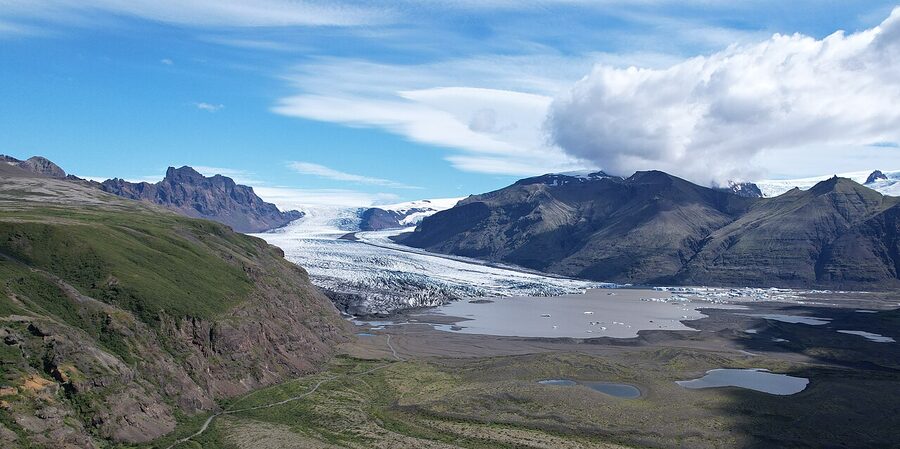
The shorthand I use: 5 days or fewer in Iceland, do Sólheimajökull. Seven days and a Ring Road, do Skaftafell. If you’re in winter and you want to combine a glacier hike with an ice cave on the same day, the Vatnajökull operators run paired tours that Sólheimajökull doesn’t quite match. That’s the strongest argument for going east in winter.
Difficulty levels and who can go
Operators sort their tours into three rough levels. Read the booking page carefully because the names vary by company.
Easy. The default. Flat or gently sloping glacier surface, crampons and ice axe carried (the axe is mostly a walking aid, not a climbing tool), no rope, no harness. Total distance is usually 3 to 5 km, the ice section is 1.5 to 2 hours, total tour is 3 to 4 hours. Suitable for almost anyone in reasonable health: if you can walk uphill on a beach for 30 minutes without stopping you can do this. Age minimum is typically 8 or 10 years. Tour cost: 13,000 to 16,000 ISK.
Moderate. The lower icefall section, some uphill on uneven ice, mild crevasses you skirt around. Total tour is 4 to 5 hours, ice section is 2.5 to 3 hours. Better fitness needed and a comfort level with stepping over and around features. Age minimum is usually 12. Tour cost: 14,000 to 18,000 ISK. The Falljökull tour at Skaftafell sits here.
Hard. Roped travel, deeper crevasses, ice climbing on a small wall, multi-day options. This is mountaineering with crampons rather than walking with crampons. Age minimum 16, fitness minimum proper. Cost from 25,000 ISK for a half-day tour and 80,000+ ISK per day for a multi-day expedition.
For 95% of visitors the easy tour is the right answer. The moderate tour is worth picking if you’ve done outdoor walking, you have decent boots, and you want a step up. The hard tour is for people who’ve done Alpine glacier travel before or who specifically want a learning trip with a certified mountain guide.
Pregnancy: most operators decline after the first trimester. Knee or back issues: tell the operator at booking, they’ll usually accept you on the easy tour but might ask for a doctor’s note. Heart conditions: ask the operator, they’re cautious. Recent surgery: don’t, give it 6 months.
Gear: what’s provided, what you bring
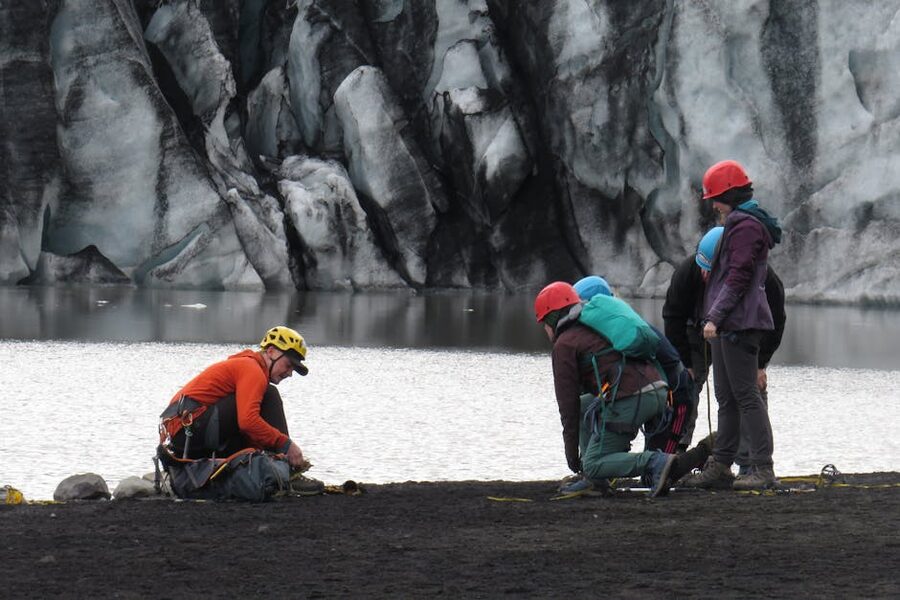
The technical gear comes with the tour. You don’t need to own or buy any of it.
- Crampons: the spiked frame that straps onto your boot. You’ll spend 5 minutes at the start being shown how they fit and how to walk in them.
- Ice axe: held like a walking stick on the easy tours, with the head pointing down the slope. On harder tours you learn the self-arrest position in case of a slip.
- Helmet: standard. Sits over a hat or beanie.
- Harness: only on the moderate and hard tours. The easy tour doesn’t use one.
- Rope: only on the hard tours where the group is roped together.
What you need to bring is the clothing and the boots.
Boots: sturdy, waterproof, ankle-high hiking boots that have been broken in. This is the one thing where it really matters. Crampons need a solid boot to grip on. Trainers, sneakers, soft-soled walking shoes, or fashion ankle boots will not work, and most operators will refuse you on the day if you turn up in the wrong footwear. They usually have rentals for around 1,500 to 2,500 ISK if you arrive without; book in advance because they run out in summer. If you’re buying for the trip, look for something rated B1 or B2 for crampon compatibility.
Layers: it’s cold on a glacier even in June. Thermal base layer, fleece or wool mid-layer, waterproof shell on top. Trousers should be quick-dry hiking pants, ideally with a waterproof outer for winter trips. Cotton is the worst material for glacier walking; once it gets wet it stays wet and you get cold fast.
Gloves: wool or fleece. The ice axe handle gets cold and your hands chill faster than the rest of you.
Hat: wool beanie. The helmet sits over it.
Sunglasses: not optional. UV reflects off the ice with surprising strength and you can get snow blindness on a sunny day in March without realising. Polarised lenses help. The guides will mention this; bring them.
Sunscreen: same logic. Even in winter on a clear day, your face will burn from UV bouncing off the ice. Especially relevant for the bridge of your nose and your forehead under the helmet.
Backpack: small daypack with water (1 litre), snacks, your camera, and a spare layer. The guide doesn’t carry your water for you.
What it actually feels like, hour by hour
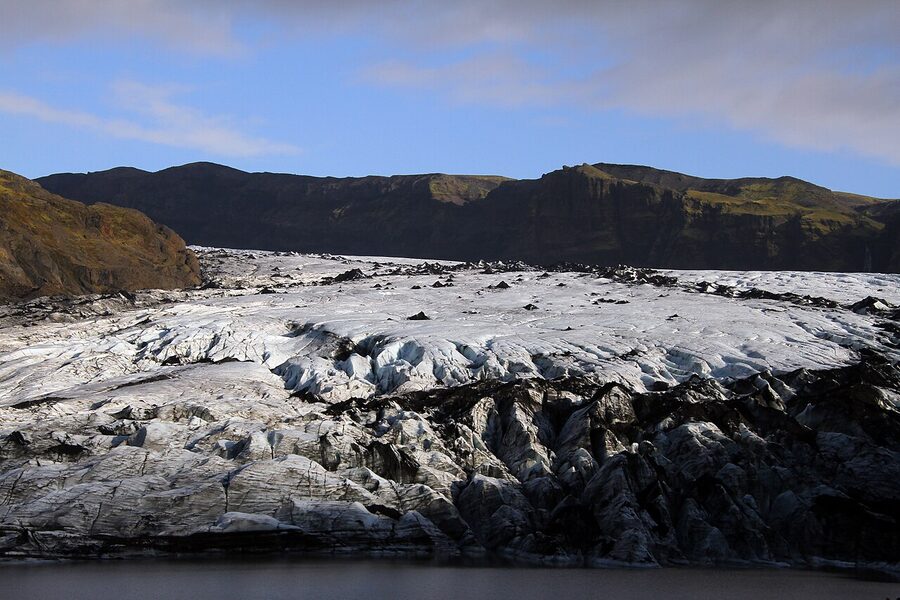
Here’s the rough shape of a standard 3-hour Sólheimajökull tour. Skaftafell is similar timing but the approach walk is slightly longer.
Hour 0 to 0:30, meet and approach. You arrive at the car park, find your guide (they’re wearing branded jackets and standing by a small hut or a minibus), sign a waiver, and start walking the 25-minute path to the glacier snout. The path is well-marked and slightly downhill. You pass the lagoon between you and the ice, which is where the snout used to reach.
Hour 0:30 to 0:50, gear-up. At the small shed near the snout, the guide hands out crampons, helmet, ice axe, and harness if needed. You’ll spend 15 minutes putting it all on with the guide checking every fitting. The crampons are the trickiest bit: the straps cross over the top of your boot and tighten with a buckle. Walking with them on grass or gravel is not graceful, but you only need to walk 50 metres before you’re on the ice and they start working properly.
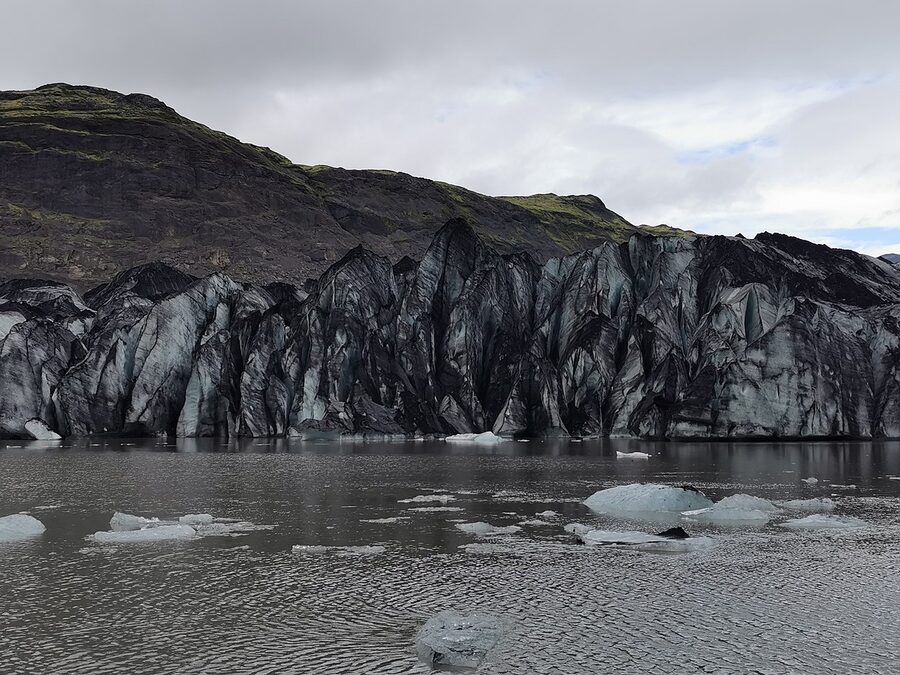
Hour 0:50 to 2:30, on the ice. The actual glacier walk. You go single file behind the guide at a slow steady pace, with stops every 15 to 20 minutes for the guide to point things out and for the group to take photos. You’ll see surface streams, ash bands (from the 2010 Eyjafjallajökull eruption mostly, on the South Coast glaciers), small crevasses you walk around, and at least one moulin where water disappears down a vertical shaft. The guide will let you stand near the edge of safe features and point out which ones to keep distance from. There’s usually a turnaround point about 800 metres up the glacier where the group has a longer photo break, then you retrace your steps.
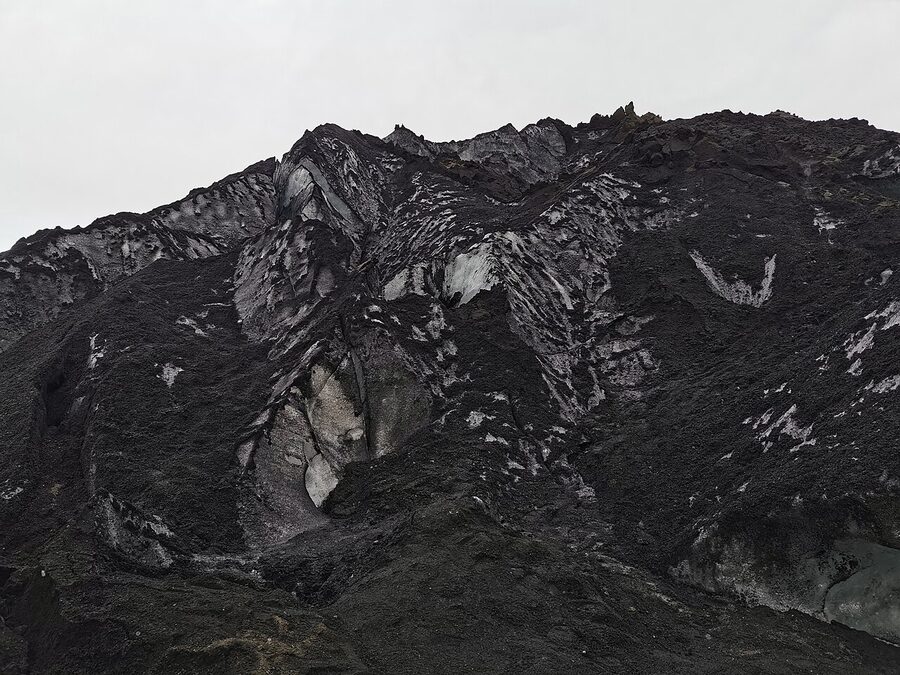
Hour 2:30 to 2:50, gear-down and walk out. Back at the shed, you take the crampons off (the guide helps), hand back the gear, and walk the 25 minutes back up the path to the car park. Your legs will feel slightly heavier than they did on the way in, but it’s not punishing.
What you take away: a few good photos, sore calves the next day if you don’t normally walk much, and a slightly different idea of what ice is. Most people I’ve taken out tell me the moulin is the bit that sticks. The blue is the bit they photograph. The walking on ice is the bit they post about.
The season: when to go
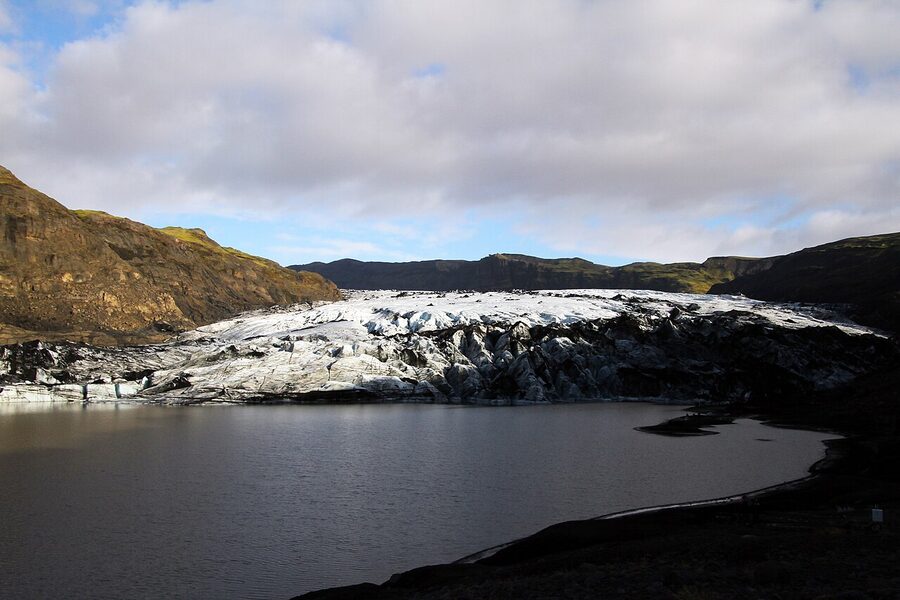
Tours run year-round on Sólheimajökull, Skaftafell, and Langjökull. The choice between summer and winter is mostly about what kind of glacier you want to walk on.
Summer (June to September). The classic season for glacier hiking. Long daylight (you can run a tour at 5pm in July), warmer air temperatures (single-digit to mid-teens Celsius on the ice itself), and the glacier surface is at its most active. Meltwater is flowing, surface streams are everywhere, the moulins are spectacular, and you can see the texture of the ice without snow covering it. The downside: the South Coast in July is busy, and you’ll share the glacier with five other groups at the same time at Sólheimajökull. Book a morning tour to dodge the lunchtime rush.
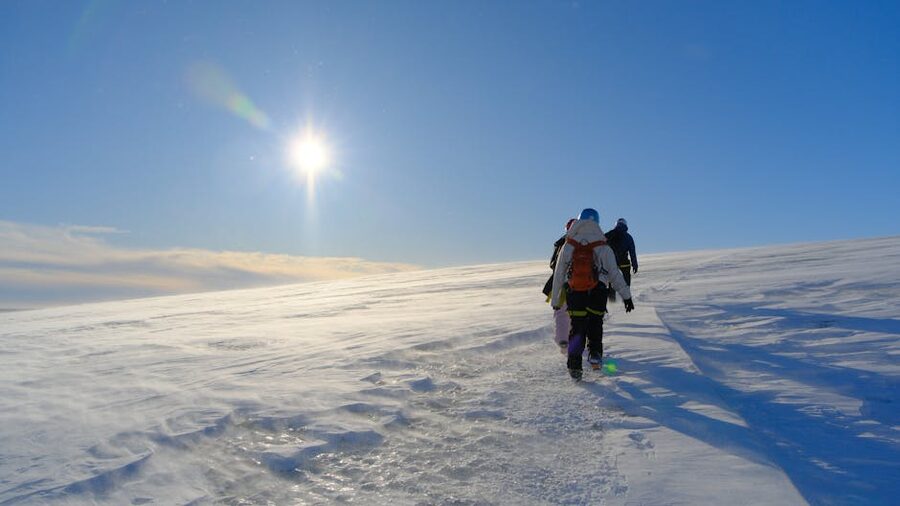
Winter (October to March). Shorter days, snow cover on the surface, and a different kind of beauty. The glacier sits under a layer of fresh snow much of the time, which softens the ridges and makes the colour palette more uniform. You don’t see the surface streams or the moulins as clearly because they’re snow-covered. The big winter advantage: you can pair the glacier hike with an ice cave tour on the same trip. Combo tours from the Vatnajökull operators are 25,000 to 32,000 ISK and they’re the smart winter booking. November and February are my favourite months for this. December and January are darker than people expect: the sun barely clears the horizon and your tour will fall in a 4 to 5 hour daylight window between 11am and 4pm.
Year-round. The standard Sólheimajökull, Skaftafellsjökull, and Langjökull tours run every month. Tours get cancelled on rare occasions for storms or extreme conditions, but the operators have refund or reschedule policies and they’ll let you know the day before if it’s looking iffy. Check en.vedur.is the night before any tour for weather, and road.is for road conditions if you’re driving yourself.
How to book and what it costs
There are three sensible ways to do this. Pick the one that matches the rest of your trip.
Self-drive plus glacier tour at the meeting point
You’re already renting a car, you’re driving the South Coast or the Ring Road, you book the glacier tour as a standalone (around 13,000 ISK at Sólheimajökull or Skaftafell) and meet the guide at the trailhead. This is the cheapest way and the most flexible. Total cost for two people: 26,000 ISK plus your car rental and fuel.
The catch is winter driving. If your tour is in December, January, or February and you’re not used to driving in snow or on icy roads, the self-drive option is more stressful than it needs to be. Route 1 is generally well-maintained and gets ploughed quickly, but conditions change fast and a sudden squall can drop visibility to ten metres for half an hour. If that worries you, take a day tour from Reykjavik with the driving included.
Day tour from Reykjavik with transport included
The Reykjavik-Sólheimajökull day tour is the most-booked glacier hike in Iceland. You’re picked up from your hotel between 8 and 9am, driven down the South Coast in a minibus (the driver-guide will stop at one or two waterfalls on the way for a quick photo), you do the glacier hike at midday, then drive back via the same route with another stop or two for lunch and the black-sand beach at Reynisfjara. You’re back in Reykjavik by 7 or 8pm. Cost is 18,000 to 22,000 ISK including pickup, transport, and the glacier portion. Book through Arctic Adventures, Troll Expeditions, or compare on GetYourGuide’s Iceland day tours and Viator’s Iceland page.
This is the route I’d suggest for first-time visitors who don’t want to drive in winter or who only have one free day. You see the South Coast classics, you do the glacier, and you don’t worry about driving.
Multi-day Reykjavik tour to Skaftafell
Two-day or three-day packages out of Reykjavik that overnight at one of the Skaftafell hotels and do the glacier hike on day two. Cost is 80,000 to 130,000 ISK per person depending on the hotel category and what’s included (some throw in an ice cave tour as well, which is the version I’d book in winter). Your operator handles the driving, the hotel, and all the tour bookings. Arctic Adventures and Troll Expeditions both run versions; Icelandic Mountain Guides have premium packages that bundle Falljökull rather than the easier Skaftafellsjökull.
This is what I’d book if I had 7 to 10 days in Iceland in winter and I wanted the glacier-plus-ice-cave combo without driving. The premium pays for itself in the cancellation flexibility (operators reschedule rather than cancel when weather closes the road).
Where to stay near the glaciers
If you’re doing Sólheimajökull on a day trip from Reykjavik you don’t need a hotel near the glacier; you sleep in town. For Skaftafell or any Vatnajökull hike, you’ll want a base in the southeast. The good options:
Fosshotel Skaftafell. Right next to the Skaftafell visitor centre, which means you can walk to the trailheads. Standard chain hotel, breakfast is fine, the building isn’t winning any architecture awards but the location is unbeatable for early-morning glacier tours. Doubles 32,000 to 48,000 ISK.
Fosshotel Glacier Lagoon. About 15 minutes east of Skaftafell, much closer to Jökulsárlón lagoon. Newer, larger, and the better hotel of the two if you’re combining a glacier hike with a lagoon visit. Solid breakfast, big rooms, the view from the dining room takes in the glacier on a clear morning. Doubles 38,000 to 55,000 ISK.
Hotel Höfn. In the town of Höfn, about 50 minutes east of Jökulsárlón. Further from the glaciers but you get a proper town with restaurants and a harbour, which is welcome after a day on the ice. Less expensive than the Foss properties (28,000 to 40,000 ISK) and a better choice if you’re staying two or three nights and want somewhere with options for dinner.
Hotel Vík í Mýrdal. In Vík, about 40 minutes from Sólheimajökull. Useful if you’re doing Sólheimajökull and you want to overnight on the South Coast rather than driving back to Reykjavik the same day. Modern, cosy, the rooftop has a view of the church on the hill. Doubles 35,000 to 50,000 ISK.
Photography
A few practical notes if you care about the photos.
Wide-angle is what you want for the broad glacier vistas. Anything from 14mm to 24mm full-frame equivalent will give you the dramatic context shots. A 35mm or 50mm prime is good for the texture close-ups (those bubbles, ridges, ash bands).
For moulin shots a tripod helps because you’ll want a longer exposure to capture the water dropping into the dark. Most operators don’t mind you carrying a small travel tripod. If you don’t have one, the smartphone Night Mode handles the low light pretty well.
Use a wrist strap on your camera. The single biggest risk on the glacier is dropping a phone or camera into a crevasse and never seeing it again. The wrist strap is non-negotiable; carry your phone in a zipped pocket between shots.
Best light: late afternoon in summer (sun comes from the side and lifts the texture), midday in winter (because that’s all the light you get). Overcast diffuse light reads the blue more strongly than direct sun.
If you’re after serious glacier photography, look at the dedicated Iceland photography tours which run multi-day glacier-focused itineraries with photography-trained guides who’ll wait while you set up properly. Better than trying to combine a standard glacier hike with serious photo work.
Safety: the bit you need to read
I’ll keep this brief and direct. Never walk on a glacier in Iceland without a certified guide. Not even a few metres onto the snout for a photo. Not even on a sunny day when the ice looks solid.
The reason is what’s under the surface. Crevasses (cracks in the ice that can be 30 metres deep) often have a thin snow bridge on top that looks like solid surface. Moulins drop straight down. Ice bridges over rivers can collapse. Surface lakes can break through. None of this is visible from above without training and equipment.
People die every year doing this. Most often they’re solo travellers who walked onto the snout for a photo and slipped into a hidden crack, or stepped onto an ice bridge that gave way. There was a fatality in 2019 at Sólheimajökull when a tourist’s foot broke through into a meltwater pocket and the cold water and inability to climb out did the rest. The reputable operators carry GPS, ice screws, ropes, first aid, satellite communicators, and full insurance because they need all of it. The cost of the tour is what pays for the rope team to come and get someone out if it goes wrong.
The safetravel.is site, run by ICE-SAR (Iceland’s volunteer rescue association), has good public guidance: safetravel.is. Read it before any outdoor activity here.
One more thing: listen to your guide on the day. If they tell you to step here, not there, do it. They’re not being precious; they read the glacier in real time and they know where the surface changed since yesterday’s group came through.
What I’d skip
A few opinions, take or leave them.
Cheap day tours that bundle the glacier hike with five other things in twelve hours. The glacier deserves a half-day of attention, not 90 minutes squeezed between Geysir and Reynisfjara. If a tour says “Golden Circle plus glacier hike plus Northern Lights” in the same package, it’s selling you a coach ride past three things rather than a glacier experience.
The photo-package upsell. Most operators offer a “professional photographer” package for an extra 8,000 to 12,000 ISK. The photos are fine but not great, and you take better ones with your own phone if you have any patience for setup. Skip it and use the saved money on a longer dinner in Reykjavik.
Booking your first ever glacier hike in winter as your first activity in Iceland. You’ll be jet-lagged, your fitness will be slightly off, and the dark and the cold will compound. Do it on day 3 or 4 of the trip when you’ve adjusted. If your timing only allows day 1 or 2, that’s fine, just take it slow.
The “extreme” branded tours that promise something the standard tour doesn’t deliver. The standard tour is plenty extreme for most people. The advertising photos are taken on the harder routes that you’re not on; if you want the actual ice climbing pose for the camera, book the moderate or hard tour and do it properly.
The “what I’d do” pick
Short trip, 3 to 5 days in Iceland, Reykjavik base. Book the Sólheimajökull day tour with Reykjavik pickup. Arctic Adventures or Mountain Guides for the operator. 18,000 to 22,000 ISK per person, full day, one less driving stress.
Ring Road or 7 to 10 days, summer. Self-drive to Skaftafell, stay one night at Fosshotel Skaftafell or Glacier Lagoon, do the Skaftafellsjökull or Falljökull hike with IMG. 13,000 to 16,000 ISK for the tour, 35,000 to 50,000 ISK for the hotel. Add a side visit to Jökulsárlón lagoon and Diamond Beach the same afternoon.
Winter, 7 days, want the postcard. Take a 2-day Reykjavik-Skaftafell package with combined glacier hike and ice cave at Vatnajökull. 80,000 to 120,000 ISK, includes overnight, transport, both tours. The combo is the strongest argument for going in winter.
If you’ve got the budget and you’re an experienced hiker, IMG’s longer Falljökull or Vatnajökull day tour is the better quality experience than the easy options. You spend more time on the glacier, smaller group, more attention from the guide, more time among the actual features.
One last thing
Glacier hikes are one of the few Iceland experiences that delivers exactly what the brochure promises. Real ice, real beauty, real adventure, kept safe by guides who do this every day. There’s no aurora-style “if conditions allow,” there’s no waterfall-tour standing-in-the-rain disappointment. You book it, you turn up with the right boots, you walk on a glacier. The blue is real. The crampons work. The moulin sound, the one you remember a year later, is real too.
If you want help slotting this into a wider trip, the day tour overview compares it against the other South Coast options, the tour roundup covers the multi-day packages, and the tour guides hub is where the rest of the deep-dives live. Þetta reddast.