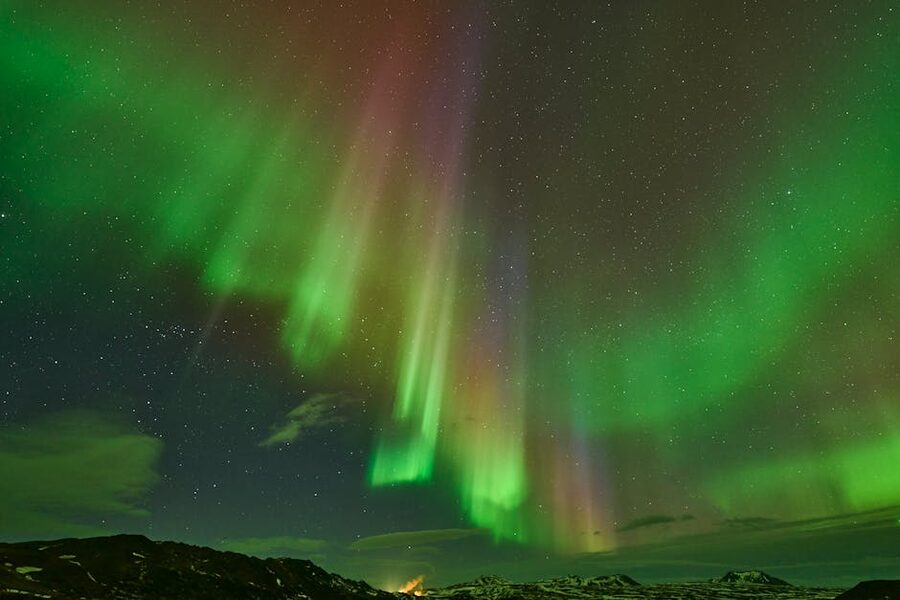
The first thing to know about chasing Norðurljós (northern lights) in Iceland is that they don’t owe you anything. Some nights they roll across the sky in great green ribbons that everyone in the village comes outside to watch. Other nights you stand in a freezing field at 11pm with a thermos of cocoa and see a faint smudge that might just be cloud. That gap, between the postcard and the reality, is the whole story of aurora hunting here. This guide is what I’d tell a friend who’s planning their first trip to see the lights, and what I’d add for a second-timer who got skunked the first round.
I’ll cover what the aurora actually is in plain language, when the season runs, how to read the vedur.is forecast that every Icelander uses, where to go from Reykjavik and from the South Coast, the tour categories worth your money and the ones I’d skip, what to wear so you can stay outside more than ten minutes, and the camera and phone settings that work. There’s a section on aurora hotels with wake-up calls if you want to outsource the worry, and a frank paragraph on what the lights actually look like to your eyes versus your camera. By the end you’ll know how to plan a trip that gives the aurora a fighting chance instead of a one-night gamble.
In This Article
- What the northern lights actually are
- When to come, month by month
- Reading the aurora forecast like a local
- What you actually need to see them
- Where to go from Reykjavik
- The South Coast and dark-sky bases
- Snæfellsnes and the Kirkjufell shot
- The North and the Westfjords
- Tour categories and what to expect
- Budget bus tours
- Small-group and private tours
- Photography-focused tours
- Boat aurora tours
- Hotels with aurora wake-up calls
- Hotel Rangá
- ION Adventure Hotel
- Hotel Skálakot
- Hotel Húsafell
- Silica Hotel at the Blue Lagoon
- Self-driving the aurora hunt
- Photography gear and settings
- Mirrorless or DSLR
- Smartphone
- Eyes versus camera, the truth
- What to wear
- Common mistakes, in roughly the order I see them
- What I’d actually do for a five-night trip
- What I’d skip
- One last thing
What the northern lights actually are
Without the science you’ll never quite understand the forecast, so here’s the version that fits in two paragraphs.
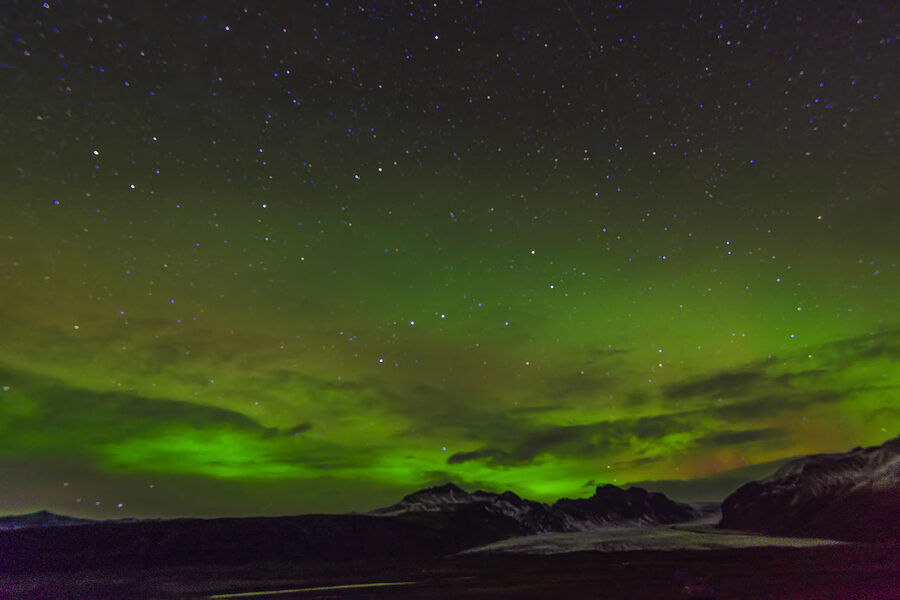
The sun throws charged particles into space all the time, and during big events called solar flares and coronal mass ejections it throws a lot more. When that solar wind hits Earth’s magnetic field, the particles get funneled toward the poles. They smash into oxygen and nitrogen high in our atmosphere, those atoms get excited, and when they settle back down they release light. Oxygen at lower altitudes glows green, which is what you see most of the time. Oxygen way up high glows red. Nitrogen produces blue and purple. The reason Iceland is one of the best aurora-watching places on Earth isn’t luck, it’s geography. We sit at about 64 degrees north, right under what scientists call the auroral oval, the ring around the magnetic pole where the lights tend to land.
The sun runs on roughly an 11-year cycle of activity. We just came out of solar maximum, which means activity is still elevated through 2026. That doesn’t make the aurora a guarantee, but it does mean the underlying solar weather is more active than it was five or six years ago, and the displays tend to be brighter and more frequent when conditions cooperate. None of this changes how you actually go about hunting them, but it’s useful to know that this is a good few years to come.
When to come, month by month
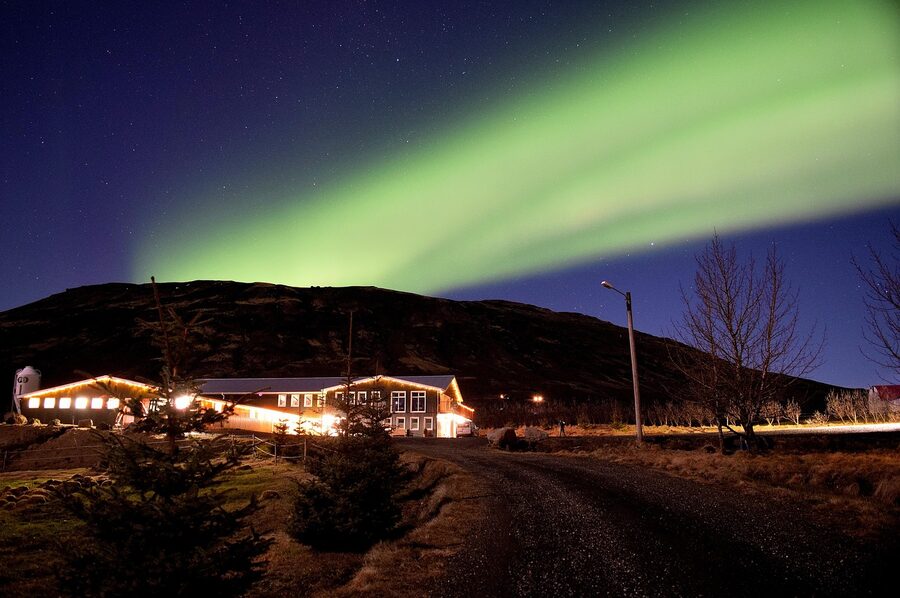
The official season is late August through mid-April. That’s when nights get dark enough that aurora is even visible. From mid-April to mid-August our nights are too bright (and in June there isn’t really a night at all), so the lights might be physically there but you can’t see them.
Within the season, not all months are equal. Here’s how I’d rank them, with the caveat that any given week can flip the script.
- October: My pick for first-timers. Nights are long enough (dark from about 7pm), but the deep winter weather hasn’t fully landed yet. Roads are usually open. There’s still autumn colour on the ground, which makes for better photos than pure white-on-black. Days are long enough to actually do daytime stuff too.
- February and March: The aurora-photographer favourites. Long, dark nights but the worst storms of midwinter are easing. Statistically, Iceland gets more clear nights in late winter than in November-December. By March the daylight is creeping back, so you can do glacier hikes and ice caves in the day and aurora at night without burning the candle at both ends.
- November and December: Maximum darkness (the sun barely scrapes the horizon by 3:30pm at solstice), but also our cloudiest, stormiest months. You can absolutely get lucky here, and combining it with Christmas markets in Reykjavik makes for a great trip even on bad-aurora nights, but the weather odds are the worst of the season.
- January: Similar to December for darkness, slightly more settled weather as the month progresses. Cold but reliable.
- Late August and September: Shoulder months. The aurora is real but faint because there’s still residual light in the sky for much of the night. Good if you’re combining with a summer-flavoured trip and want a chance, not your best bet if aurora is the only reason you’re coming.
- April: Same shoulder logic in reverse. The first half is still dark enough; by the back half you’re losing nighttime quickly.
The single biggest mistake I see is people booking a two-night trip in mid-December and being shocked when they don’t see the lights. Two nights is a coin flip on a good week and a guaranteed miss on a bad one. If aurora is the goal, give yourself five nights at minimum, ideally a full week, and you have a real chance of catching at least one strong display.
Reading the aurora forecast like a local
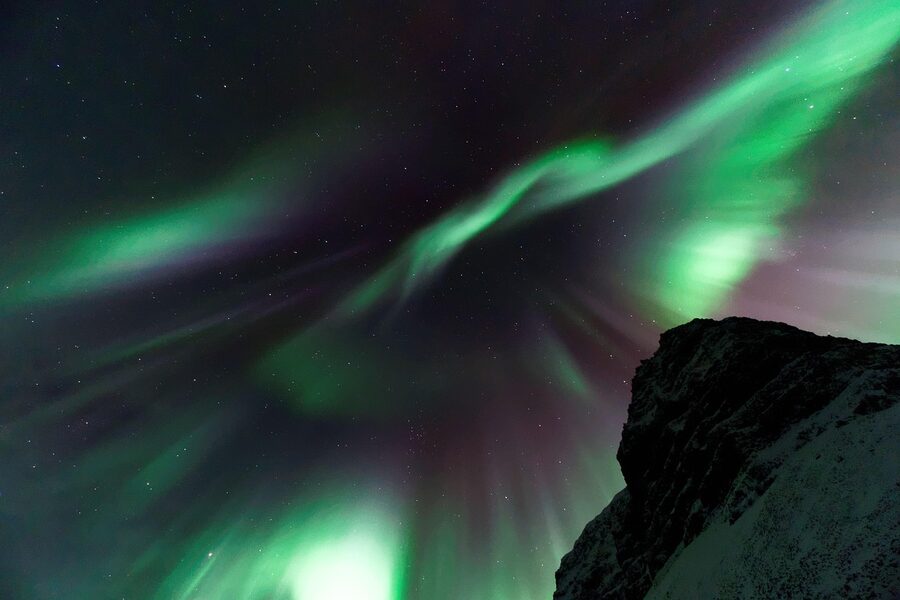
Every Icelander chasing the lights is checking the same source: en.vedur.is/weather/forecasts/aurora, the aurora forecast page from the Icelandic Met Office. It’s free, updated daily, and it tells you the two things that matter: cloud cover across the country, and the KP index for the next three nights.
The KP index runs from 0 to 9 and measures geomagnetic activity. Here’s the practical version.
- KP 0-1: Quiet sun. The aurora might be present but only as a faint glow on the northern horizon, if anything.
- KP 2: Faint aurora possible under perfectly dark skies. Don’t bother driving out unless cloud cover is dead clear.
- KP 3: The threshold. From most of Iceland, KP3 with clear skies gives you a real, visible display. This is the level where I’d commit to driving somewhere.
- KP 4: Bright auroras likely. Often visible even with some light pollution. The kind of night where Reykjavik suburb dwellers walk to the park.
- KP 5: Minor geomagnetic storm. Strong, multi-coloured aurora. Rare but not unusual through the season.
- KP 6: Vivid moving curtains, often filling the sky overhead, not just the northern horizon. A great night.
- KP 7: Intense, fast-moving aurora visible across most of the country and parts of mainland Europe. Once or twice a year.
- KP 8-9: Once-a-decade events. The whole sky goes neon and people in Italy start photographing it.
Here’s the thing nobody tells you: KP isn’t the only number that matters, and on a clear-sky night with KP3 from a properly dark location you’ll have a great experience. Cloud cover is the actual killer. The Met Office page shows a green-shaded map for cloud and white for clear, and what you’re hunting for is a white window somewhere reachable. Sometimes that means driving an hour east. Sometimes it means flying north to Akureyri because the south is socked in for a week.
I check the forecast around 6pm. If the KP is 3 or higher and there’s any clear-sky window, I start planning where to drive. If the whole country is grey and the KP is 1, I make hot chocolate and watch a film. The forecast only goes three days ahead, by the way. Anything claiming a 14-day aurora prediction is selling you something.
What you actually need to see them
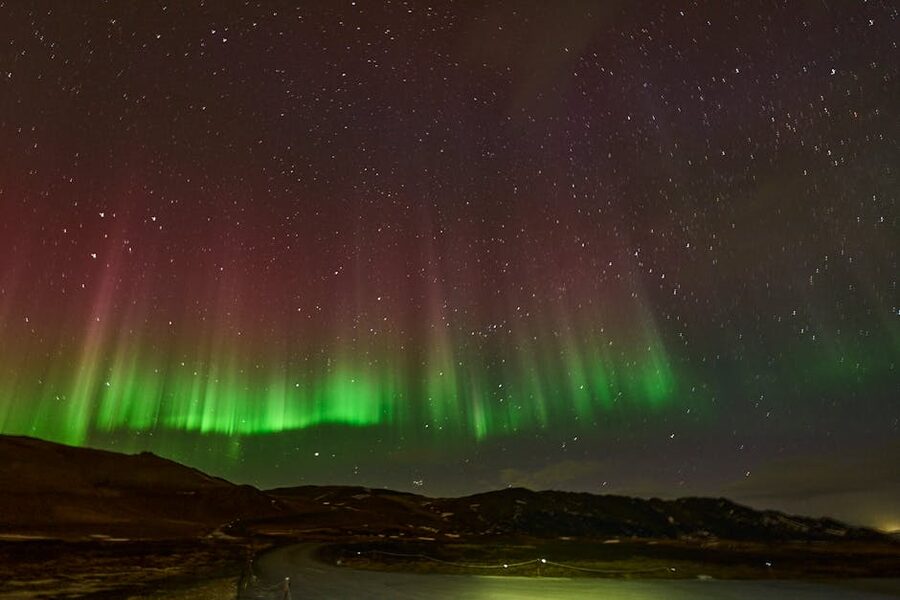
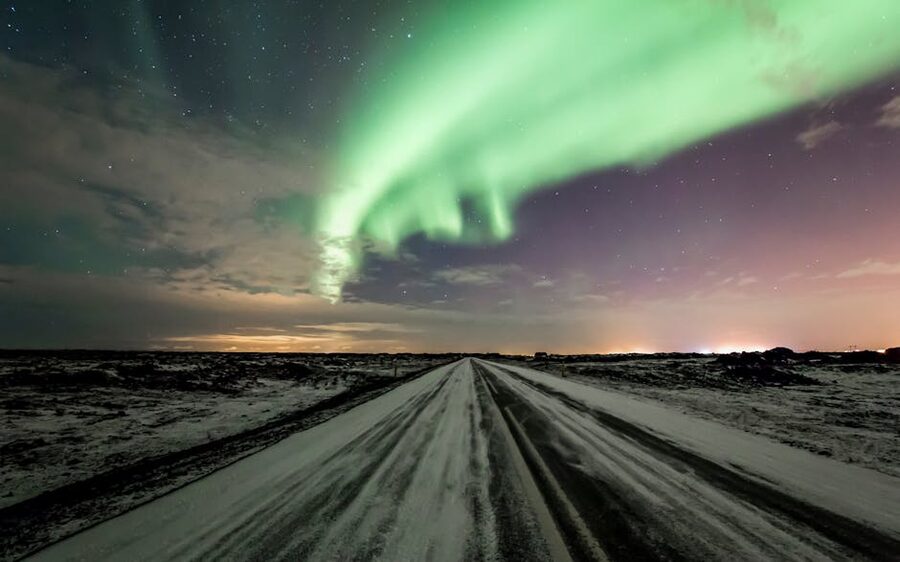
Three ingredients have to line up. Lose any one and you might as well stay in.
First, darkness. The aurora is invisible during daylight (it’s still happening, you just can’t see it against the sun). In Iceland that means roughly between September and April. You also need to be away from artificial light, which is where location comes in. Reykjavik isn’t a megacity but it has enough sodium glow to wash out anything below KP4 or so.
Second, a clear sky. Even the strongest aurora is invisible behind cloud. This is the variable that ruins more trips than anything else. Iceland is a windy island in the North Atlantic and weather changes by the hour, which is good news (a 6pm overcast can clear by 10pm) and bad news (a 9pm clear sky can fog out by 11). The trick is to be ready to move when a window opens.
Third, the aurora itself, which means a KP of around 3 or higher. From Iceland’s latitude, KP2 with perfectly clear dark sky might give you something on the northern horizon, but KP3 is when most people would call what they saw “the northern lights.” Above KP4 it gets genuinely dramatic.
Notice that two of those three are about geography and weather, not the aurora itself. That’s why the answer to “how do I see the northern lights in Iceland” is mostly “stay long enough that the weather has to break for you eventually, and have somewhere dark to go when it does.”
Where to go from Reykjavik
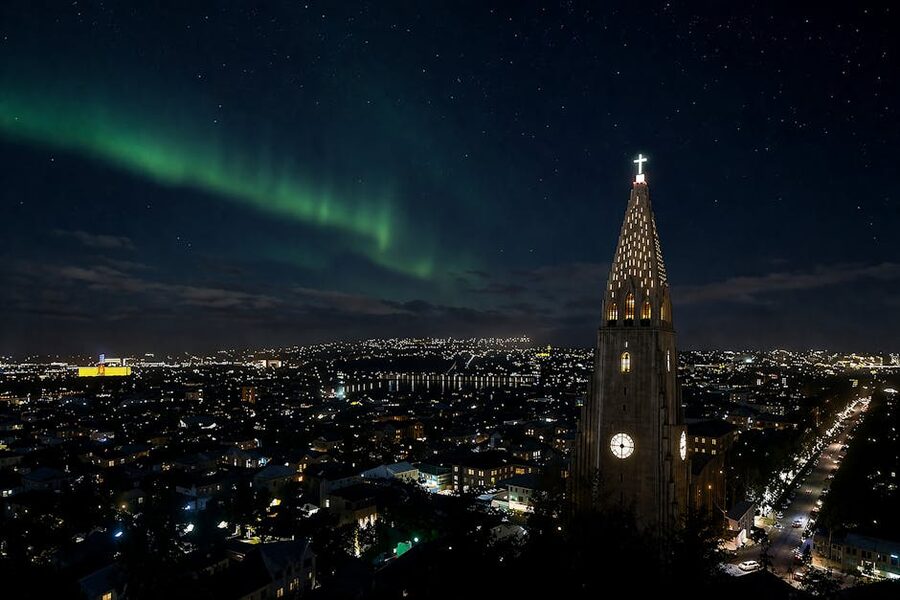
You don’t have to leave Reykjavik to see the lights, but you’ll see more if you do. Here are the spots I’d actually use, in order of effort.
Grótta lighthouse sits on the western tip of the Seltjarnarnes peninsula, about a 35-minute walk from downtown or 10 minutes by car. There’s no streetlight near it, you face west and north over the open Atlantic, and on a clear KP3+ night you’ll see plenty. Park near the Eiðisgrandi pool and walk the last bit. Watch the tide; the causeway floods at high tide and people get cut off (we have to rescue tourists every winter, please don’t be one).
Öskjuhlíð hill, where the Perlan dome sits, is wooded enough on the back slopes to block some of Reykjavik’s lights. Drive up, park, walk into the trees on the north side. Less dramatic than Grótta but easier if you’re staying centrally.
Heiðmörk nature reserve is 25 minutes south of the city centre. Genuinely dark, lots of pull-offs, no facilities at night so bring everything you need. Best spot near Reykjavik that’s still close enough to do on a hunch when the forecast suddenly improves.
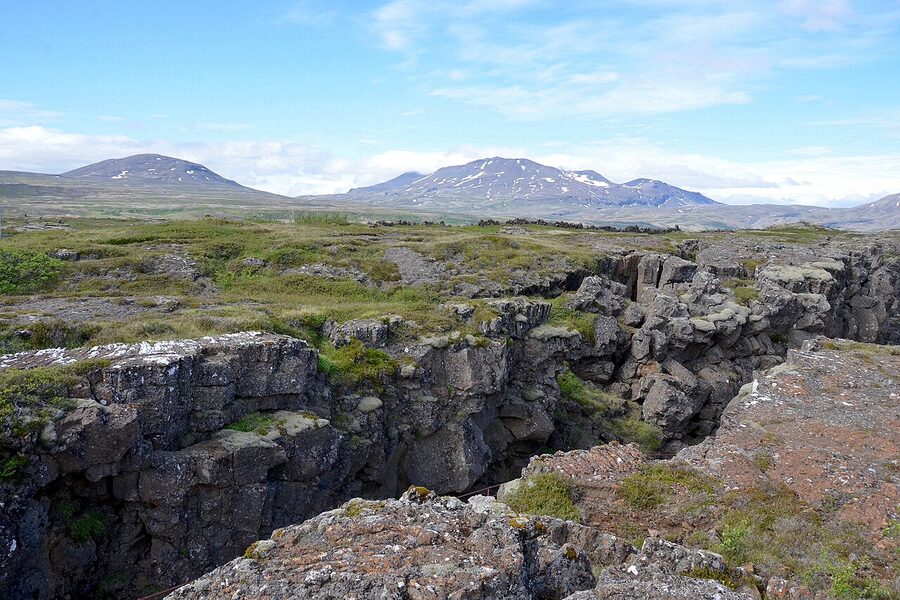
Þingvellir National Park is 45 minutes east. This is my favourite within easy reach because the foreground is spectacular even before the lights show, and the sky over Þingvallavatn lake is huge. Park at the visitor centre lot.
The Reykjanes peninsula south of the airport has plenty of dark coastline. If your flight lands at Keflavík and you have a rental car waiting, you can essentially aurora-hunt on the drive in, weather permitting.
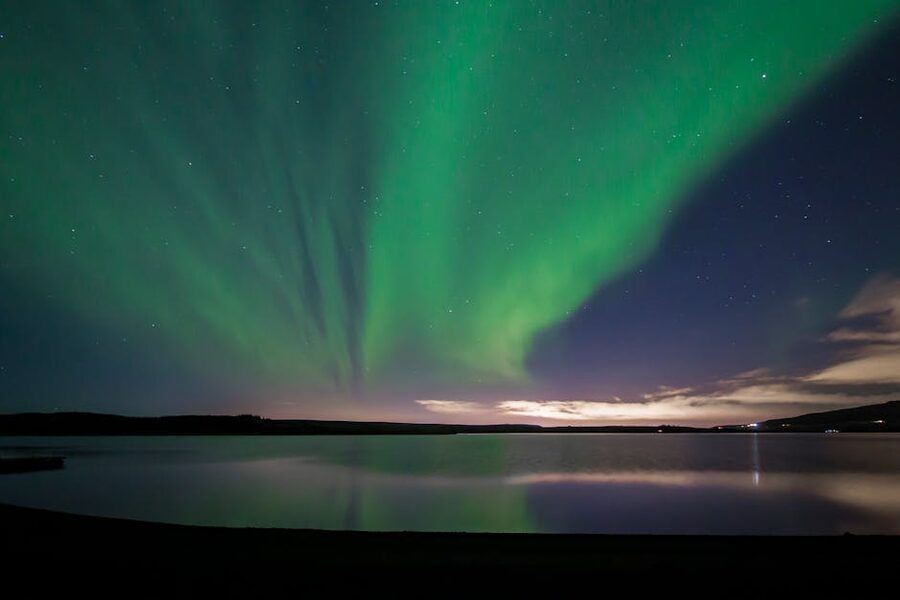
One quick disappointment to head off: the Blue Lagoon. The classic shot of someone in the silica water with green sky overhead is a thing, but it relies on a strong KP night plus the lagoon’s own lights being kind. Most nights at the Blue Lagoon you’ll be in lovely warm water under cloud or under a normal night sky. If you book it specifically for aurora you’ll often be disappointed. Book it because soaking in geothermal water is great, and treat any aurora you happen to see as a bonus. The Blue Lagoon also runs a Northern Lights Bar package if you want to try the combination, but my real take is that the lagoon is at its best in late afternoon when steam meets winter light, not at midnight under (probable) cloud.
The South Coast and dark-sky bases
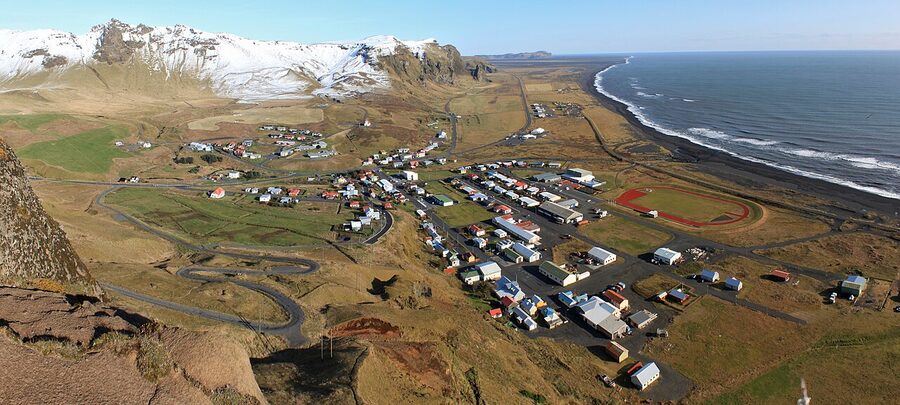
If you want to maximise your odds, sleep outside Reykjavik. The South Coast runs from the Reykjanes peninsula all the way to Höfn, with countless lay-bys, viewpoints and dark farms. Three areas I’d specifically recommend.
Hella and Hvolsvöllur, about 90 minutes east of Reykjavik on Route 1, are quiet farming towns surrounded by dark land. This is where Hotel Rangá sits, the most aurora-focused hotel in the country (more on hotels below). The Hekla volcano area and the foothills of Eyjafjallajökull give you huge horizons.
Vík and Reynisfjara, two and a half hours from Reykjavik. Vík has maybe 700 people in it, the surrounding land is dark, and Reynisfjara’s black sand beach plus the Reynisdrangar sea stacks is the most photographed foreground in Iceland for a reason. A word of caution at Reynisfjara: the sneaker waves there are deadly. People die at this beach almost every year. Stay well back from the waterline at all times, and never turn your back on the surf.
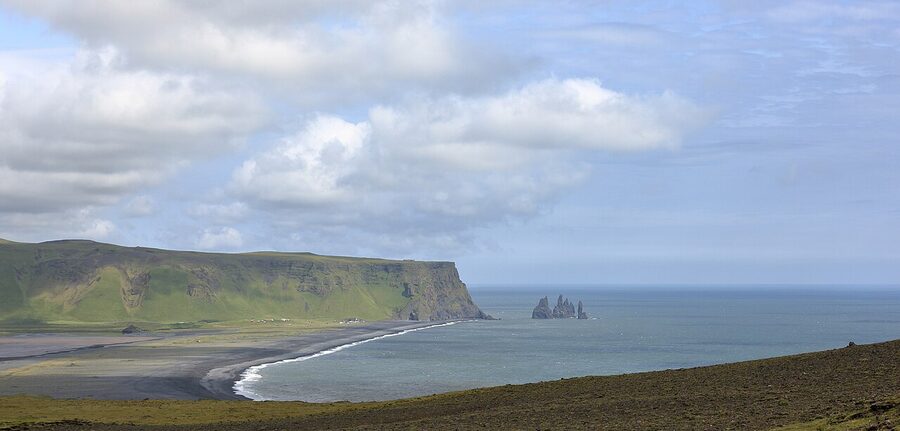
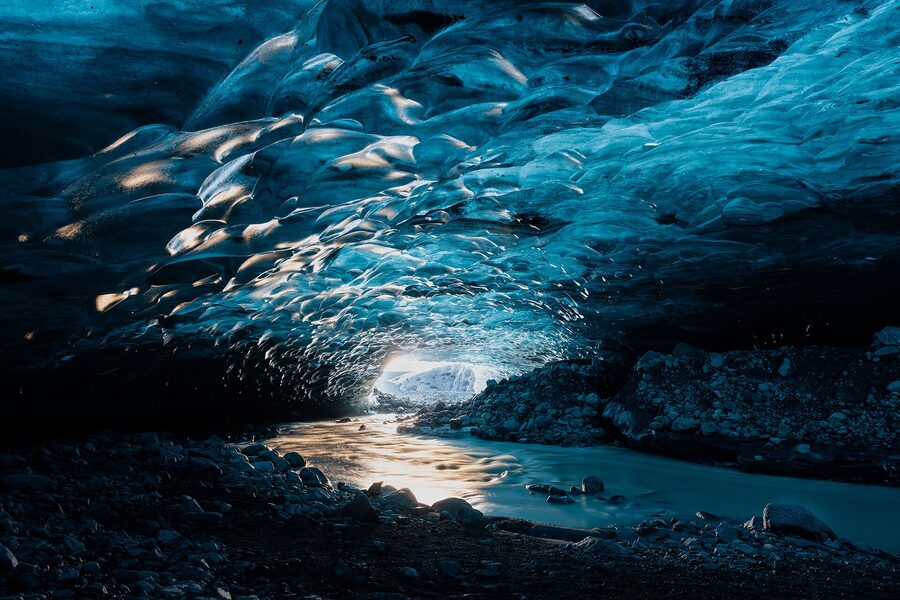
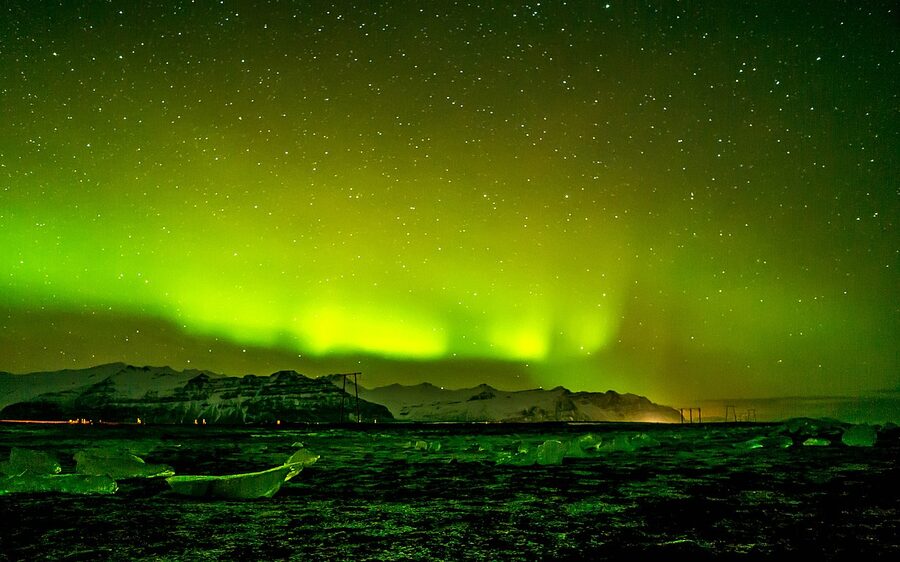
Skaftafell and Jökulsárlón, four to five hours from Reykjavik. The glacier lagoon at Jökulsárlón might be the best aurora foreground in the country, because the icebergs catch the green light and reflect it. It’s a long drive but if you’re already going for an ice cave tour, time it for a strong KP night and you have something special.
Snæfellsnes and the Kirkjufell shot
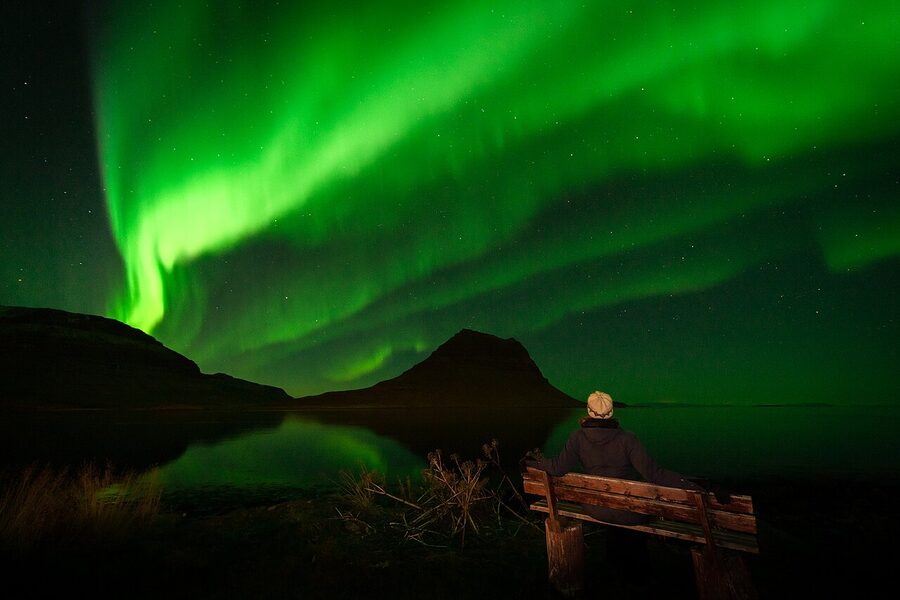
If you’ve Googled “aurora Iceland” you’ve seen Kirkjufell mountain with green ribbons over it, often with the small Kirkjufellsfoss waterfall in the foreground. That photograph is not a one-off; the location is genuinely that good when conditions cooperate. Kirkjufell sits on the north coast of the Snæfellsnes peninsula, two and a half hours from Reykjavik. The classic angle is from the small parking lot just off Route 54 by the waterfall, looking north toward the mountain.
Realities to manage: every night with even a hint of aurora forecast, that parking lot fills with photographers. You’ll be shoulder to shoulder with tripods. The location works because the mountain points roughly north, which is where the auroral oval sits, but it doesn’t mean every night will deliver the postcard. And you really do need to be there for the moment, the dance can last fifteen minutes and then be done.
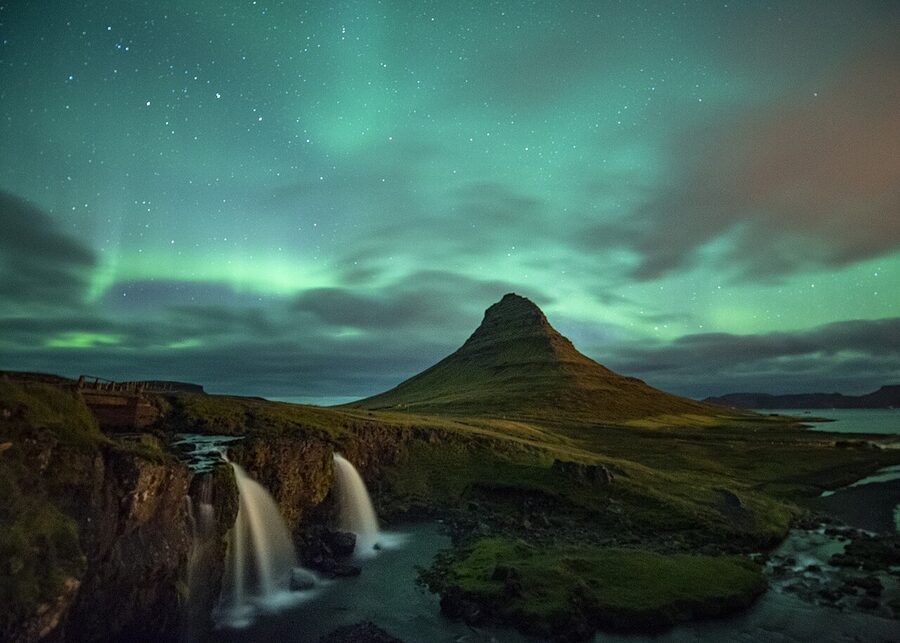
Snæfellsnes generally is one of the underrated aurora regions. Less traffic than the South Coast, dark coast in every direction, and the option to base in Stykkishólmur or Grundarfjörður and hunt outwards.
The North and the Westfjords
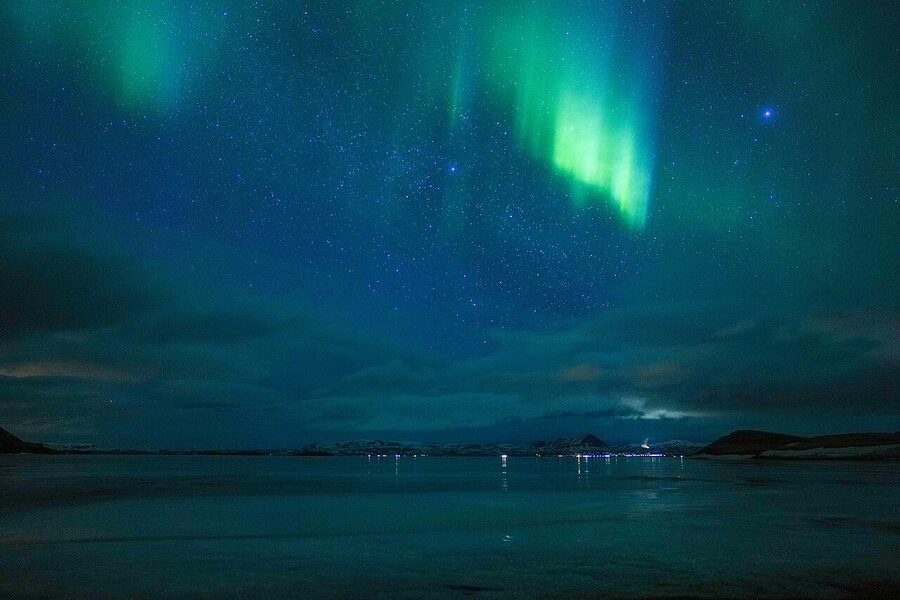
Two undersung options for serious aurora chasers.
Akureyri and the Mývatn area in north Iceland. You can fly Reykjavik-Akureyri in 45 minutes (Icelandair operates the route, currently around 25,000 ISK return when booked ahead). The north sits in a partial rain shadow and statistically gets more clear nights through midwinter than the south. From Akureyri you can drive 90 minutes to Mývatn, which has dramatic geothermal foregrounds, the Goðafoss waterfall en route, and the Mývatn Nature Baths if you want geothermal water plus aurora-hunting in one trip.
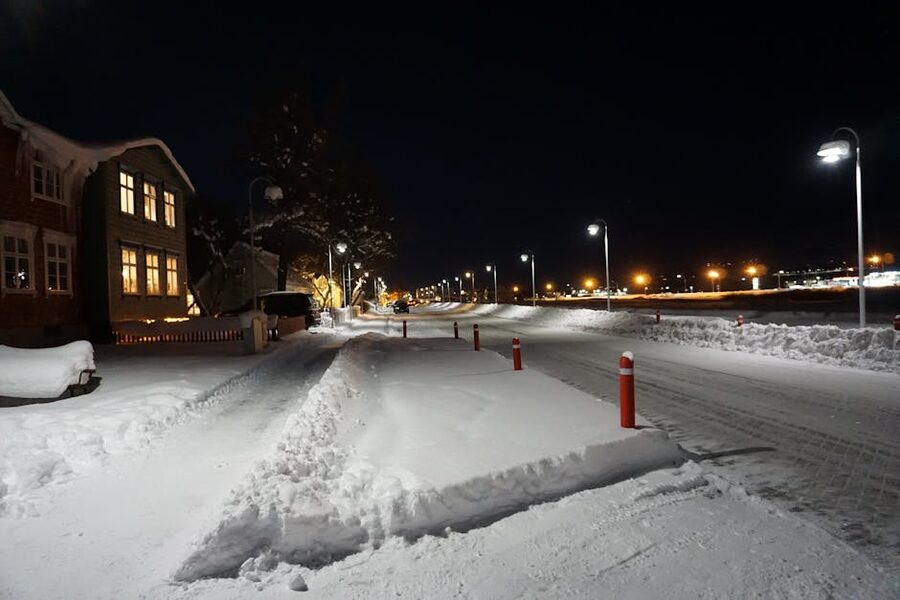
The Westfjords. If you have a week and a serious aurora obsession, this is where to go. Fewer roads, fewer people, fewer light sources. Ísafjörður is the main town. Roads can close in winter without warning so you need to be flexible and check road.is daily. This is not a first-trip recommendation, but for a return visit it’s where I’d go.
Tour categories and what to expect
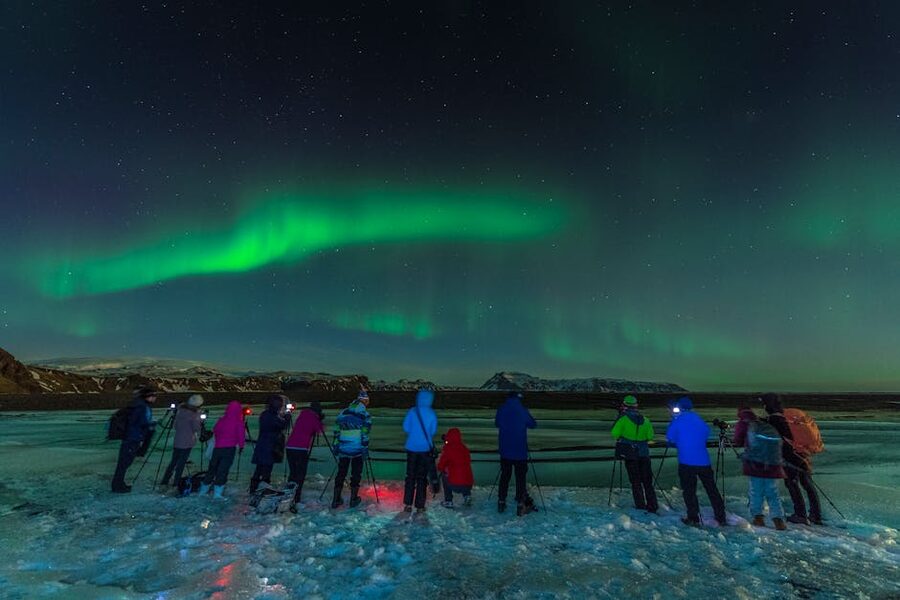
Roughly four categories, with different price points and trade-offs.
Budget bus tours
Operators like Reykjavik Excursions, Gray Line and Iceland Travel run nightly aurora coaches for around 12,000 to 18,000 ISK per person. You leave Reykjavik in a 50-seat bus around 8 or 9pm, drive 30 to 60 minutes to a known dark spot, wait around for a few hours, drive back. Most operators offer a free re-try if you don’t see anything, which is the genuinely good part of the deal because it means you can chase the lights across multiple nights for one ticket.
The real take: you go where the bus goes. If there’s a clear-sky window 90 minutes away the bus probably won’t reach it. You’re with 40 other people whose phone screens light up the area, and you don’t get a lot of choice over location. For a first night out it’s a fine, low-commitment option. I wouldn’t make it your only attempt.
Small-group and private tours
Around 25,000 to 50,000 ISK per person. Operators include Reykjavik Sightseeing, Hidden Iceland, and several others. Vehicles are 8 to 15 seats, guides actively chase clear sky rather than just driving to the same lay-by every night, and you usually get hot drinks and pastries. Better photography help. Worth the upgrade if it’s your one and only night and you want to maximise odds.
Photography-focused tours
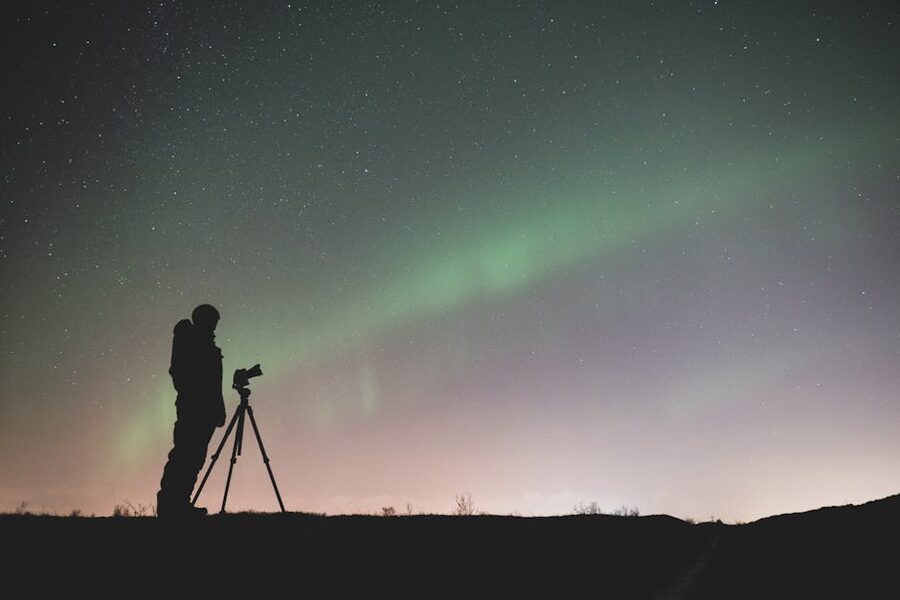
From around 70,000 ISK per person per night and up. Photographers like Iurie Belegurschi run Iceland Photo Tours, which spawned an entire local industry. You’re paying for a small group (often just six to eight), a guide who is also a working aurora photographer, on-the-spot tuition, and access to less obvious locations. Worth it if you’re a hobbyist photographer who wants to come home with the postcard. We have a deeper piece on photography tours of Iceland if you want to go down that rabbit hole.
Boat aurora tours
Elding runs the most established aurora boat trip out of Reykjavik harbour, around 13,000 ISK. You leave the city’s light pollution on the water, the dark sea makes a huge clean reflector for any aurora you do get, and you’re back in two and a half hours. It’s a different experience to a land tour, more atmospheric. The trade-off: if conditions are rough you’ll be cold and possibly seasick. Worth doing once if you have the nights.
For a wider selection of bookable tours, GetYourGuide’s Iceland page and Viator’s Iceland page aggregate most of the operators in one place. We list the day tours we’d actually take in our best day tours from Reykjavik piece.
Hotels with aurora wake-up calls
The best move for a serious aurora trip is to base outside Reykjavik at a hotel that does aurora wake-ups. Staff watch the sky, and when a display starts they call your room or knock on the door. You roll out of bed, grab the warm clothes you laid out, and you’re shooting in fifteen minutes. Worth the premium if your trip can stand it.
Hotel Rangá
The aurora hotel in Iceland, full stop. Sits in countryside near Hella, 90 minutes from Reykjavik. On-site observatory, themed suites, geothermal hot tubs out back facing huge dark sky. Wake-up service is part of the package. Nightly rates are not cheap (count on 60,000 to 90,000 ISK per night in season), but it’s a destination in its own right. Check rates on Booking.com.
ION Adventure Hotel
Built into a lava field at Nesjavellir, near Þingvellir. Sleek architectural design, infinity geothermal pool with sky views, and a very specific dramatic location. The hotel is sometimes listed under its older name Fosshotel Hengill. Around 50,000 to 80,000 ISK per night. Check rates on Booking.com.
Hotel Skálakot
A small horse-farm hotel under Eyjafjallajökull. Quiet, dark, intimate (only a handful of rooms). Around 40,000 to 60,000 ISK per night. Check rates on Booking.com.
Hotel Húsafell
West Iceland, in the Borgarfjörður region near Langjökull glacier. Geothermal hot pots, contemporary design, surrounded by lava field and mountain. Around 45,000 to 70,000 ISK per night. Check rates on Booking.com.
Silica Hotel at the Blue Lagoon
If you want to combine the Blue Lagoon experience with aurora-watching, the Silica is the boutique sister property and has its own private mini-lagoon. Stays include lagoon access. Around 80,000 to 120,000 ISK per night. Check rates on Booking.com.
Bubble hotels (Bubble Lodges, the Buubble brand) are another option if you want to fall asleep watching the sky through a clear plastic dome. Smaller, more rustic experience, often around 35,000 to 55,000 ISK per night.
Self-driving the aurora hunt
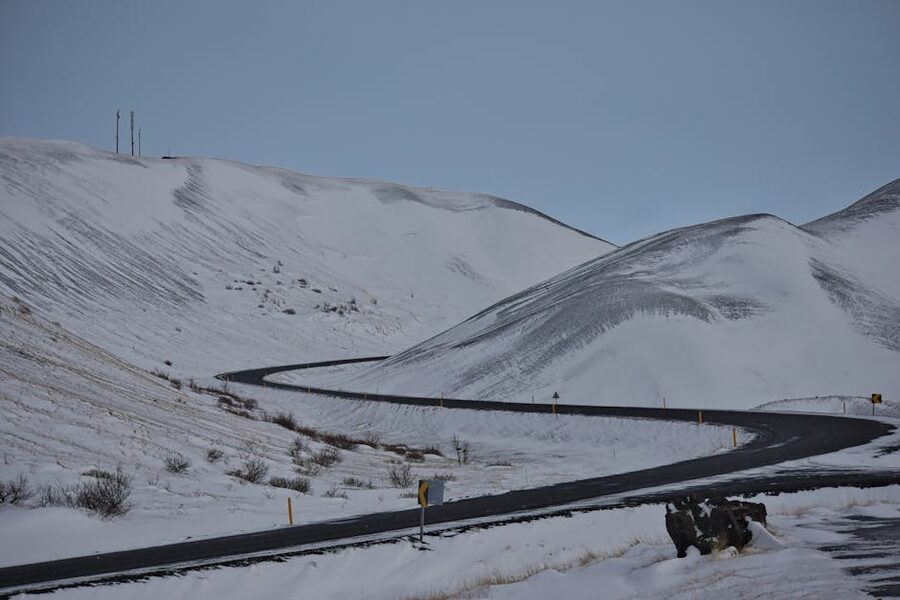
This is what most experienced aurora chasers eventually do. Rent a car, check vedur.is at 6pm, drive to wherever the cloud cover map shows clear, pull off the road, set up, wait. The advantages over a tour: total flexibility, no group, no pressure to leave at midnight when the sky is finally clearing, and the ability to chase a clear-sky window the bus tours can’t reach.
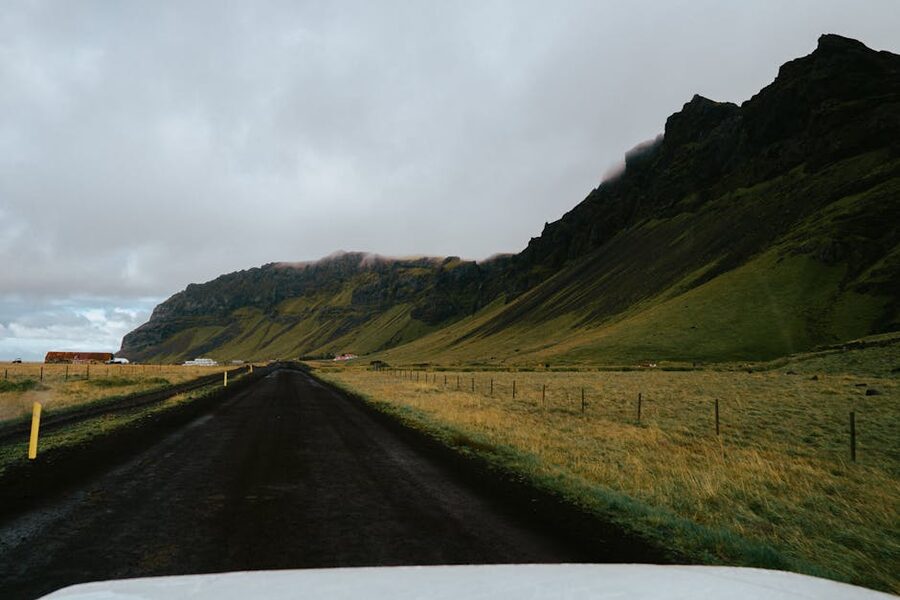
The trade-offs are real. Winter driving in Iceland is not summer driving anywhere else. Roads can ice over in an hour. Wind can rock your car. There is no street lighting outside towns, so finding pull-offs in the dark is harder than you’d think. You need a 4WD with proper winter tyres (in Iceland, factory-fitted studded tyres in winter, not all-seasons), insurance that covers gravel and ice, and an eye on the road conditions at road.is and weather at vedur.is. The Icelandic safety body keeps an info site at safetravel.is that’s worth a read before any winter driving here.
Practical things I do on a self-drive aurora night:
- Fill up the tank before sunset. You don’t want to be hunting fuel at midnight in winter.
- Pre-pick three potential spots within an hour of the base, with map pins saved offline.
- Bring a thermos of hot drink. Cold hands stop working sooner than you’d expect.
- Park facing back toward home. If conditions deteriorate, you want to drive out, not turn around.
- Don’t park in the road. Use proper pull-offs only. Tourists getting hit by trucks while photographing aurora is a real and recurring tragedy here.
If you’re set on self-driving, our guide on renting a car in Iceland covers the practical stuff in detail. Þetta reddast (it’ll work out) but only if you’ve stacked the odds in your favour.
Photography gear and settings
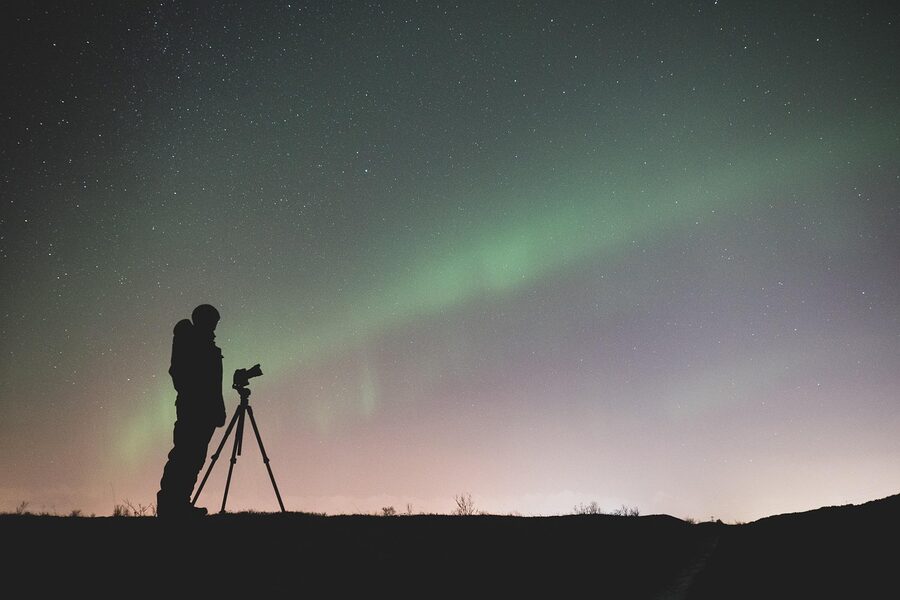
You can absolutely photograph the aurora well, and you can do it on a phone. Here’s what each setup actually needs.
Mirrorless or DSLR
- Tripod: Essential. Any sturdy travel tripod works. Don’t try to brace against rocks; the wind in Iceland in February will shake whatever you’re leaning on.
- Lens: Wide angle, 14mm to 35mm full-frame equivalent. Fast aperture matters more than sharpness. f/2.8 is ideal, f/4 is workable, anything slower than f/4 will struggle.
- Settings starting point: ISO 1600, f/2.8, 8 to 15 second exposure, manual focus to infinity (turn off autofocus, you’ll hunt forever in the dark).
- Focus trick: Before the aurora arrives, while there’s still some twilight, autofocus on a distant feature, then switch to manual and tape the focus ring so it doesn’t slip.
- Test and adjust: Shoot a 10-second test, look at the playback, adjust ISO down if blown, exposure up if dim. This “trace and review” loop is how everyone dials in.
- Battery life dies fast in cold. Carry two spares, kept inside your jacket pocket against your body.
Smartphone
Modern phones handle aurora better than people expect. iPhone 11 onward and Pixel 6 onward both have decent night modes that can hold a 30-second exposure. Same logic applies: you need stability. Rest the phone on a wall, prop it against a backpack, or buy a small travel tripod with a phone clamp for under 5,000 ISK at any Reykjavik camera shop.
On iPhone, open Camera, tap Night Mode (the moon icon), and slide it to maximum (usually 30 seconds at a tripod-stable rest). On Pixel, switch to Astro mode, which appears in Night Sight when the phone detects very low light. Both will surprise you.
Aurora apps worth installing: Hello Aurora (community-sourced sightings plus forecast), My Aurora Forecast (KP and cloud cover with notifications), Aurora Forecast 3D (visualises the auroral oval position).
Eyes versus camera, the truth
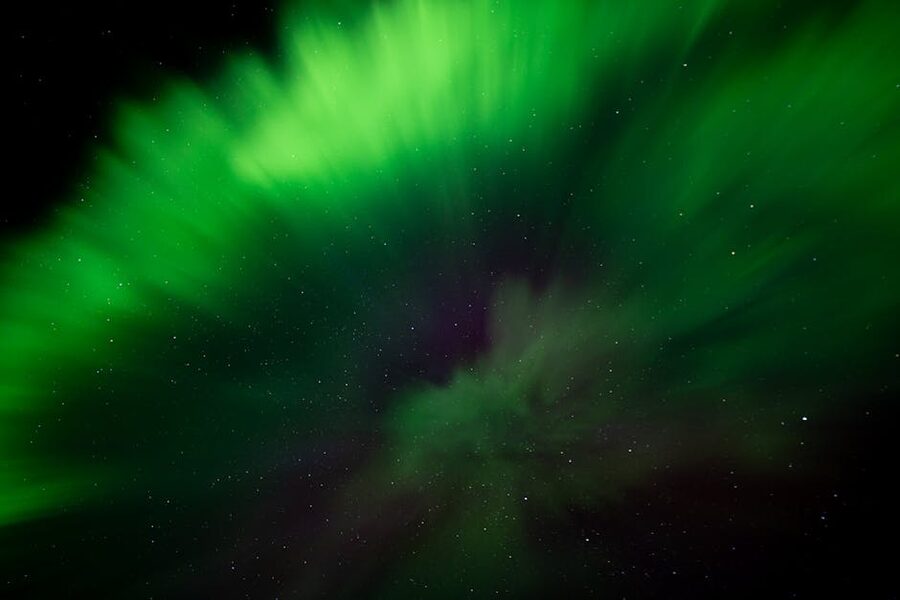
Probably the most important paragraph in this whole guide. The aurora photos you’ve seen on Instagram are taken with cameras that can stack ten or fifteen seconds of light into one image. Your eyes can’t do that. They see what’s there in real time.
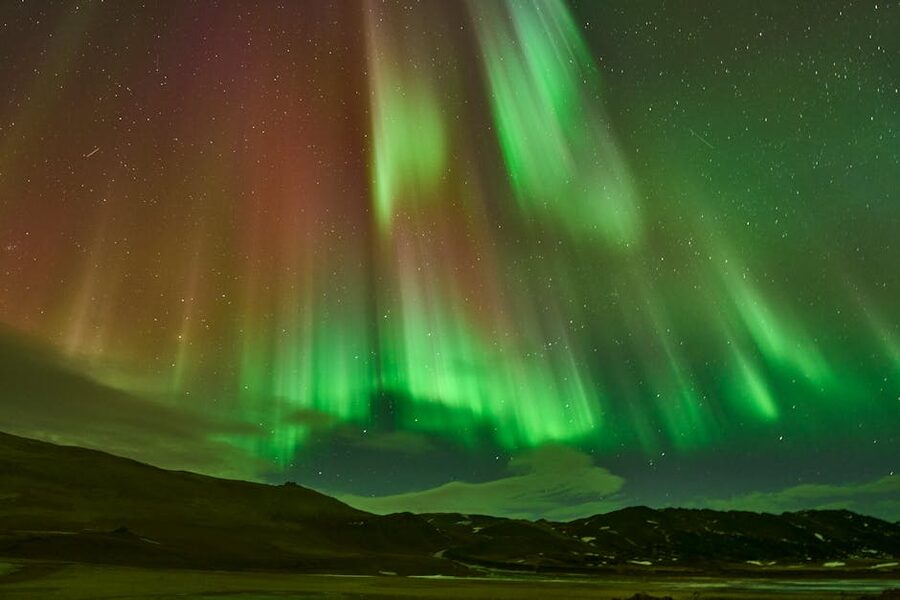
What you actually see at KP3 with clear skies: a milky grey-green glow on the horizon, sometimes a faint ribbon, slow movement that you might mistake for cloud at first. It’s pretty, but it’s gentle. You’ll think “is that it?”
What you see at KP4 to 5 with strong activity: clear green colour, visible curtain shape, slow waving movement across the sky. This is what most people picture when they think “aurora.” Maybe one in three nights through the season delivers this.
What you see at KP6+: actual neon green and pink, fast-moving curtains overhead, the sky genuinely dancing. You don’t need anyone to point them out. Once a week to once a month through the season.
The photos look more dramatic than the reality unless you happen to be there for a once-in-a-trip storm. That’s not because the photos are fake (they’re not). It’s because cameras and eyes work differently. Knowing this in advance makes the experience better, not worse. You go in expecting “wow, that’s pretty and faintly weird” and you’re delighted with anything more.
What to wear
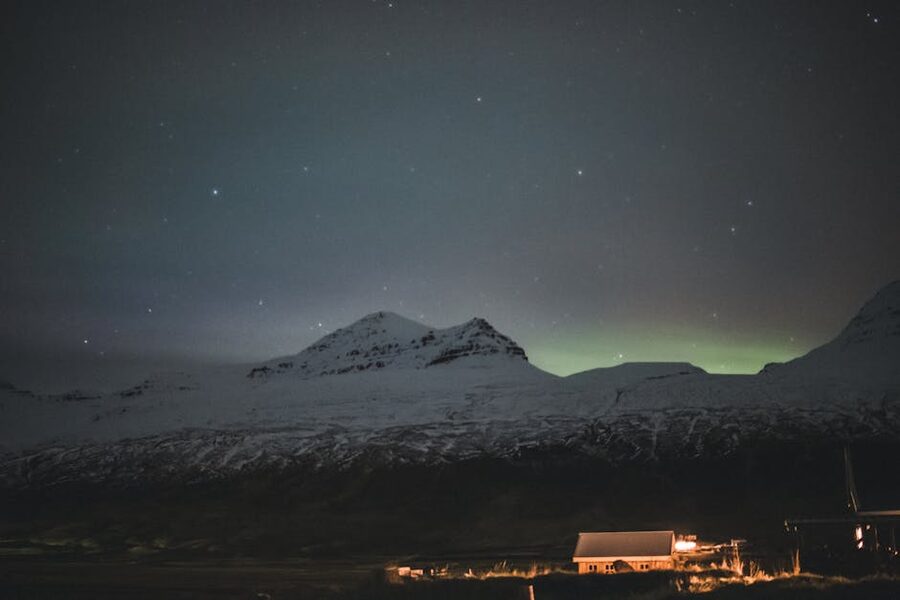
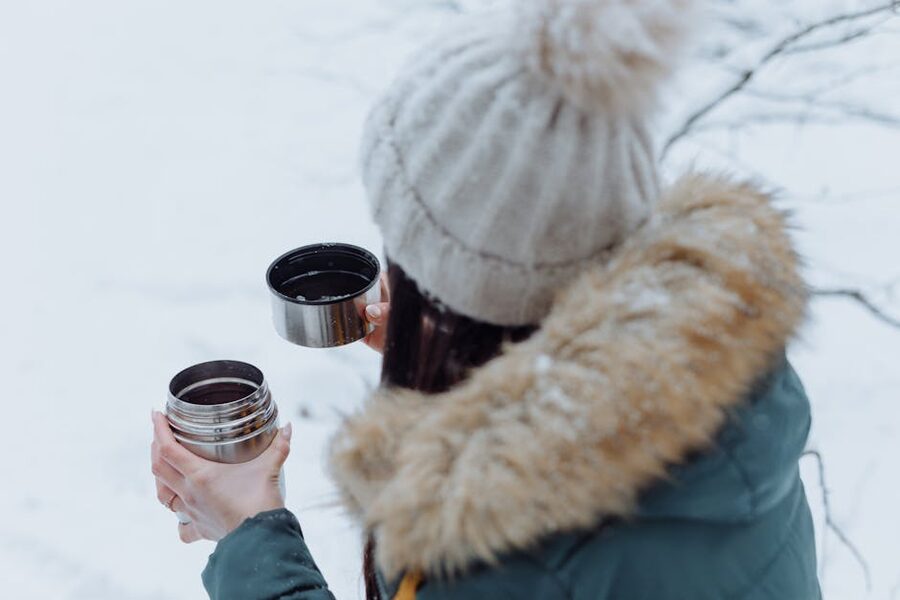
Aurora hunting is mostly standing still. That’s a different problem from hiking, where you generate heat. You need to be warm enough to stay outside for two hours without moving much, in temperatures often below freezing and with wind that can hit 60 km/h.
The setup that works:
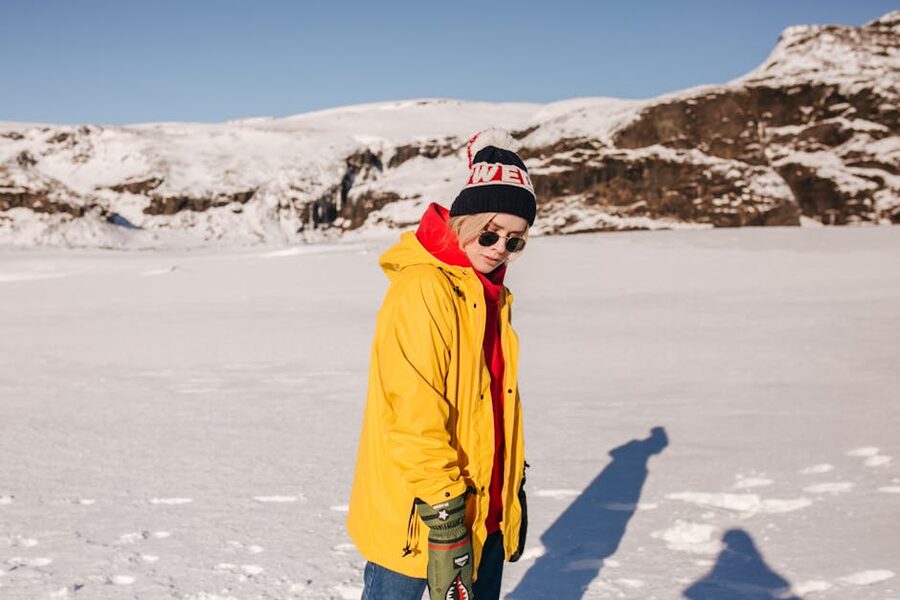
- Base layer: Merino wool or synthetic, top and bottom. Cotton is the enemy.
- Mid layer: Fleece or thin down for warmth.
- Outer layer: Windproof, ideally waterproof. The wind in Iceland is the thing that gets you, not the air temperature.
- Trousers: Insulated or layered. Thin base layer plus regular trousers plus waterproof shell trousers if it might rain.
- Boots: Insulated, waterproof, with grip. Most parking-lot aurora viewing is on icy ground.
- Gloves: Two pairs. A thin liner glove for camera work and a thick mitt over the top for between shots. Bare fingers on a metal tripod in February will cost you skin.
- Hat and neck buff: Both. Most heat loss is from the head and neck.
- Hand warmers: Cheap, sold at every petrol station, lifesaving on a 2am hunt.
If you’re flying in light, plenty of Reykjavik outdoor shops rent cold-weather gear by the day or week. 66°North and Icewear are the Icelandic brands worth looking at if you want something that lasts past the trip.
Common mistakes, in roughly the order I see them
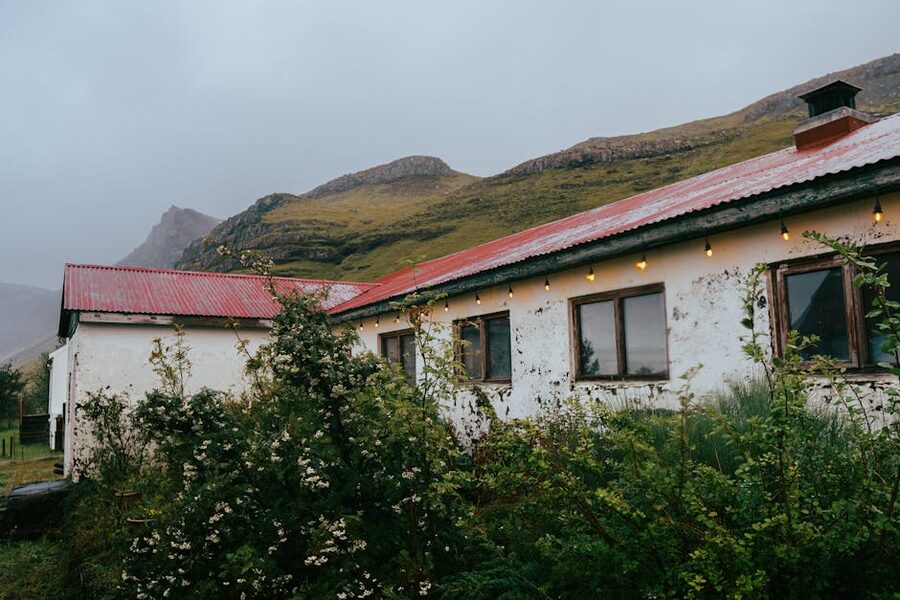
Booking a two-night Iceland trip in December specifically for the aurora. The maths just doesn’t work. Two nights in our cloudiest month is a coin flip on a coin flip. Stay longer or go in October or February-March instead.
Expecting the lights on the first night. Many people see them in the first 24 hours. Many more don’t. Plan as if you’ll need three nights to get one good display, and treat anything earlier as a bonus.
Trying to see the aurora through a hotel window. Glass reflects, hotel grounds have lights, and you’ll see almost nothing even when there’s plenty in the sky. You have to actually go outside, and ideally drive 15 minutes from anything illuminated.
Watching the sky from inside a brightly lit area. Your eyes need 15 to 20 minutes to fully dark-adapt. If you keep glancing at your phone screen you reset that clock every time. Use red-light mode if your phone has it, or just put it away.
Booking the bus tour and assuming you’ve covered it. The free re-try is the value, not the single tour. Use the re-try clause across multiple nights.
Believing “guaranteed aurora” packages. Nobody can guarantee the aurora because nobody controls the sun or the weather. What they can guarantee is dark sky and a re-try clause, which is fine. Be sceptical of anyone selling you certainty.
Forgetting about food. Aurora hunting often means missing dinner. Bring snacks. Petrol station hot dogs (pylsur) are a national institution and open until late. Worth knowing.
What I’d actually do for a five-night trip
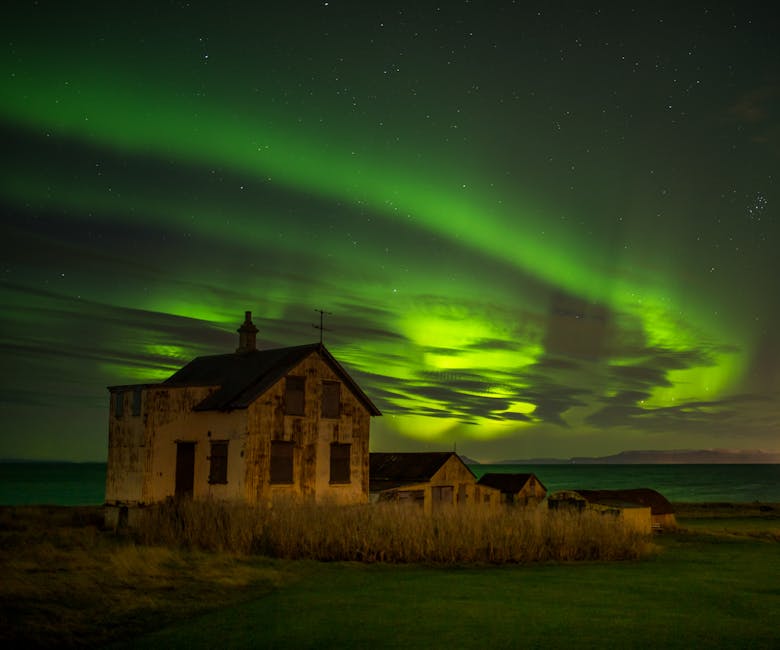
If a friend asked me to plan their aurora trip, here’s the structure I’d give them.
Length: Five nights minimum, ideally seven. Aurora is a “maybe” each night, so you need multiple shots.
Timing: Late October, mid-February, or early March. Avoid mid-November to mid-January if possible.
Base: Two nights in Reykjavik for arrival, food, the city stuff, plus a Grótta hunt or two. Then three nights at a rural hotel in the south (Hotel Rangá if budget allows, a smaller guesthouse in Hella or Hvolsvöllur if not). The rural base massively increases your odds because you can step outside any time you wake up.
Tour mix: One small-group photo tour on a forecast-cloudy night. Cloudy nights are when a tour is most worth it because the guide can drive 90 minutes to find a clear-sky window. On clear nights, hunt yourself.
Daytime activities: Build the trip around the Golden Circle, an ice cave tour from Vík, glacier hike from Skaftafell, the Blue Lagoon or Sky Lagoon. That way the trip is great whether the aurora cooperates or not.
Daily rhythm: Sleep in. Do daytime stuff late morning to mid-afternoon. Be back at the hotel by 5pm to check the forecast. Eat early. Lay out warm clothes. Nap. Be ready to move at 9pm if conditions look promising. Sleep in again next day.
What I’d skip
Cheap bus tours that drive 30 minutes out of Reykjavik to the same lay-by every night. Fine as a first try, not the way to maximise your odds.
“Guaranteed aurora” packages that cost a fortune. Nobody can guarantee the lights. The straightforward packages just guarantee they’ll keep trying.
Booking the Blue Lagoon specifically as an aurora venue. Soak there because it’s a great soak. Don’t expect a green sky.
Anything described as an “aurora experience” in central Reykjavik that doesn’t involve actually leaving the city. The light pollution kills it.
Aurora-themed shopping mall installations and Northern Lights “shows” on screens. These exist. They are not the lights.
One last thing
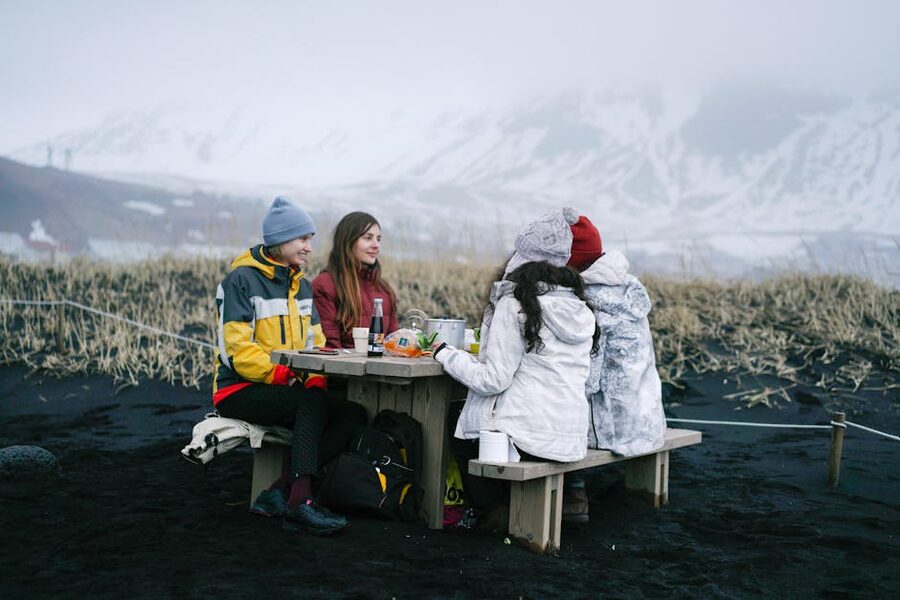
The aurora is real, it’s spectacular when it cooperates, and Iceland is one of the genuinely best places on Earth to chase it. But it’s also shy, weather-dependent, and indifferent to your schedule. Plan for it the way you’d plan for a fishing trip. Give it time, stack the odds, accept that some nights you’ll go home empty-handed, and enjoy what you do see when it shows.
The best aurora night I’ve had was a random Tuesday in late October when I’d given up by 11pm and walked outside to take the rubbish out. The whole northern sky was on fire. I called my neighbours and we all stood in the street like idiots watching the show. That’s the deal with the lights. They come when they come. You just need to be in Iceland with warm clothes on and the patience to wait.
If you’re ready to start planning, our month-by-month guide to visiting Iceland, the climate breakdown, and our tours overview are the places to go next. And if you want to dig into the photography side specifically, the photography tours guide covers the gear and operators in more depth.
Þetta reddast. The lights tend to find people who keep showing up.