A lava tunnel tour feels like an instant time machine. This guided walk through Raufarhólshellir is one of the only ways to see Iceland’s lava-cave “plumbing” safely, and it’s close enough to fit into a busy Reykjavik schedule. You’ll learn how volcanic activity shaped the tunnel, then watch color and light effects that come from mineral-rich rock near the entrance.
I especially like that the tour gives you real safety gear (helmet and headlamp/flashlight) and a focused, guided 1-hour inside the cave. The other big win is the easy logistics: you can start at BSÍ Bus Terminal or add pickup, so you’re not spending your limited time wrestling buses and schedules.
One thing to plan for: the tunnel is cold, wet, and step-heavy. Expect slippery footing and wear sturdy shoes—this isn’t a “wear sneakers and stroll” kind of cave.
In This Review
- Key Highlights I’d Prioritize
- Why This Lava Tunnel Tour Feels Worth Your Time
- Getting There: BSÍ Bus Terminal to the Lava Fields
- The Raufarhólshellir Tunnel Walk: Science You Can See
- The Lights-Off Moment: Why Darkness Is Part of the Attraction
- Gear and Safety: What’s Included and What to Wear
- Transfers and Carbon-Neutral Transport: Nice, Practical, Not Hype
- Time on the Clock: How Long You’ll Be Gone
- What You Get for $129: Value Breakdown That Makes Sense
- The Most Common “Watch Out For This” Notes
- Who Should Book This Lava Tunnel Tour?
- Should You Book This Tour?
- FAQ
- How long is the Lava Tunnel Tour from Reykjavik?
- Where does the tour meet in Reykjavik?
- Is pickup from my hotel or cruise port available?
- What safety equipment is included?
- What is included in the price?
- Is food or drinks included?
- What should I wear for the tunnel?
- What happens if weather is poor?
- Can I cancel and get a full refund?
Key Highlights I’d Prioritize
- Guided access to Raufarhólshellir, a lava tunnel you can’t really do on your own
- Helmet + flashlight/headlamp included, with instruction so you know what to do in the dark
- Up to 30 minutes from Reykjavik by bus, so it works even on a tight itinerary
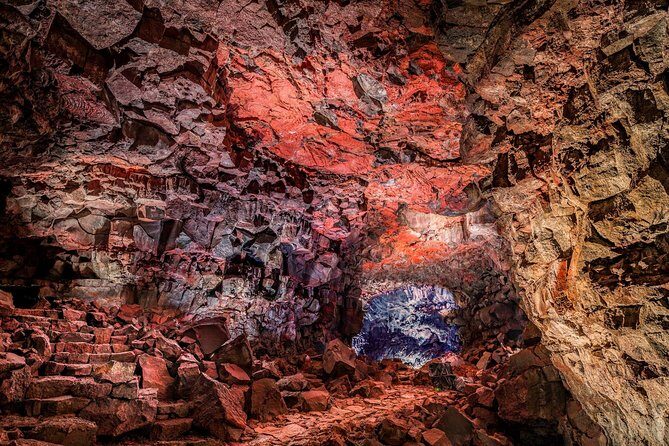
- Stunning colored walls caused by different minerals, with columns of light near the entrance
- A lights-off blackout moment that turns the cave into a full sensory experience
- Small-ish group size (max 30), which keeps the walk more orderly
Why This Lava Tunnel Tour Feels Worth Your Time
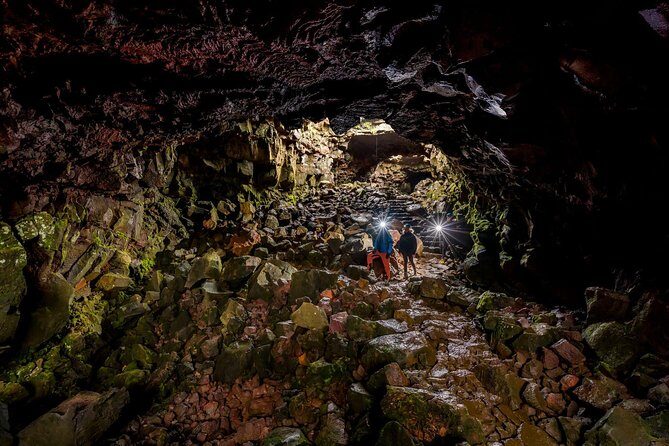
This tour is built around one job: getting you into Raufarhólshellir with the right rules, gear, and guidance. Lava tunnels don’t behave like show caves. They’re dark, uneven, sometimes slick, and made of natural rock that can look different depending on airflow, moisture, and the light angle. That’s exactly why a guide matters here.
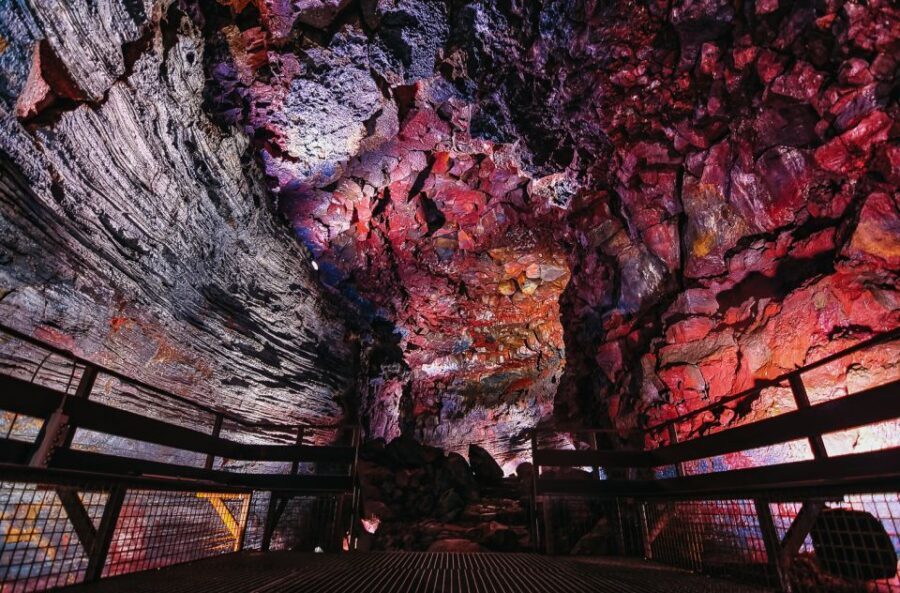
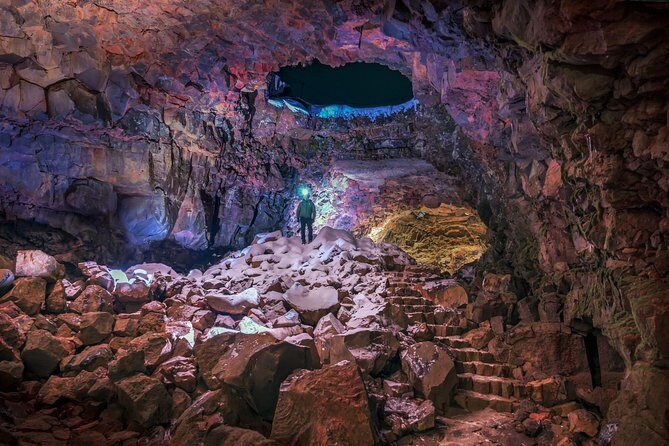
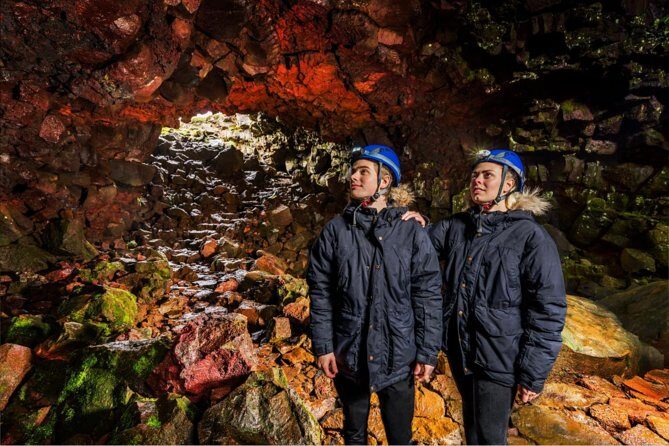
Inside, the tour focuses on the story your eyes can actually see. You’ll walk the path of lava that flowed thousands of years ago, then learn what the tunnel reveals about how eruptions behave underground. The ceiling near the entrance has caved in, and that creates the dramatic “columns of light” effect—when sunlight reaches inside and hits mineral layers, the cave walls show multiple colors.
I also like the pacing: you get a proper guided experience without being gone all day. If you’re doing the bigger-ticket Iceland activities, this tour is the kind of add-on that feels smart—short travel time, clear payoff.
You can also read our reviews of more tours and experiences in Reykjavik.

Getting There: BSÍ Bus Terminal to the Lava Fields
The meeting point is BSÍ Bus Terminal in central Reykjavik (Vatnsmýrarvegur 10). If you choose the transfer option, you’ll be picked up from your hotel area, and cruise port pickup is offered if you select it. Either way, you’ll start with a bus ride out of town.
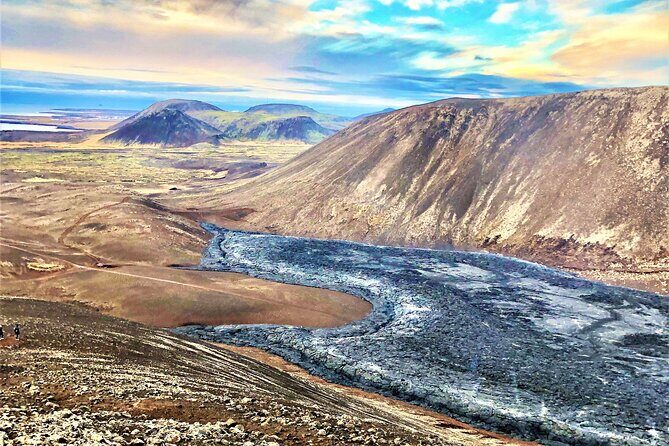
Timing is friendly. The tunnel is described as about 30 minutes from Reykjavik, and in practice you should think in the “about 40 minutes” range depending on traffic and where exactly you board. The drive isn’t just filler—you’ll be rolling out from the city toward the volcanic zones, and you’ll likely recognize Iceland’s signature mix of flat lava fields and low, stark terrain.
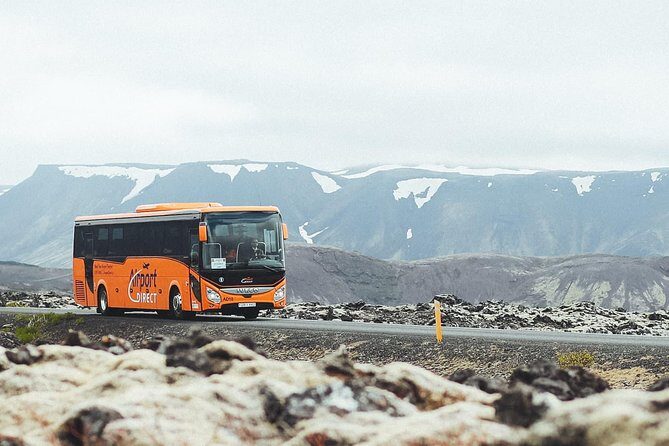
The bus operation looks designed for real-world travel flow: vehicles are marked with the Reykjavik Excursions logo, and you’re told to be ready about 30 minutes before departure. That’s a small detail, but it matters. It reduces the “where is the bus?” scramble, especially if you’re traveling with a group or have a tight schedule.
One practical note: the visitor center area at the tunnel is small. Some on-site facilities are limited (for example, toilets are available), so plan to handle any longer stops before you’re underground.
The Raufarhólshellir Tunnel Walk: Science You Can See
Once you arrive, the core experience is the guided walk inside the lava tunnel: about 1 hour of time with your group and guide. This is the part that turns a generic cave visit into an Iceland-specific one.
The tunnel itself is large for something you reach from Reykjavik. It can be around 30 metres wide and up to 10 metres high, and you’ll notice how the geometry changes as you move away from the entrance. Near the entrance, the ceiling has collapsed in a way that allows sunlight to stream in. That light is what creates those column effects.
Your guide explains how a lava tunnel forms and why its surfaces look the way they do. Here’s what to pay attention to as you walk:
- the smooth areas that suggest lava flow and cooling
- the texture shifts where the rock composition changes
- the mineral-driven color variations on the tunnel walls
Those colors aren’t just pretty. They’re a clue. Different minerals respond differently to heat and water, and they get revealed as the tunnel cools and weathers. The tour’s science is grounded in what you’re standing next to, not just background facts.
Also, your group won’t wander. You’ll be guided for safety and spacing. That keeps the walk from turning into a “follow whoever walks fastest” situation, and it helps you catch the moments your guide points out—especially the light and dark transitions.
The Lights-Off Moment: Why Darkness Is Part of the Attraction
This is one of those tours where the “wow” isn’t only what you see—it’s what you experience. Many visitors highlight a moment when the lights are turned off inside the tunnel, creating near-total darkness for a short stretch.
That blackout effect matters because it changes your sense of scale and detail. When your eyes can’t rely on bright illumination, you notice the cave differently: sound carries, your body slows down, and the tunnel shape feels more dramatic. It’s also a good reminder that headlamps/flashlights aren’t optional here—they’re your safety line.
If you’re the type who likes photography, you may feel torn. You’ll want to capture the light at the entrance and the colored walls, but the blackout moment is better experienced than photographed. I’d treat it like a short reset. Look less at your camera, more at how the cave changes when the light goes away.
Gear and Safety: What’s Included and What to Wear
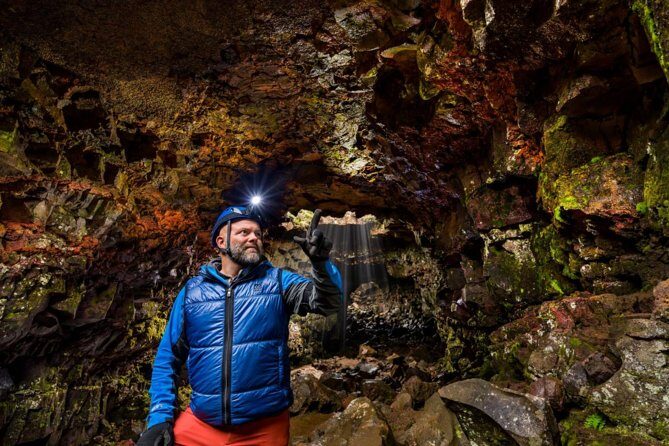
This tour includes the essentials you’d expect for a lava tunnel:
- Helmet
- Flashlight/headlamp
- A guide-led route inside the cave
- Use of safety equipment and instruction
Some participants also mention extra traction and walking support, like trekking poles and crampons. Even if you don’t get them all, assume the ground can be slick. The cave can be wet from outside conditions, and steps are part of the route.
Here’s the real-life payoff: wearing the right footwear means you can focus on the tunnel instead of fighting for balance. Plan for cold air, damp surfaces, and uneven footing. Sturdy shoes matter more than trendy footwear. Warm layers help too, since you’ll be suited up for a cave that stays chilly.
A few common “do this” reminders are worth taking seriously:
- keep your pace steady on steps
- stay aware of where you’re putting your feet
- listen when the guide explains the route and safety rules
The tour is designed to fit most people—there’s a minimum age of 3 years, and the group cap is 30—but conditions in the tunnel still mean this is a walking tour with actual ground contact.

Transfers and Carbon-Neutral Transport: Nice, Practical, Not Hype
Transportation is included: bus fare, round-trip transfer, and carbon-neutral transfer in cooperation with Vaxa Technologies. That doesn’t change the tunnel itself, but it does change how you experience the day.
When your transport is handled, you show up at BSÍ Bus Terminal (or get pickup) and you don’t have to build a mini logistics plan. That frees you to spend time deciding what to wear, when to eat, and how to schedule other sights around your cave hour.
Also, this is one of the rare Reykjavik activities where the site is close enough that you can squeeze it in even on a travel day. If your main priority is seeing something Iceland-specific without burning half your day on driving, this fits.
Time on the Clock: How Long You’ll Be Gone
The listed duration is about 3 hours. That includes the drive from Reykjavik, the guided cave walk (about 1 hour), and the return.
A key thing to understand: the tunnel walk is short enough that you won’t get exhausted, but long enough to feel like you really entered another world. The group spends time learning the volcanic process behind the tunnel formation, not just posing at a few points.
When you plan the rest of your day, aim for “buffer time” before and after. You’ll likely want a quick snack after the tour since food and drinks aren’t included.
What You Get for $129: Value Breakdown That Makes Sense
At $129 per person, you’re paying for more than a bus ticket. You’re paying for:
- guided access to a large lava tunnel that isn’t a DIY stop
- helmet + flashlight and safety instruction
- a structured 1-hour experience inside the cave
- round-trip transportation from central Reykjavik
Is it “cheap”? No. But it also isn’t trying to sell you a ten-minute look. For the money, you’re buying safety, guidance, and a genuinely unusual natural feature. That’s how you get value in Iceland: fewer stops, more purpose, and time where your senses actually get something.
If you’re deciding between multiple tours, think about what this one adds. You’ll see a volcanic feature from the inside. Outside Iceland, most “caves” are rock formations. Here, the cave is the cooled record of lava behavior.
If you’re traveling with kids or a group, the format is also practical. It’s family-friendly, it’s short, and it gives clear structure from pick-up through return.
The Most Common “Watch Out For This” Notes
Based on the kinds of issues people bring up, these are the considerations that can affect your trip:
Pacing and timing clarity
The tour depends on you being at the right place at the right time. If you’re using a ticket via a third-party app, double-check the pickup start versus tour start time. Being late can turn into a missed bus situation, and that’s a headache in Reykjavik where taxis add up quickly.
Slippery conditions
The cave can be slippery and cold. Bring warm clothing and wear shoes that handle wet, uneven surfaces.
On-site facilities
The tunnel area is limited (toilets exist, but don’t plan on a full visitor center setup).
Who Should Book This Lava Tunnel Tour?
I think this is a great fit if you:
- want a top Iceland nature experience close to Reykjavik
- like learning, but don’t want a lecture—this is science you can see
- want a short adventure that still feels special
- are traveling as a family, couple, or solo traveler who can manage a walk with steps
It’s less ideal if you:
- hate dark, uneven footing
- need a fully flat, low-step walking route
- are very sensitive to cold and wet conditions (you can dress for it, but it’s still a cave)
Should You Book This Tour?
Yes—if you’re okay with cave conditions and you want a guided, safe look at one of Iceland’s major lava tunnels. The best reason to book is simple: Raufarhólshellir is the type of place where a guide makes the experience better and safer, and the included helmet and flashlight remove a lot of guesswork.
If your schedule is tight, the timing and short drive from Reykjavik make it a smart use of limited vacation hours. And if you’ve already seen other volcanic sights around Iceland, this gives you the underground version—literally seeing the space lava once traveled.
Just do two things before you go: dress for damp steps, and confirm your pickup timing so the bus hunt doesn’t eat your day.
FAQ
How long is the Lava Tunnel Tour from Reykjavik?
The tour runs for about 3 hours total, with roughly 1 hour inside the lava tunnel itself.
Where does the tour meet in Reykjavik?
The meeting point is at BSÍ Bus Terminal (Vatnsmýrarvegur 10, 101 Reykjavík, Iceland).
Is pickup from my hotel or cruise port available?
Pickup is offered if you select the transfer option. Pickup from a cruise port is also included if that option is selected.
What safety equipment is included?
You’ll be provided with a protective helmet and a flashlight/headlamp for the cave walk, along with guide instruction.
What is included in the price?
The price includes bus fare, the guided cave tour (about 1 hour), use of the flashlight and helmet, and carbon-neutral transfer in cooperation with Vaxa Technologies.
Is food or drinks included?
No. Food and drinks are not included, so plan to grab something before or after.
What should I wear for the tunnel?
Wear warm clothes and sturdy footwear. The tunnel can be slippery and cold, and it includes steps and uneven surfaces.
What happens if weather is poor?
The experience requires good weather. If it’s canceled due to poor weather, you’ll be offered a different date or a full refund.
Can I cancel and get a full refund?
Yes. You can cancel up to 24 hours in advance for a full refund (if canceled less than 24 hours before, the amount paid is not refunded).