Some cities need a map. Reykjavik needs a storyteller.
This 2-hour Reykjavik walking tour is a friendly way to get your bearings fast, mixing big-name sights with small, odd details you’d miss on your own. You start at Ingólfur Square and move through the city center with a guide who blends Icelandic history, mythology, and real-world recommendations—so the places you see start to make sense instead of just looking like postcards.
I particularly like two things: the way the tour turns landmarks into stories (not just stops), and the practical focus on where to eat and drink once you’re done walking. A guide such as Einar, Bjarni, Stephan I, and Jonina comes through in the reviews as energetic, funny, and ready to answer questions, which is exactly what you want after a long travel day. The one drawback is simple: you’ll spend a good chunk of time outside, so Reykjavik wind and cold can make the pace feel tougher if you’re not dressed for layers.
In This Review
- Key highlights worth planning around
- Starting at Ingólfur Square: how the tour finds your bearings
- Austurvöllur and Alþingi: politics, photos, and the Icelandic way of formal
- Lake Tjornin (Tjörnin): the best “reset button” in the itinerary
- Ægisgarður 9 and the elf-home theme: seeing what’s not on the postcard
- Harpa Concert Hall: the standout stop that earns a pause
- Laugavegur: the walking-meets-living part of downtown
- Hallgrímskirkja: the church you’ll remember, even from the outside
- What you’ll learn from a Viking-style guide (and how to use it)
- Price and value: is $51 per person a smart first day move?
- Weather-proofing: what to wear so the walk stays fun
- Who this tour fits best (and who might skip it)
- Should you book this Reykjavik Viking walking tour?
- FAQ
- Where is the meeting point?
- What’s the tour duration?
- Is food or drinks included?
- Which languages are offered?
- Is this tour wheelchair accessible?
- What should I wear for the tour?
Key highlights worth planning around
- Harpa Concert Hall: you get the design, the vibe, and a great reason to pause mid-walk
- Old-city core orientation: Harbourside streets, Parliament-area views, and classic downtown stops
- Tjörnin (Lake Tjornin) birdlife: a calmer breath between busier blocks
- Icelandic mythology moments: including a visit tied to an elf home theme
- Street-level local picks: where to eat, drink, and even happy-hour suggestions
- Pronunciation and language mini-lesson: you learn how to say names like Hallgrímskirkja
Starting at Ingólfur Square: how the tour finds your bearings
Most “sightseeing tours” begin by naming attractions. This one begins by helping you understand how Reykjavik fits together.
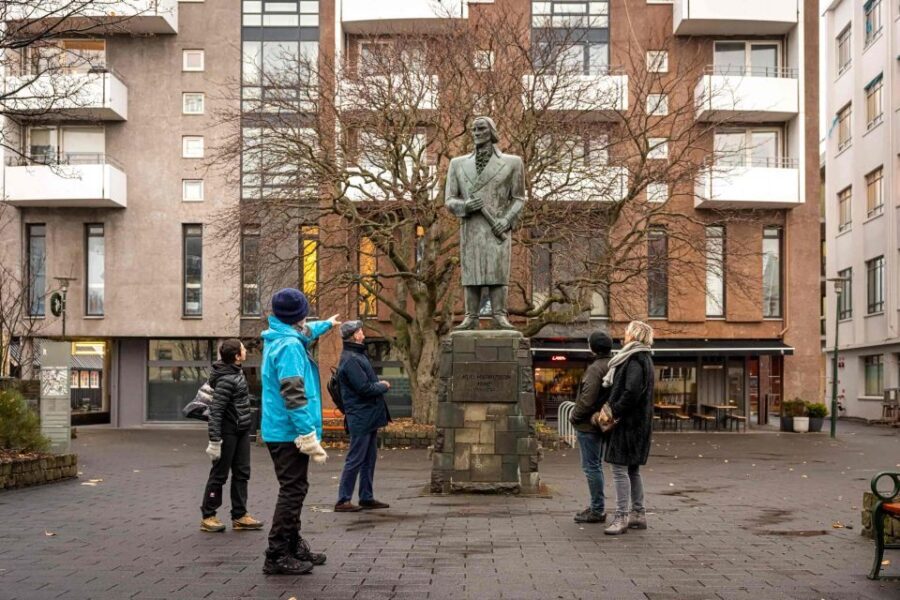
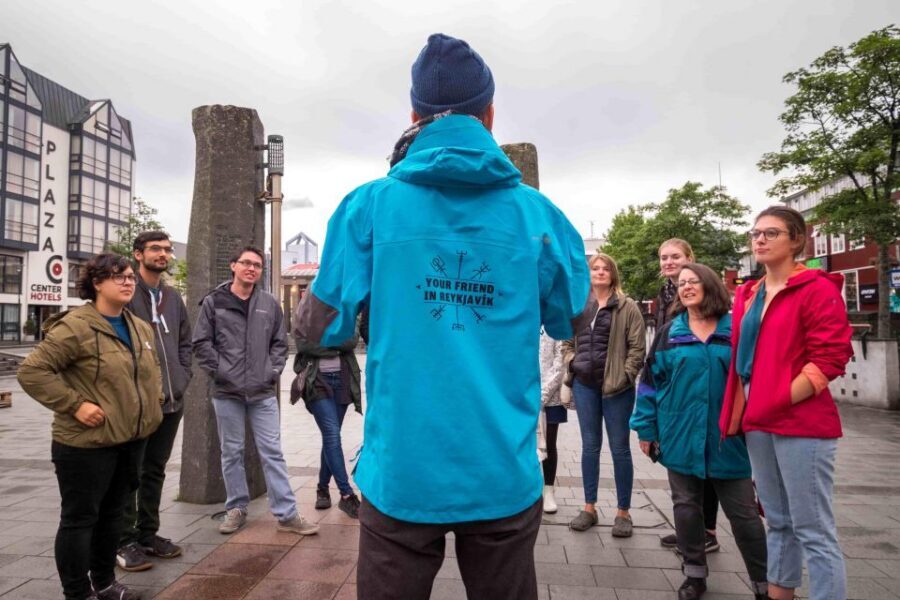
You meet at Ingólfur Square, at the two tall stone seat pillars (over 2 meters high). It’s at the start of Austurstræti, squared off by Aðalstræti, Hafnarstræti, Veltusund, and Vallarstræti—near the Center Hotel Plaza. If you’re staying along Laugavegur, you can walk down the main street all the way to the square and be right where you need to be.
Why this matters: Reykjavik’s downtown feels compact, but it still takes a first walk to understand what’s close, what’s uphill (and sometimes wind-exposed), and what’s worth returning to. The guide’s opening chat helps you “read” the city as you go, which makes every next stop feel more intentional. It also sets the tone: you’re not just collecting photos. You’re learning the story behind them.
You can also read our reviews of more walking tours in Reykjavik

Austurvöllur and Alþingi: politics, photos, and the Icelandic way of formal
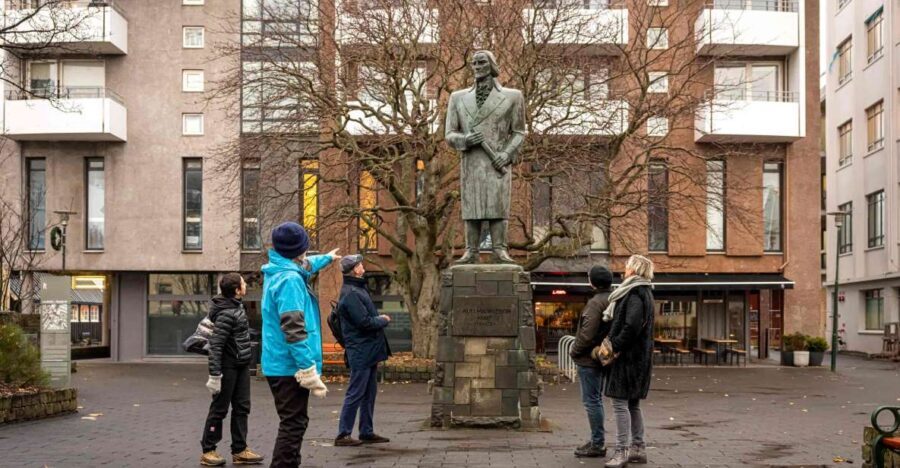
The tour moves next to Austurvöllur, a central square that often feels like Reykjavik’s living room. In a short guided block, you’ll get the context for what you’re seeing around you—why this area holds attention, and how Iceland’s identity shows up in everyday streets.
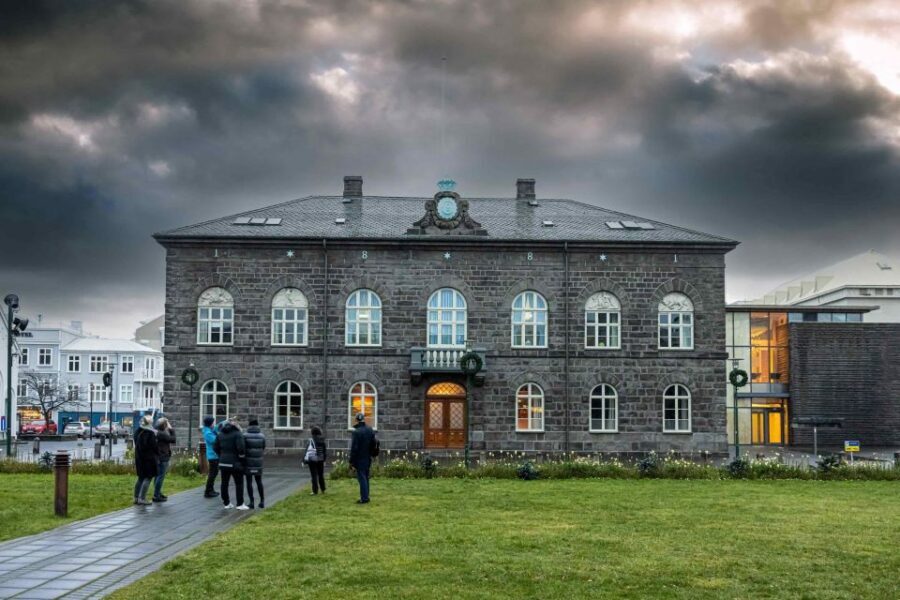
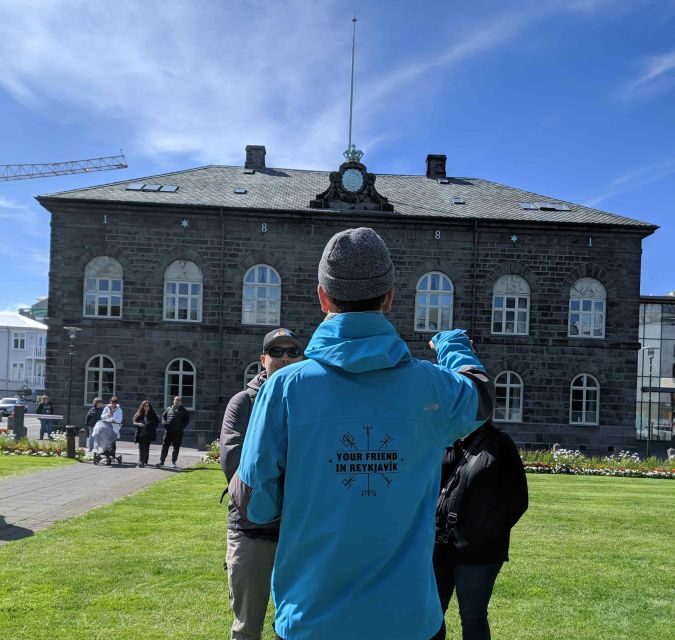
Then comes Alþingi, the Icelandic Parliament building. Expect a short photo stop, because this is one of those locations where the building and its surroundings carry meaning even if you’re not a policy person. The benefit here is timing: you’re still fresh, your questions are still forming, and the guide can explain what the symbolism means without turning the walk into a lecture hall.
One practical note: this is a downtown area, so it can be windy and exposed. Plan to pause calmly for photos, but keep moving—your layers will thank you.
Lake Tjornin (Tjörnin): the best “reset button” in the itinerary
After Parliament-area formality, the walk heads toward Lake Tjornin (Tjörnin). If you’re only expecting big sights, this stop is the one that changes your whole mood.
This is a guided stretch focused on the pond and birdlife, and it gives you something Reykjavik can do well: quiet. Even in the middle of the city, Tjörnin can feel like a pause button—great for regrouping, getting your bearings visually, and taking in how everyday Reykjavik life sits alongside landmarks.
Why it’s valuable: you’ll appreciate the later church and concert-hall areas more when you’ve had a softer moment to absorb the city’s rhythm. Also, it’s an easy place to ask questions because your body isn’t doing “tour mode” sprinting between stops.
Ægisgarður 9 and the elf-home theme: seeing what’s not on the postcard
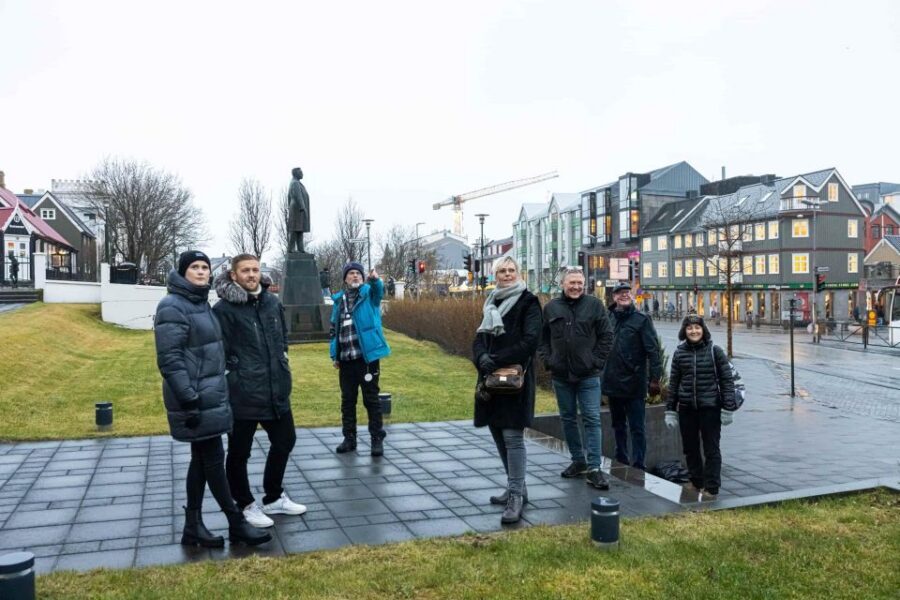
One of the most fun parts is the tour’s insistence that you notice details. This is where you get a look at local quirky culture, including a stop tied to an elf home theme.
The tour includes Ægisgarður 9, which is short on time but long on interest. You’re basically learning how to look: what residents pay attention to, what traditions show up in small ways, and why mythology still matters in Iceland. Even if you’re skeptical, it’s a playful lens that makes the walk feel less like a checklist.
I like this approach because it prevents the “everyone sees the same things” problem. Once you know what to look for, Reykjavik stops being just a pretty street-and-building mix. It becomes a place with its own logic and folklore.
Harpa Concert Hall: the standout stop that earns a pause
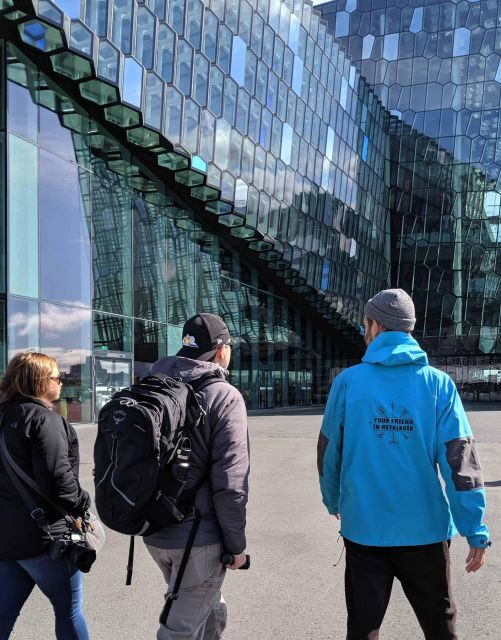
If there’s one landmark that almost forces people to slow down, it’s Harpa Concert Hall. This part of the walk includes a guided visit that gives you more than a photo angle.
You’ll learn what Harpa represents and why it fits in this city—an Icelandic sense of modern design placed right in the heart of Reykjavik. It’s also a great moment to warm up a bit if you need it. One review mentioned finishing the tour in the concert hall and grabbing something warm like mulled wine or hot chocolate, which is a smart move in cold weather.
Tip: in wind and cold, your best souvenir is often the moment you get to stand still for a minute. Harpa is built for that.






Laugavegur: the walking-meets-living part of downtown
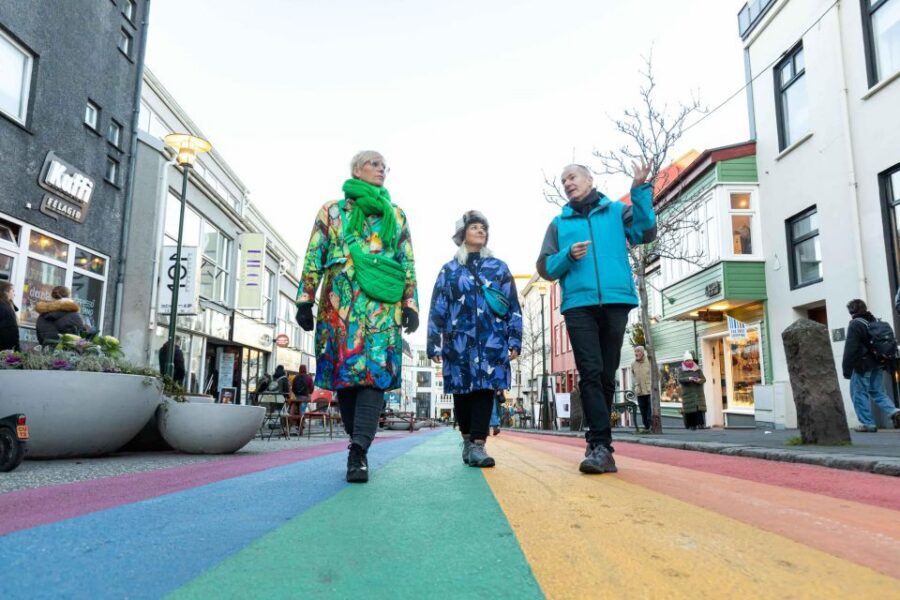
Next is Laugavegur, the main shopping street. The tour gives this section about 20 minutes of guided time—enough to understand what’s worth noticing without turning it into a shopping slog.
This is where the guide’s local recommendations can pay off. The tour is designed to point you toward places to eat and drink, and to warn you away from traps. The emphasis isn’t only on what looks good—it’s on what fits the way the city actually works: timing, atmosphere, and what you might enjoy after your walk.
In my view, Laugavegur is where orientation becomes useful. If you know which blocks are livelier, which are better for a quick meal, and where you can step off the main drag to feel more “local,” you save time later. And since food and coffee are usually your biggest day-to-day budget items, the guide’s practical tips help you spend wisely.
Hallgrímskirkja: the church you’ll remember, even from the outside
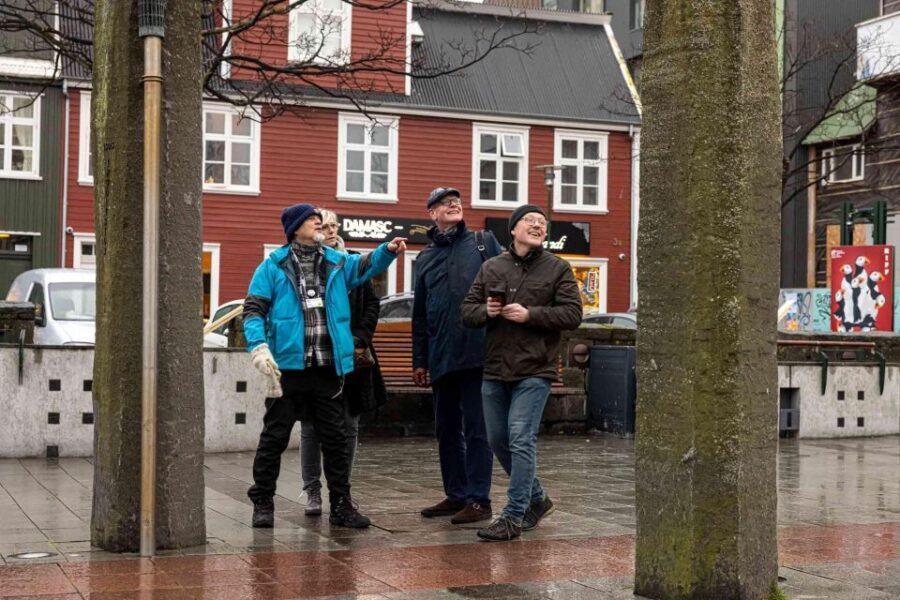
Finally, you reach Hallgrímskirkja, the iconic church that dominates Reykjavik’s skyline. This stop gets about 20 minutes of guided time, and it’s one of those places where even the exterior tells you a lot about Icelandic priorities: scale, visibility, and presence.
The guide also teaches you how to pronounce the name—useful because you’ll hear it constantly, and Icelanders notice when visitors get it right.
A heads-up: sometimes the interior can be affected by church preparations. If that happens during your visit, you’ll still get the main experience from the outside and the surrounding context. Don’t make the tour your only plan for church time; treat it as a best-effort orientation and photo stop.
What you’ll learn from a Viking-style guide (and how to use it)

The tour calls itself a walk with a Viking, but the value isn’t costumes. It’s the storytelling framework. You’ll hear Icelandic mythology alongside local history, and you’ll get an Icelandic language mini-lesson so you can say key names and follow the city conversation.
You’ll also get guidance on how to navigate the city like someone with local instincts: what to linger near, where to go for a drink, and where to focus your next day. In reviews, guides like Stephan I and Einar stand out for story energy and humor—plus the willingness to answer questions in real time, not just at the start and end.
Here’s how to make the most of that: ask one question per stop. Something like:
- What should I do with this viewpoint tomorrow morning?
- Where would a local grab a quick meal near here?
- If the weather changes, what’s the best backup plan?
The tour is built for exactly that kind of interaction, and it turns your two hours into more than a route—you leave with choices.
Price and value: is $51 per person a smart first day move?
At $51 per person for roughly two hours, this tour sits in the “worth it if it saves you time” category.
Think of it like this: you’re paying for three things you can’t easily buy with a self-guided walk:
1) a fast orientation of the city core
2) context that makes landmarks meaningful
3) targeted recommendations for where to eat and drink (including practical happy-hour knowledge)
If it’s your first day in Reykjavik, the value is even clearer. A guided orientation helps you avoid wandering for no reason, and it helps you choose restaurants with less trial and error. If you already know Reykjavik well, the tour may feel more like a polished recap than a breakthrough—but most first-time visitors need exactly that foundation.
Weather-proofing: what to wear so the walk stays fun
This is an outdoor walking tour through downtown. The tour itself recommends layers, and you should treat that as the main rule.
Bring:
- a warm layer you can adjust
- a wind-ready shell if you have one
- gloves or something you can keep in your pocket
In reviews, the guides handled very windy conditions well, but you’ll still enjoy it more if you make your body comfortable first. Two hours in Iceland can feel quick when you’re focused on stories, and it can feel long when your hands are freezing.
Who this tour fits best (and who might skip it)
This walk is a good match if:
- you’re in Reykjavik for the first time and want a clean orientation
- you like history and mythology, but you want it delivered in a human way
- you want practical restaurant and drink guidance, not just photos
- you’re traveling with kids or want a family-friendly pace
You might skip it if:
- you hate walking in cold wind and won’t dress in layers
- you already have a strong grasp of Reykjavik and don’t care about extra local context
- you plan to spend most of your time on the outskirts and want a focused neighborhood specialty instead
Should you book this Reykjavik Viking walking tour?
I’d book it if you want your first day to feel lighter and more confident. The tour does a smart job of blending iconic Reykjavik sights (Harpa, Alþingi, Hallgrímskirkja) with quieter pauses like Tjörnin, plus the fun cultural lens of Icelandic mythology. Add in the guide-led recommendations for food and drinks, and you’re likely to save time and avoid the usual guesswork.
If you’re deciding last minute, pick it when you can dress for wind, and when you can actually ask questions. Two hours goes fast when you’re moving, but it leaves you with the kind of local orientation that makes the rest of your trip feel easier.
FAQ
Where is the meeting point?
Meet at Ingólfur Square in central Reykjavik, by the two tall stone-high seat pillars (over 2 meters high). It’s at the beginning of Austurstræti, near the Center Hotel Plaza.
What’s the tour duration?
The tour runs for about 2 hours.
Is food or drinks included?
No. Food or drinks are not included, but the guide shares recommendations for where to eat and drink during the walk.
Which languages are offered?
The live guide is available in English, German, French, and Spanish.
Is this tour wheelchair accessible?
Yes, it is wheelchair accessible.
What should I wear for the tour?
Wear weather-appropriate clothing and plan on layers, since the walk is outdoors.