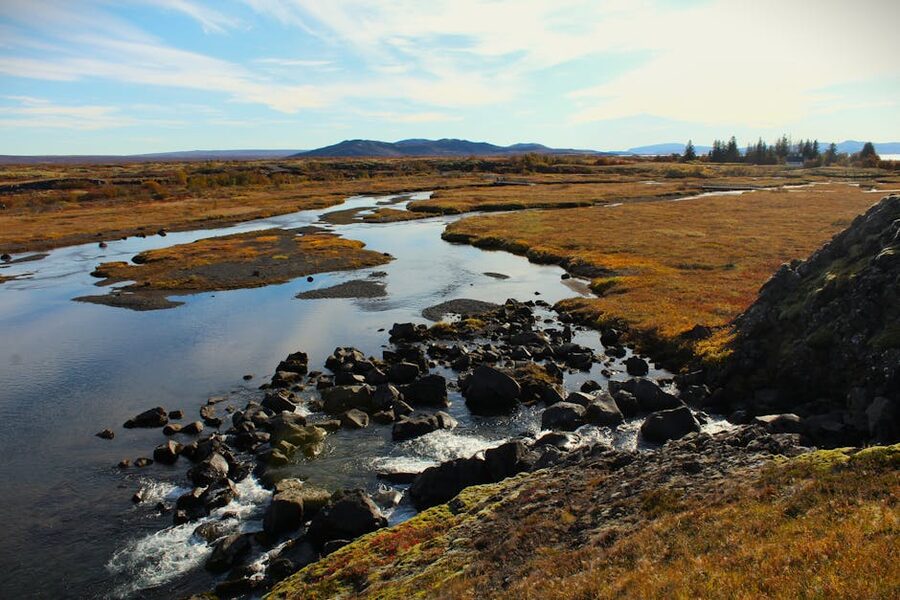
Ask an Icelander when they take their own holidays inside Iceland, and you’ll keep getting the same answer. September. Specifically the second week through the third week. Not because the country empties out (it does, but that’s a side effect), and not because the weather flips dramatically (it doesn’t), but because the whole month sits in a kind of sweet spot that the calendar reorders later. The summer light is still doing useful work. The first proper aurora of the season turns up. The Highlands are usually still open through the early days. The colour starts moving in the dwarf birch around the rift at Þingvellir. And the prices breathe.
If you’ve narrowed your trip down to a shoulder season but you’re not sure which end to pick, this is the longer version. What the month actually does, what stays open, what starts to close, what the photographs look like, what to put on, and a couple of itineraries you can lean on. The when-to-visit guide walks every month if you want the wider context first, and the climate piece sets up the wind and the daylight properly. If you’re weighing September against July, the summer guide is the comparison piece. This one is September-specific.
In This Article
- Why September is the locals’ month
- What the daylight is actually doing
- Weather, plainly
- The aurora returns
- The autumn-colour window
- What’s still open in September
- The Highlands tail-end
- The Ring Road, calmer
- Reykjavík in shoulder season
- Festivals and events
- Réttir, the sheep round-up
- What to actually pack
- The south coast in September
- North Iceland in autumn light
- The east, when you can get there
- Snæfellsnes, Iceland in miniature
- Hot springs and lagoons in autumn air
- The cost of a September trip
- What to skip in September
- A sample seven-day September itinerary
- A shorter five-day version
- Booking the right way ahead
- The bigger picture, briefly
- What I’d actually do
Why September is the locals’ month
The straight answer to “is September a good time?” is that it’s the month I quietly recommend to friends visiting from abroad if they’re flexible on dates. You still get summer-tier access, summer-tier road conditions, and most of the operators still running, but on top of that you get autumn light, the aurora coming back, and the kind of sky that photographs don’t do justice to. The Mediterranean idea of “shoulder season” doesn’t quite map. Here it means the weather might still be summer-mild on the south coast on a Wednesday and feel borderline winter on a Friday. You hedge with layers and you keep moving.
Hotel pricing eases noticeably from the second week. Car rental is meaningfully cheaper than mid-July, often by a third on a small 4WD. Tours that were on a constant queue in August have gaps you can walk into the day before. The Ring Road is calmer. South-coast laybys aren’t full. You won’t be alone at Skógafoss, but you also won’t be ninth in line for a parking spot.
And then around mid-month, the night gets dark enough that the aurora becomes worth chasing. That’s the real argument for September over August. August has long days and warmer water and zero northern lights, full stop. September gets you both summer access AND the first real aurora window. If you want one trip that covers the maximum of what Iceland offers in a single shot, it’s the only month that does it.
What the daylight is actually doing
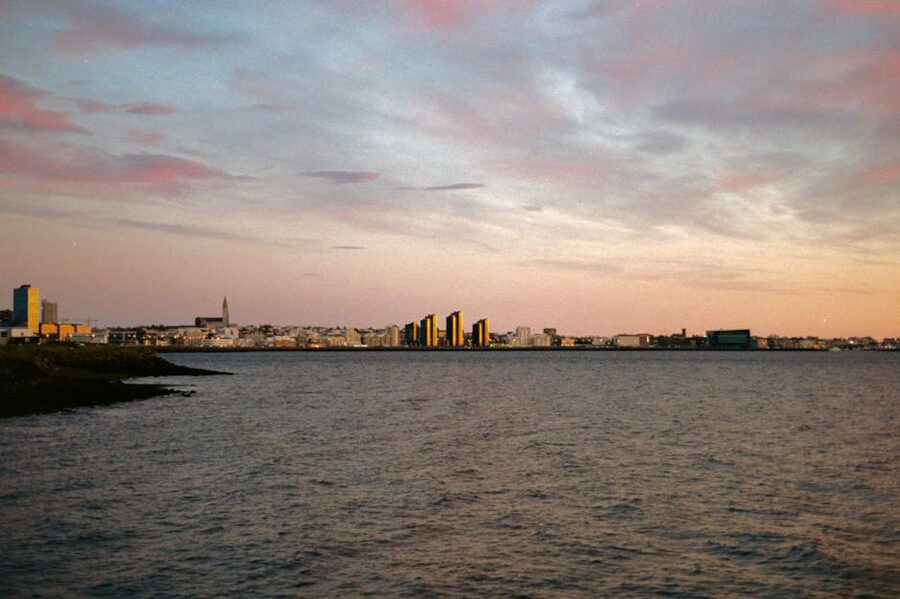
The numbers matter here. On 1 September in Reykjavík, sunrise is around 6:11am and sunset is around 8:41pm, call it 14 hours of usable light, with a long golden hour that just keeps going. By 30 September, sunrise has moved to about 7:35am and sunset to about 6:58pm, so you’re down to roughly 11.5 hours. That’s a sharp drop over the month, and it changes what your day looks like depending on when in September you come.
If you arrive in the first week, plan as if it’s still summer. You can do a full Golden Circle day after a leisurely breakfast and still be back at the hotel before dark. By the last week, you’re packing more tightly. A south-coast day to Vík and back is still doable, but you’re driving the last hour with headlights on. The flip side: those late-September nights are when the aurora season properly starts, so the trade is real.
One thing you’ll notice: the sunsets are long. Iceland sits high enough north that the sun’s exit angle is shallow, so the golden hour stretches into a golden two hours. Photographers who’ve shot summer here grumble about the harsh midnight sun. September gives them the light they actually want. If you’ve got a camera, structure your driving days so you’re somewhere photogenic, Jökulsárlón, Reynisfjara, the Stokksnes peninsula behind Vestrahorn, between roughly 6pm and sunset.
Weather, plainly
Reykjavík averages about 7 to 11°C through September, with daytime highs nudging up to 13 or 14°C in the first week and dropping toward 8 or 9°C by the end. Hotel Rangá’s records put the average high at 11°C and the average low at 6°C, which matches what I’ve seen most years. North Iceland (Akureyri) runs a degree or two cooler. The east is similar to the south. The interior, when you can get to it, is colder than all of them.
Rainfall climbs. Reykjavík averages around 86mm spread across the month, which sounds dramatic but is mostly delivered in short, hard bursts followed by clearing. The Icelandic word for it is fjúk, the kind of fast-moving precipitation that you walk through rather than wait out. An umbrella is genuinely useless here. The wind almost always has a horizontal component and umbrellas turn inside out within a block of leaving the hotel. Stick to a proper waterproof jacket and waterproof trousers if you’re going to be out all day.
Wind is the other variable. September isn’t the windiest month (that’s usually November to January), but storms do start rolling in from the North Atlantic with more frequency than in July. The forecast on vedur.is is excellent and updates every couple of hours. Use it religiously. If a yellow or orange wind warning lands on a day you’d planned to be on the south coast, swap that for an indoor Reykjavík day and run the south-coast loop later. The country is small enough that re-shuffling your itinerary by 24 or 48 hours is usually fine.
Snow on the highest peaks becomes possible toward the end of the month. You’ll see Esja get a dusting from Reykjavík some mornings around the 25th. It’s beautiful and harmless at sea level, but it’s the first proper signal that the highland pass routes are about to close.
The aurora returns
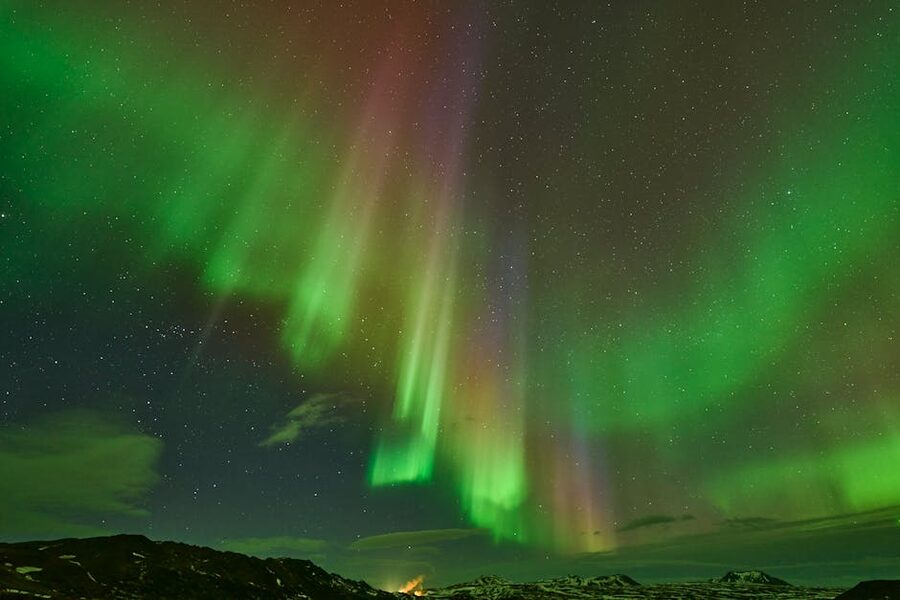
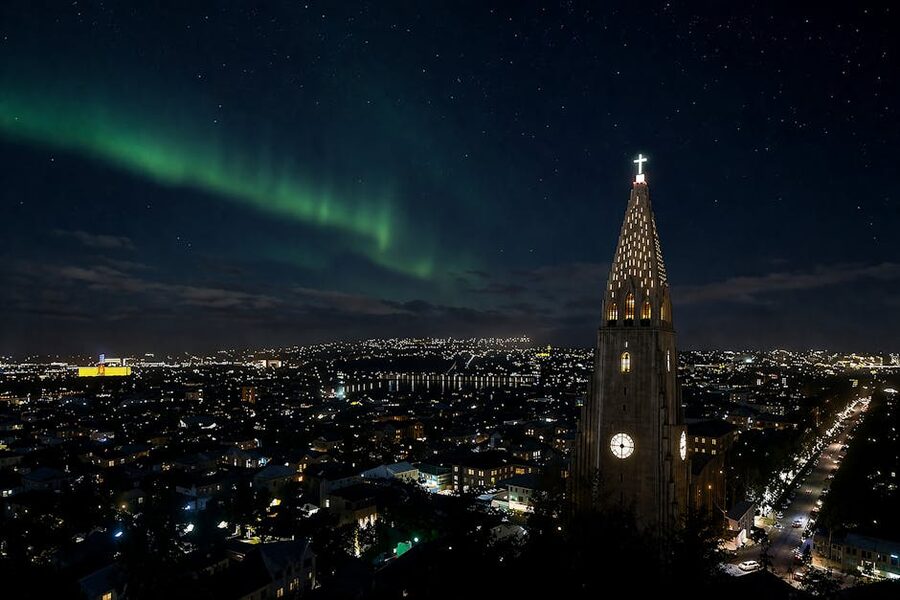
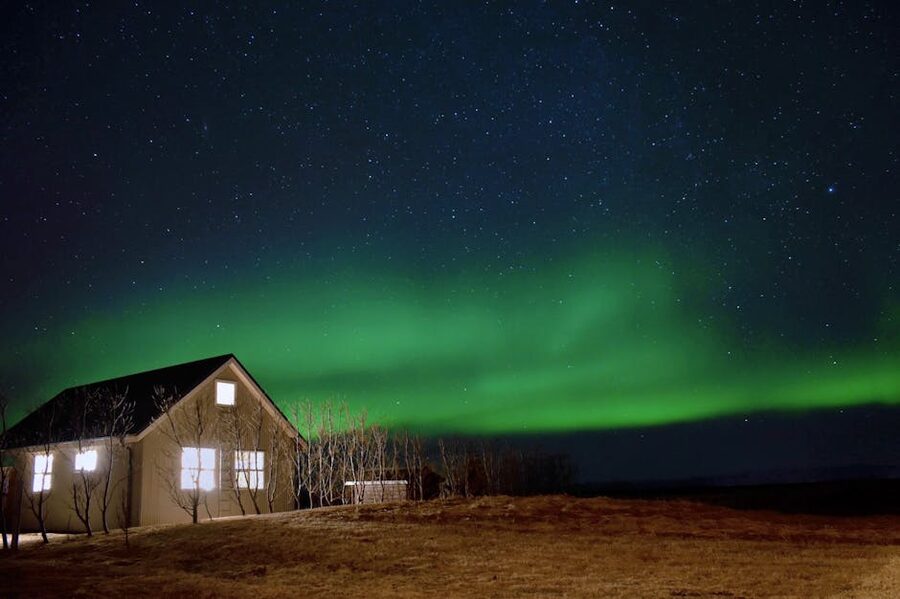
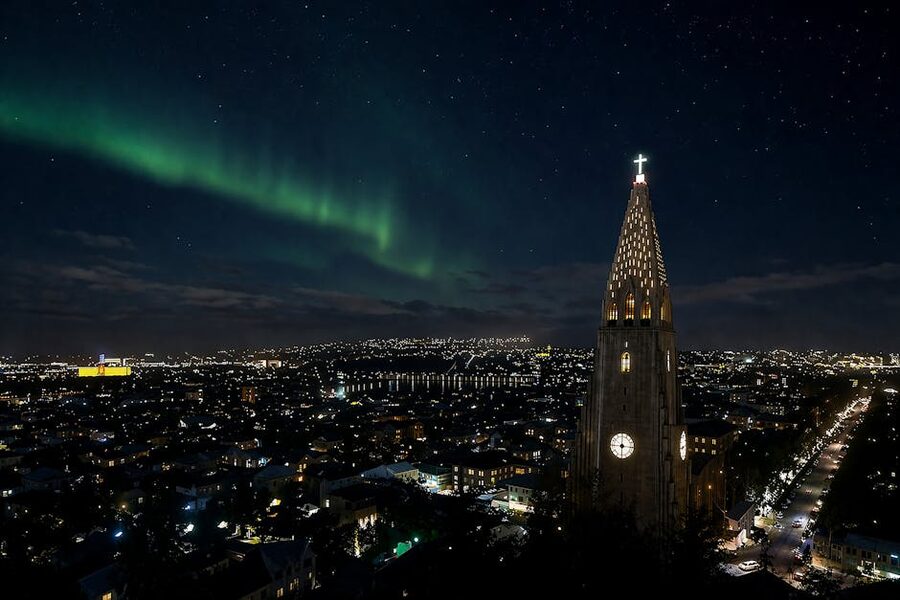
This is the part that quietly tips the scale toward September for a lot of trips. From late August onward the night sky goes properly dark again for a few hours. By the second week of September there’s enough darkness between roughly 10pm and 5am that, if KP is up and the sky’s clear, you’ll see them. Mid-month near a new moon is the sweet spot. The first big show of my year is almost always between the 10th and the 20th.
To be clear: the aurora is never guaranteed. You need three things to line up. Solar activity (KP index 3 or above is fine for Iceland because we sit under the auroral oval), clear skies, and being away from city light pollution. Two of those you can plan for. The third you can’t. Check the vedur.is aurora forecast in the early evening, look at the cloud-cover map alongside it, and if both look workable, head ten or fifteen minutes out of town.
You don’t necessarily need a tour. If you’ve rented a car, you can drive yourself to anywhere on the Reykjanes peninsula, around Þingvellir, or out toward the south coast and find a dark layby. If you’re in town without a car, a guided aurora tour from Reykjavík is the easier option, they monitor the forecasts professionally and shift the destination on the night to give you the best clear-sky shot. Pick one with a “free re-tour if no aurora” guarantee. Most of the reputable operators do.
The aurora hunting guide goes deeper on the chasing logistics, when to leave the hotel, what to bring, how to read KP and cloud cover together. If you’re coming specifically for the lights and aurora is your top priority, lean toward the second half of September, build in three or four nights so you can wait out clouds, and stay somewhere with low light pollution like Hella, Selfoss, or Hofn. Reykjavík itself is fine in a pinch but you’ll always do better outside it.
The autumn-colour window
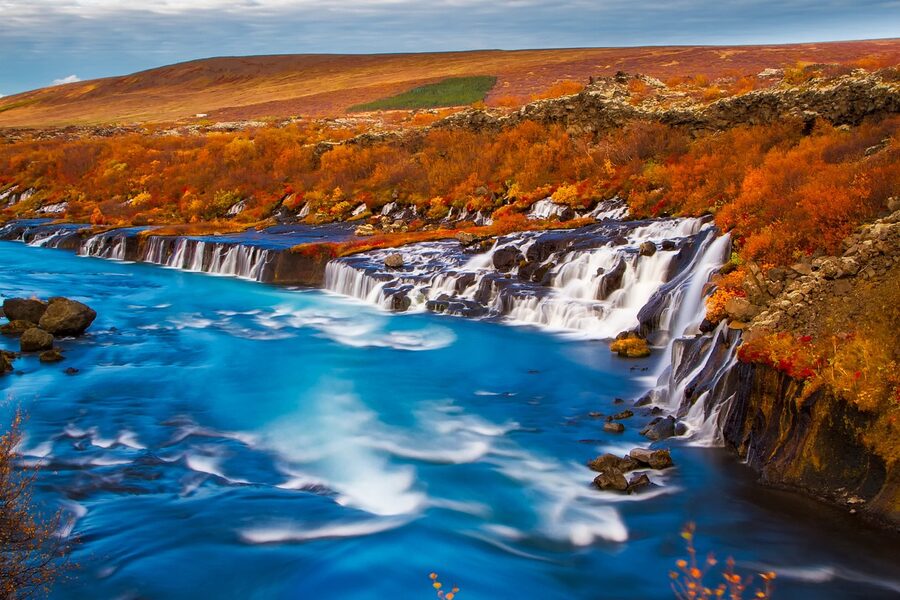
This needs a small expectation reset. Iceland’s autumn isn’t New England. The country is mostly treeless. What turns colour is the dwarf birch, the willow, the heather, and the moss, low, ground-hugging, more red and rust than New England’s flame orange. It’s a quieter palette and you have to be looking for it. Once you see it, you can’t unsee it. The hillsides take on this almost Persian-rug texture, brown-red, gold, and the occasional surviving green.
Timing-wise, the change tends to land mid-month and accelerates fast. North Iceland turns about a week ahead of the south. By the third week of September you’ll see meaningful colour at Þingvellir, in the Þórsmörk valley if you can get up there, in Skaftafell, and on the Snæfellsnes hillsides. The lupine season is long over (they peak in late June) so you won’t catch the famous purple, but the post-lupine grasses turn a deep straw-gold that photographs beautifully.
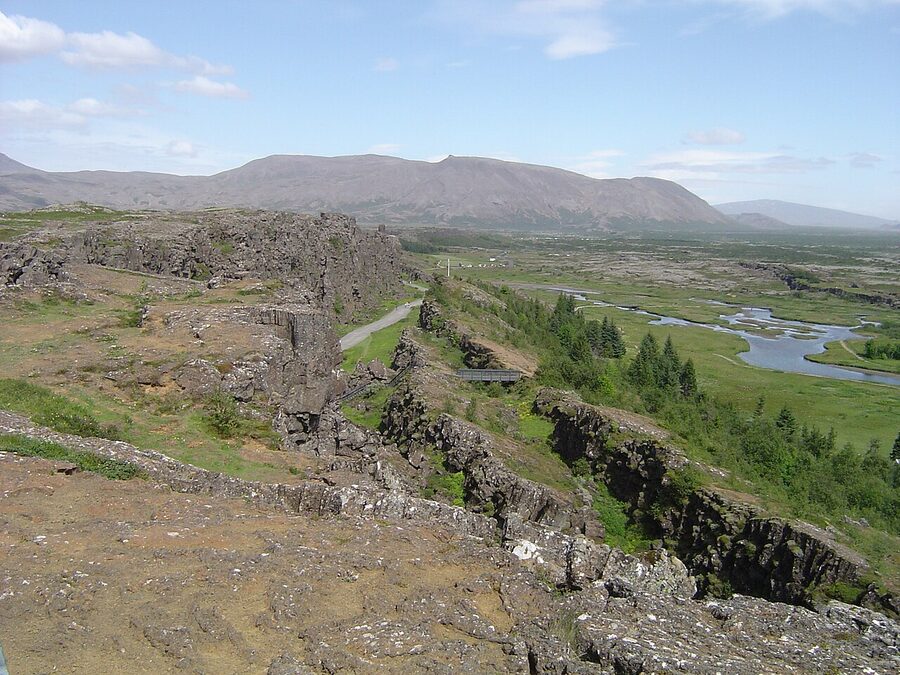
If autumn colour is a primary reason you’re coming, plan to be here in the third week. Þingvellir, Vatnshlíðarvatn near Akureyri, and the Þórsmörk side valleys are the highest-density colour spots I’d point a photographer at. The wind being what it is, the leaves don’t always last long once they turn, a single hard storm can strip the birch in 24 hours, so don’t bank a whole trip around peak foliage the way you would in Vermont. Treat it as a bonus.
What’s still open in September
The good news is that most of summer’s offering is still running. Tour operators don’t switch to winter mode until October. Whale-watching from Húsavík and Reykjavík still has high success rates (90%+ in early September, dropping to about 80% by month-end). Puffin season is over by mid-August, so you’ve missed those, but other birdlife is still around. Inside the Volcano at Þríhnúkagígur, the descent into a magma chamber that’s only operated mid-May to late October, runs through to 30 October so September is a perfectly good window for it.
The Westman Islands ferry from Landeyjahöfn runs the full schedule through September, dropping to a slightly reduced winter timetable at the start of October. Hornstrandir ferries from Ísafjörður wind down at the end of August or very early September, so if you wanted to hike the Westfjords nature reserve, that’s the one window that’s basically closed by now. Glacier hikes on Sólheimajökull and Skaftafellsjökull continue year-round and the September weather is actually some of the most reliable for them.
The Highlands tail-end
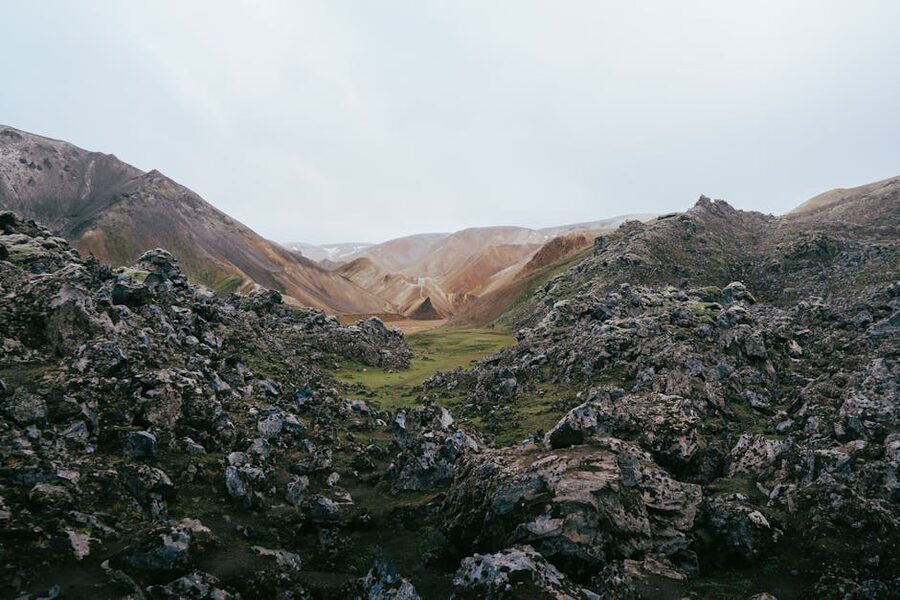
The interior, Landmannalaugar, Þórsmörk, the Kjölur and Sprengisandur tracks, is the most weather-dependent part of any September trip. The Icelandic Road Administration closes the F-roads when the first proper snow comes, and the timing varies year to year. Most years the early F-roads start closing around the second half of September, with the higher and more remote ones (F210 to Þórsmörk via Krossá, F35 across the interior) usually closed by the end of the month. F26 Sprengisandur often shuts earliest because the river crossings get unpredictable.
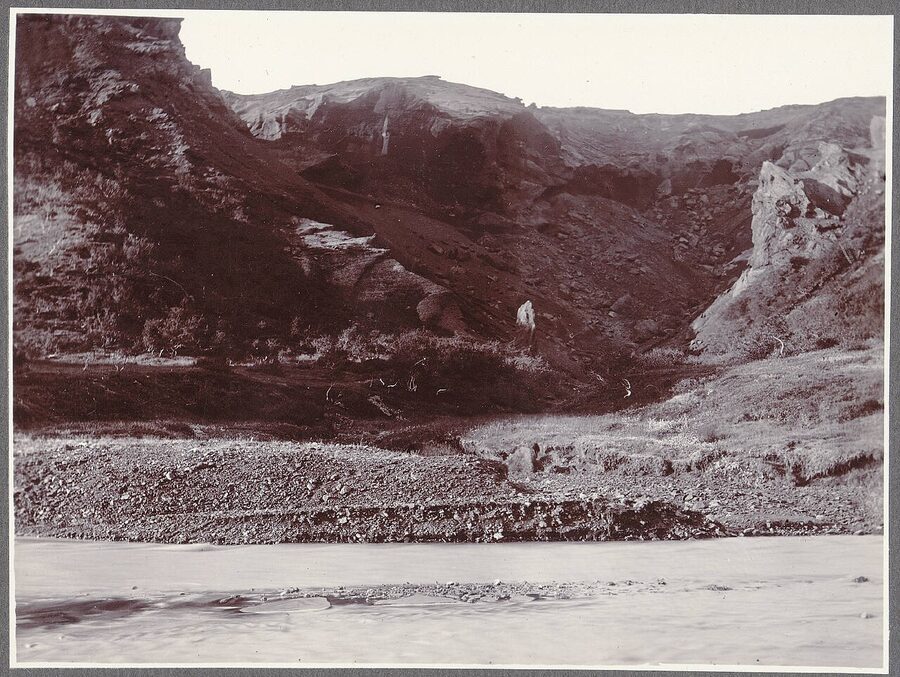
Check road.is the morning of any highland day, not the night before. Conditions change overnight. If you’re set on the highlands, come in the first ten days of September and you’ll usually have access. After the 15th it becomes a coin flip. After the 25th it’s almost certainly closed for the season. A Reykjavík-based superjeep day tour with operators like Mountaineers of Iceland or Arctic Adventures is the safer way to access Þórsmörk in the second half of the month, they have the vehicles for the river crossings and they cancel rather than risk it when the rivers are too high.
The Ring Road, calmer
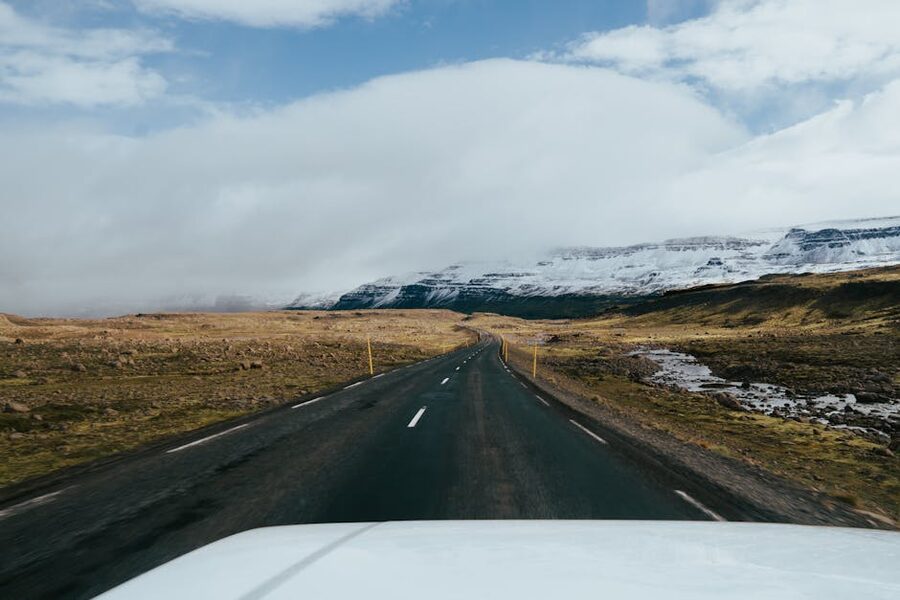
September is genuinely a good month to drive Route 1 the whole way around. Roads are mostly clear of snow except possibly in mountain passes the very last days of the month. Traffic is thinner. Hotels and guesthouses, which book up months ahead in summer, often have rooms 48 hours out. Petrol stations are all open. The only complications: shorter days mean tighter daily distances, and weather can close one section while another sits in sun, so you may have to flex your itinerary.
For a full clockwise loop, eight days is the right length. Seven works but you’ll feel rushed at the east. Ten is luxurious. The basic outline I’d suggest: Reykjavík to Vík to Höfn (south coast); Höfn to Egilsstaðir (east fjords); Egilsstaðir to Mývatn to Akureyri (north); Akureyri to Borgarnes to Reykjavík (closing the loop, optionally via Snæfellsnes). The full Ring Road guide has stop-by-stop notes and where to overnight.
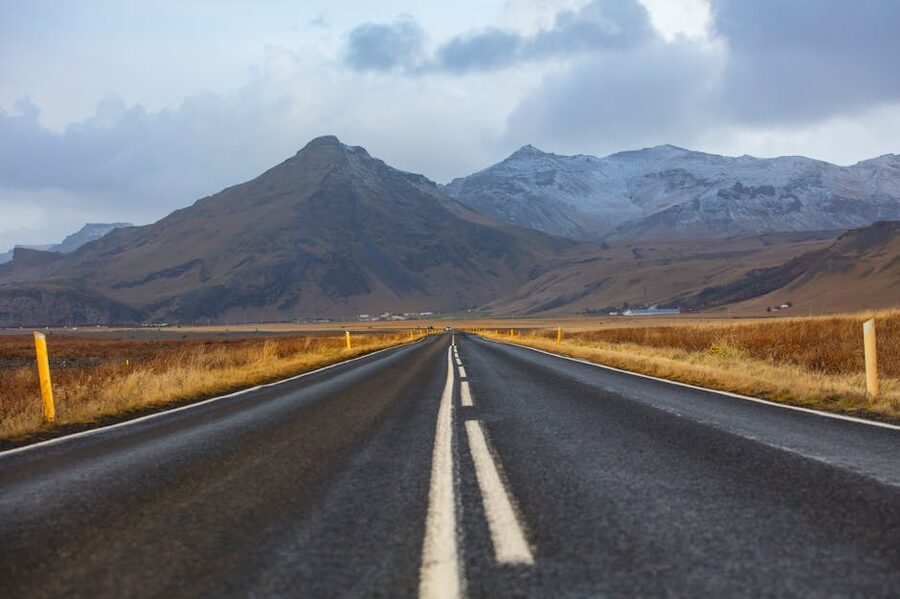
For car rental, you want a 4WD. A small Dacia or Suzuki is fine if you’re sticking to Route 1, but the moment you want to take the road into Þórsmörk, the back way to Glymur, or any of the more interesting side trips, a 2WD will leave you stranded. Northbound is a good comparison engine that aggregates Icelandic rental companies. Blue Car Rental is the one I quietly use myself, straightforward, no nonsense on the gravel-and-ash damage waiver wording, easy pickup at the airport.
Reykjavík in shoulder season
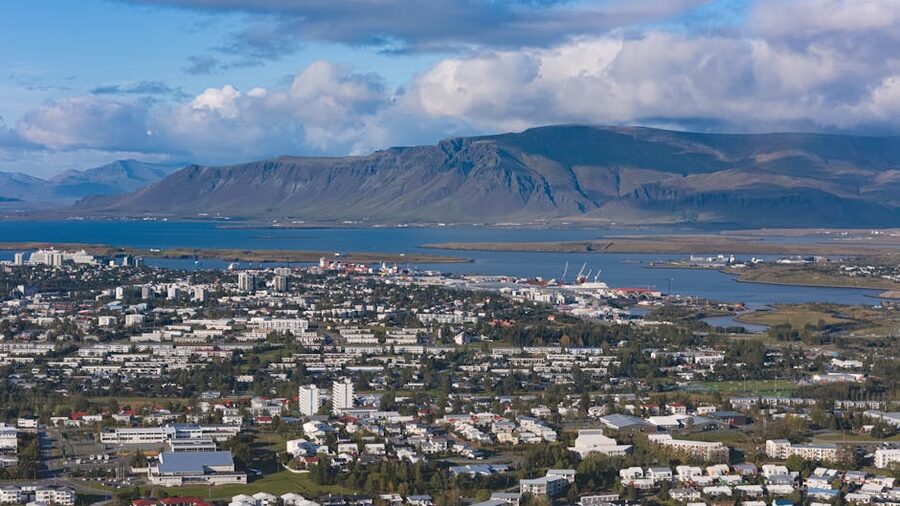
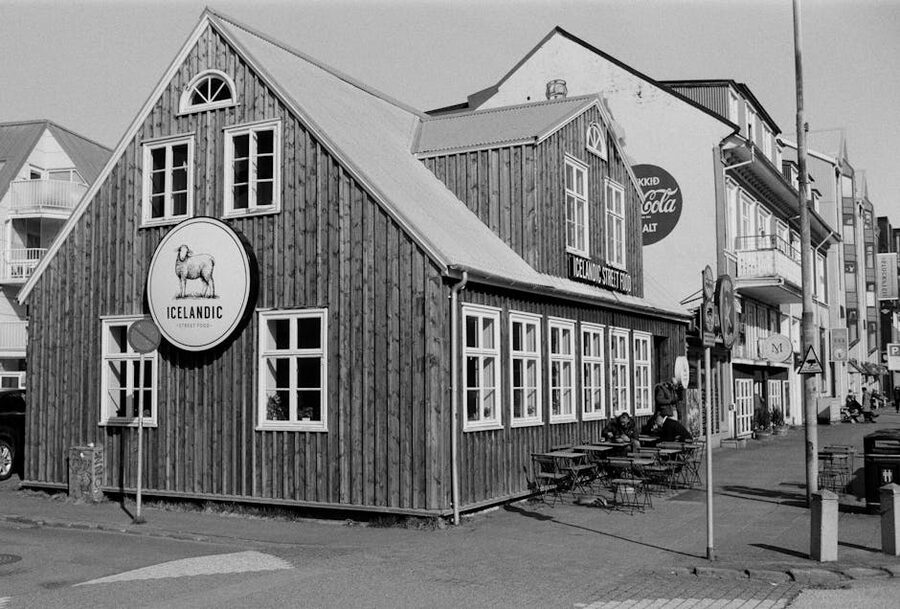
The capital is at its best in shoulder months. Cruise-ship traffic eases (most ships have wrapped their season by mid-September). Restaurants take bookings 24 hours ahead instead of two weeks. The Saturday morning routine at the public pools, Sundhöllin, Vesturbæjarlaug, Laugardalslaug, is back to mostly locals, so you actually overhear Icelandic at the hot pots. The cafés along Laugavegur and Skólavörðustígur stop being completely full and you can sit at one with a book without queuing.
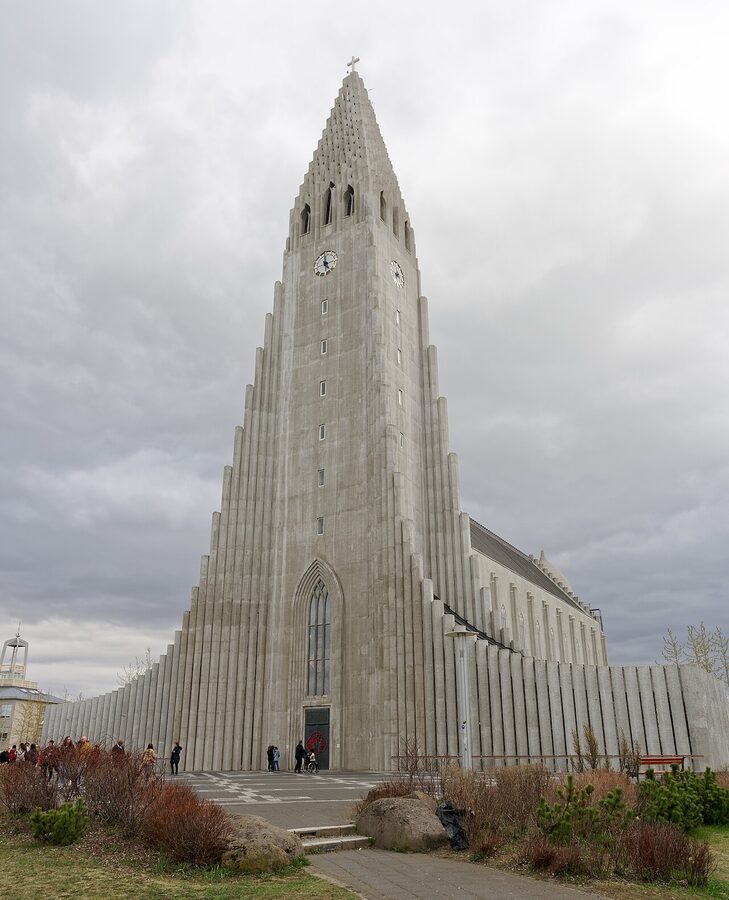
The classic Reykjavík day works fine in September. Walk up Skólavörðustígur to Hallgrímskirkja, take the lift up the tower (1,500 ISK or so, gets you the best view of the city colour patterns), come back down the rainbow street, drop into Mokka or Reykjavík Roasters for a coffee, head down to the harbour for the Sun Voyager and the Harpa concert hall, eat at one of the harbour-area places (Matur og Drykkur, Kopar, the food hall at Grandi). The Reykjavík city guide goes deeper on neighbourhoods and where to actually eat.
Festivals and events
The big September anchor is the Reykjavík International Film Festival (RIFF), which runs from 24 September to 4 October in 2026. It’s an indie-leaning festival, first and second features in competition, and it runs everything from regular cinema screenings to swim-up cinema in geothermal pools and screenings inside actual lava caves. Tickets are easy to grab on the day; few sessions sell out. If you’re going to be in Reykjavík in those final days of September, build in an evening for it.
The Reykjavík Marathon sits at the very end of August (22 August in 2026) so technically it’s pre-September, but the Reykjavík Culture Night (Menningarnótt) runs the same weekend, and the post-marathon vibe carries into the first week of September. You won’t catch the marathon itself unless you’re here on the 22nd, but the city tends to be in a slightly festive mood for a few days after.
Réttir, the sheep round-up
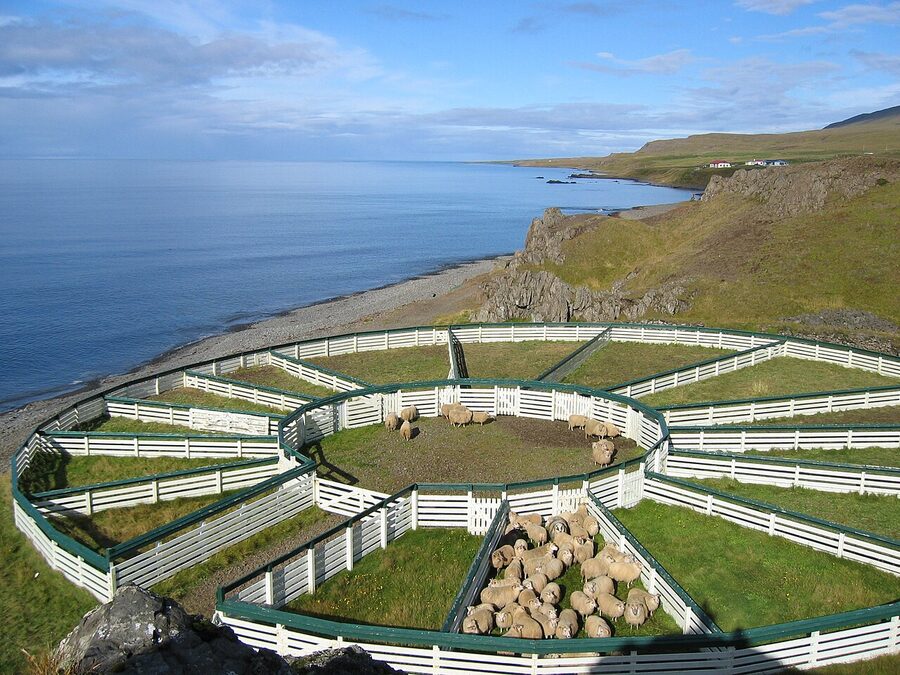
If you want a single experience that few visitors ever see, this is it. Through September, farmers across rural Iceland walk their sheep down from the highland summer pastures to lower ground for winter. The animals get sorted at a rétt, a circular wooden pen with radiating sections, one section per farm. The sorting itself takes a long, social afternoon, multiple generations of the same family, plus the inevitable kids in wellingtons running around, and most réttir are public-welcome. The northern réttir tend to happen first, often in the second week of September, and the timing rolls south through the month.
Specific dates aren’t published far in advance. The Visit Iceland sheep round-up page has a region-by-region list closer to the day, and asking at any rural information centre will usually get you a date within a 24-hour window. Skaftholtsréttir in Skagafjörður and Auðkúlurétt are well-known and easy to drop in on. The thing to know: dress warm, don’t try to help (you won’t recognise your own farmer’s mark), and bring a camera, the dust, the wool, the late-afternoon light, and the long line of sheep coming down the slope photograph beautifully.
What to actually pack
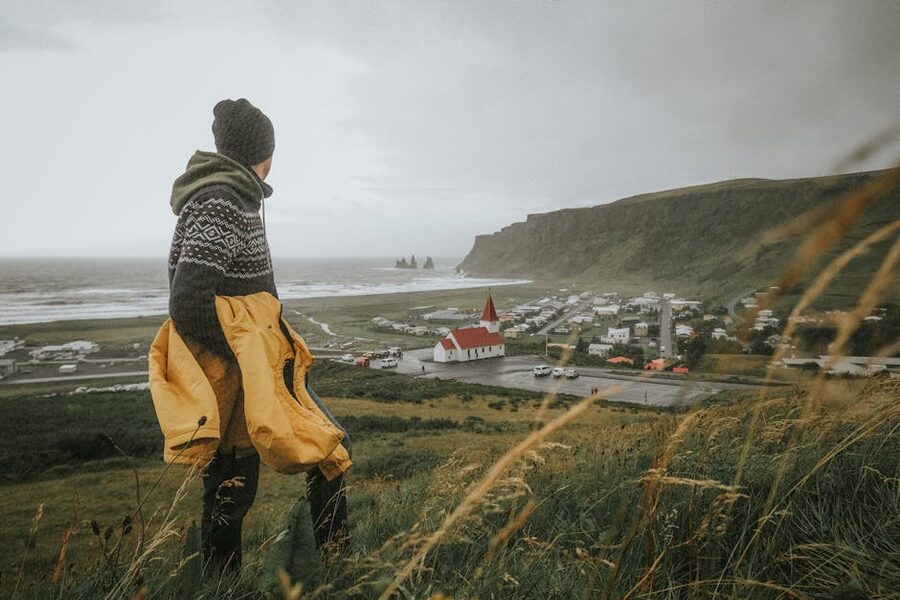
The September packing list isn’t long but it’s specific. The principle is layers, three light layers will keep you warmer than one thick one, and you can shed and add through a single afternoon as the weather flips.
Base layer: merino wool or a synthetic equivalent. Mid layer: fleece or a light down sweater. Outer layer: a proper waterproof shell jacket, not a “water-resistant” one. Same for trousers, waterproof shell pants you can pull on over jeans. A warm beanie. Light gloves (you’ll want them in the second half of the month, especially north of Akureyri). Decent waterproof boots with ankle support, gravel and uneven volcanic terrain is hard on flat trainers. Wool socks, not cotton.
Things people forget: a buff or neck gaiter (cuts the wind), a head torch (if you’re driving in late September, sunset is at 7pm and you’ll appreciate it for finding things in the rental car footwell), and sunglasses with proper UV cover (the low autumn sun goes straight through your windshield and is genuinely brutal driving east in the morning or west in the late afternoon). A sleep mask is still useful in the first week of September if you sleep light, sunset at 8:40pm and sunrise at 6:10am is still bright at the wrong end of a hotel room.
Skip: the umbrella, the dressy clothes, the “just in case” extra big jacket. Iceland is informal everywhere. A clean fleece over your base layer is fine for any restaurant, including the Michelin-starred ones.
The south coast in September
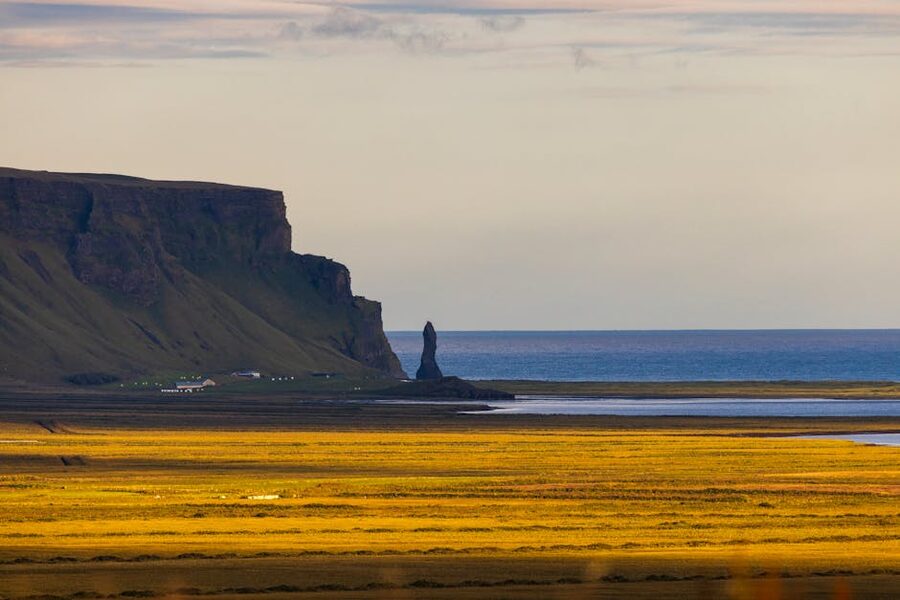
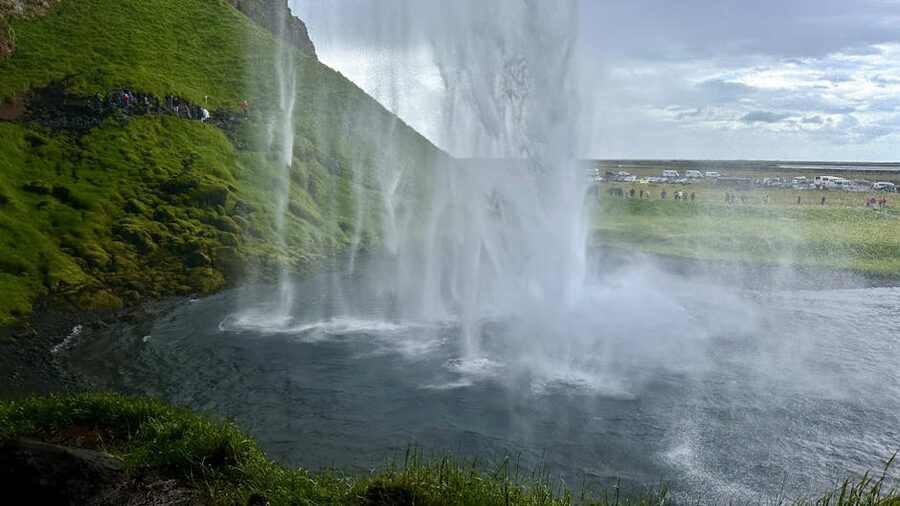
The south coast is the most-driven stretch in Iceland and September is when it becomes properly enjoyable again. Reykjavík to Vík and back is doable in a long day if you’re up at 7am, but I’d give it two days and overnight at Vík or Hella so you’re not rushed. The standard sequence: Seljalandsfoss and Skógafoss, the DC-3 wreck on Sólheimasandur (a 4km flat walk each way from the parking, or take the shuttle), Reynisfjara black-sand beach at Vík, then dinner.
Real safety note about Reynisfjara: the so-called “sneaker waves” come in unpredictably and faster than you can outrun them. People drown here. Stay back from the high-tide line, watch where the locals stand, and never turn your back on the water. The basalt columns and Reynisdrangar sea stacks are magnificent, there’s just no need to die for them.
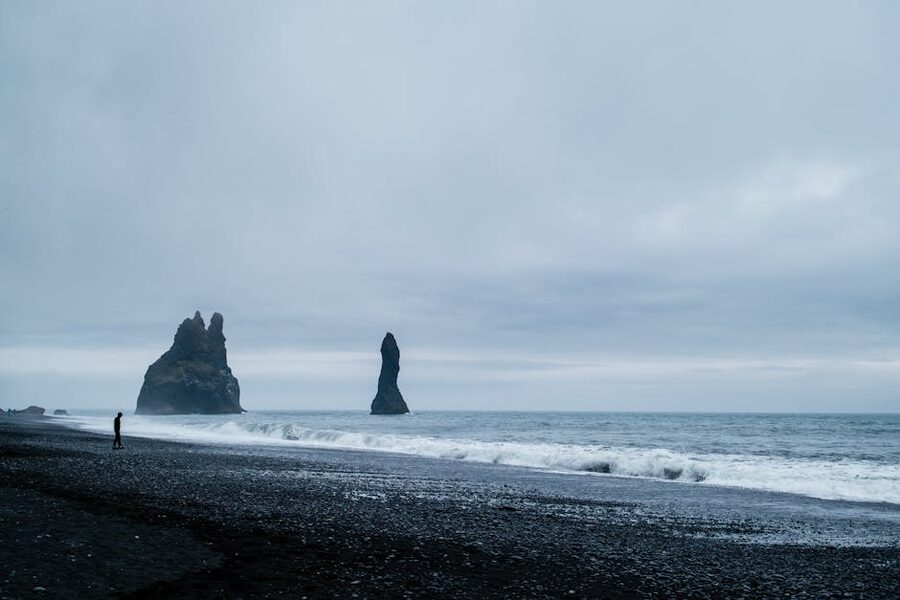
If you’ve got the third day, push on east to Skaftafell and Jökulsárlón. This is where September’s lower-angle light starts paying off. Skaftafell has a gentle 1.8km walk to the Svartifoss columnar-basalt waterfall that’s one of the country’s prettiest short hikes, and from the visitor centre you can see Skaftafellsjökull glacier tongue without much walking. Jökulsárlón is two more hours of driving and a major stop, the floating bergs and the seal colonies in the bay are best mid-afternoon to sunset.
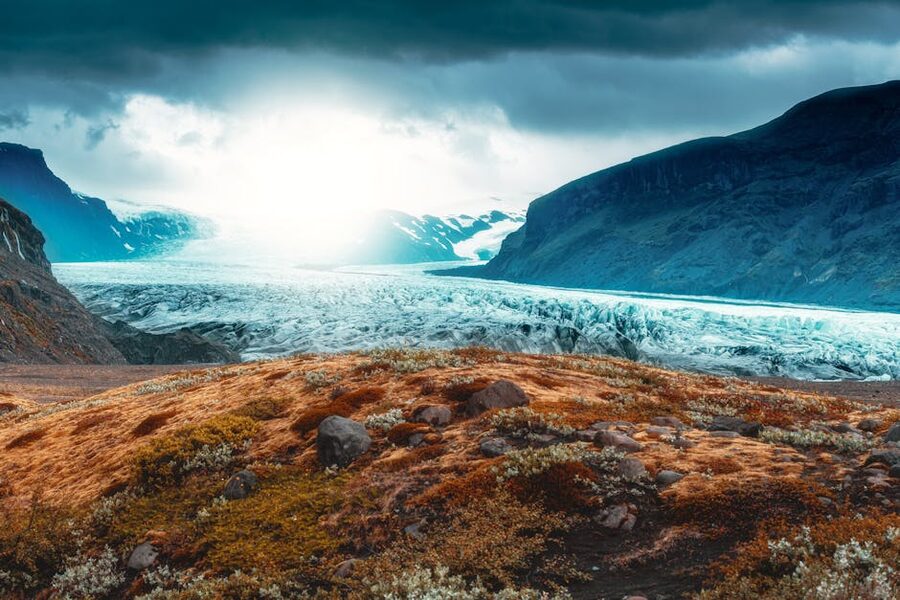
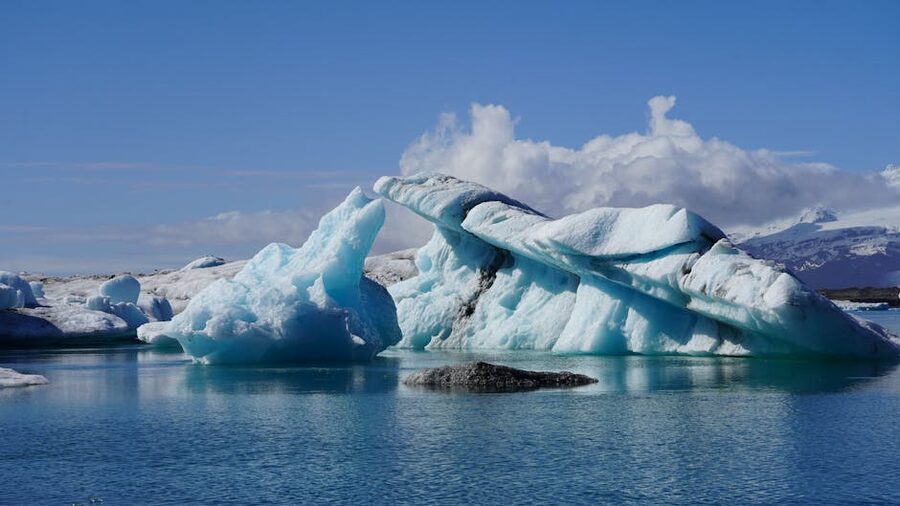
Höfn is your overnight base if you want to push further east. From Höfn to Egilsstaðir is about three and a half hours along a gorgeous east-fjord coast where you’ll often have the road to yourself in shoulder season. The fjord road climbs over a series of low passes and drops down into each fishing village in turn, Djúpivogur, Breiðdalsvík, Stöðvarfjörður, most of which have one café and a population in the low hundreds.
North Iceland in autumn light
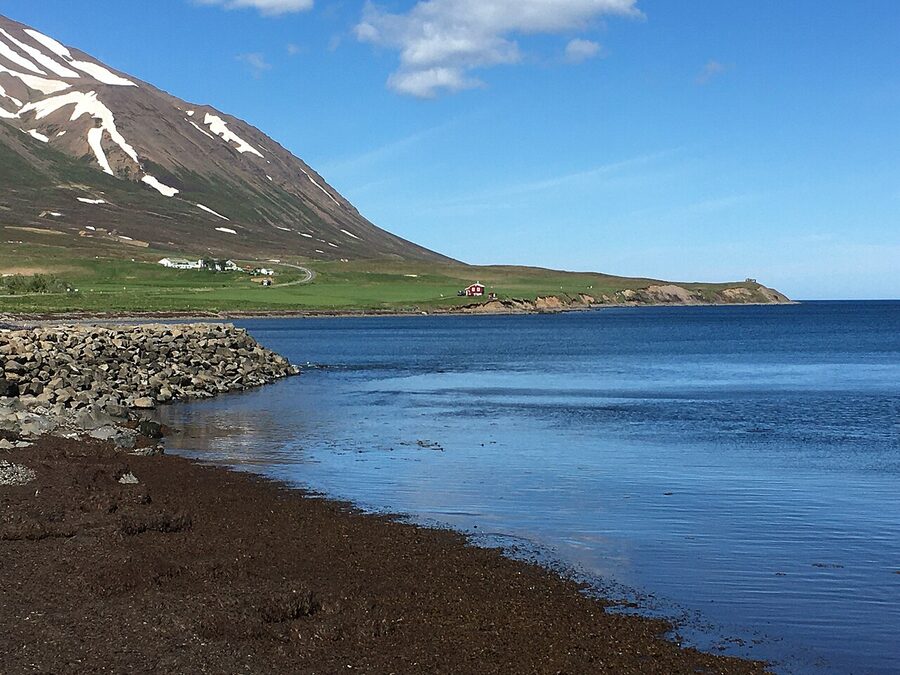
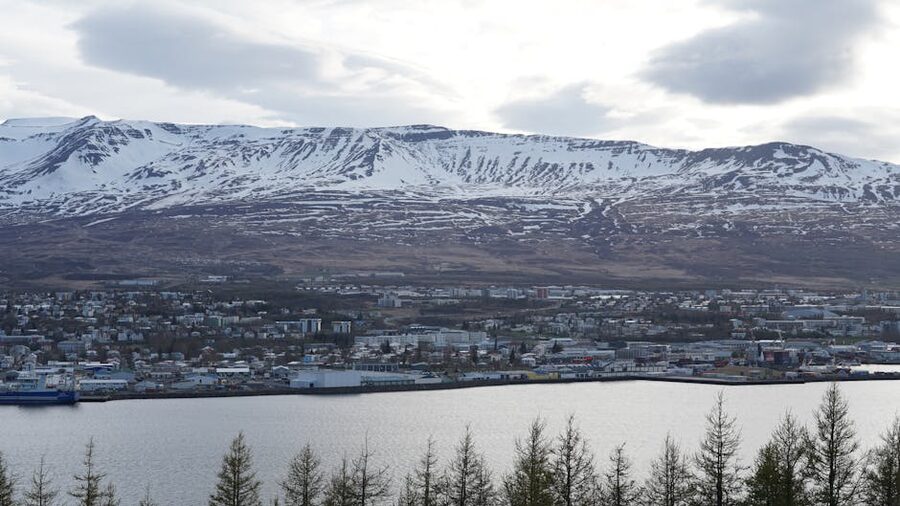
Akureyri is the second city, but “city” is generous, it’s about 19,000 people sitting at the head of a long fjord on the north coast. It’s also the most logical base for the Mývatn/Goðafoss/Húsavík cluster of sights, all within an hour or so. In September the colour change here is more pronounced than further south because the latitude pushes things forward by about a week. Akureyri’s botanic garden, free to enter, is at its most photogenic in mid-month.
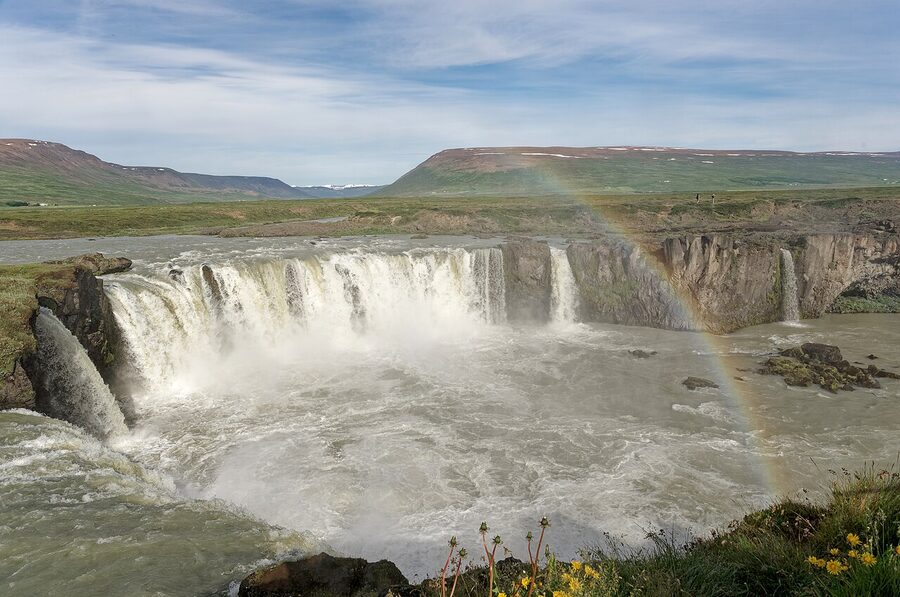
Goðafoss, the “waterfall of the gods”, named after the year 1000 when the Lawspeaker is said to have thrown his old Norse pagan idols into it, is half an hour east of Akureyri and worth a stop in either direction. The new viewing platforms on the east side are flat and accessible. The west side requires a short scramble down but gives you the better mid-afternoon angle.
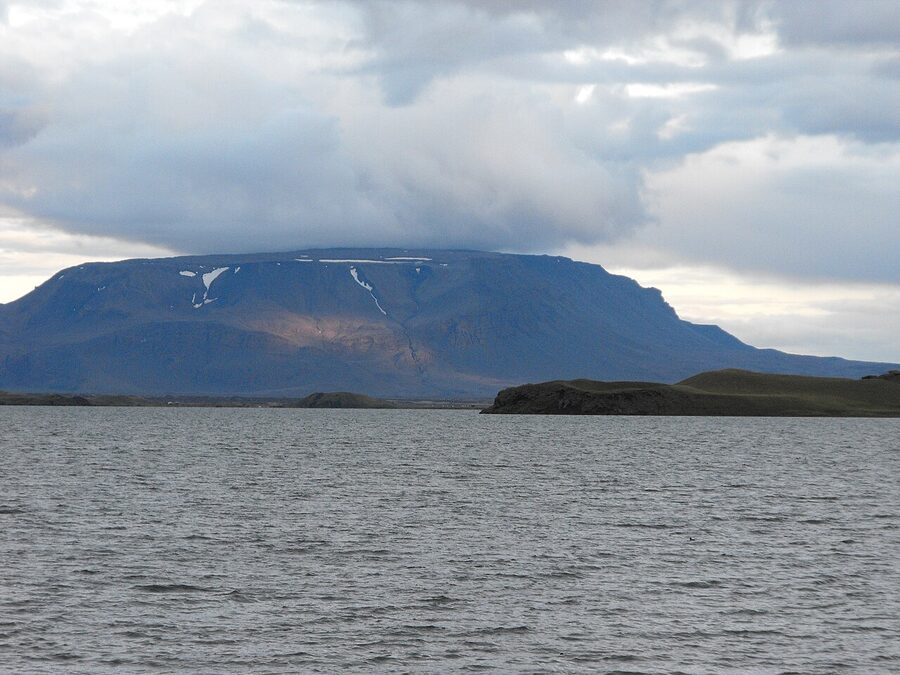
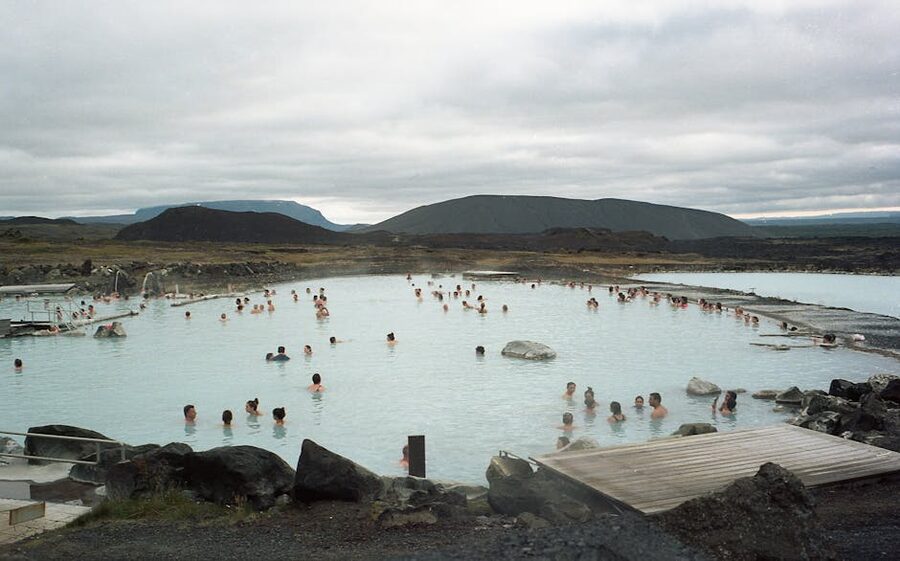
Mývatn is a geothermal lake area an hour beyond Goðafoss. The Dimmuborgir lava formations, Hverir’s bubbling mud pots, and the Mývatn Nature Baths (the local equivalent of the Blue Lagoon, half the price, far less crowded) make a full day. If you want a soak without paying Blue Lagoon prices, Mývatn Nature Baths is what locals from the north use, about 6,500 ISK adult entry. The water has that same milky blue from silica and mineral content.
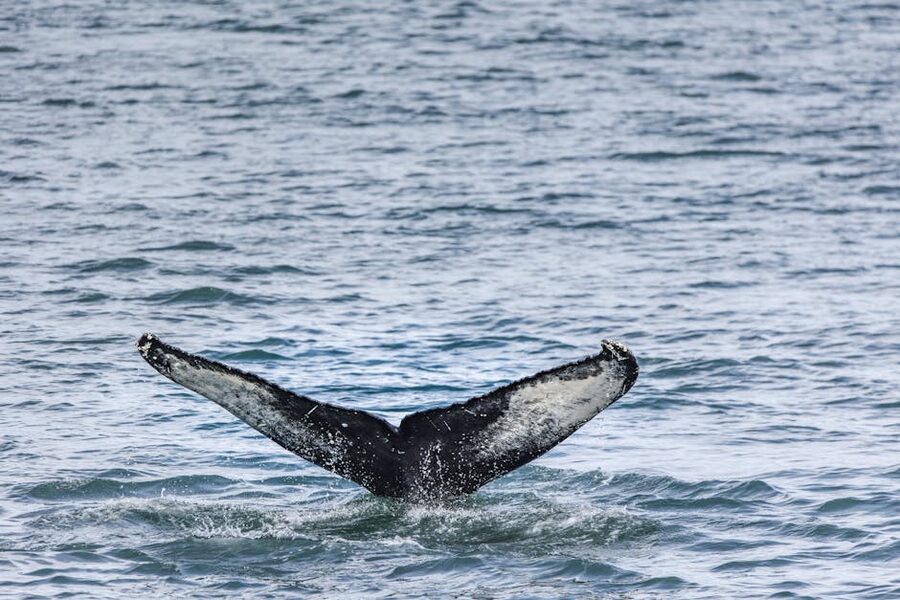
From Akureyri you can also do Húsavík for whale watching. North Sailing and Gentle Giants are the two main operators, both running on traditional schooners and oak boats. September success rates are still well above 90%, humpbacks are the main draw, sometimes minkes and white-beaked dolphins. Bring more layers than you think you need; the wind on a boat is meaner than on land.
The east, when you can get there
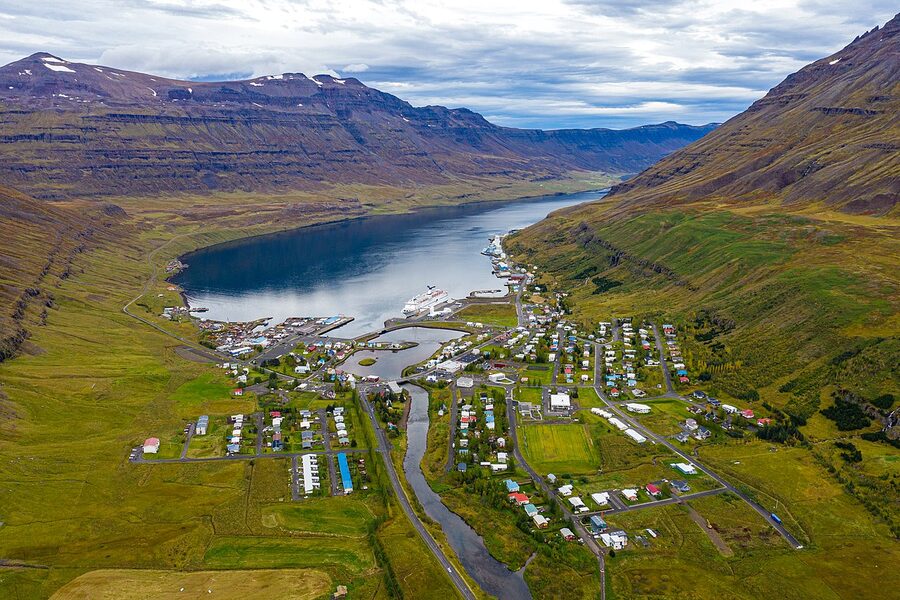
The east is the quietest region of Iceland year-round and September is when you really feel it. Egilsstaðir is the biggest town in the east at about 2,700 people. Seyðisfjörður, half an hour east over a high pass, is the famous photogenic village with the rainbow road leading to the blue church. The pass road (Route 93) gets a dusting of snow most years in late September, so check it before you commit.
The east is where I’d send someone on a return trip to Iceland, not a first trip. There’s less postcard-iconic than the south, but the slowness is the point. You can sit in a café in Seyðisfjörður and not see another tourist for an hour. The fjords are deep and quiet and the road clings to the water all the way down to Höfn.
Snæfellsnes, Iceland in miniature
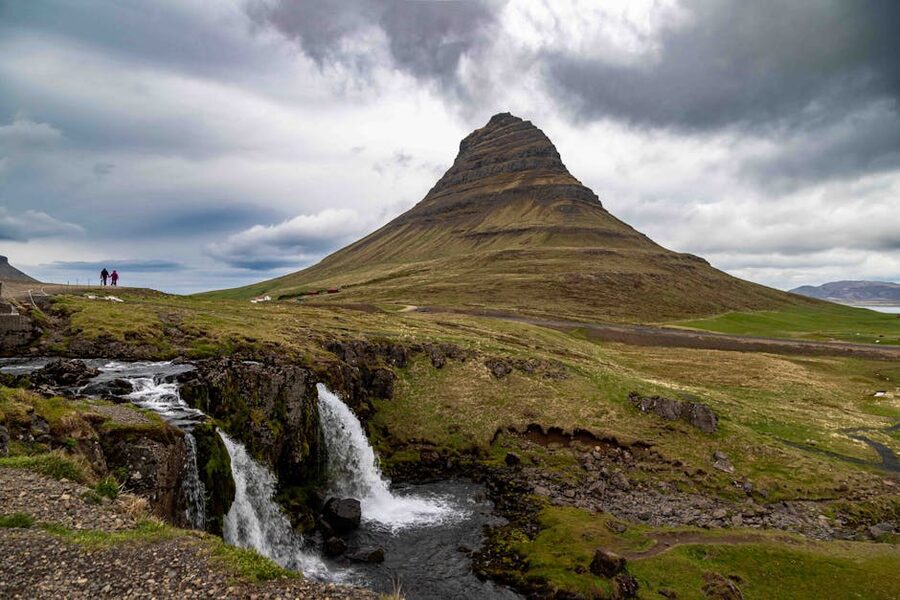
If you only have a few days and you can’t do the full Ring Road, Snæfellsnes is the day-trip-from-Reykjavík alternative that gives you a compressed version of everything. Glaciers, lava fields, beaches, fishing villages, Iceland’s most-photographed mountain (Kirkjufell at Grundarfjörður), and the Snæfellsjökull volcano that Jules Verne sent his characters through to the centre of the earth. Two hours from Reykjavík to the southern coast of the peninsula, then a slow loop.
In September the peninsula is at its quietest of the practical season. Tour buses still run but in lower numbers. Stykkishólmur is a working fishing town with one of the best small museums in Iceland (the Library of Water, an art installation in an old library building, free). Arnarstapi has a basalt-column coast walk that’s flat and beautiful. The full Snæfellsnes guide has the full route.
Hot springs and lagoons in autumn air
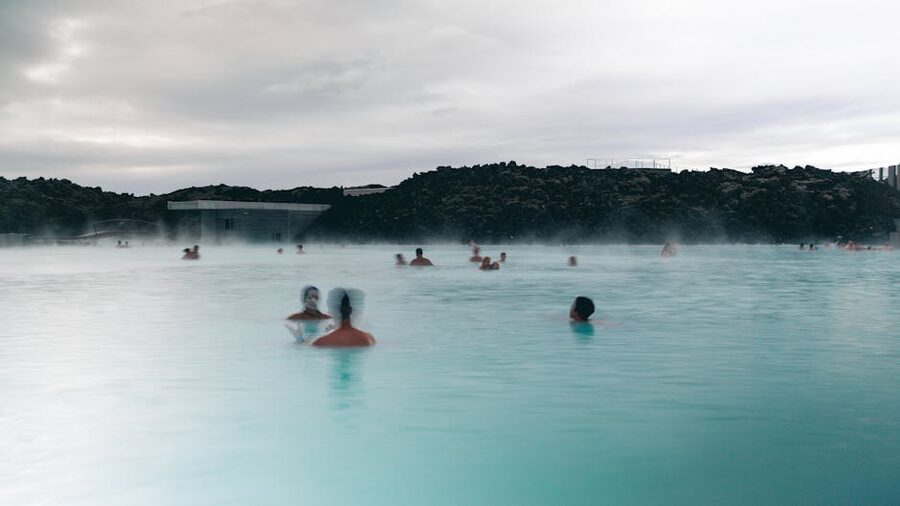
Hot springs are arguably better in shoulder season. Cold air, hot water, steam rising, the contrast is the point, and September gives you that without subjecting you to a January storm. The Blue Lagoon remains the famous one and is worth doing once, but book the early-morning slot (8 or 9am, before the airport-pickup crowds) and you’ll have a different experience to the midday tourist crush. Standard entry is around 12,000 ISK in September, ramping up by booking class.
Sky Lagoon is the modern alternative on the Reykjavík edge, built into the cliff edge with an infinity-style pool that looks out over the bay. The seven-step ritual (sauna, cold plunge, steam, body scrub, etc.) is the gimmick and it actually works. I prefer it to the Blue Lagoon for atmosphere; the Blue Lagoon’s design is showier, but Sky Lagoon’s view is better and the crowds are smaller.
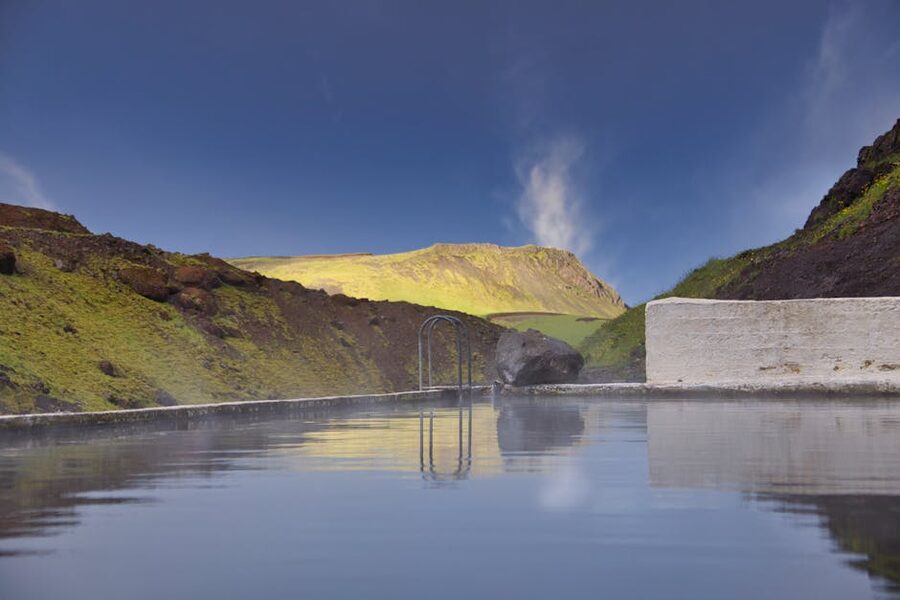
For the wild option, Reykjadalur (an hour from Reykjavík, 90 minutes’ moderate uphill walk to a hot river you sit in fully clothed in your swimwear) is in its absolute best season. Cold air on the walk in, then steam rising off the river when you arrive. Free, no booking required. A more adventurous option is Landbrotalaug on Snæfellsnes, a tiny natural pool that fits two adults, go early or late to have it to yourself. Read the full hot springs piece for the longer list.
The cost of a September trip
Concrete numbers based on rates I’ve checked recently. Hotel pricing in Reykjavík for a mid-range double in September runs around 28,000 to 38,000 ISK per night, against 38,000 to 55,000 in July. Outside Reykjavík the gap is wider, countryside guesthouses that charge 32,000 ISK in summer drop to 22,000 in September. Self-catering apartments have the smallest gap. A small 4WD rental for a week from a comparison engine like Northbound sits around 80,000 to 110,000 ISK in September against 130,000 to 170,000 in July.
Tour pricing doesn’t shift as much. The big bus operators (Reykjavik Excursions, Gray Line) and the smaller Highland 4WD specialists run the same prices. What you save is on availability, you can book day-of in September where July requires booking weeks ahead. If you’re booking accommodation through Booking.com, the standard hotels aren’t dramatically cheaper but the small guesthouses are.
Overall budget for two adults, eight days, mid-range, flights aside, works out around 600,000 to 900,000 ISK including car rental, accommodation, fuel, food, and a couple of paid activities (Blue Lagoon, an aurora tour, a glacier hike). That’s 30 to 40% less than the equivalent in mid-July.
What to skip in September
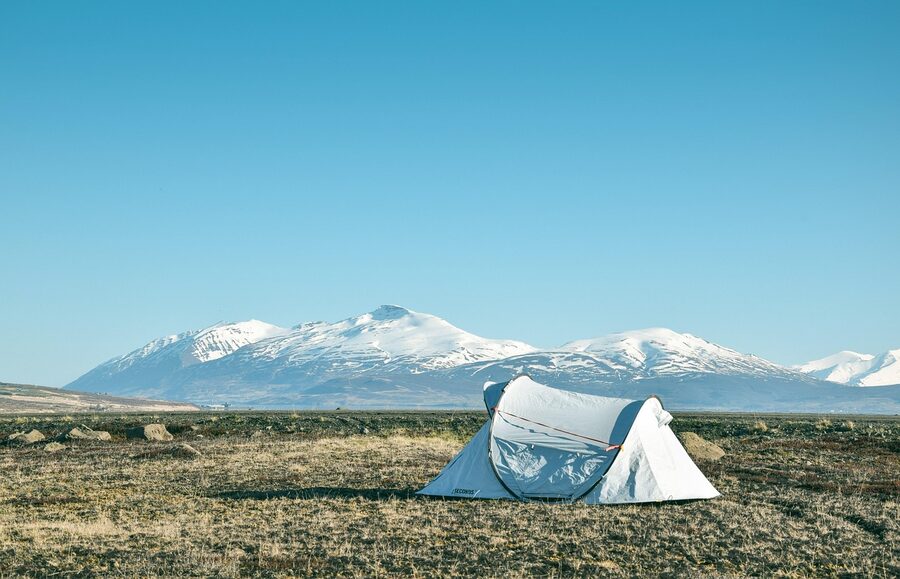
Camping after the second week of the month is for the experienced and committed. The wind chills get serious, the rain becomes more frequent, and most of the established campsites start closing or going to self-pay winter mode. If you’re new to Iceland or new to camping, just don’t. A guesthouse for 22,000 ISK is a much better night’s sleep than a tent in horizontal rain.
Beach swimming is also out, and it always is in Iceland. The North Atlantic stays at 8 to 10°C through summer, drops further in autumn. People do it as a stunt, not as a swim. The hot pots and lagoons are where you actually want to be.
Trying to see all of Iceland in four or five days. The country looks small on the map but the distances are deceptive. Five days lets you do the south coast properly, plus a Golden Circle day, plus one downtime day in Reykjavík. Eight days lets you do the full Ring Road. Less than five and you’re going to spend the trip in the car. Add days, not stops.
A sample seven-day September itinerary
This is the version I’d send a friend who’s flexible on dates and wants the country at its photogenic best.
Day 1. Land at Keflavík, pick up car, drive into Reykjavík (45 minutes). Walk Skólavörðustígur and the harbour, climb Hallgrímskirkja, dinner near the harbour. Early to bed, jet lag is real and tomorrow’s an early start.
Day 2. Golden Circle. Þingvellir, Geysir, Gullfoss, with an afternoon stop at Secret Lagoon (cheaper and quieter than Blue Lagoon, 4,500 ISK). Back in Reykjavík for the evening. If the aurora forecast is up, a guided aurora tour from Reykjavík.
Day 3. South coast. Seljalandsfoss, Skógafoss, the wreck walk, Reynisfjara, overnight Vík.
Day 4. Vík to Höfn via Skaftafell (Svartifoss walk) and Jökulsárlón. Long day but the scenery is the trip’s high point. Overnight Höfn, aurora possibilities are strong this far from any city.
Day 5. Höfn to Egilsstaðir along the east-fjord coast. Slow day, lots of stops at fishing villages. Overnight Egilsstaðir or push on to Seyðisfjörður if the pass is open.
Day 6. Egilsstaðir to Akureyri via Mývatn. This is a longer driving day but Mývatn is an essential stop. Overnight Akureyri.
Day 7. Akureyri to Reykjavík. The longest single day on the loop (about five and a half hours) but you can break it at Hvammstangi for seal-watching or Borgarnes for the Settlement Centre. Drop the car at Keflavík next morning for the flight.
An eight-day version adds a Snæfellsnes loop on Day 7 and pushes the Reykjavík return to Day 8. A six-day version cuts the east section and goes Reykjavík → south coast → Vík/Höfn → back via interior on Day 6.
A shorter five-day version
If you’ve only got five days, the realistic version is: Reykjavík and Golden Circle on Days 1 and 2; south coast (Vík + Jökulsárlón overnight) on Days 3 and 4; back to Reykjavík via Sky Lagoon on Day 5. You won’t see the north or east, but the south coast is the photogenic highlight reel anyway. Don’t try to add the north on a five-day trip, you’ll end up with two extremely long driving days that consume the time you saved.
Booking the right way ahead
Hotels and guesthouses in popular areas (Vík, Höfn, around Mývatn, Akureyri) book up earlier than you’d think for September. Three to four months ahead is comfortable. One month is doable but you’ll be reaching for second-choice options. Two weeks out, in central Reykjavík, you’ll find rooms but probably not at the best places.
For mid-range, Hotel Rangá at Hella is one of the better-positioned south-Iceland places, a working aurora hotel with wake-up calls when the lights appear. Hotel Höfn at Höfn is the most reliable east-coast base. Berjaya Hotel Akureyri is the standard north-base choice. In Reykjavík itself, Sand Hotel on Laugavegur is a good central option that doesn’t feel like a chain.
Tours are a different timeline. The big bus tours (Reykjavik Excursions Golden Circle, Arctic Adventures glacier hikes, Mountaineers of Iceland superjeep) you can book a few days ahead. Inside the Volcano sells out further ahead, book three to four weeks out for September dates. Whale watching from Húsavík and aurora tours from Reykjavík you can book the day before.
The bigger picture, briefly
If September is the locals’ month, October is the photographer’s month and August is the tourist’s month. Knowing which of those three you are tells you more than any guide can. A first-time visitor who wants the iconic Iceland, a chance at aurora, and easy logistics is best served by the second and third weeks of September. Someone who wants empty Highlands and warm weather should be here in late June or early July. Someone who wants long winter aurora and ice caves should come in February or early March. The when-to-visit overview goes through every month.
The downsides of September, to be fair: the weather genuinely is more variable than mid-summer, you’ll spend some days inside, and one or two stops on a planned itinerary may get rain-cancelled. The Highlands aren’t a guarantee. The aurora isn’t a guarantee either. If you need certainty, June or July is more reliable. If you want maximum range, summer access, autumn light, returning aurora, lower prices, September gives you all four in a single window, and nothing else does.
What I’d actually do
If somebody told me they had eight days in mid-September and a flexible budget, here’s the trip. Land Reykjavík on a Saturday, rent a 4WD from Blue Car Rental, full clockwise Ring Road starting Sunday morning. Two nights at Höfn (the southern light is the best of the trip, you want a slow morning at Jökulsárlón). One night at Egilsstaðir. Two nights at Akureyri (one for Mývatn day, one for whale-watching from Húsavík or to slow down at Goðafoss in good light). Drop back to Reykjavík via Borgarnes and add a Snæfellsnes loop on the last full day. Fly out the morning after.
If the aurora hits one of those nights, change the plan. Drive out from wherever you’re staying, find a dark layby, sit on the bonnet of the car for an hour. The photographs people frame from Iceland trips are almost always taken in conditions that wouldn’t have happened to plan.
September in Iceland is the month I quietly point friends to. It’s not the showiest, it doesn’t make magazine covers the way the midnight-sun summer does. But it does more in one trip than any other month manages, and it does it with the country having space to breathe again. Þetta er sko bestasti tími, this really is the best of times. If your dates can flex, this is when to come.