
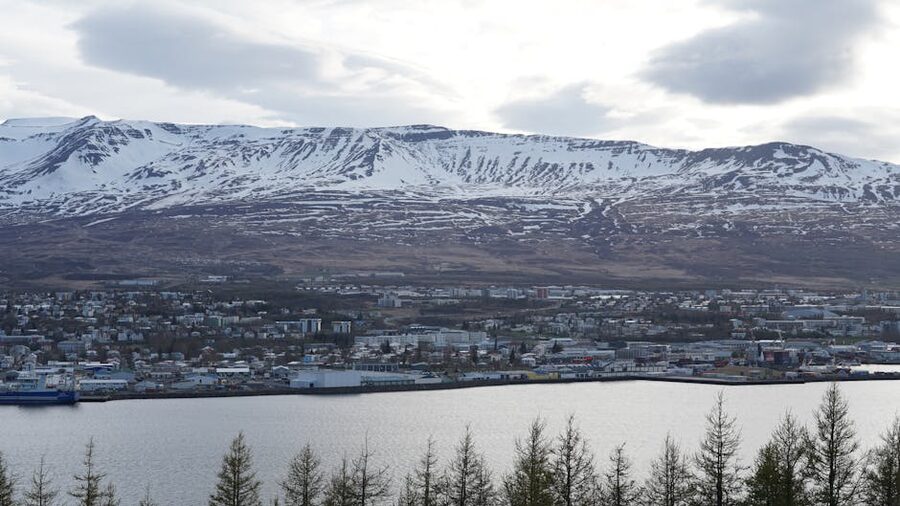
The first time I drove into Akureyri after a week looping the south coast, I felt like I’d hit a quiet little capital instead of a town of nineteen thousand. The fjord was still as glass, the hills were dusted with the last of April’s snow, and the traffic lights at the bottom of the hill were red, and shaped like little hearts. That’s Akureyri. It calls itself the Capital of the North, and it earns the title.
For a lot of visitors, Iceland still means Reykjavik plus a Golden Circle day. The whole northern half of the country gets two paragraphs in a guidebook and a sigh of “next time.” That’s a mistake. Akureyri sits at the head of Eyjafjörður (Iceland’s longest fjord), four to five hours’ drive from Reykjavik, with the longest runway outside the capital and a flight that gets you here in 45 minutes. From here you can be at Goðafoss in half an hour, in Mývatn in a little over an hour, and on a whale boat in Húsavík by lunchtime.
This guide is the thing I wish someone had handed me on that first trip. Where to base yourself, what to actually do in town versus what to use the town as a launchpad for, which restaurants are worth it, how the buses and flights work, what the weather will throw at you, and the day trips that justify staying two, three, or four nights instead of just rolling through.
In This Article
- Where Akureyri sits and why it matters
- How to get to Akureyri
- Flying from Reykjavik
- Driving the Ring Road
- The bus
- The geography of the fjord
- Where to stay in Akureyri
- Hotel Kea
- Berjaya Akureyri (formerly Icelandair Hotel Akureyri)
- Hotel Akureyri Dynheimar
- Apótek Guesthouse
- Akureyri Backpackers
- Hotel Edda Akureyri (summer only)
- Things to actually do in town
- Akureyrarkirkja, the church on the hill
- Lystigarðurinn, the world’s northernmost botanical garden
- Sundlaug Akureyrar, the public pool
- The harbour walk
- Hof Cultural Centre
- Akureyri Art Museum and the Akureyri Museum
- The heart-shaped traffic lights
- The downtown wander
- Where to eat
- Strikið
- Bautinn
- Greifinn
- Rub23
- North (at Hotel Akureyri Dynheimar)
- Bláa Kannan
- Kaffi Ilmur
- Brynja
- Bars worth knowing
- The day trips that make Akureyri worth basing here
- Goðafoss, thirty minutes east
- Lake Mývatn, an hour east
- Húsavík, an hour east, then northeast
- Tröllaskagi, the herring towns and the high mountains
- Forest Lagoon, fifteen minutes from town
- Grimsey, the Arctic Circle island
- Hrísey, the small island
- Dettifoss and Ásbyrgi, the longer drive east
- Skiing at Hlíðarfjall
- Wildlife around Akureyri
- When to visit Akureyri
- Summer (mid-June through August)
- September, the locals’ quiet favourite
- Winter (late October through April)
- Spring (April and May)
- Akureyri vs Reykjavik
- A two-day Akureyri itinerary
- A three-day Akureyri trip with Húsavík
- A four-day “this is what I’d actually do” pick
- A few things I’d skip, or be careful about
- Practical Akureyri
- One last thing
Where Akureyri sits and why it matters
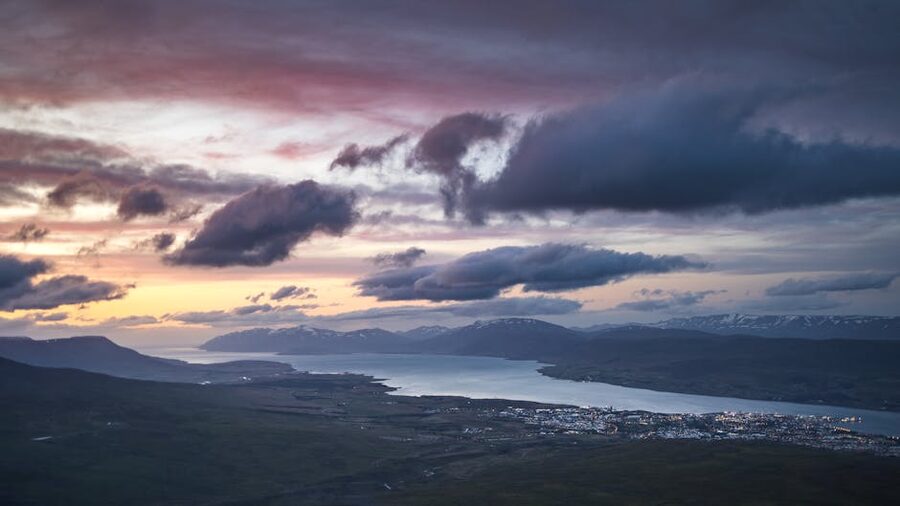
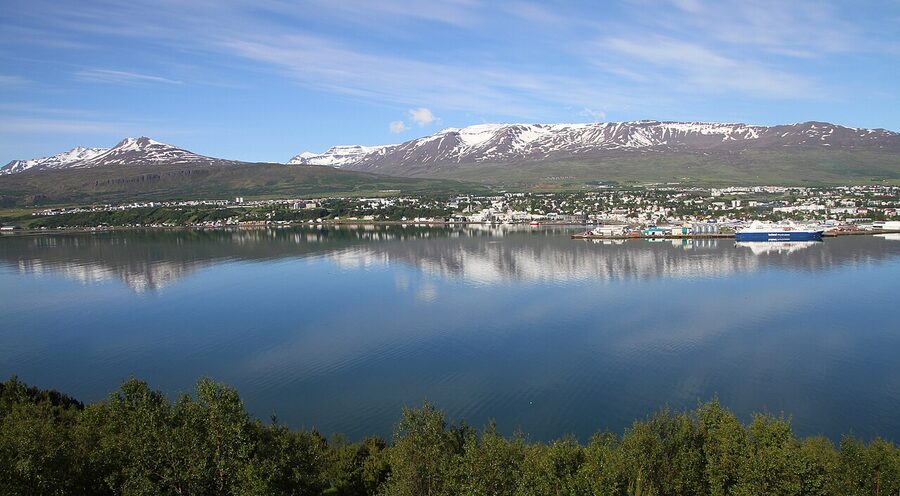
Akureyri is at 65.7 degrees north, just south of the Arctic Circle. The town sits on the western shore of Eyjafjörður (Island Fjord), a sixty-kilometre finger of water that opens northwards into the Greenland Sea. To the west, mountains rise sharply behind the houses; to the east, across the water, more mountains stack along the Vaðlaheiði ridge. There’s no wide flat hinterland here. You’re in a wedge between fjord and slope.
The town was a Danish trading post by 1602, got formal town status in 1862 with a population of 286, and grew into a fishing and shipping hub during the twentieth century. Today the wider Eyjafjörður municipality is closer to twenty thousand people. It feels small after Reykjavik (which is roughly 230,000 with the suburbs), and big after the rest of the north (which is mostly farms and villages of three hundred). That in-between size is the point. Akureyri has a real downtown, real restaurants, a university (around 2,500 students), a hospital, and an airport. But you can walk the centre in fifteen minutes and you’ll see the same person at the swimming pool twice in a week.
The geography also gives Akureyri its weather quirk. The mountains around the fjord cast a rain shadow, so the town is one of the drier and sunnier parts of Iceland. In summer it can hit 20 to 25°C on the warmest days, which feels almost tropical by Icelandic standards. In winter it’s cold, and the sun barely peeks over the southern ridge in December, but the snow tends to stay rather than melt and re-freeze the way it does in Reykjavik. People in the north will gently mock the south for having “Reykjavík weather.” It’s not entirely unfair.
How to get to Akureyri
You have three real options: fly, drive, or take the bus. Each has its case.
Flying from Reykjavik
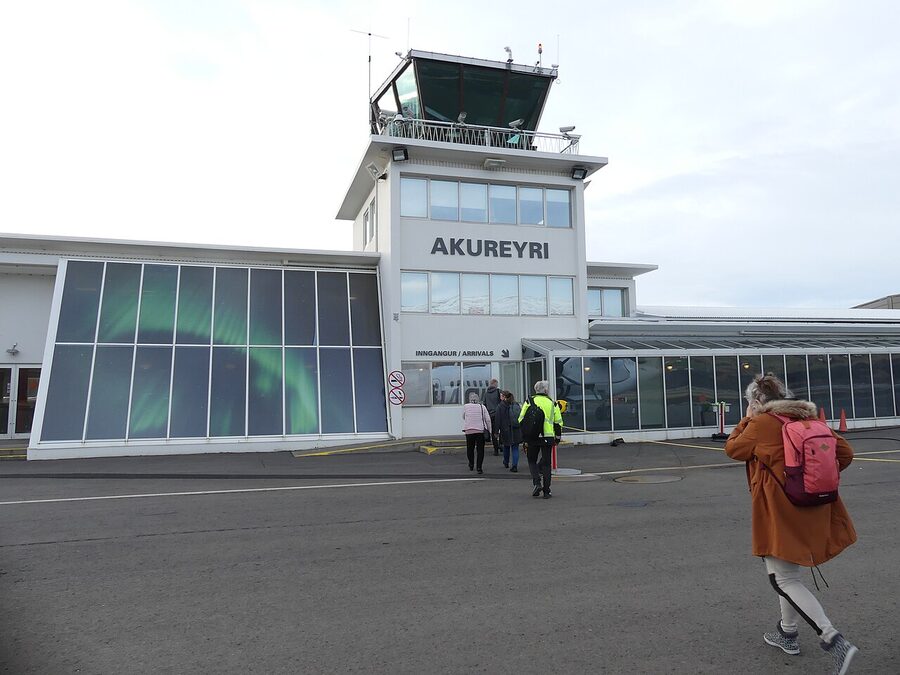
Air Iceland Connect, the domestic arm of Icelandair, runs four to five flights a day between Reykjavik’s domestic airport (RKV, in the city itself, not Keflavík) and Akureyri (AEY). The flight is 45 minutes, takes you over the highlands and Vatnajökull, and is genuinely scenic on a clear day. One-way fares typically run 18,000 to 30,000 ISK depending on how far ahead you book, with last-minute prices climbing to 35,000 or so.
This is the smart play if you’ve already done the south and west and want to skip the long drive home, or if you’re flying in from abroad and want one short hop to the north before starting your road trip. You can rent a car at AEY just as you can at Keflavík. Note that there’s no direct international link to Akureyri except for occasional seasonal charter or low-frequency easyJet routes from London Stansted; for most travellers it’s still Keflavík first, then domestic up.
One more thing to know: the domestic operation has had a rough patch with cancellations in the past two winters, mostly weather-related. Build in a buffer day before any onward flight if you’re connecting through Reykjavik in winter. It’s Iceland; storms happen.
Driving the Ring Road
By car it’s about 390 km from Reykjavik via Route 1, which usually takes five to six hours of pure driving with no stops. Realistically you won’t drive it pure. You’ll want to break in West Iceland, maybe pause at Hraunfossar or in Borgarnes, push through the long lava-and-mountain stretch around Holtavörðuheiði, and roll into Akureyri tired but happy. Most people give it two days, with an overnight in West Iceland or at Hvammstangi.
In summer the route is straightforward and the road is well-maintained. In winter it’s another matter. The mountain passes between south and north can close in a storm, sometimes for a day. Check road.is every morning, watch vedur.is for weather, and follow safetravel.is for advisories. A 4WD with proper winter tyres is sensible from late October through to April. So is the discipline to wait out a storm rather than pushing on. We say þetta reddast, it’ll work out, and it usually does, but only if you give the weather a chance to settle.
If you’re approaching from the east via Egilsstaðir, it’s roughly 250 km and three to four hours, with Lake Mývatn in the middle to slow you down (in the best way).
The bus
Strætó’s route 57 runs from the Mjódd terminal in Reykjavik to Akureyri once or twice a day, and takes around six and a half hours. Fares are around 12,000 to 14,000 ISK one way. It’s cheaper than flying but slower than driving, and you don’t get to stop where you’d like. Most travellers use it as a fallback if a flight cancels or if they’re truly on a budget. The bus arrives at the Hof Cultural Centre on Strandgata, which is a two-minute walk from the centre.
From Akureyri, regional buses also run to Húsavík, Mývatn, Dalvík and Siglufjörður, but they’re once-a-day affairs designed mostly for locals. If you’re not driving, plan tightly.
The geography of the fjord
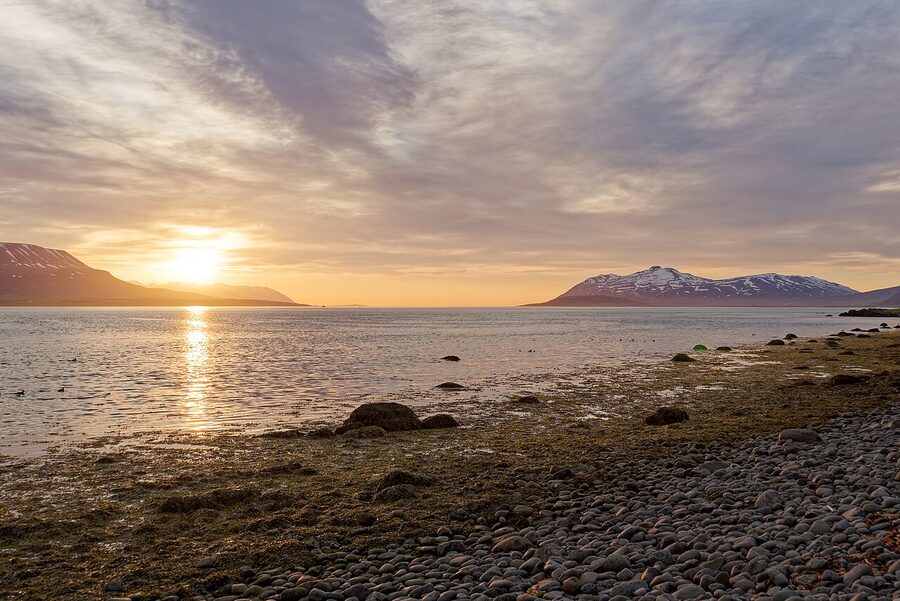
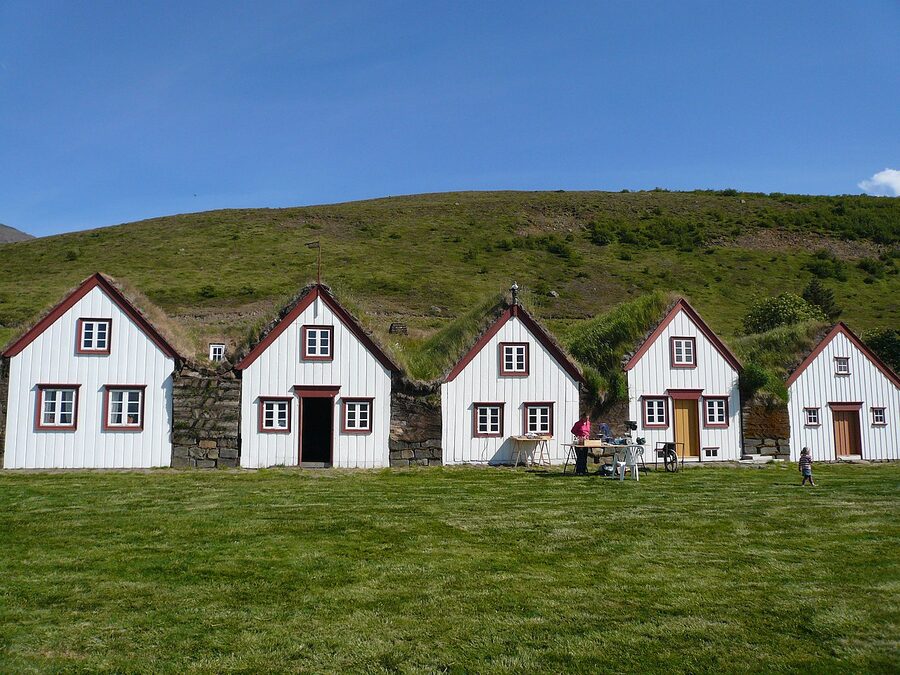
Eyjafjörður (literally “Island Fjord,” named after the small island of Hrísey in the middle) is the longest fjord in Iceland at around 60 km. That’s not its only superlative. It also has some of the best whale-watching success rates in the country, the highest concentration of horse breeders, and a microclimate that ripens hay earlier than anywhere else north of Reykjavik. Driving north along the eastern shore on Route 1 toward Húsavík, you pass turf-house museums, dairy farms with horses in the fields, and the kind of empty roads that make you slow down just to enjoy them.
The fjord opens northwards into the Greenland Sea (the local name is Norðurhaf, the Northern Sea), and on the clearest days you can see all the way out to Hrísey and beyond. Sunsets in summer don’t really happen, the sun just dips behind a ridge and bounces back up; in winter, the same fjord sometimes ices over enough that you can hear it crack.
Where to stay in Akureyri
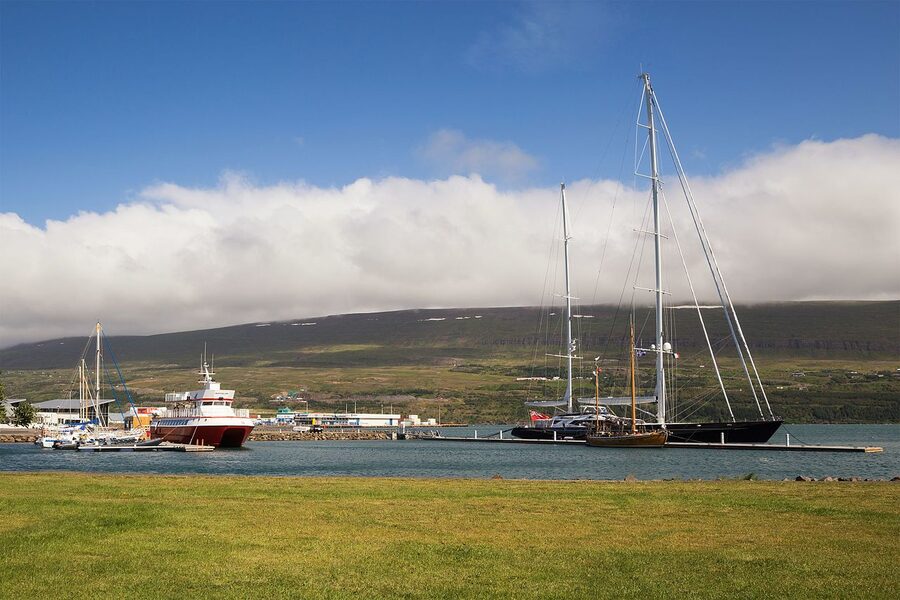
Akureyri is small enough that almost everything in town is within fifteen minutes’ walk. Picking your hotel is mostly a budget question, not a neighbourhood one. Below are the places I either stay at, recommend without hesitation, or send people to when they ask.
Hotel Kea
Right on the central pedestrian street with a view of the fjord and a five-minute walk to the church, Hotel Kea is the classic Akureyri choice. 116 rooms, four-star, the kind of hotel that’s been here long enough that the local taxi drivers all know how to spell it. The Múlaberg Bistro & Bar on the ground floor is one of the better restaurants in town. Rooms are usually 25,000 to 45,000 ISK depending on season. Check rates on Booking.com.
Berjaya Akureyri (formerly Icelandair Hotel Akureyri)
A modern hotel near the harbour, slightly out of the absolute centre but still walkable. Renamed when Berjaya took over the Icelandair Hotels portfolio. Reliable mid-to-upper range with a good restaurant. Rooms are typically 22,000 to 42,000 ISK. Check rates on Booking.com.
Hotel Akureyri Dynheimar
This is the boutique option I’d pick if I were back for a third or fourth time and wanted something with a bit of character. Twenty-six rooms in a building near the church, dark interiors, some rooms with record players or a guitar in the corner. The attached restaurant North is run by Gunnar Karl Gíslason, the chef behind Reykjavik’s Michelin-starred Dill. Rooms 28,000 to 50,000 ISK. Check rates on Booking.com.
Apótek Guesthouse
A family-run guesthouse on the walking street, set in a historic building with seventeen rooms (some shared bathrooms, some private), a sun terrace, and a top-floor apartment that sleeps up to seven. Excellent value if you’re travelling as a small group or want a guesthouse feel rather than a hotel. Check rates on Booking.com.
Akureyri Backpackers
Dorms and a few private rooms, lively bar downstairs, easy place to meet other travellers. Centrally located on Hafnarstræti and a one-minute walk from the swimming pool. Dorm beds around 6,500 ISK, private doubles 16,000 to 22,000 ISK. The on-site restaurant and bar is one of my favourite low-key spots in town for a beer and a chat. Check rates on Booking.com.
Hotel Edda Akureyri (summer only)
A 204-room summer hotel that opens roughly mid-June through early August. Useful in high season when the better-known places are full, with a good buffet dinner and happy hour at the bar. Functional rather than charming, but the price is right for July. Check rates on Booking.com.
If you’ve got a car and don’t mind being out of town, there are also a handful of countryside hotels along the fjord (Hotel Sveinbjarnargerði, Hotel Kjarnalundur, Hotel North) that put you closer to the Forest Lagoon and the Goðafoss road. Lovely if you want the quiet, less convenient if you want a beer in town at 11pm.
Things to actually do in town
Akureyri itself doesn’t take more than a day and a half to see properly, and that’s part of its charm. It’s not a city that demands you “do” it. It’s a base. But the in-town list still has more on it than people expect.
Akureyrarkirkja, the church on the hill
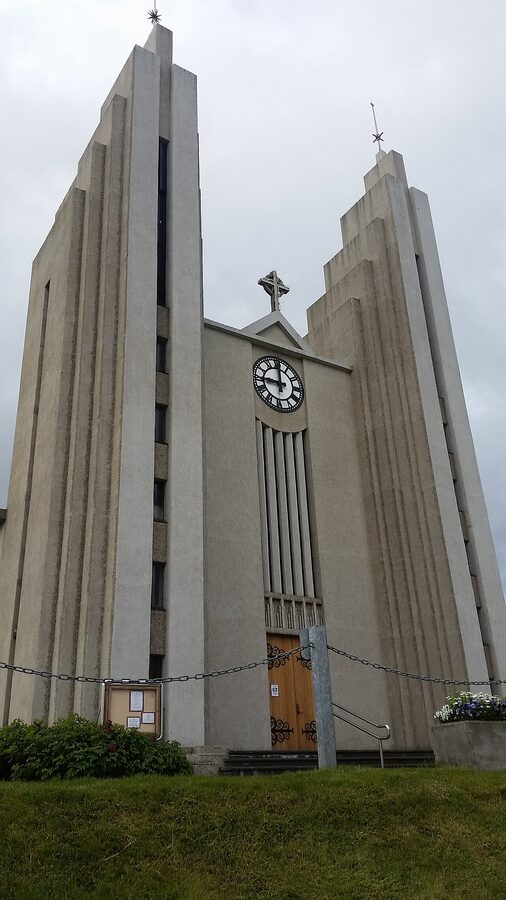
Walk up the long flight of steps from Hafnarstræti and you’re at Akureyrarkirkja, the white concrete church that dominates the skyline. It was finished in 1940 to a design by Guðjón Samúelsson, the same architect behind Reykjavik’s Hallgrímskirkja, and you can see the family resemblance: tall central spire, twin side wings, lines that nod to Iceland’s hexagonal basalt columns.
Inside, two things are worth the visit. One is the 3,200-pipe organ, which sounds extraordinary when there’s a service or a recital on. The other is the central stained-glass window, which originally lived in Coventry Cathedral in England and was sold off when that cathedral was being expanded in the 1930s, before the wartime bombing made it famous. There’s a small Akureyri symbolism in that, a piece of an English cathedral now lighting up an Icelandic one. The view from the church steps over the fjord is probably the best free view in town.
Lystigarðurinn, the world’s northernmost botanical garden
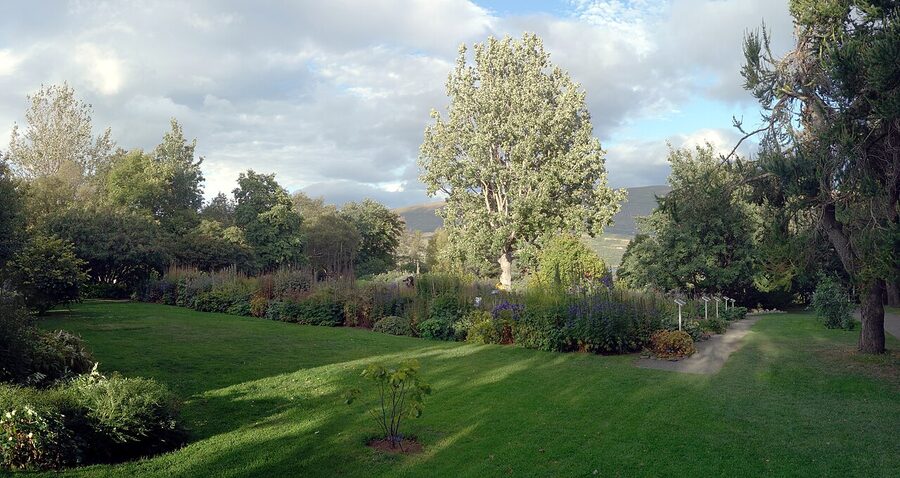
A short walk south of the church is Lystigarðurinn (the Garden of Joy), Akureyri’s botanical garden and the most northerly in the world. It opened in 1912 as a public park, and now holds over 7,000 species of plants, including almost every native Icelandic species. Entry is free.
I’ll happily spend an hour here in summer, or fifteen minutes in any other season. The trees are surprisingly tall for being this far north, the layout is loose and walkable, and the café (now branded LYST) does excellent cake. Open year-round; the café and toilets close in winter, but the garden itself is yours to wander whenever.
Sundlaug Akureyrar, the public pool
If you only do one in-town thing, do this one. Sundlaug Akureyrar is one of the largest and best-equipped public pools in Iceland, with a 25-metre indoor pool, a 50-metre outdoor pool, three hot pots, a steam room, two big slides, a kids’ splash area, and a separate cold pool for the brave. Entry is 1,400 ISK for adults in 2026, less than half what a tourist lagoon costs.
This is where Akureyri actually socialises. Old men sit in the hottest pot and discuss the weather, kids fly down the slide, teenagers cluster around the steam room. Go in the late afternoon, stay till the light goes, and you’ll feel more like a local than at any tourist spa in the country. Bring your own towel and pre-shower naked in the changing room as the signs ask. We’re serious about that.
The harbour walk
Walk down Strandgata along the waterfront and you’ll pass colourful boats, the occasional cruise ship in summer, and the striking glass-and-steel form of the Hof Cultural and Conference Centre. The harbour itself is working: fishing boats, whale-watching boats, the odd yacht. On a clear evening it’s the best place in town to watch the light fade over the fjord.
Hof Cultural Centre
The big circular building by the water is Hof, opened in 2010 as a concert hall, conference centre, and home of the Akureyri Symphony Orchestra. Worth checking the programme: there’s almost always something on, and the architecture inside is worth a look even if there isn’t. The tourist information office for the region is on the ground floor, which is genuinely useful for any region-wide questions and for picking up the free Akureyri Art Trail brochure.
Akureyri Art Museum and the Akureyri Museum
Two separate museums, both small, both worth an hour. The Art Museum (Listasafnið) leans into contemporary Icelandic art with a few good international shows in summer, and is in a handsome early twentieth-century building downtown. The Akureyri Museum (Minjasafnið) is the local history museum, with rooms set up as turn-of-the-century homes and the kind of artefact collection that makes you understand how a fishing town becomes a city. A combined ticket also gets you into Laufás and a couple of smaller sites.
The heart-shaped traffic lights
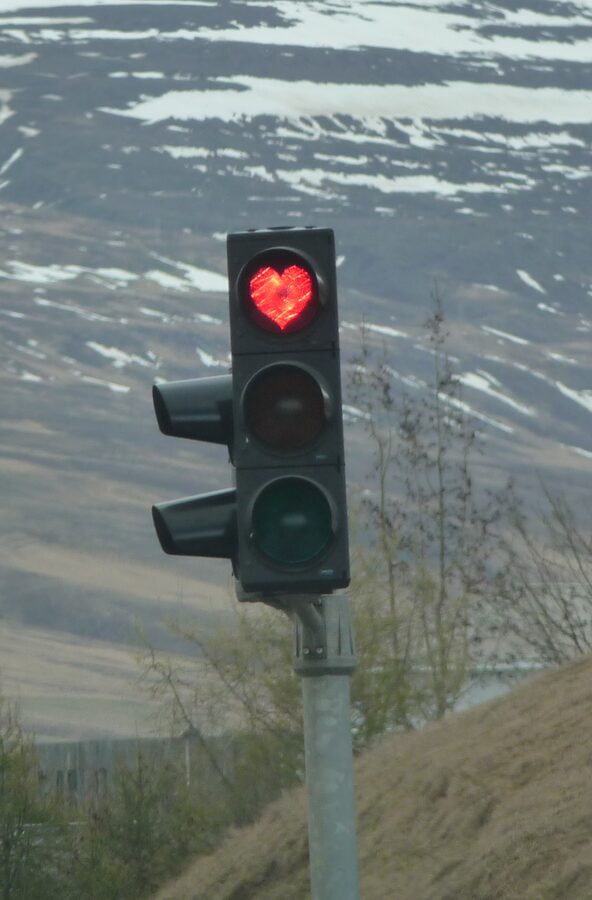
Yes, this is the Akureyri thing on Instagram. After the 2008 financial crash, the town painted the red lights on its main downtown intersections as little hearts to cheer everyone up, and they’ve stayed that way ever since. It’s small. It’s sentimental. It absolutely works on me every time I drive through. Come on, look at them. They’re hearts.
The downtown wander
Hafnarstræti is the pedestrian high street and runs about three blocks of cafés, gift shops, the bookstore Eymundsson, an outdoor gear shop, and a few bars. Off it, walk one street back and you’re in residential streets of brightly painted houses with rusted iron rooftops, gardens, and rhubarb growing in early summer. Do this slowly. There is no schedule. The town is small. You’ll do a loop and end up back where you started.
Where to eat
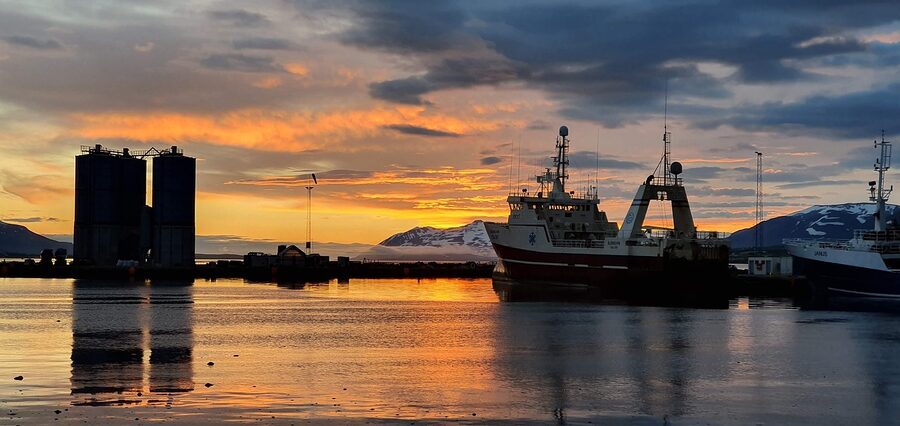
Outside Reykjavik, this is the best food town in Iceland. That’s not a stretch. The pool of restaurants is small but the average is high, and a few are genuinely very good.
Strikið
Fifth-floor restaurant at Skipagata 14, with a wraparound view of the fjord that, on a clear evening, is the best dinner view in town. Modern Icelandic with a seafood lean. The reindeer carpaccio when it’s on the menu, the catch of the day, the salmon. Reservations are smart, especially in summer or on weekends. strikid.is for the menu and to book.
Bautinn
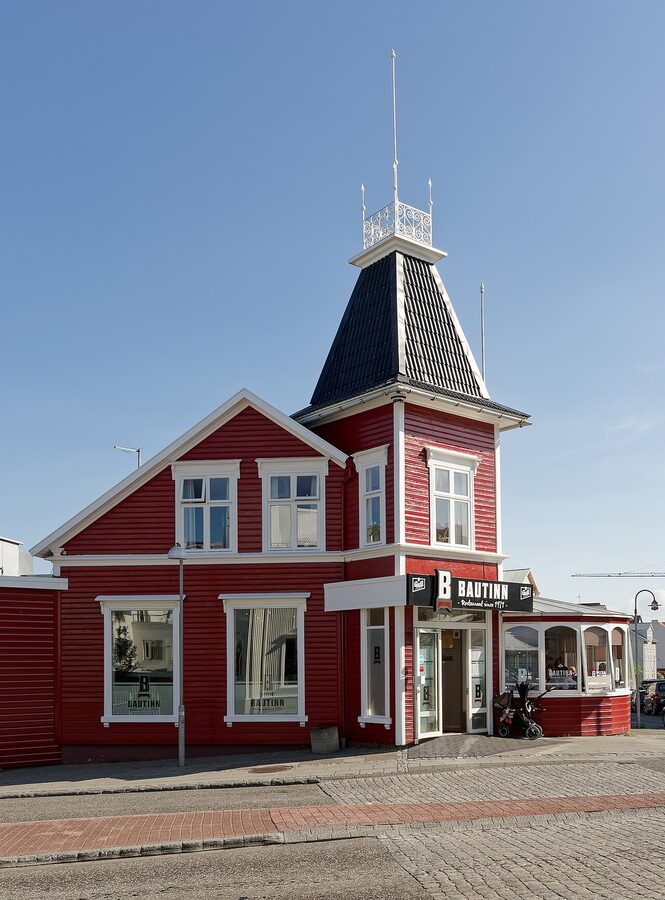
Iceland’s oldest still-operating restaurant, founded in 1971, in a building from 1902 at Hafnarstræti 92. Burgers, fish, lamb, and a salad bar that comes with every main course. Bautinn is not the place for fine dining; it’s the place where you have a big honest meal after a day on the road and walk out happy. Locals and travellers in equal measure. bautinn.is.
Greifinn
An Akureyri institution since 1994, at Glerargata 20 (slightly out of the centre, easy walk or short drive). Pizza, pasta, burgers, steaks, fish, all done well, in big portions, in a space full of local families on a Friday night. Open every day 11:30 to 22:00. Not the hippest restaurant in town, just one of the most reliable.
Rub23
Icelandic and Japanese fusion, which sounds like a misstep and isn’t. Sushi made with local fish, sushi pizza for the curious, and a menu where you can pick a fish or meat and then pick a homemade spice rub from a long list. The omakase with wine pairing is the best meal in town if you’re feeling festive. Centrally located, reservations recommended.
North (at Hotel Akureyri Dynheimar)
If you want the proper splash-out evening, North is the one. Helmed by Gunnar Karl Gíslason of Dill fame, the menu changes with the season and leans hard on local producers. Bookings essential.
Bláa Kannan
The bright-blue 1913 building at Hafnarstræti 96 is Bláa Kannan (the Blue Pot), Akureyri’s coziest café. Cakes, pastries, soups, sandwiches, and good coffee. Good for breakfast, better for a slow afternoon hot chocolate. Open until 21:00 most nights.
Kaffi Ilmur
A creaky-floored old house on the main street, also a café, with a buffet menu at lunchtime that’s hearty and good value. Soups, bread, salads, the kind of food that makes you wonder if you should just stay for dinner too. Very Akureyri.
Brynja
Brynja, at Aðalstræti 3, has been making ice cream by the same recipe since 1939. It’s the oldest ice cream parlour in Iceland and locals will fight you if you suggest there’s a better one. Soft-serve vanilla with a dipping sauce is the classic order. Yes, you eat ice cream in winter here. That’s the rule.
Bars worth knowing
Græni Hatturinn (the Green Hat) is the live music venue in town: small, intimate, and where every touring Icelandic band plays when they come north. Always check the gig guide. Götubarinn is the main local bar that fills up on Friday and Saturday nights, with a piano downstairs and decent cocktails. R5 Micro Bar and Ölstofa Akureyrar both lean into the local craft beer scene (a lot of Iceland’s better breweries are clustered around Akureyri, including Einstök), with an Einstök Brewer’s Lounge upstairs at Ölstofa where you can order a tasting flight.
The day trips that make Akureyri worth basing here
If you only stay one night in Akureyri, you’ll have an okay time. If you stay three, you’ll start to understand why Icelanders argue, only half-joking, that the north has the better Iceland. The day trips are the reason. Here’s how I’d rank them.
Goðafoss, thirty minutes east
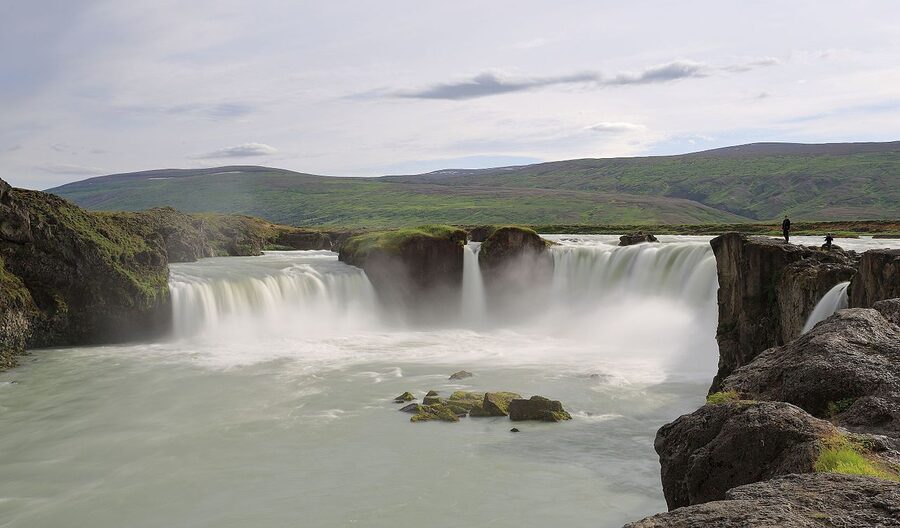
Goðafoss (the Waterfall of the Gods) is on Route 1 about 30 minutes east of Akureyri, and is the easiest grand-scale waterfall stop in Iceland. It’s twelve metres high and thirty metres wide in a perfect horseshoe of basalt, fed by the Skjálfandafljót river that drains the highlands. The name comes from the year 1000, when, according to the saga, the lawspeaker Þorgeir Ljósvetningagoði threw the wooden statues of the old Norse gods into the falls after Iceland officially adopted Christianity at the Alþingi.
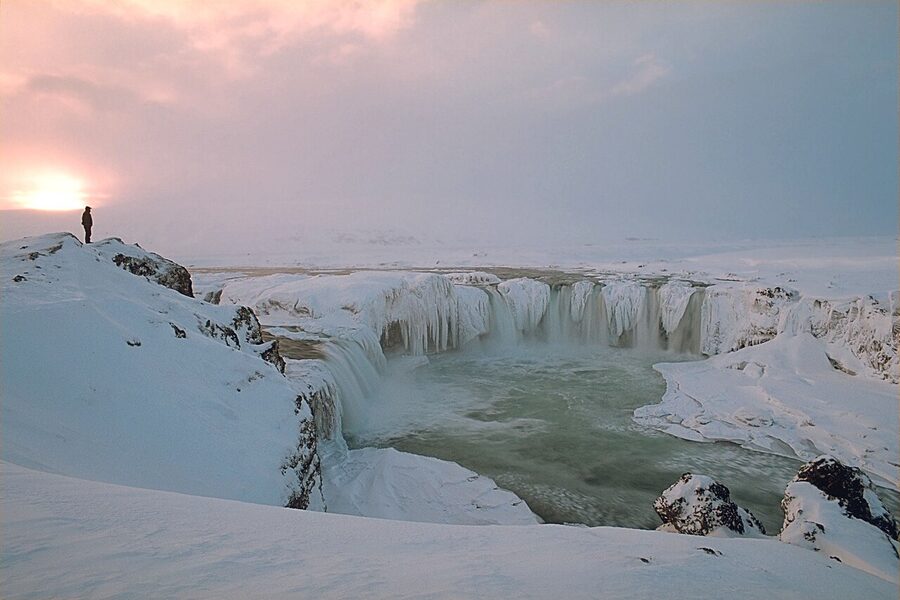
You can see it from the eastern bank in five minutes if you’re rushing back to your car, or you can walk both sides on a loop in an hour. I prefer the eastern viewpoint for the wide-angle shot and the western one for the closer view of the spray. In winter, the basalt rim ices up and the falls turn into a white-on-white scene that’s almost more dramatic than the summer version.
Lake Mývatn, an hour east
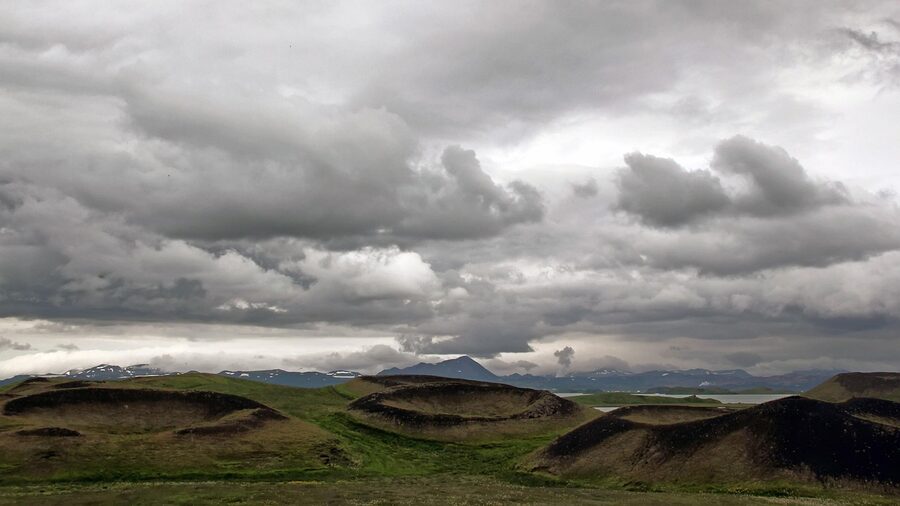
If you only do one day trip from Akureyri, this is it. Mývatn (Midge Lake) is a shallow eutrophic lake formed by a basaltic eruption around 2,300 years ago, and the area around it is one of the most concentrated geothermal landscapes in Iceland. In a single day you can see pseudo-craters at Skútustaðir, walk the lava labyrinth at Dimmuborgir, climb the rim of the Hverfjall tephra cone, smell the sulphur at Hverir mud pools, peek into the steaming crater of Krafla, and then close the day soaking at the Mývatn Nature Baths (the “Blue Lagoon of the North”).
It’s an hour from Akureyri by Route 1 east. In summer you can do it in a long, full day. In winter the light is shorter but the snow over the lava is striking, and the Nature Baths at sunset, with steam rising into the cold air, is hard to beat.

If you’re combining Mývatn with a longer trip into the interior, this is also where the Diamond Circle proper begins. The Circle is a roughly 260-km loop that strings together Goðafoss, Mývatn, Dettifoss, Ásbyrgi Canyon, and Húsavík. Doing the whole thing in one day is possible but rushed; two days with an overnight in Mývatn or Húsavík is the better split. For more on what to expect on the Ring itself, see our guide to driving the Ring Road in Iceland.
Húsavík, an hour east, then northeast
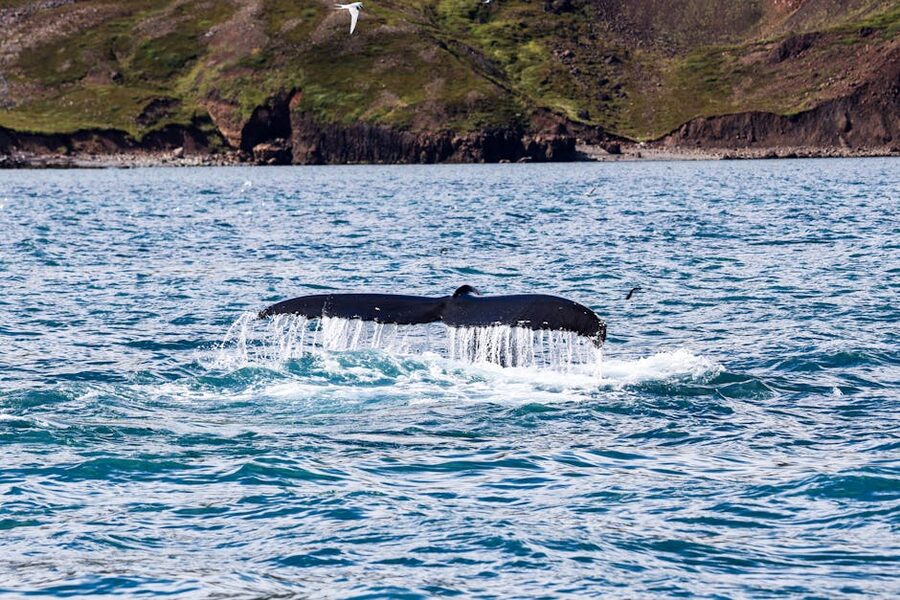
Húsavík is the whale-watching capital of Iceland, and it has earned the title fair and square. The boats go out into Skjálfandi Bay where humpback whales feed in summer (and into early autumn), with regular sightings of minke whales, white-beaked dolphins, and the occasional blue whale. The two main operators, North Sailing (northsailing.is) and Gentle Giants (gentlegiants.is), both run from the picturesque little wooden harbour. Tours are 11,000 to 14,000 ISK and last 2.5 to 3.5 hours.
The town itself is worth an extra hour beyond the boat. The wooden church on the hill, the Whale Museum if it’s raining, and GeoSea (geoseabaths.is), the geothermal sea bath built into the cliffs above the harbour, with infinity-edge pools looking out over the bay. GeoSea is around 6,500 ISK and is one of the more atmospheric soaks in the country, especially at sunset. For the deeper dive, see our standalone guide to Húsavík whale watching.
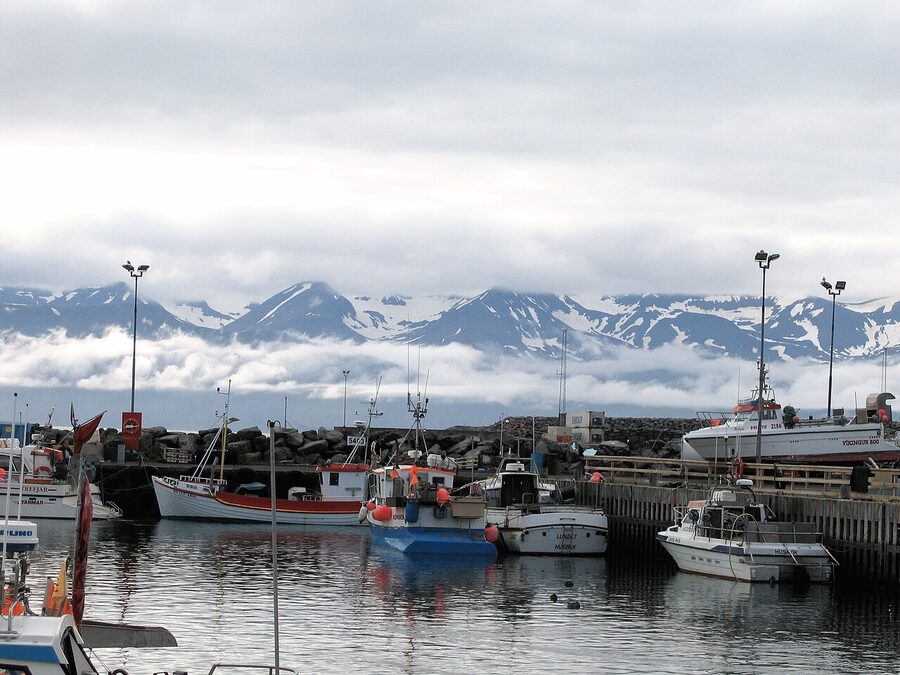
Tröllaskagi, the herring towns and the high mountains
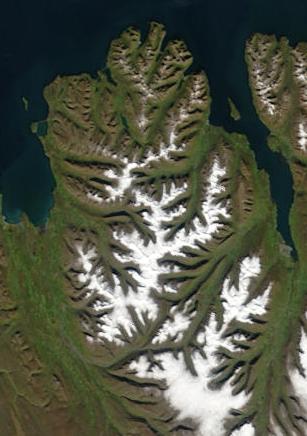
Tröllaskagi (the Troll Peninsula) is the big mountainous chunk of land between Eyjafjörður and Skagafjörður, and the loop drive around it is one of my favourites in the whole country. Take Route 82 north out of Akureyri, follow it along the eastern coast through Dalvík (the ferry to Hrísey leaves from here, and the deep-sea fishing trips), through the Múlagöng tunnel to Ólafsfjörður, then through the long Héðinsfjarðargöng tunnels (over 11 km combined) to Siglufjörður, the herring town at the top of the peninsula.
Siglufjörður is the highlight. Until the herring stocks crashed in 1969, this was one of the busiest fishing ports in Europe; the population swelled from 3,000 to 10,000 every summer with workers gutting and salting herring on the dockside. Today the town has 1,200 people year-round, a beautifully preserved old harbour, and the Síldarminjasafnið (Herring Era Museum), which won the European Museum of the Year award in 2004 and is one of the most interesting small museums in Iceland.
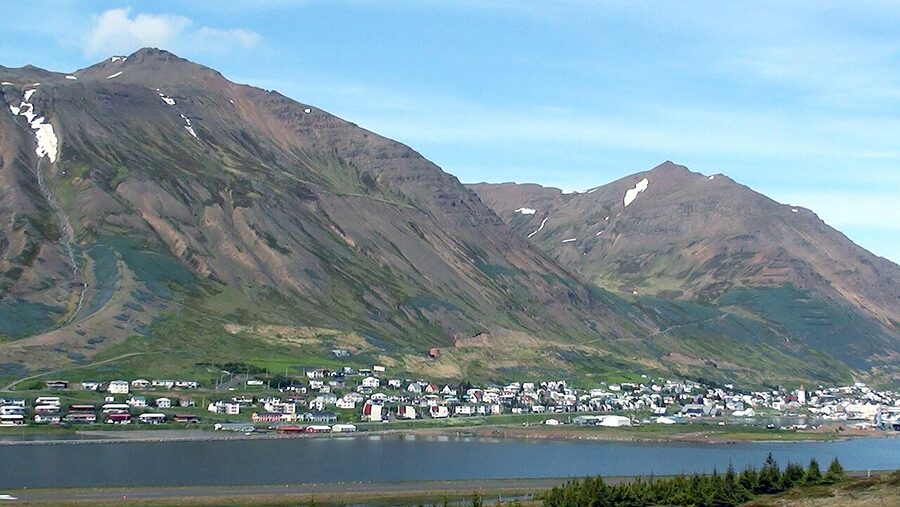
From Siglufjörður you can continue south to Hofsós, where the famous infinity pool (visitnordurland.is) sits at the edge of the cliff looking out over the fjord. Then loop back south through Skagafjörður and rejoin Route 1 near Varmahlíð. The full loop is around 250 km and a long day; an overnight in Siglufjörður (Sigló Hotel is excellent) lets you take it slowly.
Forest Lagoon, fifteen minutes from town
Akureyri got its own destination spa in 2022 with Forest Lagoon, on the eastern side of Eyjafjörður about 15 minutes from the centre. It’s set in a small birch forest looking down over the fjord and has the same infinity-pool drama as the more famous southern lagoons, with significantly fewer crowds and a slightly cooler crowd than Sky Lagoon’s hen-party energy.
Entry is 6,900 ISK in 2026, with a 1,400 ISK towel rental on top if you forgot one. The Forest Bistro on site does food until 22:00 and the lagoon itself stays open until midnight, which makes it a good option for an evening soak after a day of driving. Book ahead in summer; weekend slots fill up. forestlagoon.is. For the broader picture of where Forest Lagoon fits among Iceland’s pools and lagoons, see our guide to hot springs in Iceland.
Grimsey, the Arctic Circle island
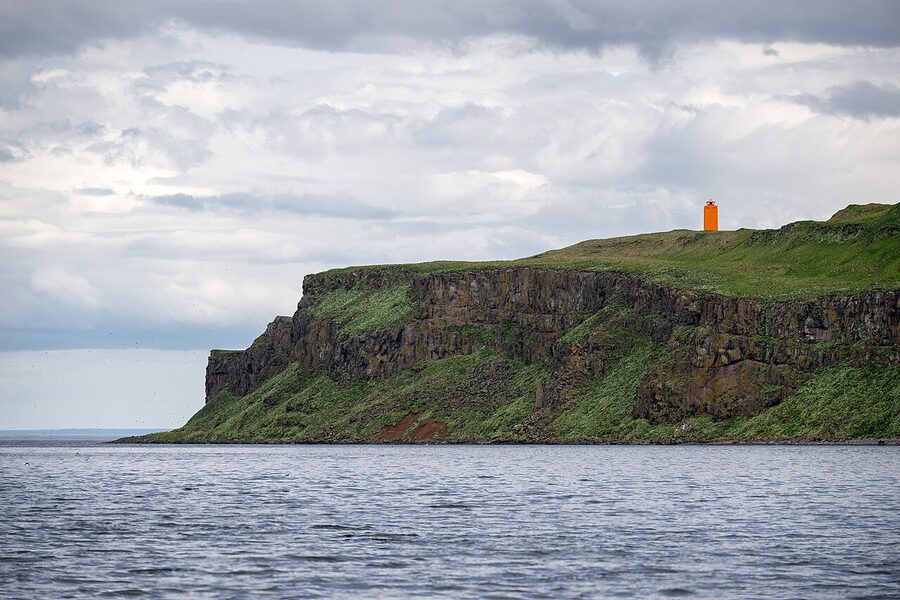
Grimsey is the small island 40 km off the north coast that the Arctic Circle technically passes through, making it the only place in Iceland that’s officially in the Arctic. The local population is around 60. The puffin population in summer is in the hundreds of thousands.
You have two ways to get there. The ferry Sæfari leaves Dalvík (an hour from Akureyri) and takes three hours each way; runs daily in summer and most days the rest of the year. Or you can fly with Norlandair from Akureyri Airport (around 30 minutes). The fly-and-sail combination, where you fly out and ferry back, is what most people do for a long day trip.
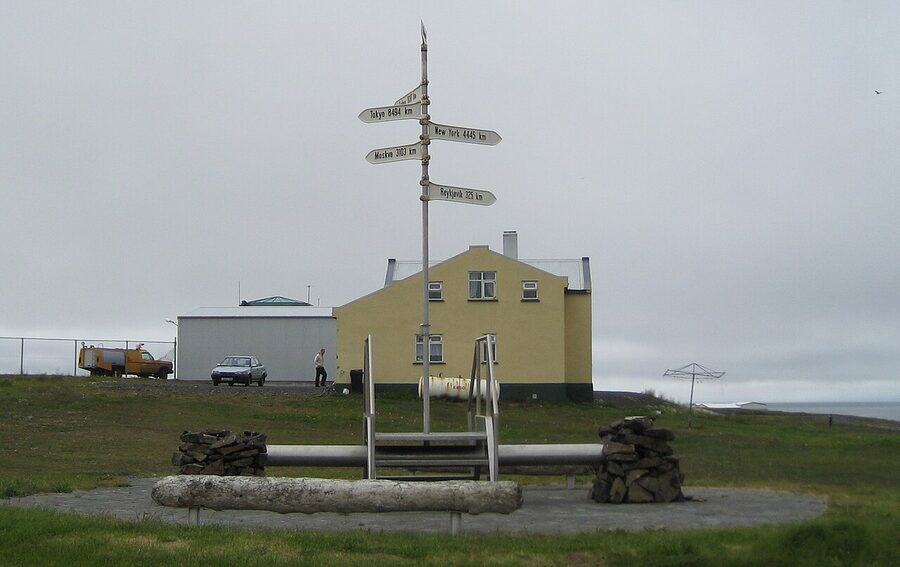
What’s actually on the island? A walking loop of about three hours that takes in the Arctic Circle marker (a giant concrete sphere that’s moved every year as the polar circle shifts), bird cliffs full of puffins from May to mid-August, the lighthouse, and a small café in the village. There’s also a guesthouse if you want to overnight, which I’d genuinely recommend if your timing works. The boat back at sunset, with the cliffs of the mainland glowing pink, is the kind of memory you take home.
Hrísey, the small island

For a much shorter, much easier island trip, take the 15-minute ferry from Árskógssandur (40 minutes north of Akureyri) to Hrísey. The island has a population of 160, no cars allowed off the ferry (the locals will wheelbarrow your suitcase to your accommodation if you stay over), a geothermal swimming pool, and good walking trails. The summer ptarmigan population swells the bird count to over 40 species. Half a day is enough; a full day with lunch at Verbúðin 66 by the harbour is better.
Dettifoss and Ásbyrgi, the longer drive east
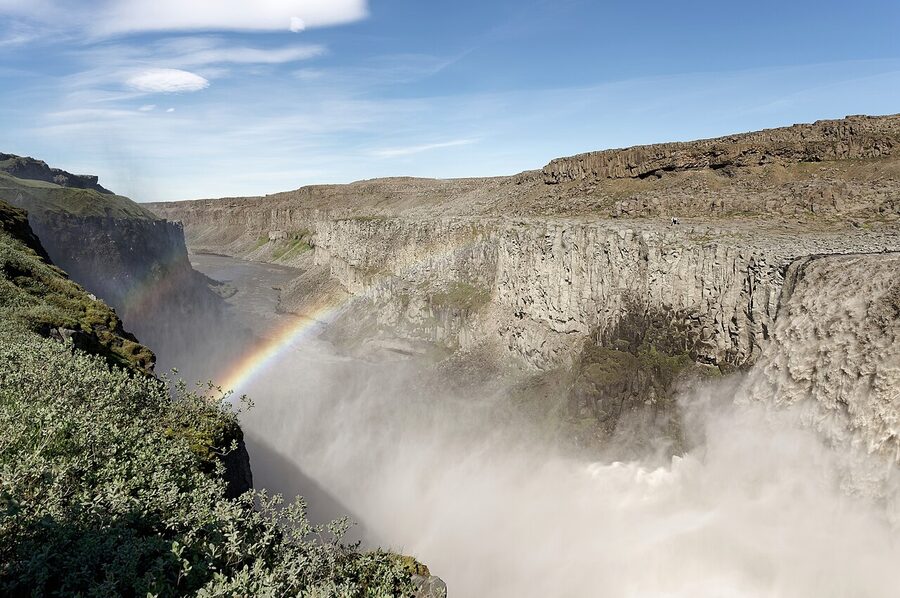
If you’re really in the mood for waterfalls, push beyond Mývatn another 60 km east to Dettifoss, the most powerful waterfall in Europe by volume. The thunder of it is genuine; you feel it in your chest from the viewpoint. Just north of Dettifoss is the smaller, more elegant Selfoss; further north still is the horseshoe canyon of Ásbyrgi, surrounded by 100-metre cliffs and a forest at its base. Norse legend says the canyon is the hoofprint of Sleipnir, Odin’s eight-legged horse. Geology says it’s a glacial flood from the last ice age.
This is a long day from Akureyri, around 200 km each way. Combine it with Mývatn or with an overnight in Húsavík for less rushing. The roads inside Vatnajökull National Park don’t all stay open in winter, so plan for late May through early October if you want the full canyon-and-waterfall combo.
Skiing at Hlíðarfjall
From late November or early December through to April, sometimes into May, Akureyri’s local mountain Hlíðarfjall is Iceland’s most reliable ski resort. It’s a ten-minute drive west of town, has 24 marked runs spread across 600 metres of vertical, two chairlifts and a t-bar, and a good mix of beginner and advanced terrain. Day pass around 6,500 ISK, equipment rental on site. The snow up here is the real reason ski-keen Icelanders fly north for a weekend. The 2024 world record longest ski jump attempt was made on this mountain (it was successful).
Wildlife around Akureyri
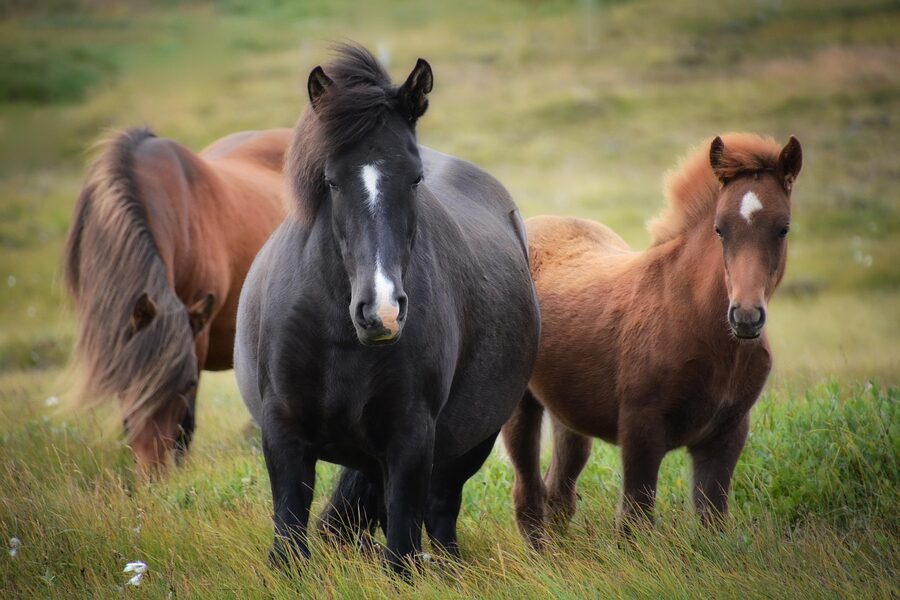
The Eyjafjörður region has more horse breeders per square kilometre than almost anywhere else in Iceland. You’ll see Icelandic horses standing in fields all along the road, often two or three to a paddock, often with foals in early summer. Riding tours are easy to arrange (Saltvík and Skjaldarvík are both near Akureyri); the Icelandic horse has two extra gaits beyond walk, trot and gallop, the smooth tölt and the fast skeið, and trying both for the first time is a giddy thing.
For more on the wildlife you’ll see across the country, including whales, foxes, puffins and the famous Icelandic horse, see our guide to wildlife in Iceland.
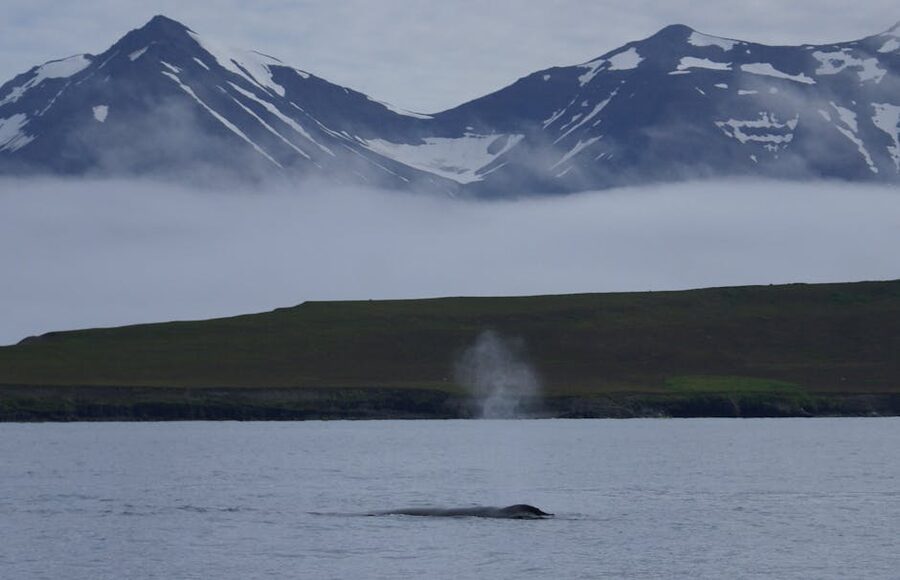
Whale watching also runs from Akureyri itself, not just Húsavík. Tours leave from the harbour year-round, with summer being prime time for humpbacks. Eyjafjörður consistently has one of the highest whale-watching success rates in the country (the operators advertise above 95% in summer, which is roughly true). Tours are 12,000 to 15,000 ISK and last around three hours. Not a bad backup if you can’t make it to Húsavík. For more on the whole whale-watching question, see our piece on whale watching in Iceland.
When to visit Akureyri
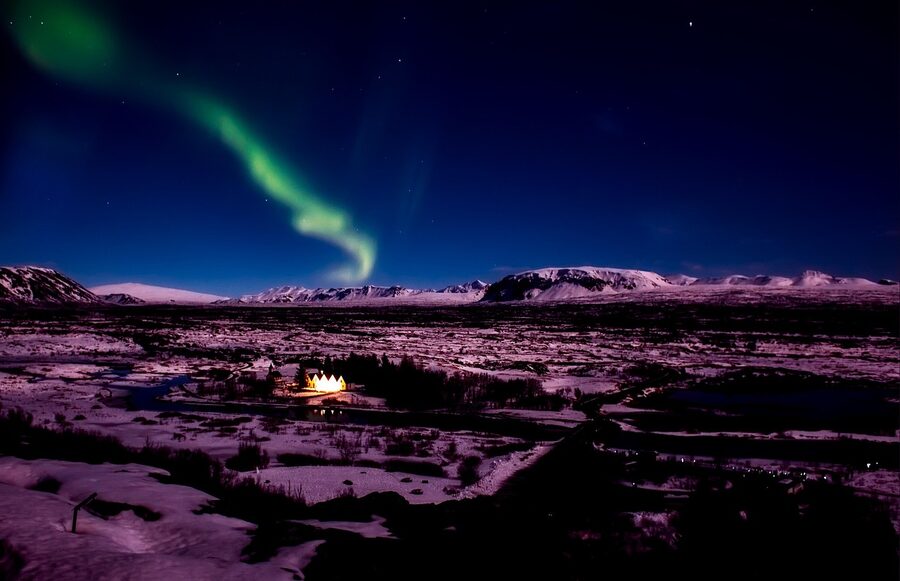
Akureyri is genuinely a year-round town, and unlike some Icelandic destinations the off-season here is real and pleasant rather than dead. Each season has a case.
Summer (mid-June through August)
Long days (the sun barely sets in late June, the midnight sun is a real thing here), mild temperatures (8 to 14°C is typical, with peaks around 20°C), all roads open, the highlands accessible, the puffins on Grimsey, the whale watching at full strength, the Botanical Garden in flower, the festivals running. This is the busiest season but Akureyri never feels overcrowded the way Reykjavik can. If your trip is mostly south coast and you’re adding a few days, this is the natural window.
September, the locals’ quiet favourite
Maybe my pick. Crowds drop off, the autumn colours come into the countryside, the dark skies return at night so the aurora becomes possible, the réttir (the annual sheep round-up, where farmers bring their flocks down from the highlands on horseback) usually happens in mid-September and you can sometimes join a local round-up if you ask the right person. Temperatures are cool, 5 to 10°C, but the weather is often the best of the year. Book your dinners; the restaurants are still busy.
Winter (late October through April)
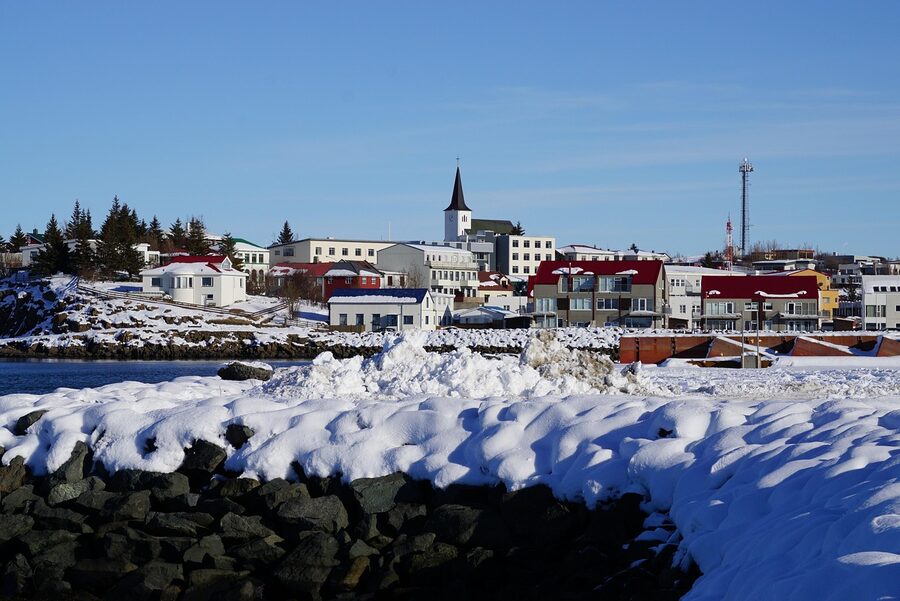
This is when Akureyri shows off. The town gets reliable snow (more than Reykjavik, which is often slush), the Hlíðarfjall ski resort is open, the aurora is at its strongest (the long dark nights help), the Christmas market in December is small but lovely, and the locals’ rhythm of pool-sauna-dinner-aurora-sleep is genuinely lovely. December is the darkest, with a few hours of twilight rather than full daylight; January and February have more sun and often the best snow. Roads need respect: 4WD with proper winter tyres, daily check of road.is, and the willingness to wait out a storm. For the wider winter picture, see our guide to Iceland in winter.
Spring (April and May)
The shoulder season nobody talks about. Temperatures climb, the snow recedes, the days get long, and prices haven’t yet jumped to summer rates. The risk: late snowfalls and the tail end of winter weather. The reward: empty roads, half-price hotels, and the first lambs in the fields.
Akureyri vs Reykjavik
People often ask me which one to spend more time in. The honest answer is they’re not really substitutes. Reykjavik is a city of 230,000 with a serious music and food scene, the country’s only true urban energy, and proximity to the Blue Lagoon and Golden Circle. Akureyri is a town of 19,000 with a slower pulse, better access to the north, and a stronger sense that you’ve actually arrived somewhere quieter and more local.
If you have a week, I’d give Reykjavik two nights and Akureyri three or four. If you have ten days, do a Ring Road loop and let Akureyri be your second base. If you have only a long weekend and you’ve already done Reykjavik on a previous trip, fly straight to Akureyri.
The food scene is smaller but the average is high. The accommodation is cheaper, sometimes 30 to 40 percent less than Reykjavik for the same level. The English level is close to identical (both well over 95 percent fluent). The crowds are dramatically lower. The weather, on average, is better. Akureyri wins on price and quiet; Reykjavik wins on density and scope. For our take on the capital, see what to do in Reykjavik.
A two-day Akureyri itinerary
If you’ve only got two nights, here’s the version that hits the highlights without rushing.
Day 1. Arrive late morning. Drop bags at the hotel, walk down Hafnarstræti, climb the church steps for the view. Lunch at Bláa Kannan or Kaffi Ilmur. Wander the Botanical Garden. Late afternoon at Sundlaug Akureyrar (you’ll be glad of the hot pots). Dinner at Strikið with the fjord view. Walk along the harbour after dinner and see if the church and Hof are lit up; in summer they don’t really need to be.
Day 2. Drive east to Goðafoss for an early stop, then push on to Mývatn. Spend the day looping the lake: pseudo-craters, Dimmuborgir, Hverfjall, Hverir, and a soak at the Mývatn Nature Baths. Drive back to Akureyri for dinner at Bautinn and a beer at Götubarinn. Aurora hunt outside town if it’s winter and clear.
A three-day Akureyri trip with Húsavík
If you can stretch to three nights, fold in Húsavík.
Day 1. As above. Town and pool day.
Day 2. Drive east via Goðafoss to Húsavík. Whale-watching tour at 13:00 with North Sailing or Gentle Giants. Soak at GeoSea at sunset. Sleep in Húsavík (Húsavík Cape Hotel or Fosshótel Húsavík).
Day 3. Drive back via Mývatn (give yourself the full afternoon at the lake, with Nature Baths included). Return to Akureyri for dinner at Rub23 or North.
A four-day “this is what I’d actually do” pick
If a friend asked me how to use a long weekend in the north, here’s the version I’d recommend with a strict bias toward what I’d do myself: late August or September, fly Reykjavik to Akureyri one-way, four nights based here.
Day 1: arrive midday, town and pool, dinner Strikið. Day 2: Mývatn full day with the nature baths. Day 3: drive Húsavík for whale watching, GeoSea sunset, sleep one night in Húsavík. Day 4: drive back via Goðafoss, then loop the Tröllaskagi peninsula in the afternoon (the long way home, through the herring tunnels to Siglufjörður and back). Forest Lagoon evening soak. Dinner Rub23.
That trip uses Akureyri for everything it’s good for: a real base, a quiet evening pulse, and a 60-km radius of weather and water and whales. It’s the quiet-Iceland counterpoint to a Reykjavik-heavy trip, and it’s the version of the country I’d send my own family to do first.
A few things I’d skip, or be careful about
Don’t drive to Akureyri just for Akureyri. The town is lovely but it’s not a city; if you don’t pair it with Mývatn or Húsavík or Tröllaskagi you’ll wonder what the fuss was about. Two nights is the minimum; one is a waste.
Don’t visit in deep winter without the right car and the right mindset. A 4WD with studded winter tyres and the patience to sit out a storm. Without that combo, you’re either driving badly or stuck in a hotel.
The Beer Spa at Bjórböðin in Árskógssandur (20 minutes north) is a fine novelty, but it’s pricey for what it is. If you’re already curious, go. If you’re not, a hot pot at the public pool gives you the same warm-and-relaxed feeling for 1,400 ISK.
Don’t skip the Akureyri swimming pool just because you’ve been to the Blue Lagoon. They’re not the same product. The Blue Lagoon is a tourist attraction. Sundlaug Akureyrar is real life. Real life is more interesting.
Practical Akureyri
Currency is the Icelandic króna (ISK). Cards work everywhere, including parking machines and pool entry. Cash is genuinely unnecessary. For more on how money works in Iceland, see our guide to Iceland’s currency, the króna.
Parking in central Akureyri requires a parking disc (P-disc) on the dashboard between 10:00 and 16:00 on weekdays. You can pick one up free at any petrol station, hotel, or tourist office, set it to your arrival time, and display it on the dash. Most central spots are limited to one to two hours; further out is unlimited. The fines for parking without a disc are real.
Tipping is not expected. Service is included in restaurant prices and on tour fares. If you want to leave a small extra, nobody will complain, but nobody will be put out if you don’t.
Tap water in Akureyri is glacial, cold, and excellent. Bring a refillable bottle; never buy bottled water here.
The town is at 65.7°N, which means in midsummer the sun barely sets and in midwinter it barely rises. Bring a sleep mask in summer. Bring proper layers and traction spikes in winter; the streets are sometimes icy. For the broader packing picture, see our Iceland packing list.
For flights and the wider getting-here question, our guide to booking flights to Iceland covers the international piece, and the domestic Reykjavik-Akureyri leg is genuinely one of the smoothest small-airline experiences anywhere. For the year-round picture of when to plan a trip, see when to visit Iceland. For the rest of the country’s tour question, our hub at the Iceland tours actually worth booking is a good next stop, and you can find guided Akureyri activities through GetYourGuide or Viator.
One last thing
Akureyri is the right answer for travellers who want to skip the worst of Reykjavik tourism, see the real north, and end the day in a hot pot watching the light go. It earns the “Capital of the North” name, but it earns it gently. Two nights minimum, three or four if you can spare them. Pair it with Mývatn and Húsavík and the Tröllaskagi loop, and you’ve done a version of Iceland most visitors miss. The town will still be small. The fjord will still be quiet. The hearts on the traffic lights will still make you smile when you turn onto Hafnarstræti for the last time.
And then you’ll be back. Most people are.


_(Kenny_McFly).jpg)


.jpg)


