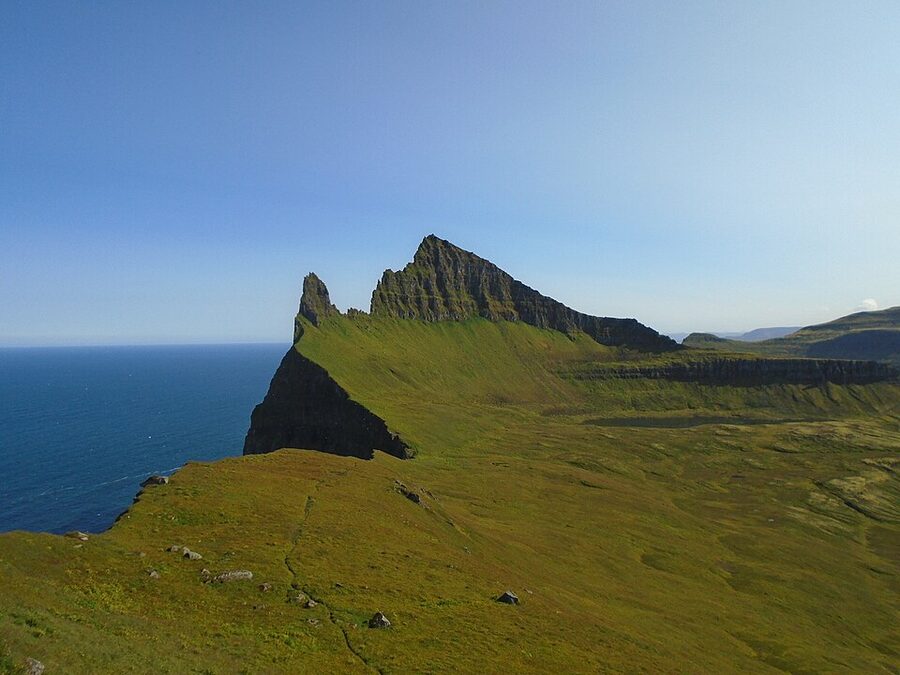
If you look at a map of Iceland the country has a head, a body, and what looks like a ragged claw of land sticking out of the northwest corner. That claw is the Westfjords. About 9,000 square kilometres, give or take, around 7,200 people, dozens of fjords, one glacier, the longest sea-bird cliff in the North Atlantic, the only road that ends at a swimming pool by the ocean. Route 1, the famous Ring Road, doesn’t go there. Most visitors don’t either. About one in ten people who come to Iceland make it this far. That is the whole point.
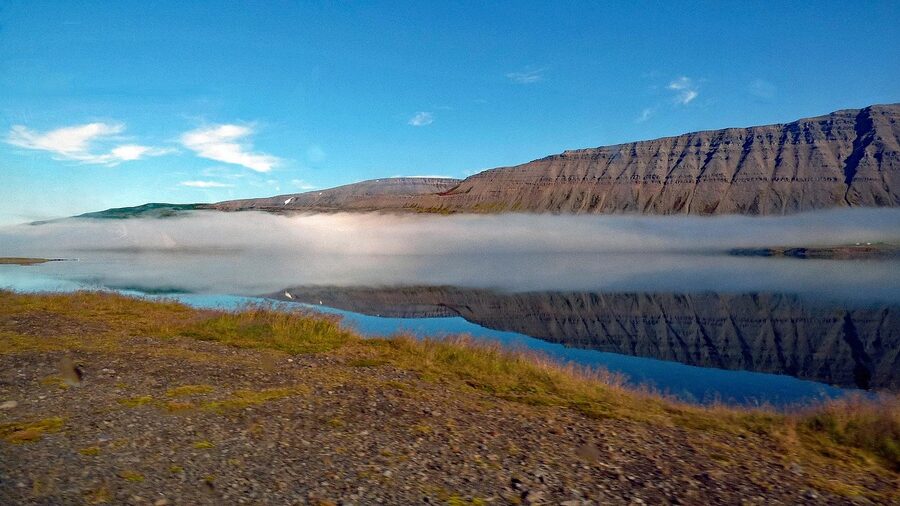
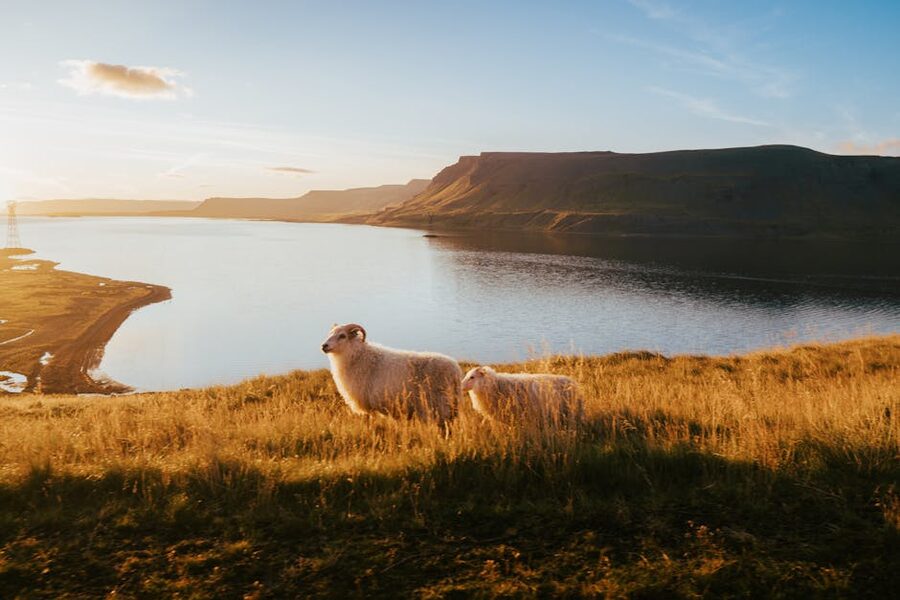
I have a soft spot for the Westfjords because they’re the bit of Iceland that still feels like Iceland used to. There is no chain hotel in Patreksfjörður. There is no Costa coffee. The petrol stations are 90 km apart and at one of them the woman behind the counter will ask you in Icelandic where you’re from and then switch to English when she sees your face. People say the light is different up here, and they’re not wrong, although the proper explanation is geometric, the fjords are deep and narrow so the sun only reaches the floor for a few hours. The rest of the day you’re walking around in this slow, grazed-down, sideways gold. Photographers know.
This guide is what I would tell you if you said over coffee that you had a week in Iceland and weren’t sure whether to go. The straight answer is yes, with caveats. The caveats are time, weather, and the fact that the highlights are spread far apart and a 200 km day on the map can be a five-hour day on the road. If you have those caveats sorted, the Westfjords pay back hard. If you don’t, do the Snæfellsnes Peninsula instead, get most of the same scenery in two days, and save the Westfjords for next time.
In This Article
- What the Westfjords actually are
- Getting there, in summer and in winter
- Driving from Reykjavík
- The Baldur ferry from Snæfellsnes
- Flying to Ísafjörður
- Getting around once you’re there
- The big sights
- Látrabjarg
- Rauðasandur
- Patreksfjörður
- Dynjandi
- Þingeyri and the Dýrafjörður loop
- Ísafjörður
- Tjöruhúsið, the fish meal
- Bolungarvík and the Ósvör maritime museum
- Hornstrandir Nature Reserve
- The Strandir region
- Hólmavík and the Sorcery Museum
- Krossneslaug, Hellulaug, and Reykjafjörður
- Djúpavík and the herring factory
- Drangajökull and the north of Strandir
- Norðurfjörður, where the road ends
- Bíldudalur and the southern fjords
- The other side: villages worth a coffee stop
- When to go
- Itineraries that work
- Three days, the south-west loop
- Five days, the proper loop
- Seven days, with Strandir
- What I would do, if I had four days
- Where to sleep
- Ísafjörður
- Patreksfjörður
- Hólmavík
- Djúpavík
- Norðurfjörður
- Where to eat
- Driving the Westfjords without losing the car or yourself
- Wildlife you’ll actually see
- The skip-list
- What I’d want you to take away
What the Westfjords actually are
Geologically speaking the Westfjords and the Eastfjords are the oldest parts of Iceland, around 14 to 16 million years old. The middle of the country is still being made, the seam between the North American and Eurasian plates runs right through it, and that is where all the volcanoes are. The two ends are the cooled-down edges, eroded by ice ages into the fjord pattern you see today. No active volcanoes here, no hot lava fields. The thing that defines the place is glaciers, water, and basalt.
The peninsula is connected to the rest of Iceland by a seven-kilometre-wide isthmus between Gilsfjörður and Bitrufjörður. That neck is the only road in. Once you cross it you’re in a world of fjords-inside-fjords, where to drive 50 km as the puffin flies you have to cover 200 km along the shoreline. You can sit on one shore and look across the water at a farm two kilometres away that you can’t reach without a four-hour drive. There are 30-something named fjords. People stop counting.
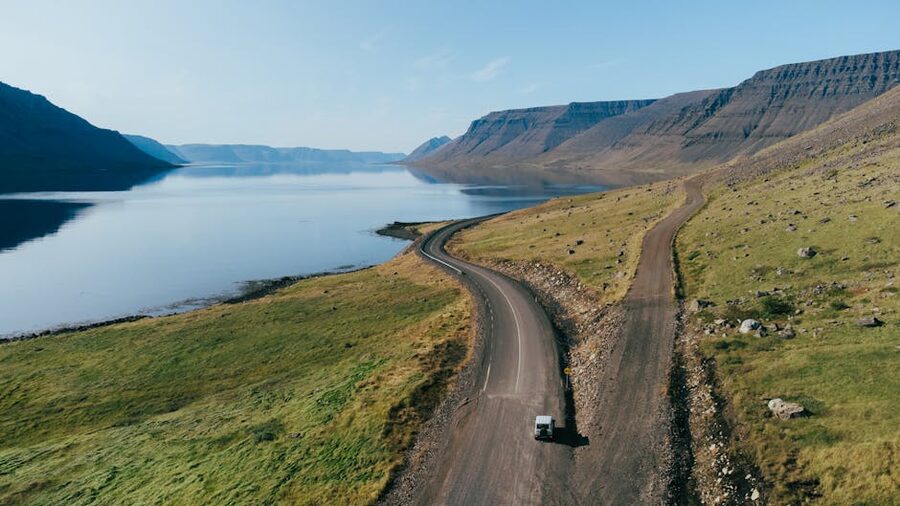
Total population is 7,168 as of the last count. The largest town is Ísafjörður at around 2,600 people. The next largest are Patreksfjörður (660ish), Bolungarvík (910), Hólmavík (350), and a long list of villages that hover between 100 and 250 souls. In 1920 there were over 13,000 people up here, more than 14% of Iceland. Then the fishing changed, the young people moved to Reykjavík, and the population kept dropping until very recently. It is starting to climb again, slowly, partly thanks to tourism, partly thanks to a biotech company in Ísafjörður called Kerecis that figured out how to turn cod skin into wound dressings and got bought by an American medical company for over a billion dollars in 2023. Cod skin. A billion dollars. The Westfjords are a strange place.
The largest landform is Drangajökull, the only glacier in the region, in the far north under the Hornstrandir reserve. It is the country’s fifth-biggest glacier and one of the few that is not retreating quickly, which has its own little story. The rest of the peninsula is treeless, mostly rock and tundra, with sheep grazing on slopes so steep you wonder how they keep their footing. They mostly do. Sometimes they don’t. You will see sheep on the road. Slow down.
Getting there, in summer and in winter
From Reykjavík there are three real options. Drive yourself, take the Baldur ferry from Snæfellsnes, or fly to Ísafjörður. Each has tradeoffs.
Driving from Reykjavík
The classic route is Reykjavík to Borgarnes on Route 1, about an hour, then north on Route 60, which is the spine road of west Iceland that eventually becomes the Westfjords loop. Reykjavík to Patreksfjörður is around 410 km and takes a solid 6 to 7 hours of driving with stops, longer on a windy day. Reykjavík to Ísafjörður is closer to 460 km and 7 to 8 hours. Those numbers assume the high pass roads are open. In winter they often aren’t.
If you have come up Route 60 the section called Dynjandisheiði (the heath above Dynjandi waterfall) is the dramatic stretch, a high mountain pass that climbs to over 500 metres and crosses a wind-blasted plateau before dropping you into Arnarfjörður. It is paved now, mostly, since 2024 the project finished. Still closes in storms. road.is is your friend, check it before you set off and again at every coffee stop.
Get a 4WD if you can afford one. In summer a 2WD will do for most of the loop, but a Yaris in the Westfjords in a side wind is not a relaxing experience. Northbound is a comparison engine that pulls quotes from most local outfits. Blue Car Rental is reliable. Lava and Hertz are both fine. See the full breakdown in our Iceland car rental guide.
The Baldur ferry from Snæfellsnes
This is the move I’d recommend if you want to hit Snæfellsnes and the Westfjords on one trip. Seatours runs the Baldur car ferry from Stykkishólmur on the north side of Snæfellsnes across Breiðafjörður bay to Brjánslækur on the south coast of the Westfjords. It is a real working ferry, not a tourist boat, locals use it daily. The crossing takes about two and a half hours, sometimes three, and stops at the island of Flatey on the way (45 minutes if you want to get off, but you have to plan for the next day’s sailing because there’s only one a day).
Cost is roughly 14,000 ISK each way for a vehicle plus driver, plus around 6,500 per extra adult passenger, depending on season. They run twice daily in summer (June to August), once daily the rest of the year. Book in advance for a vehicle in summer, especially July. The ferry can cancel in bad weather, so leave a buffer day if you have a flight to catch on the other end.
Flying to Ísafjörður
This is the best option if you have limited days. Icelandair (which absorbed the old Air Iceland Connect brand) flies Reykjavík to Ísafjörður daily, sometimes twice daily, around 50 minutes in the air, around 25,000 to 30,000 ISK return. The catch is that this flight is famous in Iceland for being the most exciting commercial flight in the country and also the most cancelled. The approach into Ísafjörður airport requires the pilot to fly down a fjord, do a hard right turn over the town, and land on a short runway hemmed in by mountains. In a stiff crosswind they can’t do it. Cancellations are normal. Plan accordingly. If you can manage it the flight is worth doing for the views alone, you go in low over the Westfjords coast and on a clear day you can see Drangajökull from the window.
Getting around once you’re there
You need a car. There is no real public transport network. Strætó, the national bus operator, runs a route from Reykjavík to Hólmavík once a day in summer (route 59) and a route to Ísafjörður via the south coast that takes most of a day, but neither of those help you actually see anything. There are local minibuses that connect Ísafjörður to Bolungarvík, Súðavík, and Þingeyri, and ferries from Ísafjörður to Hornstrandir in summer. Otherwise it’s your car or your boots.
The big sights
Three places carry the brochures: Látrabjarg, Dynjandi, and Hornstrandir. Then a long second tier of villages, beaches, and pools. I’ll go through them in roughly south-to-north order, which is also the order you’ll see them on a typical loop.
Látrabjarg
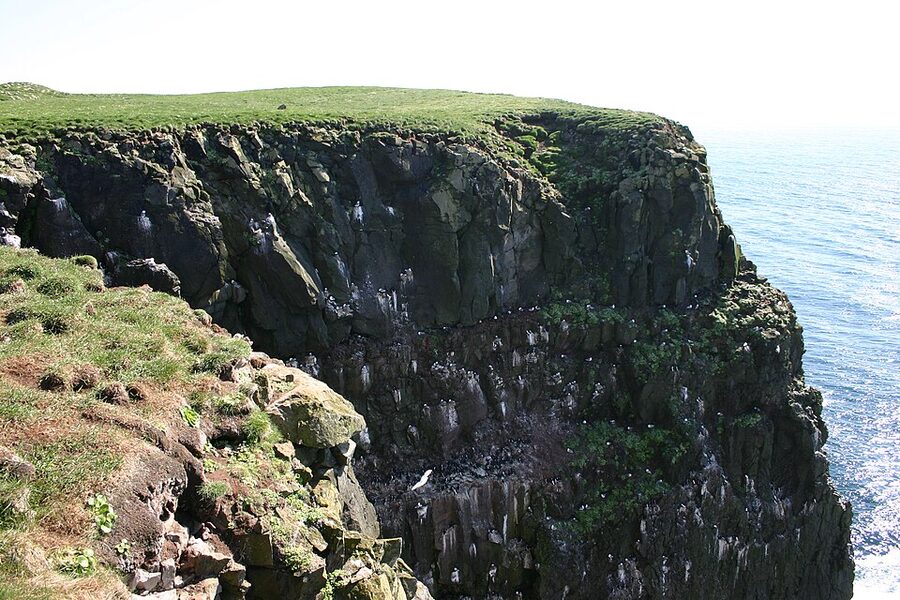
Látrabjarg is the westernmost point of Iceland, and therefore of Europe, depending on how you count Greenland. It’s a 14-kilometre-long cliff that rises to 440 metres above the sea, the largest sea-bird cliff in the North Atlantic. In a good year it hosts 40% of the global razorbill population. Plus puffins, guillemots, fulmars, kittiwakes, gannets. From mid-May to early August the cliffs are loud, smelly, alive. By mid-August the puffins have left for the open Atlantic and don’t come back until the following May. If you want puffins, come in late June.
The drive from Patreksfjörður takes about an hour each way on a gravel road that gets rough in the last 10 km. There’s no charge to enter and no fence at the cliff edge. The puffins burrow into the very lip of the cliff and the way to photograph them is to lie on your stomach and approach the edge slowly. The best advice I can give is don’t. Or rather, do, but stay at least three metres back from the actual edge. The lip is undercut and it has collapsed under photographers before. Two people died on these cliffs in 2017. The puffins are tame enough that you don’t need to be at the lip to get a good shot. A 200mm lens at four metres back is plenty.
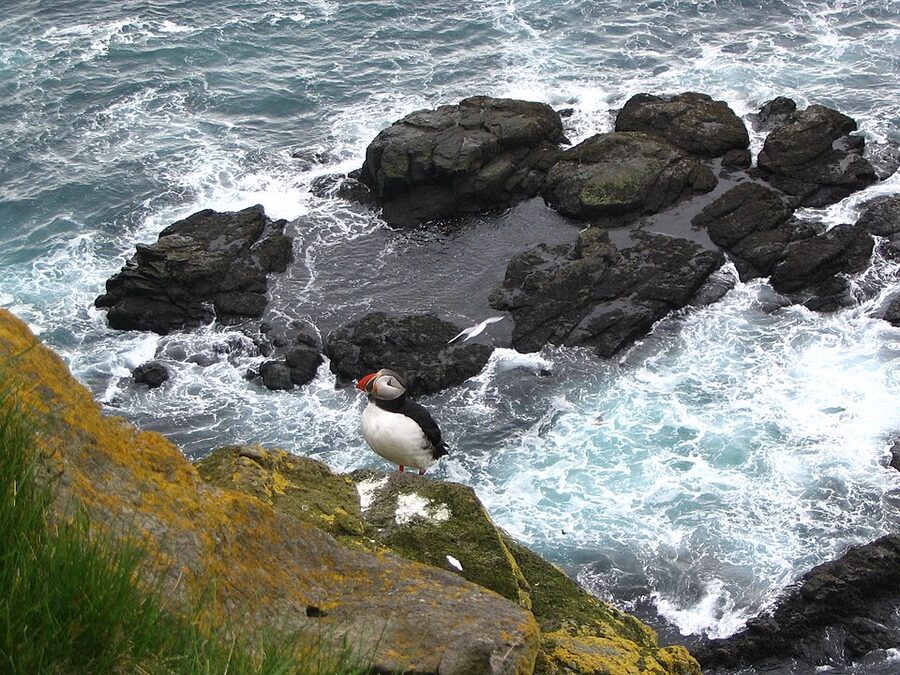
If you have a long lens and a clear morning, Látrabjarg is the best bird watching tour spot in Iceland, by a long way. There is also a small cafe at Hnjótur on the road in, the Hnjótur Folk Museum, which has a beautiful collection of fishing tools and the rusted skeleton of a 1947 American DC-3 in the field. Worth half an hour.
Rauðasandur
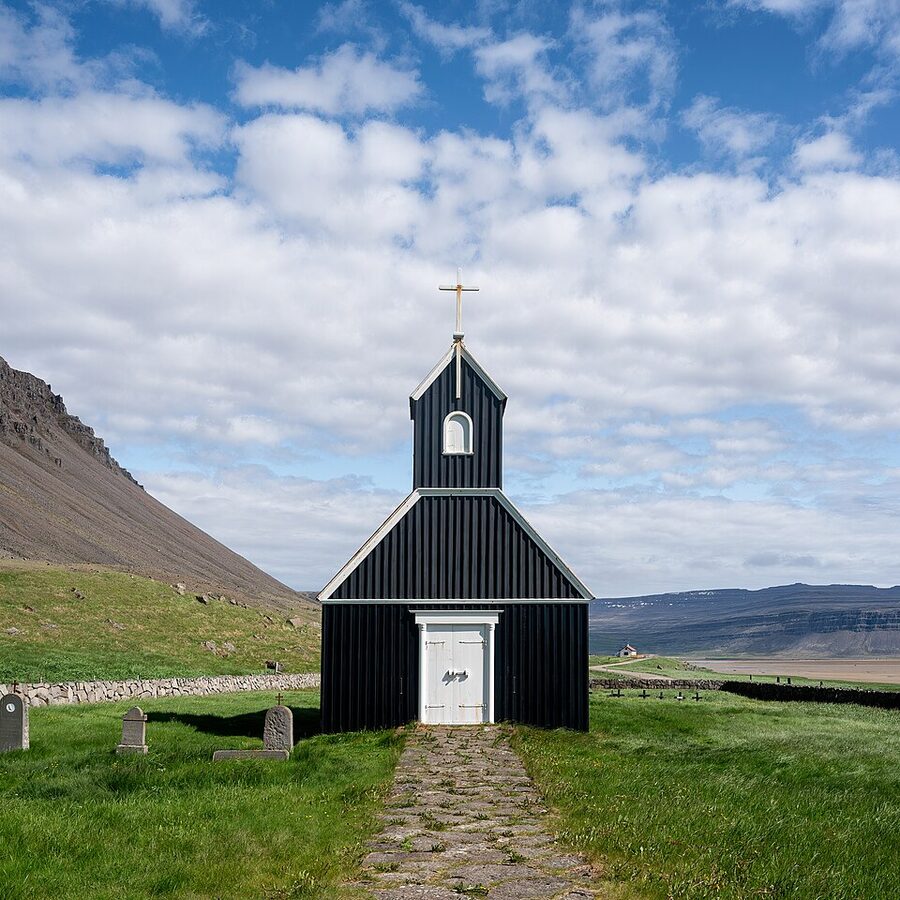
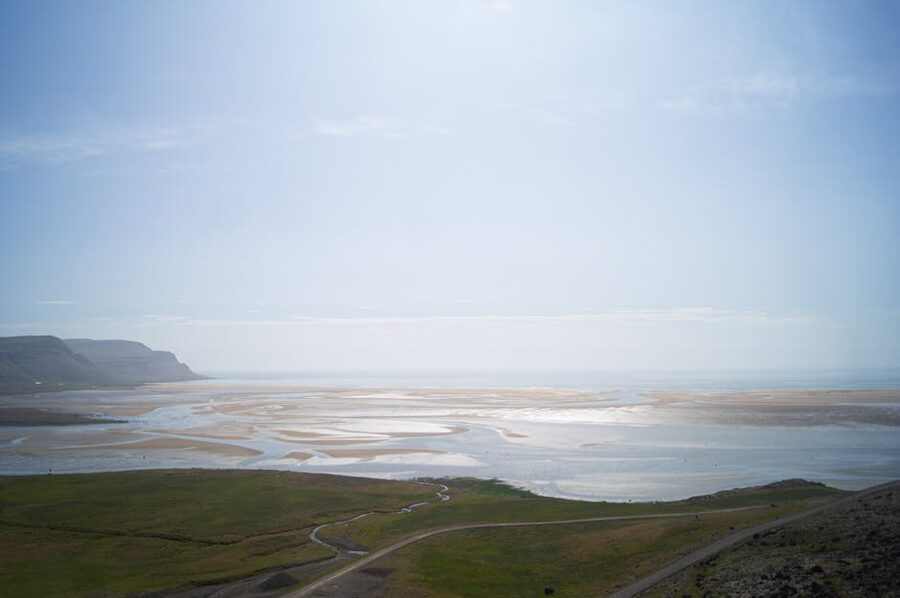
On the way to Látrabjarg, twenty minutes off the main road via a steep gravel pass, is Rauðasandur. The name means red sand. In Iceland, where almost every beach is black, that is news. The sand is actually more pink-orange than red, made from millions of years of crushed scallop shells from the bay. At low tide the beach extends for kilometres. There’s a little black-painted church at Saurbær where you park, a small café in summer (Franska kaffihúsið, French Café, they bake the bread), and otherwise nothing. Eider ducks nest in the marsh behind the dunes. The drive in is on a road that the rental agency probably told you not to do in a 2WD. The agency is being cautious. In dry summer conditions a regular car is fine, in rain or snow it isn’t.
Patreksfjörður
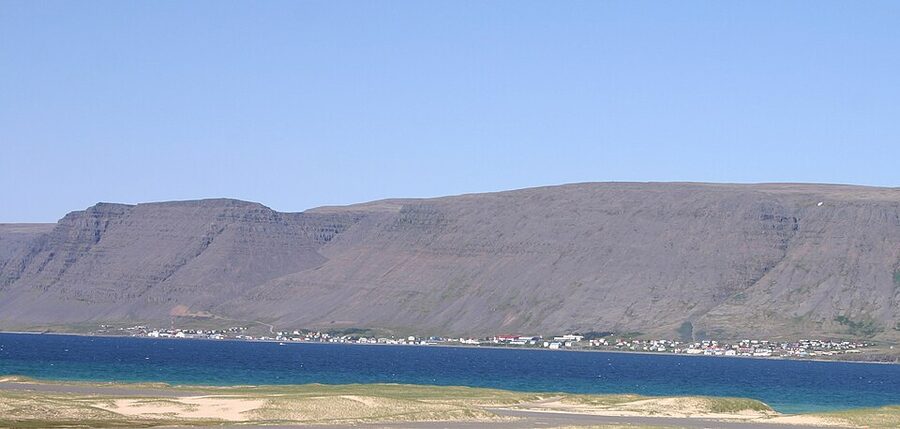
Patreksfjörður is the working fishing village that most Látrabjarg trips overnight in. About 660 people, named after Saint Patrick (the Irish settlers who passed through in the 9th century), strung out along a single fjord shore. There’s a swimming pool, a small museum, a couple of restaurants, a fuel station, a Fosshotel. And at the end of the bay there’s a surf school called Westfjords Adventures that runs cold-water surf lessons in summer. Wetsuits are 5mm. The water is around 8 to 10 degrees in July. People do it. People also drink schnapps afterwards.
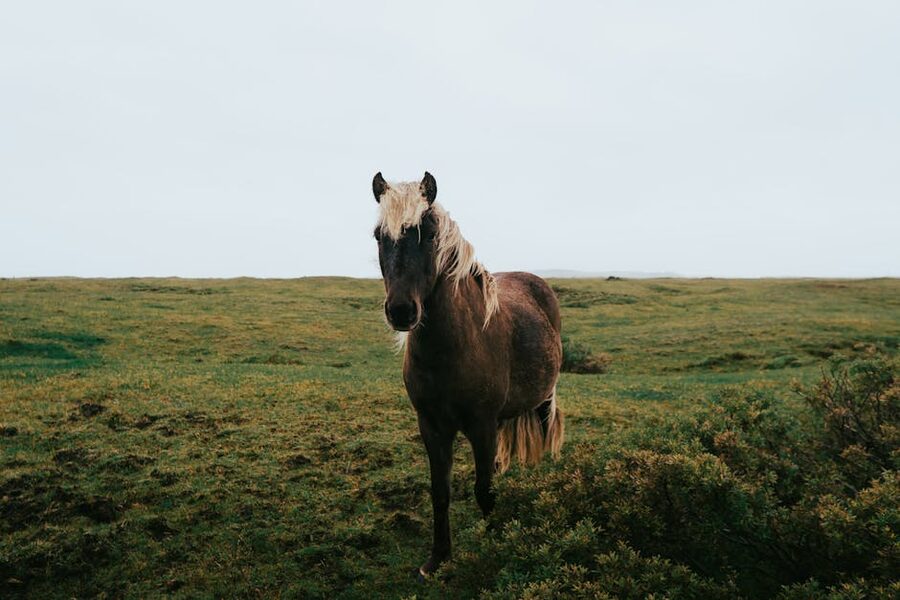
The walk along the seafront in the evening is the best free thing to do in town. There’s a little promenade past colourful sheds, a herd of Icelandic horses in a paddock at the end, sometimes a sea eagle on the cliff above the school. The harbour fish-and-chips shop is called Stúkuhúsið, opens 11am to 9pm in summer, and does a fish meal for around 2,500 ISK that’s better than it has any right to be.
Dynjandi
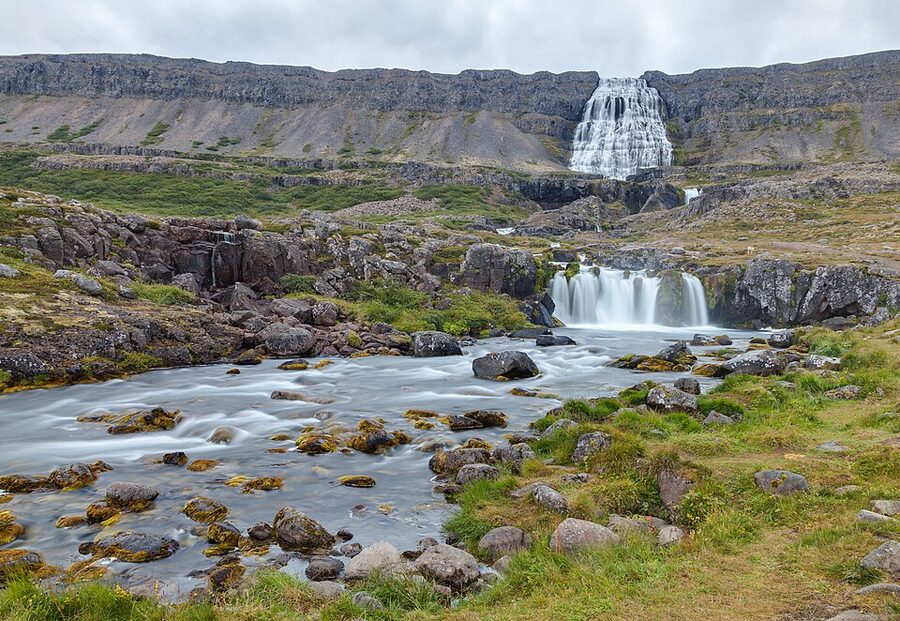
Dynjandi is the waterfall that ends up on the Westfjords postcards. Its name means “the thunderer”. It is 100 metres tall, 30 metres wide at the top and 60 at the base, a stepped cataract that fans out as it falls so it ends up looking like a bridal veil pinned to the cliff. Below it are six smaller waterfalls in the same stream, each with its own name, all of which you walk past on the path up to the main one. Háifoss, Úðafoss, Göngufoss, Hundafoss, Bæjarfoss. The walk takes about 20 minutes from the car park, gentle uphill on a graded path.
The catch is location. Dynjandi sits in Arnarfjörður, halfway up the south side of the peninsula, accessible by Route 60 from the south or by the long loop from Ísafjörður via Þingeyri to the north. From either direction it’s a half-day drive minimum. Most people see it once on a Westfjords trip and that’s it. There’s no entrance fee, a small parking area with toilets, and on a sunny day in July you might find 20 cars there. In a regional context that’s a crowd. By Skógafoss standards it’s empty. Stay until the day-trippers leave at four and you’ll have it to yourself.
Þingeyri and the Dýrafjörður loop
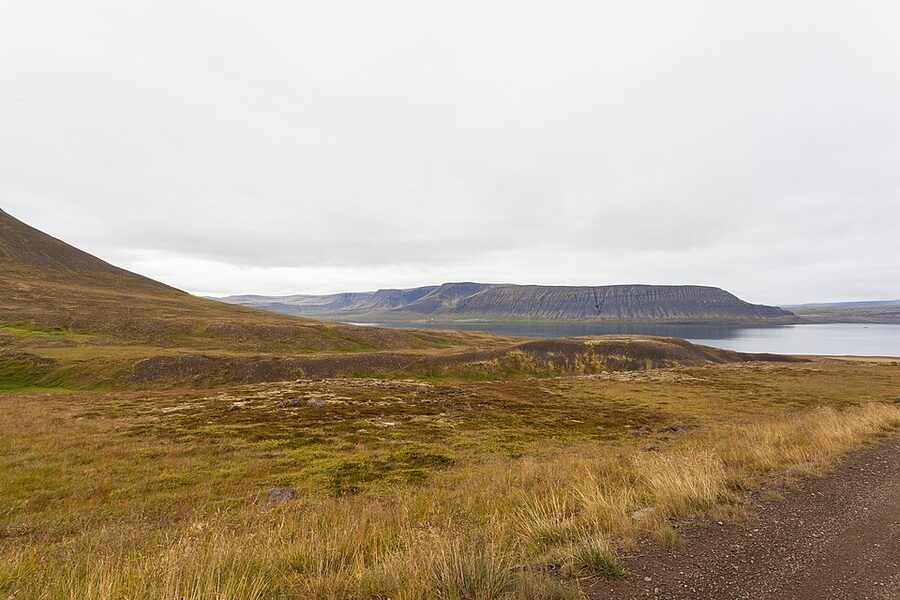
North of Dynjandi over another mountain pass (Hrafnseyrarheiði, named after Hrafn Sveinbjarnarson, the 12th-century saga doctor) is the village of Þingeyri on Dýrafjörður. Around 250 people, founded as a Norwegian whaling station in the 19th century. The church is a Norwegian-style wooden building from 1911, dark red, sat by itself on a low hill. There’s a coffee shop in the old smithy, Simbahöllin (the Simba Palace), that does Belgian waffles and lamb stew, run by a Belgian-Icelandic couple, open seasonally May to September.
The reason to detour out to Þingeyri is the Sandafell viewpoint. A four-kilometre gravel road climbs to the top of the hill behind the village and on a clear day you can see across to Snæfellsjökull, 180 km south. You can drive it. It’s steep and bumpy. Or you can walk up in 90 minutes. Either way the top is the best fjord view in the south Westfjords.
Ísafjörður
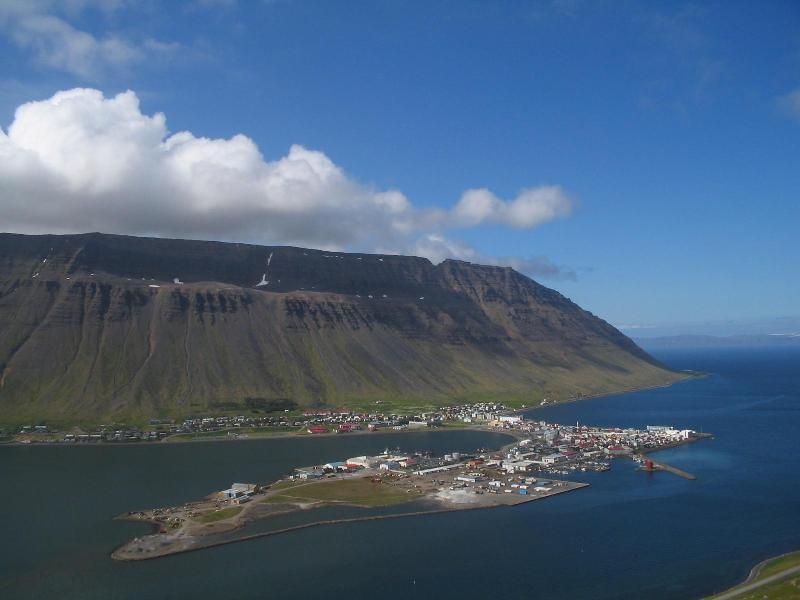
Ísafjörður is the capital of the Westfjords, around 2,600 people, the only town up here that feels like a town. It sits on a triangular spit of sand that pokes into Skutulsfjörður, with the main road tunnel (the Vestfjarðagöng, 9 km, completed 1996) coming in from the south. There’s a hospital, a high school, a small university centre, a working fishing harbour, an annual rock festival called Aldrei fór ég suður (I never went south) every Easter that local hero Mugison and his dad started in 2004 and that has become one of Iceland’s better music weekends. Free to attend. People sleep on couches.
Old Ísafjörður is the cluster of 18th-century timber houses called Neðstikaupstaður, a former Danish trading post and the oldest collection of wooden buildings in Iceland. Tjöruhúsið, the tar house, was built in 1781 and is now a restaurant. Krambúð, the shop building, dates to 1757. The Westfjords Heritage Museum is in the old Turnhúsið from 1784. Going inside is two and a half hours of fishing tools, accordion music, and old harbour photos. Better than it sounds.
Tjöruhúsið, the fish meal
Tjöruhúsið is the Icelandic fish meal. It is the reason food writers come to Ísafjörður. It is in the wooden tar warehouse from 1781, mentioned above, run for the past 25 years by a man named Magnús Hauksson who buys whatever the boats brought in that morning. There’s no menu. You sit at a long bench, the cooks bring out a parade of cast-iron pans straight from the wood-fired stove, you help yourself, you go back as many times as you like. Plaice, monkfish, halibut, cod, redfish, salt cod stew, fish balls. Plus boiled potatoes and rye bread. Around 9,500 ISK per person. BYO wine, they don’t have a licence. Cash or card. Booking essential, it’s now famous and the room is small. Open for dinner, two seatings, summer only. Tel +354 456 4419.
Around the corner is Húsið, a casual bistro with a more conventional menu (fish soup, lamb burger, that sort of thing) for around 3,500 to 5,500 ISK a plate. Open year round. If Tjöruhúsið is full or it’s winter, this is where you go.
Bolungarvík and the Ósvör maritime museum
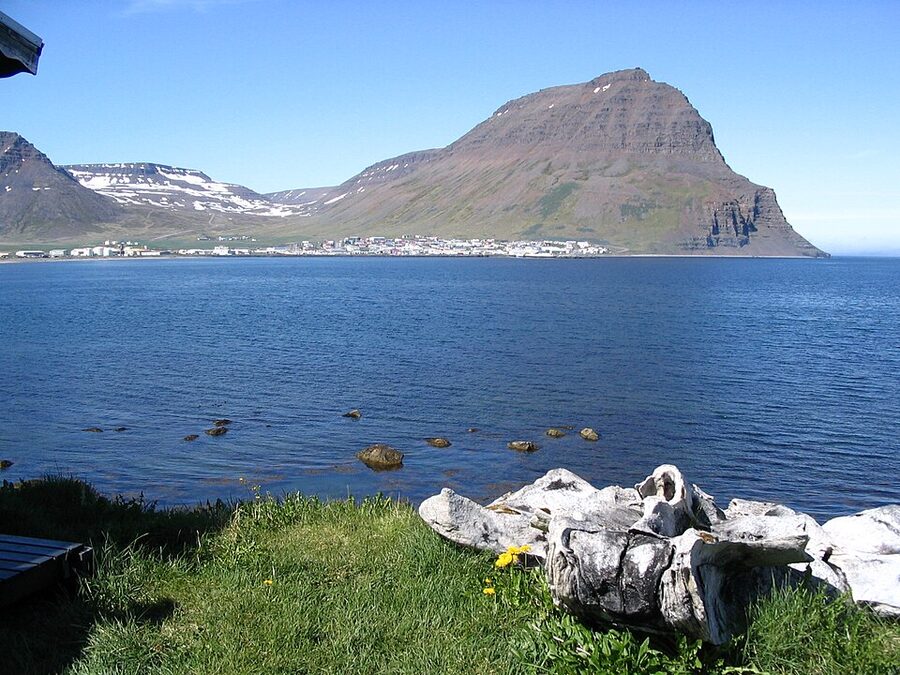
Fifteen kilometres further north through another tunnel (under the Óshlíð cliff, which used to be the worst stretch of road in Iceland before the tunnel opened in 2010) is Bolungarvík. Around 920 people, a fishing village in the most exposed possible position on the open Atlantic. The Ósvör maritime museum is a reconstructed 19th-century fisherman’s hut on the harbour, dirt floor, smoking shed, six-oared rowing boat in the doorway, manned in season by a guide in full sealskin oilskins. Five minutes round the headland. Worth seeing. Open mid-May to mid-September, around 1,200 ISK. There’s also a brutalist concrete avalanche dam above the town, built after a deadly snow slide in 1995, you can drive up to it and look down on the village.
Hornstrandir Nature Reserve
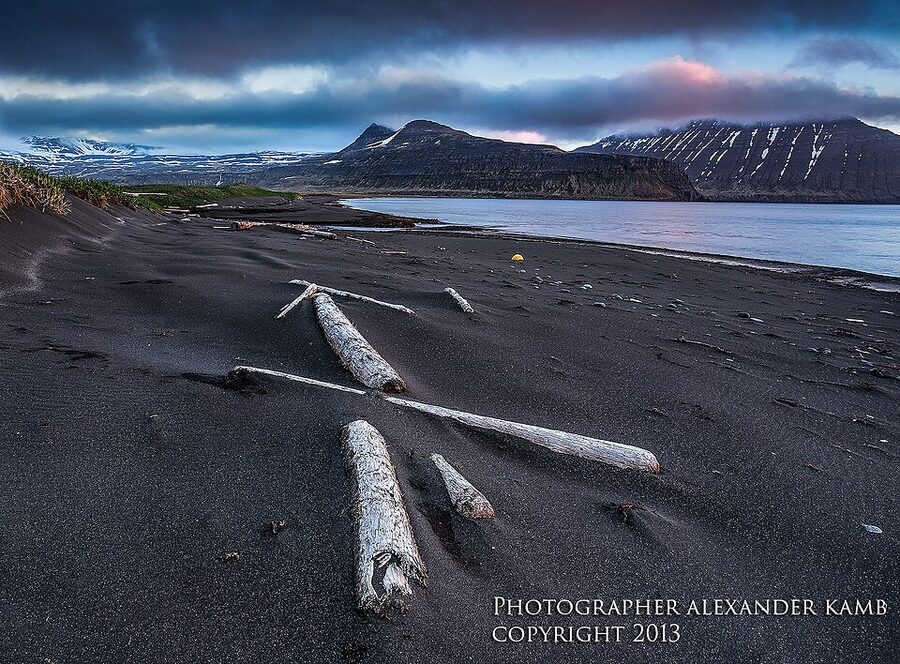
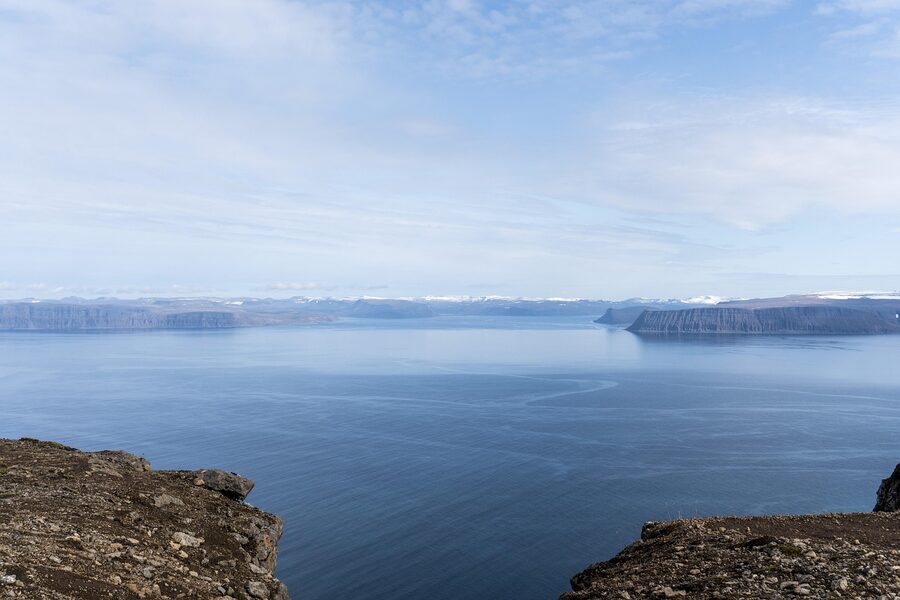
Hornstrandir is the part of the Westfjords that you cannot drive to. 580 square kilometres of nature reserve at the very north of the peninsula, abandoned by its last human residents in 1952, accessible only by boat from Ísafjörður and only between mid-June and late August. There are no roads, no cars, no shops, no electricity. There is a ranger station at Hornvík, a few unmanned huts where backpackers can shelter, and that is it. People come here to hike for days and not see another person.
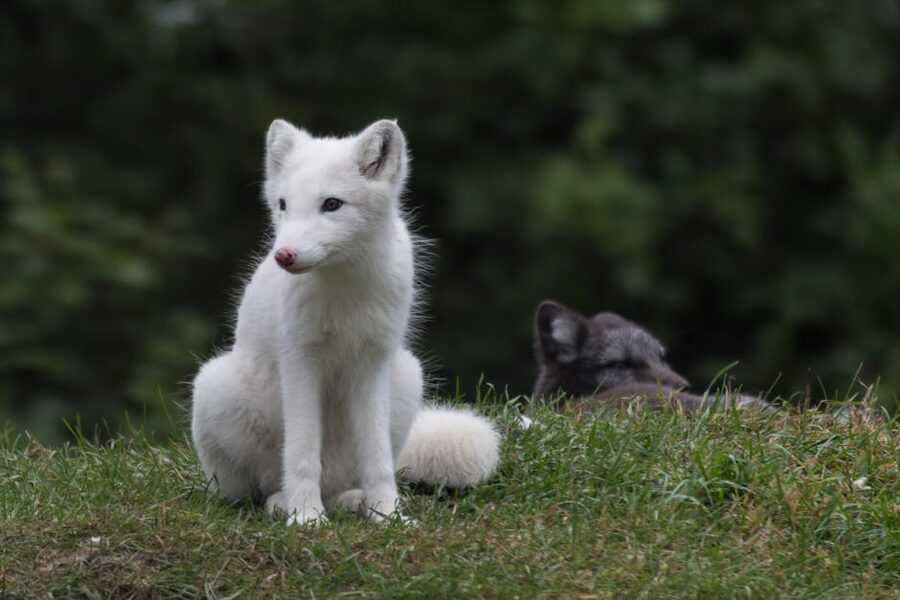
The reserve is famous for two things. One, the Hornbjarg cliffs, rising to 534 metres above the bay of Hornvík, with one of the densest seabird populations in Iceland. Two, arctic foxes that have never been hunted. They are not afraid of humans here in the way they are everywhere else. You can sit on a rock, eat your sandwich, and a fox will trot up to within five metres and sit down to watch you eat. It’s surreal. It happens.
Two ways in. Day trip from Ísafjörður (around 25,000 ISK per person, leaves morning, returns evening, you get four to five hours on land usually at Hesteyri or Aðalvík, includes a guided walk and a coffee in a 1903 Norwegian-built timber farmhouse). Or a multi-day hike, which you arrange via West Tours or Borea Adventures in town. Operators drop you at Hornvík or Veiðileysufjörður on day one and pick you up at another bay three to seven days later. You carry everything. Weather changes everything. Plan flex days.
If you only have one day, the Hesteyri trip is the standard. There used to be a herring station and a school here, abandoned in 1952 along with the rest of Hornstrandir. The houses still stand, looked after by descendants. The old doctor’s house serves coffee and pönnukökur (Icelandic crepes) in summer.
The Strandir region
The east side of the Westfjords is called Strandir, and it is where the peninsula gets even quieter. Most visitors do the south-west loop, see Látrabjarg and Dynjandi and Ísafjörður, and head back. The Strandir villages get a fraction of that traffic. The road up the eastern coast (Route 643) ends at Norðurfjörður, a tiny fish factory village with one café, one guesthouse, and a feeling that you are on the edge of the world. Which you are.
Hólmavík and the Sorcery Museum
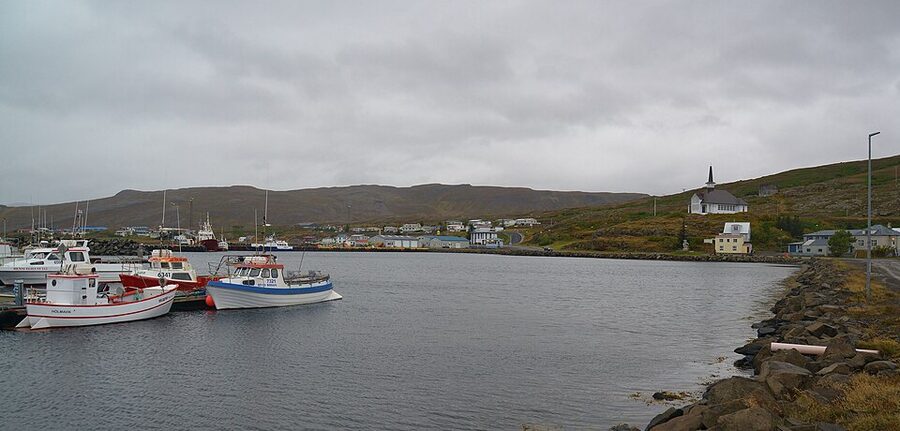
Hólmavík is the gateway to Strandir, the first town you reach if you come up from Reykjavík via Route 1 and Route 68 (which is the long way, 5 hours, but the route most direct visitors take). 350 people on a fjord. The reason most visitors stop here is the Strandagaldur Museum of Icelandic Sorcery and Witchcraft, which is the most famous tiny museum in Iceland and arguably the strangest. It documents the 17th-century witch trials in Iceland, which were unusual in Europe in that the people executed were almost all men. There are reconstructed magical staves carved on driftwood, a runic alphabet, a leather-bound grimoire, and the centrepiece, a pair of full-body trousers made from a man’s skin from the waist down. Necropants. The story goes that to make them you had to get a friend’s permission while he was alive to take his skin after death, then put a stolen coin from a poor widow inside the scrotum, and the trousers would draw money to you. It’s a 17th-century legend, the trousers in the museum are a modern reconstruction (skin is from a mannequin), but the lore is real and the museum makes it work. Around 1,500 ISK to get in. Open year-round, reduced winter hours. The café (Café Riis, attached, with the same opening hours) does a good lamb burger.
Krossneslaug, Hellulaug, and Reykjafjörður
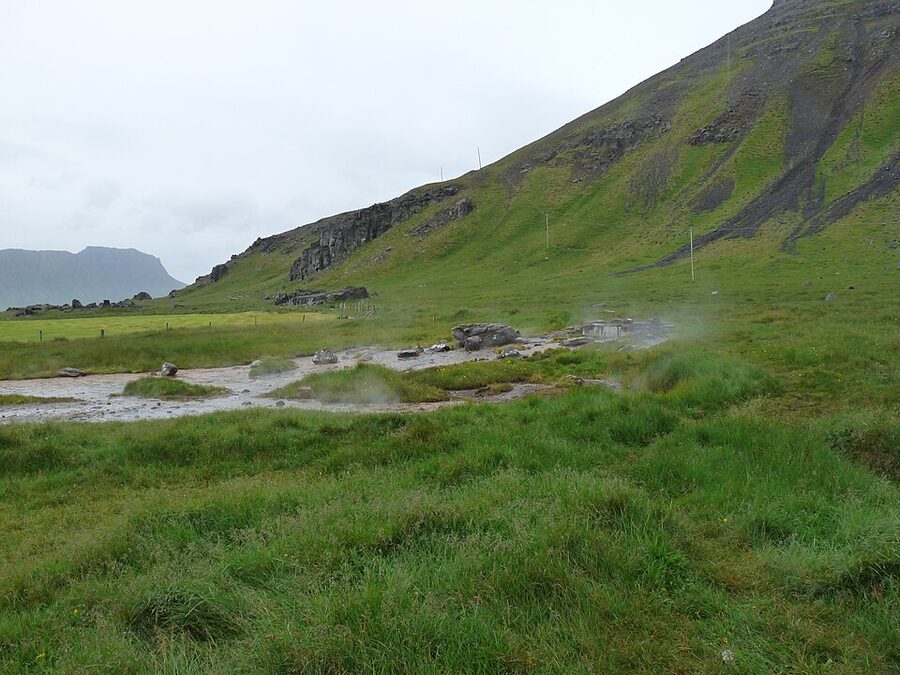
The Westfjords have hot springs you’ll have to yourself. The headline three are in Strandir.
Krossneslaug is at the very end of Route 643, an hour past Hólmavík, well past Norðurfjörður, on a windswept beach with the Atlantic crashing twenty metres below the pool deck. It is a regular concrete swimming pool, fed by a natural hot spring that comes out of the ground at 40-something degrees and gets piped in. There’s a basic changing hut, no staff. You drop 700 ISK in the honesty box. Open most of the year, sometimes shut in deep winter when the road can’t be cleared. Sitting in 39-degree water in July at 11pm, with the midnight sun glowing on the headland and waves slamming the rocks below you, is one of the better moments in Iceland. Read up on the rest of the country’s hot pools in our guide to hot springs in Iceland.
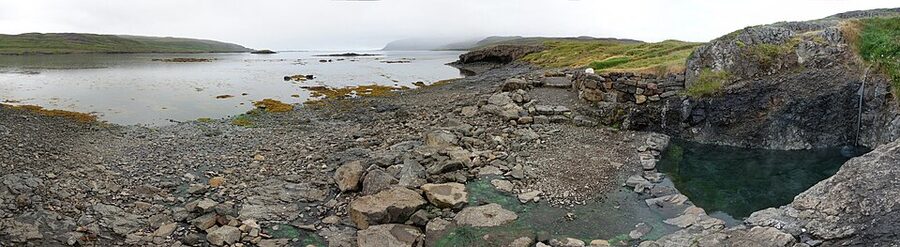
Hellulaug is on the south coast, near Flókalundur, just off Route 62 between the Baldur ferry dock at Brjánslækur and Patreksfjörður. It is a natural stone bowl in a basalt outcrop, head-high water, no concrete, just a rock pool that warms to about 38 degrees from a side spring. Free. You change in the open air, or behind your car. There is no shelter. The fjord is right there, ten metres away. Most people drive past without seeing it because the sign is small and you can’t see the pool from the road. Pin it on your map.
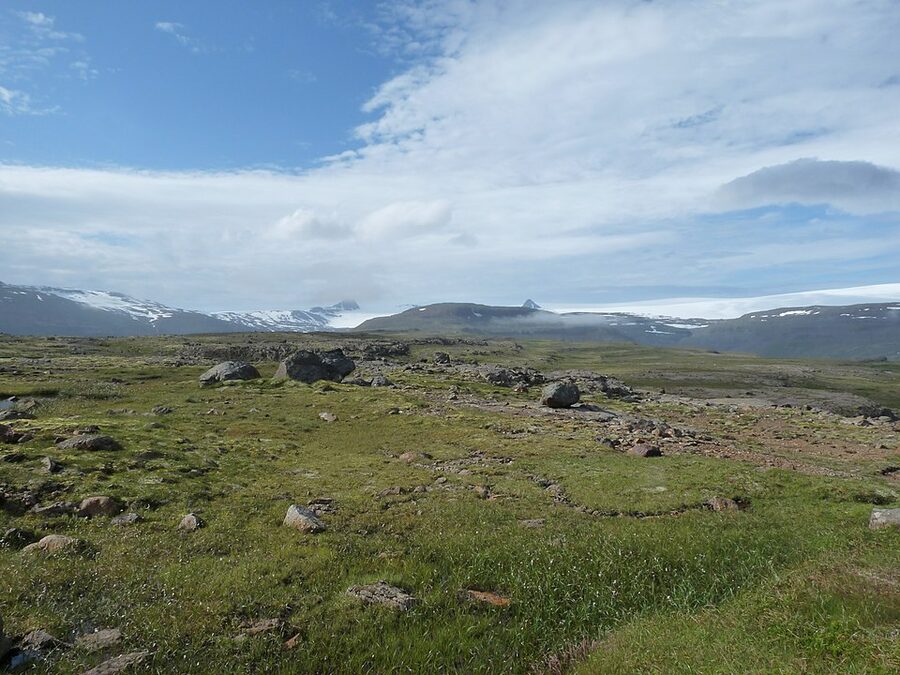
Reykjafjörður is one of the small north-Strandir fjords, off Route 643 between Djúpavík and Norðurfjörður. There is a hot pool down at the shore, walled with concrete, fed by a hot spring. Smaller than Krossneslaug, more rustic, often empty. Donation box. The location, with Drangajökull glacier looming behind, is what makes it.
Djúpavík and the herring factory
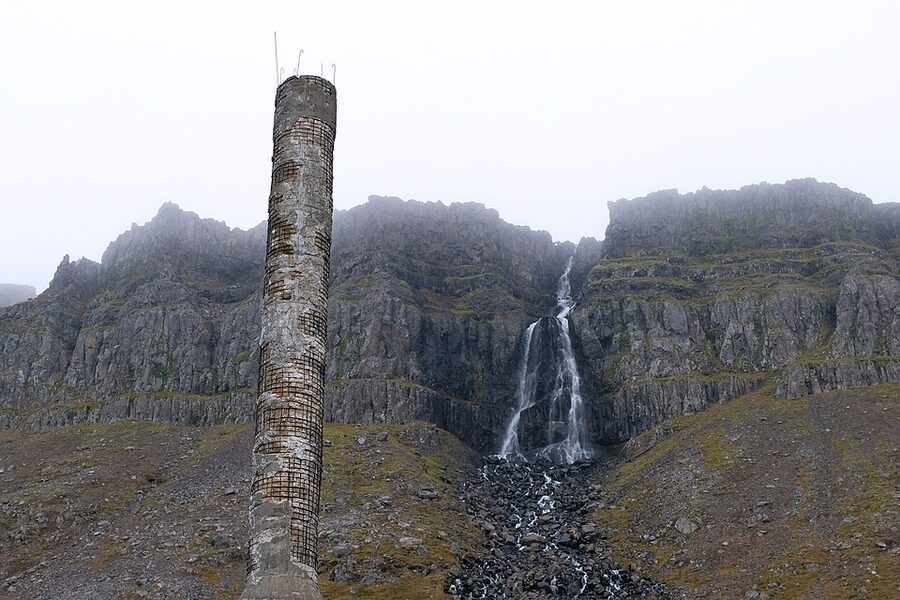
Djúpavík is a single building on a fjord. In the 1930s it was the largest concrete structure in Europe, a herring processing plant where the fish were reduced to oil and meal. The herring left in 1954 and never came back. The plant closed and most of the workers moved away. In the 1980s a couple bought the women’s dormitory, turned it into a 14-room hotel called Hótel Djúpavík, and started running tours of the rusting factory next door. Sigga, the original owner, ran it for 30 years. Their kids run it now. Around 25,000 ISK a night for a double, food included is more, the dining room is the original 1930s mess hall. The factory tour is around 1,500 ISK and lasts an hour, the guides know the rivets by name. Worth the four-hour detour from Hólmavík just to sleep there once. Reachable by car April to October, by snowmobile or skidoo in winter (or just don’t, in winter).
Drangajökull and the north of Strandir
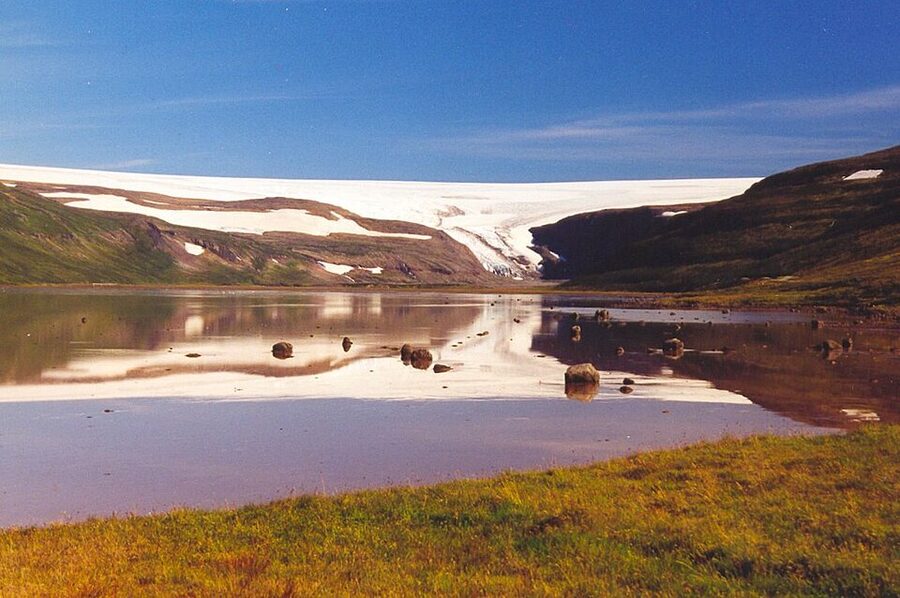
Drangajökull is the only glacier in the Westfjords and the country’s fifth largest, around 160 square kilometres, sitting on a high plateau at the top of the peninsula. It is one of the few glaciers in Iceland that is not retreating fast. The reason is geometry, the ice is at relatively low altitude but the cold air sinks down off Greenland and pools over the plateau, so the melt season is short. You can’t really hike on it without a guide, but you can see it well from the road in north Strandir, particularly the stretch above Reykjafjörður, and from the Borea boat on the way to Hornstrandir.
Norðurfjörður, where the road ends
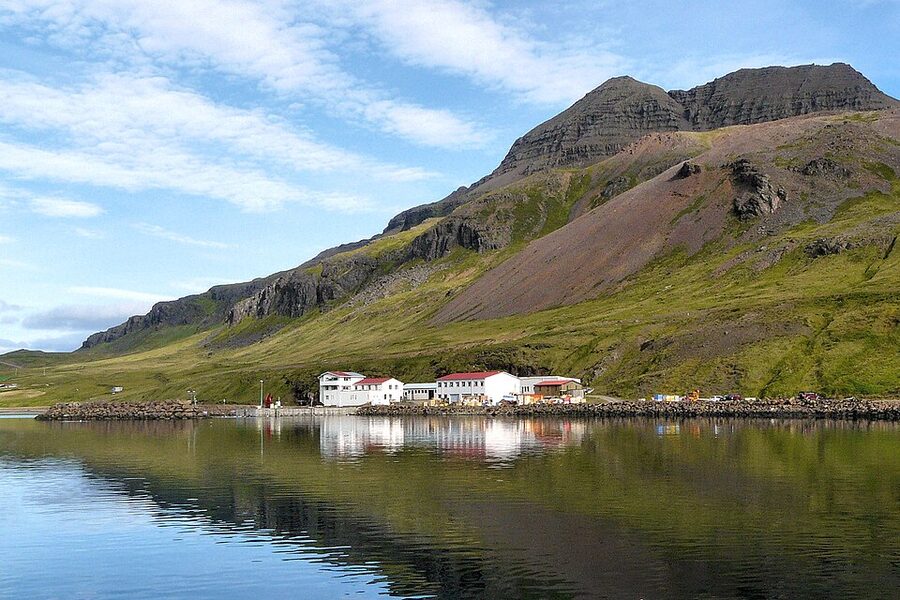
Norðurfjörður is where Route 643 stops being a road. Population 25 in winter, maybe 50 in summer. The fish factory is the employer, owned by the fishing family Ingimundsson. There’s a café-shop called Kaffi Norðurfjörður that opens around noon and runs out of soup by four. There’s a guesthouse called Bergistangi. There’s the absolute end of public road in the Westfjords (you can keep walking on a marked trail another 30 km north into Hornstrandir, but no driving). And there’s Krossneslaug ten minutes further on, mentioned above, which is the reward at the end.
Bíldudalur and the southern fjords
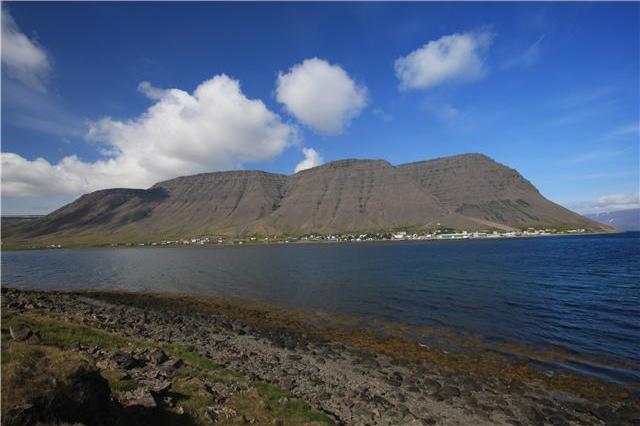
Bíldudalur is a village of around 240 people on the south side of Arnarfjörður, halfway between Patreksfjörður and Dynjandi. Quiet now. In the 1890s, under a merchant called Pétur Thorsteinsson, it was a fishing boomtown, the first town in Iceland to have piped water and a railway link to its fish-processing plant, ten years before Reykjavík caught up. There’s a small monster museum, the Sea Monster Museum, dedicated to the various aquatic beasts said to live in Arnarfjörður (the Skrímsli). It’s odd. It’s worth half an hour. Around 1,500 ISK.
The other side: villages worth a coffee stop
I have not covered everything. A handful of villages don’t get headlines but reward you with a coffee stop or an hour. Suðureyri is where the musician Mugison grew up, an end-of-fjord village on Súgandafjörður, sustainable fishing tourism (Fisherman.is runs tours of the local fish-drying operation). Flateyri is on a sand spit in Önundarfjörður, has the oldest bookshop in Iceland (1914) and an avalanche dam from the 1995 disaster. Súðavík is on the way to Ísafjörður and has the Arctic Fox Centre, a research and rehabilitation hub for orphaned arctic foxes. Hnífsdalur is just outside Ísafjörður, mostly residential. Reykhólar is in the south-east, hot springs and a seaweed harvesting project. None of these are destinations. All of them are real places where people live their lives.
When to go
Late June to early September is the window for everything. The high passes are open, the ferry runs twice daily, Hornstrandir is accessible, the puffins are in. July and early August are warmest, around 12 to 14 degrees in the day, four hours of darkness. Late June has fewer tourists but unpredictable weather. Mid-September is autumn light at its best, but the puffins have left and the Hornstrandir boats stop.
May and late September are shoulder. Most things are open but limited. The Baldur ferry runs once daily. Some Strandir hotels open in May, some not until June. Latrabjarg in early May is mostly empty cliffs, the puffins are still arriving. I would not plan a Westfjords trip for May unless I had to, but it’s the cheapest month.
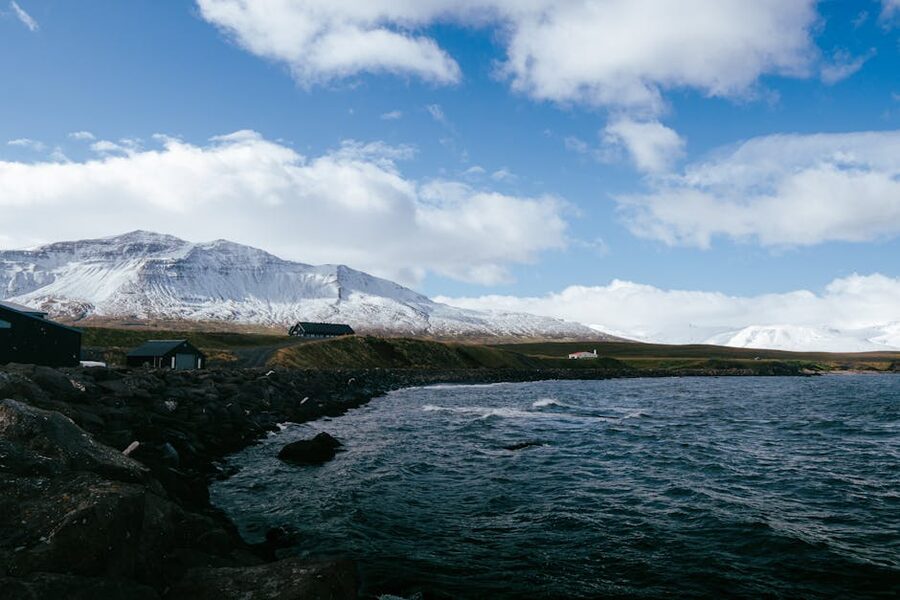
October to April is winter. The high passes close repeatedly. Many hotels and most museums shut. Tjöruhúsið closes mid-October. The Baldur ferry runs once daily but cancels often. Roads are passable to Ísafjörður via the southern Route 60 most of the time, and to Hólmavík via Route 68 most of the time, but you should expect a closure or two on any given week. Hornstrandir is unreachable. Mountain passes (Dynjandisheiði, Hrafnseyrarheiði, Steingrímsfjarðarheiði) close for days at a time. If you go in winter, go for Ísafjörður and Hólmavík and the southern villages, base in one of those, and accept that the rest of the peninsula might not be reachable.
For the best monthly breakdown of weather across Iceland, see our guide to when to visit Iceland. The key Westfjords-specific tools are the Icelandic Met Office (vedur.is) for weather and aurora forecasts, the road authority (umferd.is or road.is) for closures, and SafeTravel (safetravel.is) for hike registration and conditions.
Itineraries that work
Three days, the south-west loop
The minimum that lets you see the headline sights. Day 1, Reykjavík to Stykkishólmur (2.5 hours), Baldur ferry across Breiðafjörður (3 hours), Brjánslækur to Patreksfjörður (1.5 hours), sleep. Day 2, Patreksfjörður to Látrabjarg via Rauðasandur (full morning), back to Patreksfjörður for lunch, drive Bíldudalur to Dynjandi to Ísafjörður (4 hours), sleep. Day 3, Ísafjörður morning, drive south via Hólmavík (3 hours), back to Reykjavík (3 hours).
This is tight. You will be in the car a lot. You will not have time for Hornstrandir. You will not have time to sit anywhere. But you will have seen the puffins, the cliff, the waterfall, and Tjöruhúsið.
Five days, the proper loop
Same as above but with two extra days that change everything. Day 1 Reykjavík to Patreksfjörður via the ferry. Day 2 Patreksfjörður, Látrabjarg, Rauðasandur. Day 3 Patreksfjörður to Ísafjörður via Dynjandi (with time to actually stop). Day 4 Ísafjörður, day trip to Hornstrandir or Bolungarvík. Day 5 Ísafjörður to Reykjavík via Hólmavík and the Sorcery Museum, with time for Krossneslaug if you don’t mind a long final day.
This is the trip I’d recommend if you have the days.
Seven days, with Strandir
Add two days in Strandir at the end. Day 5 Ísafjörður to Hólmavík (3 hours via Súðavík, lunch at Café Riis, Sorcery Museum). Day 6 Hólmavík to Norðurfjörður via Djúpavík (3 hours of switchbacks), sleep at Djúpavík or Bergistangi, Krossneslaug in the evening. Day 7 Norðurfjörður back to Reykjavík (5.5 hours), sleep.
What I would do, if I had four days
Fly one-way to Ísafjörður on Icelandair, around 14,500 ISK. Pick up a 4WD at Ísafjörður airport from Bílaleiga Ísafjarðar. Drive south the same day to Patreksfjörður (3.5 hours), eat at Stúkuhúsið, sleep at Fosshotel Westfjords or Stekkaból guesthouse. Day 2 Látrabjarg morning, Rauðasandur afternoon, back to Ísafjörður via Dynjandi for the late light. Day 3 Hornstrandir day trip from Ísafjörður, dinner at Tjöruhúsið. Day 4 drop the car, fly back to Reykjavík (or hop the bus south if the flight cancels). It cuts out the long Reykjavík-and-back driving and gives you actual hours on the cliffs, in the water, and at the dinner table.
Where to sleep
Ísafjörður
Hotel Ísafjörður is the main hotel in town, three buildings on the harbour, comfortable, central, restaurant on site. Doubles from around 32,000 ISK in summer. Gentle Space Apartments is a self-catering option in old town, good for two or three nights. Hotel Edda Ísafjörður is a school dorm converted to summer hotel, only open June to August, cheaper. Hotel Horn is the budget option, a few minutes’ walk from the harbour. Camping (15 minutes’ walk from the centre) is free in low season, around 1,500 ISK in summer.
Patreksfjörður
Fosshotel Westfjords is the modern hotel above the village, sea view rooms, restaurant. Stekkaból Guesthouse is a family-run alternative on the same fjord, half the price, breakfast included, the kind of place where the host will check the weather for you in the morning. Both are good. Stekkaból is closer to my heart because I’ve stayed there four times now.
Hólmavík
Café Riis Guesthouse is rooms above the museum café, simple, central. Sandafell Guesthouse is the upgrade, doubles around 22,000 ISK with breakfast, family-run, the host’s mother does the baking.
Djúpavík
Hótel Djúpavík deserves its own paragraph. Booking is direct (djupavik.com) or via the Booking link. 14 rooms, no en suite, breakfast and dinner included, the location is the experience. Around 25,000 to 35,000 ISK per person depending on board. April to October only.
Norðurfjörður
Bergistangi Guesthouse is the only proper option. Five rooms. Run by the family that runs the fish factory. There’s also a campsite with a small hut.
Tour packages will sometimes include the lodging if that’s easier. GetYourGuide and Viator aggregate most multi-day Westfjords packages, sort by reviews. West Tours in Ísafjörður is the local operator and runs more flexible options than the big aggregators.
Where to eat
The list is short up here. That is part of the charm.
Tjöruhúsið in Ísafjörður, mentioned at length above, is the meal. Húsið nearby for everything else. Edinborg Bistro is a casual third option, pizza and burgers. Bryggjukaffi is the harbourside coffee place, decent baked goods.
In Patreksfjörður, Stúkuhúsið for fish and chips, Stúkuhús for pizza, the Fosshotel restaurant for a proper sit-down. In Bíldudalur, a single small café called Vegamót. In Þingeyri, Simbahöllin (Belgian waffles, May to September).
In Hólmavík, Café Riis is the only restaurant, also serves the museum, lamb burger and pizza. In Djúpavík, the hotel restaurant is the only restaurant. In Norðurfjörður, Kaffi Norðurfjörður is the one café, lunch only.
Outside these towns, almost nothing. Bring snacks. The N1 in Brjánslækur after the ferry sells microwave pylsur (hot dogs) and chocolate. The petrol station in Ísafjörður does decent skyr in the chiller.
Driving the Westfjords without losing the car or yourself
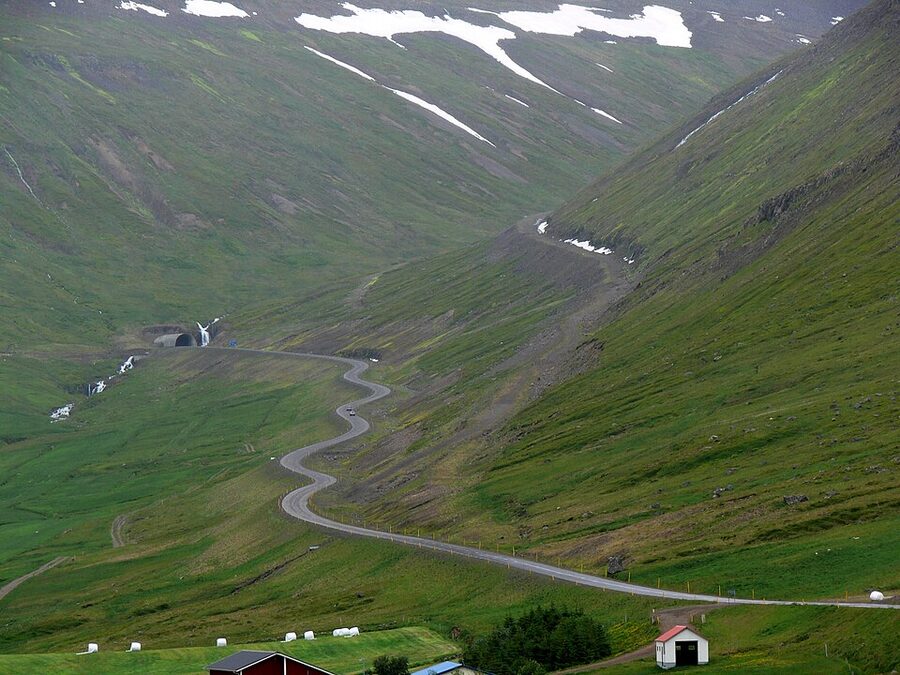
A few real things to know. The tunnels are partly one-lane. Vestfjarðagöng (Ísafjörður to Þingeyri/Suðureyri/Flateyri) and Bolungarvíkurgöng (Ísafjörður to Bolungarvík) both have stretches where the road narrows to one lane and the passing bays are on alternating sides. Read the signs and yield to whichever side doesn’t have a bay.
Single-lane bridges are everywhere on Route 60 and Route 643. The vehicle nearest the bridge has right of way. Slow down well before. The locals don’t, but you should.
Sheep on the road, especially May to August. Slow down on blind crests. They run in front of cars rather than away. Hitting a sheep is bad for everyone, the sheep, the farmer, your insurance.
Wind. The Westfjords are windy in a way that other parts of Iceland are not. Fjord-mouth gusts can flip car doors back on their hinges. Always park into the wind. If you open a door downwind, hold it. There are cracked door hinges on every other Yaris up here.
Fuel. Stations are far apart. Fill up at Borgarnes coming north, at Brjánslækur after the ferry, at Patreksfjörður before doing Látrabjarg, at Ísafjörður before going anywhere, and at Hólmavík for the Strandir loop. The fuel itself is the same price as the rest of Iceland, around 320 to 340 ISK per litre, but running out is a longer recovery here than in the south. vedur.is for weather, road.is for road status. Both updated several times a day.
Mobile signal is patchy. Vodafone and Síminn cover the main villages and most main roads, but you’ll have dead zones for tens of kilometres at a time on Route 60 and Route 643. Download offline maps before you set off. SafeTravel is the place to register your route if you’re hiking or driving F-roads.
Wildlife you’ll actually see
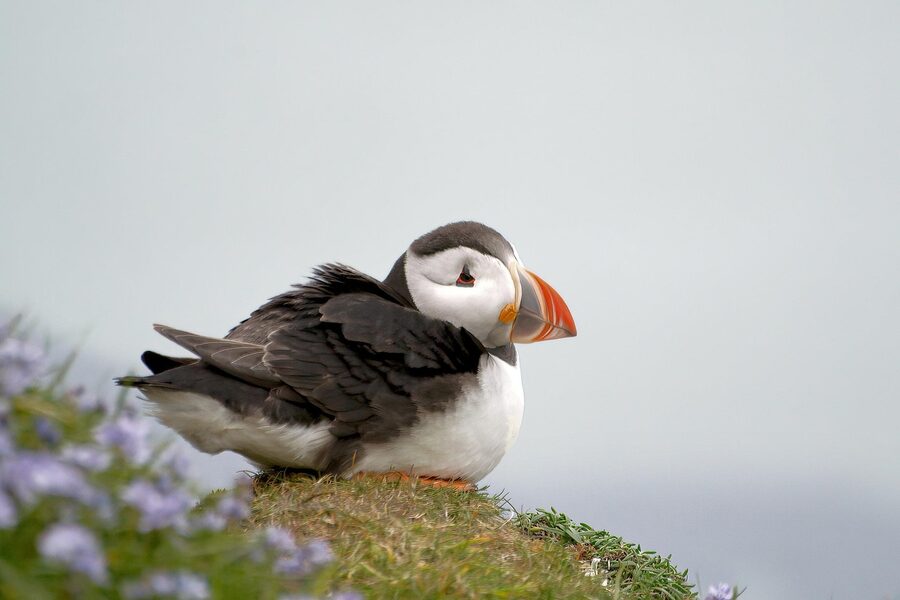
Birds first. Puffins at Látrabjarg from mid-May to early August, with peak numbers in late June. Razorbills, guillemots, kittiwakes, fulmars on the same cliffs. White-tailed sea eagles in Patreksfjörður and Dýrafjörður year-round, more visible in winter when they hunt close to shore. Eider ducks in Rauðasandur and most fjord shores from April. Arctic terns in summer, dive-bombing anyone too close to a nest.
Mammals. Arctic foxes in Hornstrandir as described above, and you can see captive ones at the Arctic Fox Centre in Súðavík, which is a research station that takes in orphans. Icelandic horses everywhere, in paddocks by the road, see our Iceland animals guide. Grey seals on the rocks at Vatnsfjörður and along the Strandir coast. Reindeer no, those are in the east.
Whales. From Ísafjörður you can occasionally spot humpbacks and minkes from the harbour or from the Hornstrandir boats. There’s no dedicated whale-watching operator in the Westfjords the way there is in Húsavík or Reykjavík, but ask at Borea, they’ll tell you what’s been seen.
The skip-list
I’ll be straight. There are mistakes I’ve watched people make.
Don’t try the Westfjords and the Ring Road on the same week. You’ll spend half the trip driving and remember nothing. Pick one. The Ring Road in seven days is comfortable, the Westfjords in seven days is comfortable. Both in seven days is misery.
Don’t drive Hornstrandir routes. There aren’t any. It’s boat-in only. People still ask. The answer is still no.
Don’t book a Yaris in October if you intend to do Dynjandisheiði. The pass closes. Even when it doesn’t, a small front-wheel-drive in a sleet storm at 530 metres is not a story I want you to come back with.
Don’t expect the puffins in mid-September. They are gone. The cliffs are still beautiful. The puffins are not there.
Don’t go to Tjöruhúsið without a reservation. They will turn you away. Last summer I watched four French people stand outside the door for ten minutes hoping. They didn’t get in.
Don’t drive the road to Norðurfjörður in late October without checking road.is. The Þrengsli stretch closes for the winter and they don’t always announce it loudly.
Don’t fly into Ísafjörður on the same day your Iceland flight leaves. Cancellations are common. If your Reykjavík flight is at 5pm, fly out of Ísafjörður on a morning the day before. Trust me on this one.
What I’d want you to take away
The Westfjords are the bit of Iceland that hasn’t been polished. There is no infinity pool with a glacier view. There is no hotel with a Michelin-trained chef. There is a concrete pool by the ocean where you put 700 ISK in a tin. There is a wooden warehouse from 1781 where a man brings you fish all night until you wave him off. There is a cliff edge with no fence where the puffins don’t care if you’re there. There is a road that ends and a foothpath that goes on for 30 km and a glacier nobody talks about. People come here to slow down because the geography forces them to.
If you have the days, take them. The Westfjords pay back hard.