
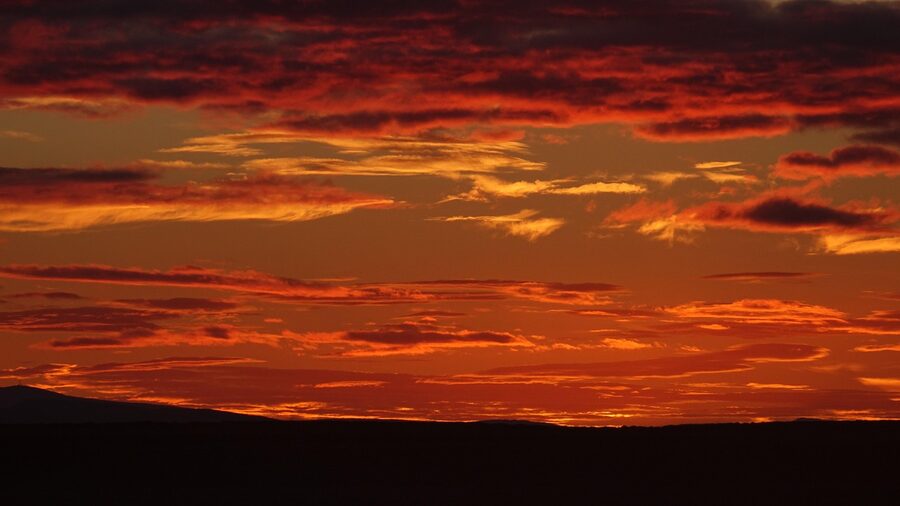
The first time I tried to explain the midnight sun to a visitor, we were standing on the seawall behind the Grótta lighthouse at quarter past midnight. The sun had technically dipped into the Atlantic about twenty minutes earlier and was already starting to climb back out. The sky was the colour of a peach. There was a couple a hundred metres away taking wedding photos. A guy was reading a book on a bench. Someone walked past with a tennis racket. It was a Wednesday.
The midnight sun does one cruel thing to first-timers: nobody sleeps. Pack a sleep mask, the single most-forgotten item on any summer Iceland trip. The full packing list walks through what else you actually need.
That is the part that surprises people. Not that Iceland has long days in summer, which everyone knows on paper, but that the country just keeps going. The pools stay open until ten. The bars stay open until five. The roads are empty at 2am because everyone is at home watching football, not because it is dark. You can hike at midnight without a torch. You can photograph a waterfall in golden light at 3am. The sun draws a long, slow loop across the sky for about three months and the whole country reorganises itself around it.
This guide is the long version of what the midnight sun actually is, when it actually happens, where to point yourself if you want the strongest version of it, and the honest trade-offs against winter Iceland. I have lived through twenty of these summers and I still get caught out by the light at the end of June. If you have already done the aurora trip and you are wondering what the opposite season looks like, this is it. The two are mirror images of the same Arctic geography.
In This Article
- What the midnight sun actually is
- How much daylight you actually get each week
- Why the light looks the way it does
- Grímsey, the only place that crosses the line
- By ferry from Dalvík
- By plane from Akureyri
- The rest of Iceland and where the light is best
- Reykjavik and the Grótta lighthouse
- Snæfellsnes and Kirkjufell at midnight
- The Westfjords for no light pollution
- Akureyri and the deeper north
- The highlands at midnight
- What to actually do with all that light
- Photography from 9pm onwards
- Hiking at midnight
- Hot pools at midnight
- Driving the Ring Road at quiet hours
- Evening whale watching
- A Reykjavik summer night out
- Summer 2026 festivals worth planning around
- Suzuki Midnight Sun Run, 25 June 2026
- Jónsmessa, 24 June 2026
- Total solar eclipse, 12 August 2026
- The other summer dates
- The practical stuff
- How to actually sleep
- Weather still happens
- What you lose by coming in summer
- Sample itineraries built around the light
- Five days, Reykjavik base, no driving
- Eight days, Ring Road plus Grímsey
- A note on the puffin season overlap
- The take
What the midnight sun actually is
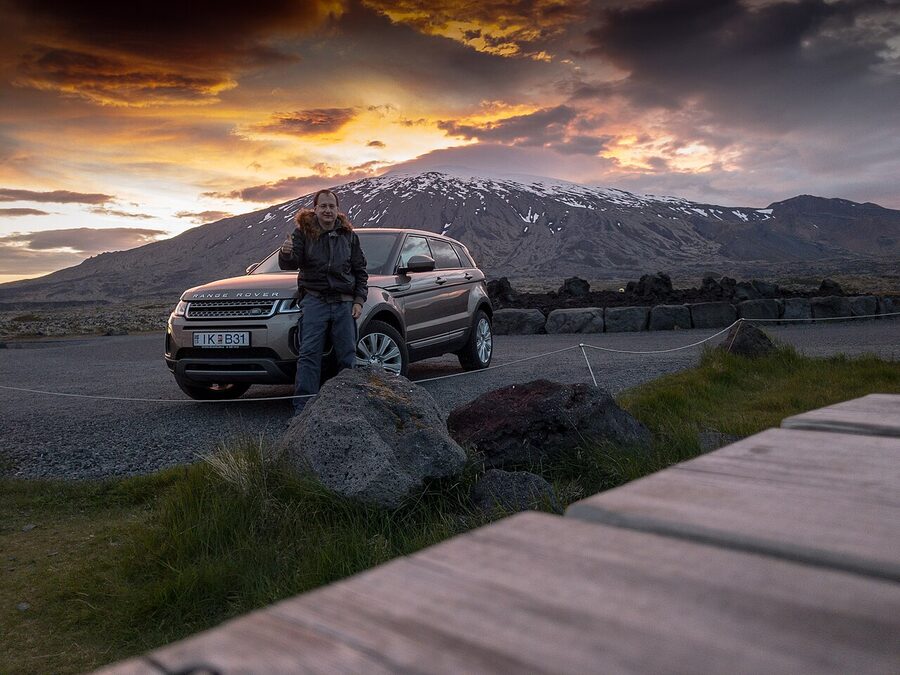
The strict definition of the midnight sun is the sun staying fully above the horizon for a full 24 hours. That only happens north of the Arctic Circle, which sits at 66.5°N. Reykjavik is at 64.13°N. Akureyri, the capital of the north, is at 65.7°N. Even the northernmost mainland point at Hraunhafnartangi is just shy of the Circle, at 66.45°N. Mainland Iceland, in other words, does not technically get the midnight sun. The only piece of the country that does is Grímsey, the small island 40 kilometres north of the mainland, which sits exactly on 66.5°N. The Arctic Circle runs across it.
What the rest of Iceland gets is the next-best thing, which photographically is the same thing. The sun dips just below the horizon and stays there in a long, low golden glow that locals call white nights or björt nætur. From late May to early August, Reykjavik does not get properly dark. The official sun-down on June 21 in Reykjavik is at 12:03am, sun-up is at 2:55am, and the three hours in between are filled with a continuous orange-pink twilight that is bright enough to read by. If you stand on a hill and look north, you can see the sun trace the horizon. It never properly leaves.
So when you read about the midnight sun in Iceland, what you are reading about is a band of about three months of effectively continuous daylight, with a true 24-hour-sun version available on Grímsey for about ten days around the solstice. Both are remarkable. The mainland version is much easier to access and looks identical in photographs. The Grímsey version is the technically correct one if you want to stand on a marker with a brass plaque and say you crossed the Arctic Circle.
How much daylight you actually get each week
Daylight in Iceland is on a steep curve in early summer and a steep curve down again in late summer. Here is the rough shape of it from Reykjavik, where I get most of my data points. Akureyri adds about 30 to 60 minutes at each end. Grímsey adds another hour on top of Akureyri.
- Mid-May: 17 to 18 hours of direct daylight, golden hour from about 8pm onwards, twilight bridging the rest.
- 1 June: roughly 19 hours of direct sunlight, sunset around 11:30pm.
- 21 June (solstice): 21 hours and 8 minutes of direct sunlight in Reykjavik, sunset 12:03am, sunrise 2:55am, the gap filled with twilight that never gets properly dark.
- 1 July: 20 hours, sunset around 11:55pm, the longest stretch of stable bright nights.
- 21 July: back down to about 18 hours, sunset around 11pm.
- 1 August: 17 hours, sunset around 10:30pm, the first real night returns to the sky for an hour or so.
- End of August: 14 to 15 hours, proper dark from about 11pm, the very first faint aurora season begins.
The number that gets quoted is “21 hours of daylight on the solstice.” That is true and it is sold as the headline. The number that matters more in practice is that for about ten weeks running, you can hike, drive, and photograph at any hour of the night without needing a torch or a tripod. The official Icelandic Met Office weather and daylight data is at vedur.is, and timeanddate.com/sun/iceland has the day-by-day breakdown for any town. Bookmark both before you go.
Why the light looks the way it does
The reason midnight sun light looks the way it does is geometry. In most of the world, the sun rises high overhead at midday and sets perpendicular to the horizon. The harsh top-down light hits everything from above and the shadows are short and hard. The golden hour at sunrise and sunset is brief precisely because the sun crosses the horizon at a steep angle and is gone within forty minutes.
In Iceland in midsummer the sun is doing something different. It is moving in a long, shallow arc across the sky, never climbing very high above the horizon and never dropping very far below it. That means the light is hitting everything at a low angle for hours on end. The shadows are long all day. The colours are warm all day. There is essentially no harsh midday light to dodge. Photographers describe this as having a seven-hour golden hour, which is roughly accurate. If you have ever tried to photograph Skógafoss at noon and watched the sky burn out, midsummer fixes that. You shoot at 11pm and the rainbow is still there.
Grímsey, the only place that crosses the line
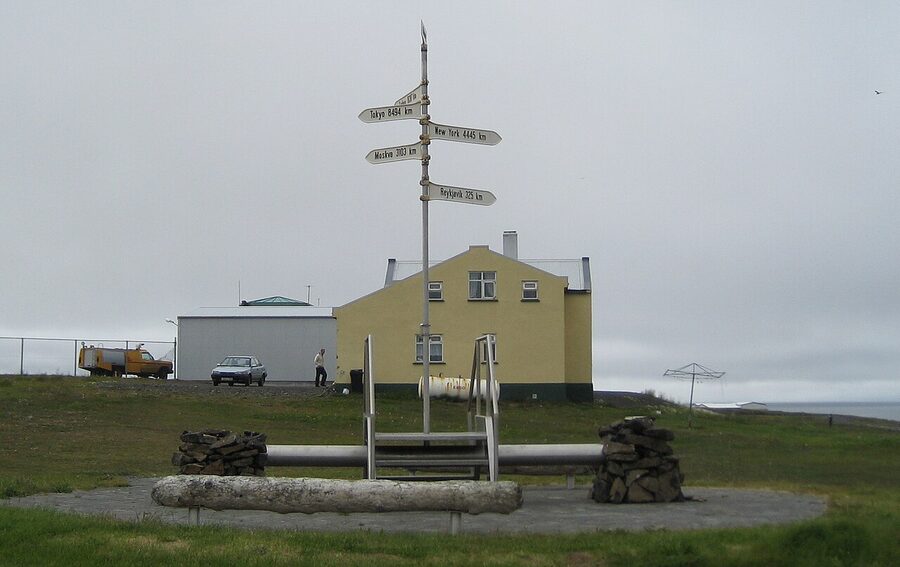
If you want the technical, capital-letters Midnight Sun, where the sun does not set for a full calendar day, Grímsey is the only place in Iceland where it happens. The island is a flat, grassy, cliff-edged speck about 40 kilometres off the north coast, with a permanent population of 80 or so, mostly fishing families. The only village is Sandvík at the south end. The Arctic Circle line runs across the island roughly through the middle, and you can stand on it.
The sun does not set on Grímsey from roughly 16 June to 26 June. Outside that window the island still has near-continuous daylight from May to early August, but the sun briefly dips for a few minutes either side of midnight. The reason it matters is partly the photo (sun above horizon at midnight) and partly the marker. Since 2017 there has been a sculpture called Orbis et Globus, a 3-tonne concrete sphere set on the Arctic Circle line. Because the Arctic Circle is actually drifting north by about 14 metres a year, the sphere is moved each summer to keep it in the right place. By the time it crosses the cliff into the sea, somewhere around 2050, they will need to think of something new. Until then, you can hike up from the harbour, walk a 90-minute loop, find the sphere, take a photo with a foot on either side of the line, and have legitimately stood inside the Arctic Circle.
To get to Grímsey you have two options. Both run from the north coast.
By ferry from Dalvík
The Sæfari is the dedicated Grímsey ferry, run by the Icelandic Road Administration (Vegagerðin). It leaves Dalvík at 9am five days a week in summer (Mon, Wed, Thu, Fri, Sun), takes about three hours each way, and gets back to Dalvík by about 6pm. That gives you four to five hours on the island, which is enough for the Orbis et Globus walk, lunch, and a wander around the cliffs. Bus 78 from Akureyri at 8:10am connects with the ferry. The crossing costs around 6,500 ISK return. The schedule and bookings are at ferjur.is/saefari or by phone on +354 522 1100. Check it the morning of, because weather can cancel a sailing.
The ride out is on the open North Atlantic and it can be rough. If you get seasick, take something before you board. There are no cabins to escape to. On a calm day the boat is genuinely lovely and you might see whales on the way. On a rough day it is three hours of holding on. Either way, dress for outside.
By plane from Akureyri
The other option is to fly from Akureyri with Norlandair. The flight is about 25 minutes each way in a small Twin Otter and currently runs three days a week in summer. It costs around 35,000 ISK return, which is more than the ferry but saves you most of a day. You can fly out in the morning, walk the island, and fly back in the evening with time to spare. The Akureyri-Grímsey flight is one of the shorter scheduled commercial flights anywhere in northern Europe. It is also weather-dependent in the same way the ferry is, but the plane can sometimes get in when the boat cannot.
If you have the time and the weather window, I would do this as an overnight. There is a small guesthouse and a campsite on the island. Sleep on Grímsey on a clear night around the solstice, walk to the cliff at midnight with a coffee, watch the sun grazing the horizon over the open Arctic. There is genuinely nothing else like it in Iceland. Day trips work, but they are slightly missing the point.
The rest of Iceland and where the light is best
If you are not going to Grímsey, the practical question is which corners of mainland Iceland give you the strongest version of the midnight sun. The honest answer is that the difference between Reykjavik and Akureyri at midnight in late June is small to a casual eye. They both look gold, both look bright, both have a sun that never quite sets. Where the difference shows up is in the angle of the sun and the length of the twilight, and in the practical question of whether you have something photogenic in front of you to point a camera at. Here is where I would point you.
Reykjavik and the Grótta lighthouse
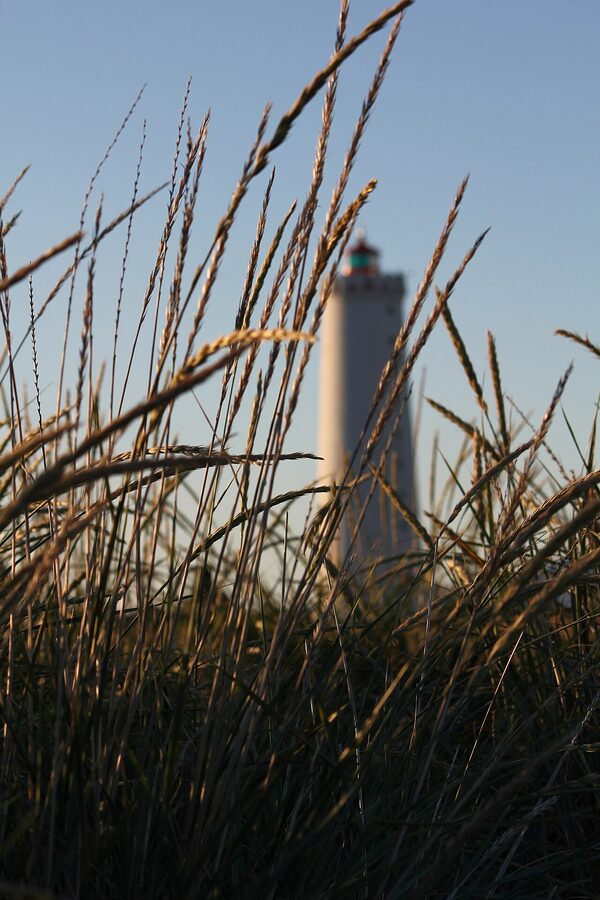
If you have one evening in Reykjavik in summer, walk out to Grótta. The lighthouse sits at the western tip of the Seltjarnarnes peninsula, about 25 minutes on foot from the central pond Tjörnin. Locals come here to watch the sun do its long, slow setting into the Atlantic. The path out to the lighthouse itself is a tidal causeway, so check the tide table at the trailhead, but you do not actually need to be on the rock to see the sun, the seawall on the inland side has the same view. There is also a small geothermal foot-bath called Kvika in the rocks just before the path, free, no changing facilities, no fee. Bring a towel.
The other Reykjavik option is to walk Tjörnin around midnight. The pond is in the middle of the city, the swans and ducks are still on the water at 1am, the buildings reflect, and you will see other people walking home from bars without a thought. Hallgrímskirkja, the big concrete church on the hill, is open 9am to 8pm in summer for the tower viewing platform; you cannot go up at midnight, but the building itself lit by the low sun is its own thing. The Reykjavik city break guide covers the rest of the walking routes.
Snæfellsnes and Kirkjufell at midnight
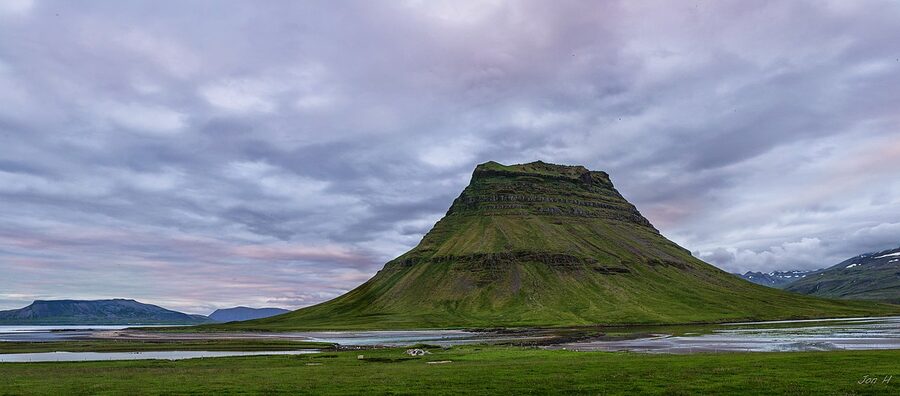
Of all the midnight sun trips I run for visiting friends, the most reliable jaw-drop is driving out to Snæfellsnes in the late evening and arriving at Kirkjufell around 11pm. Kirkjufell is the conical mountain north of Grundarfjörður, the most photographed mountain in Iceland and one of the most photographed in northern Europe. In daylight in July it is genuinely busy, with tour buses parked along the verge and people lined up on the small bridge over the Kirkjufellsfoss waterfall. At 11pm it is empty. The sun is grazing the horizon over the fjord behind you and lighting the front face of the mountain in a slow gold.
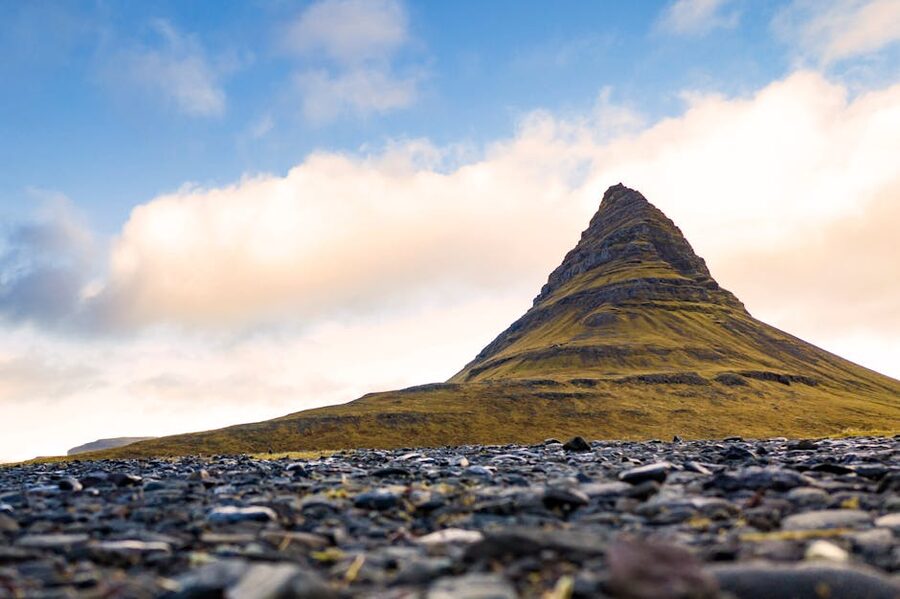
From Reykjavik it is a two-hour drive each way. Leave around 8pm, eat in Borgarnes on the way out at the Settlement Center café, arrive at Kirkjufell around 10:30pm, photograph until 1am, drive home in full pale daylight. You will not be tired, oddly, the body does not register midnight when the sky looks like 7pm. Just keep an eye on the road, especially the gravel section past Hellnar if you go around the western tip.
The Westfjords for no light pollution
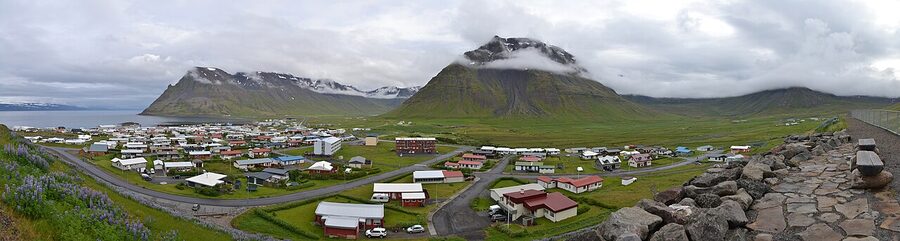
The Westfjords are the empty corner of Iceland and they are the strongest argument for getting off the Ring Road in midsummer. Almost no light pollution, almost no other traffic, and the fjord geography means that wherever you stand, there is water and there are mountains and the sun is grazing over both. Ísafjörður is the main town and a sensible base. From there, drive out to Látrabjarg in the western fjords for the puffin cliffs and the most westerly point in Europe, or take the boat to Hornstrandir for proper wilderness.
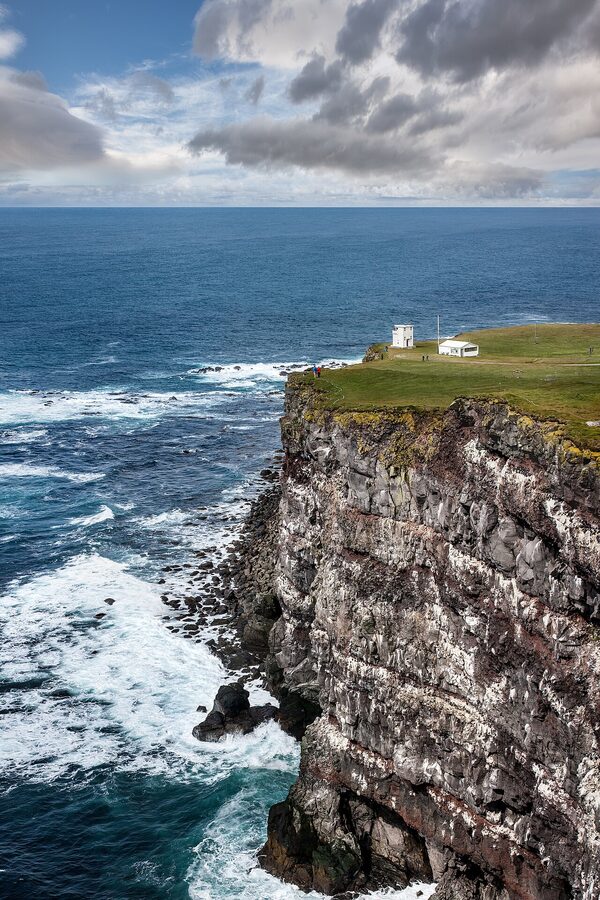
Látrabjarg is also where you find the densest puffin colony in Iceland, about 4 million birds nesting from May to mid-August. The drive there is on slow gravel and not for everyone, count five hours from Ísafjörður if you respect the road. The reward is sitting on the cliff edge at 11pm, two metres from a puffin that is not afraid of you, with the light low and the surf far below. The full bird watching guide covers the access in detail.
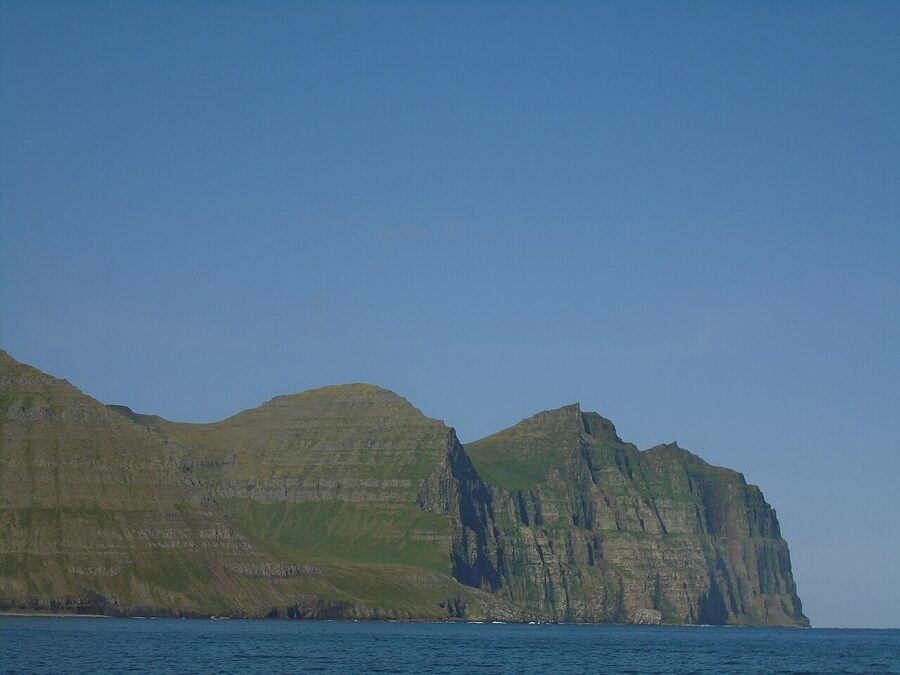
If you have the gear and the days for a backcountry walk, Hornstrandir, the empty thumb at the very top of the Westfjords, is the version of Iceland that does not exist anywhere else. No roads, no shops, no electricity. The Ísafjörður boat runs from about 20 June to the third week of August. You walk for three to seven days, you carry a tent, you might not see another person for two days at a stretch. The arctic foxes are not afraid of you. The sun does not set. It is hard to describe and hard to forget.
Akureyri and the deeper north
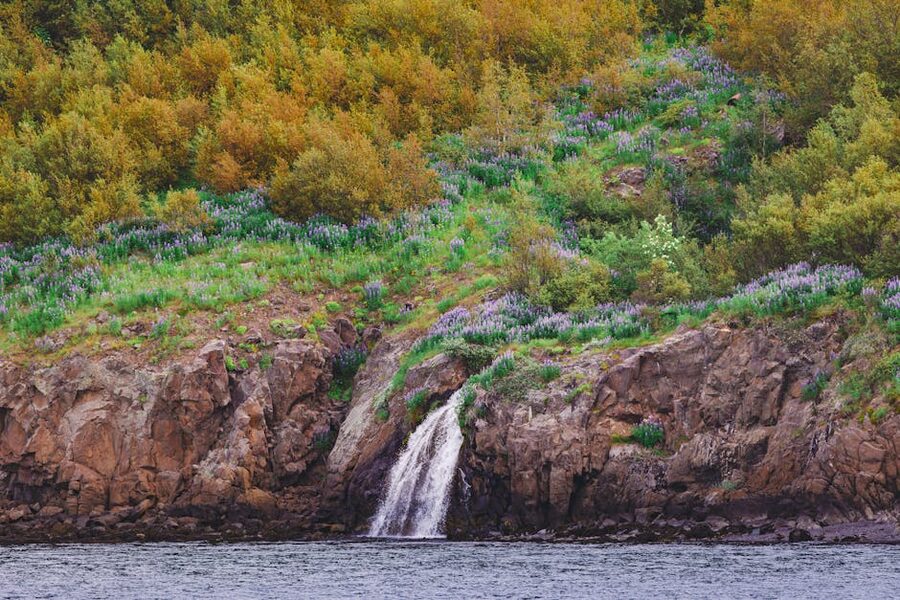
Akureyri is the second city of Iceland and the natural base for everything north of the Ring Road’s halfway point. From here you reach the Mývatn lake area for the geology and the bird life, Húsavík for whale watching, Goðafoss for the waterfall, and the Dalvík port for the Grímsey ferry. Daylight in Akureyri runs about 30 to 60 minutes longer than Reykjavik on either end of the day. The town itself is small, walkable, has the country’s best botanical garden (free, open until 10pm in summer), and one of the best municipal pools at Sundlaug Akureyrar.
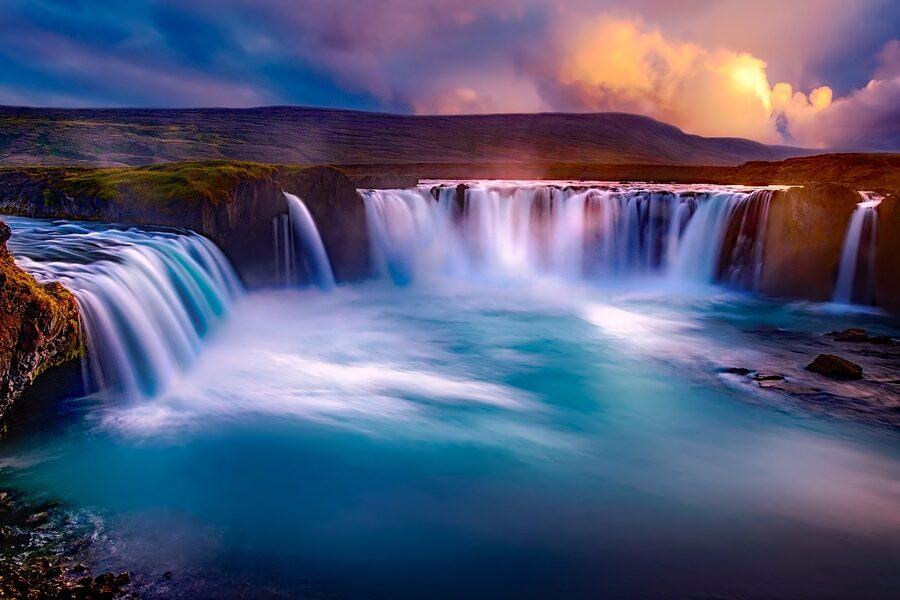
The Diamond Circle, the north’s answer to the Golden Circle, runs from Akureyri east to Goðafoss, north to Húsavík, around to Mývatn, and back. It is genuinely better at midnight than at midday. The waterfalls are softer, the geothermal areas at Mývatn steam against the orange sky, and the road is empty. Plan a long evening for it.
The highlands at midnight
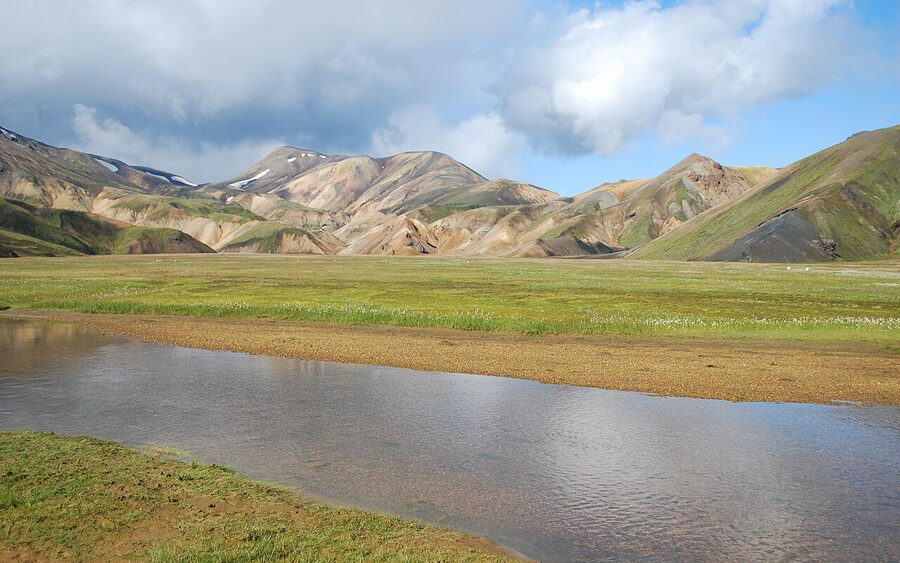
If you have a 4WD and the F-roads are open, the highlands at midnight are the strongest version of midnight sun the country offers. The highlands sit at 600 to 1,000 metres elevation, no light pollution, no other vehicles past about 10pm, the rhyolite hills of Landmannalaugar still picking up colour from a sun that is grazing the horizon. The hot pool at the trailhead is open all night, free, and not crowded after midnight.
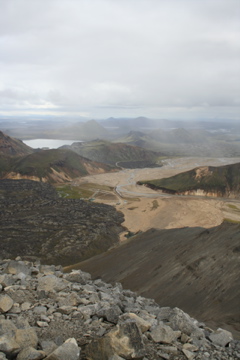
The huts at Landmannalaugar are run by Ferðafélag Íslands and book out six to eight months ahead for July. The campsite next door is first-come, first-served and rarely full midweek. Either way, the F-road in (the F208 or F225) needs a 4WD with proper ground clearance and you should not be doing it in your first car-rental day. Take a guided super-jeep tour from Reykjavik first if you have not done F-road driving, then come back independently if you want a longer stay.
What to actually do with all that light
The mistake most visitors make is to treat the long days as a reason to fit more daytime activities in. That is fine, but it misses the point. The actually-different thing about an Icelandic summer is the late-evening and night-time hours. Here is what to use them for.
Photography from 9pm onwards
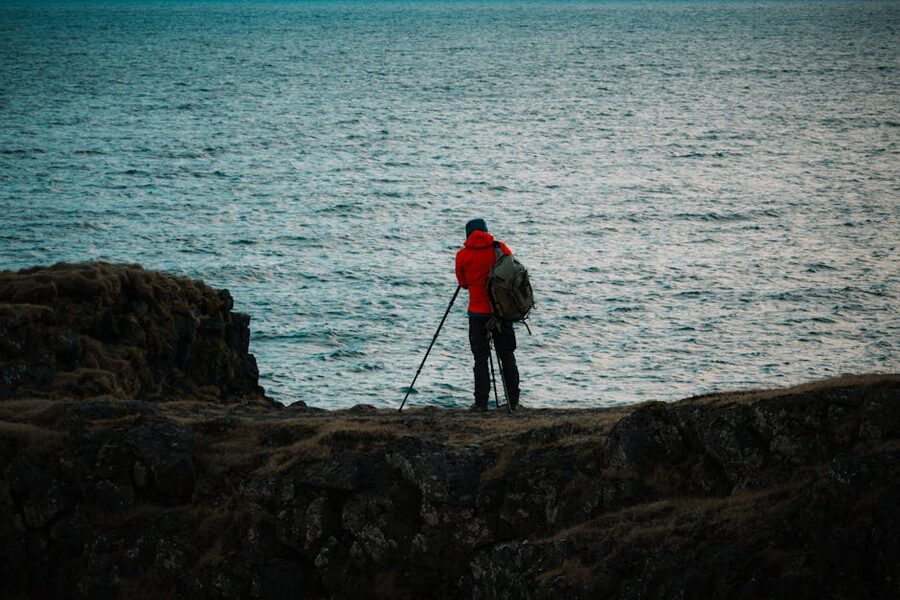
The single best use of the midnight sun is photography. Golden hour starts around 9pm and runs until about 3am. The sun is low, the colours are warm, the shadows are long, and the headline sites are empty of crowds. If you take photographs and you can rearrange your sleep, this is the season Iceland was made for. Bring a polarising filter for the waterfalls and a graduated ND filter for the skies, but you do not really need a tripod, the light at 1am is bright enough to handhold a sharp shot at f/8 and 1/200s. The photography tour guide covers the operators who run dedicated midnight-sun trips out of Reykjavik and Akureyri.
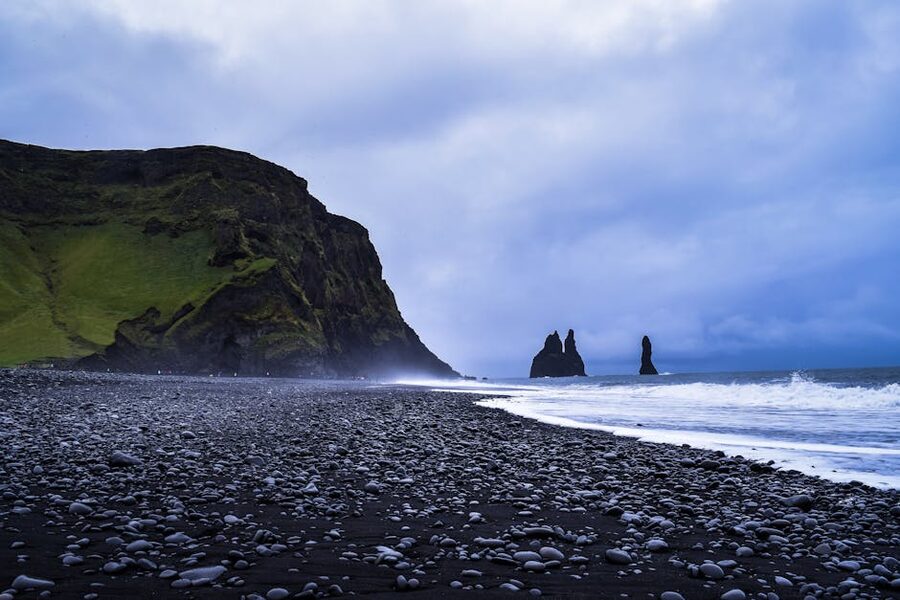
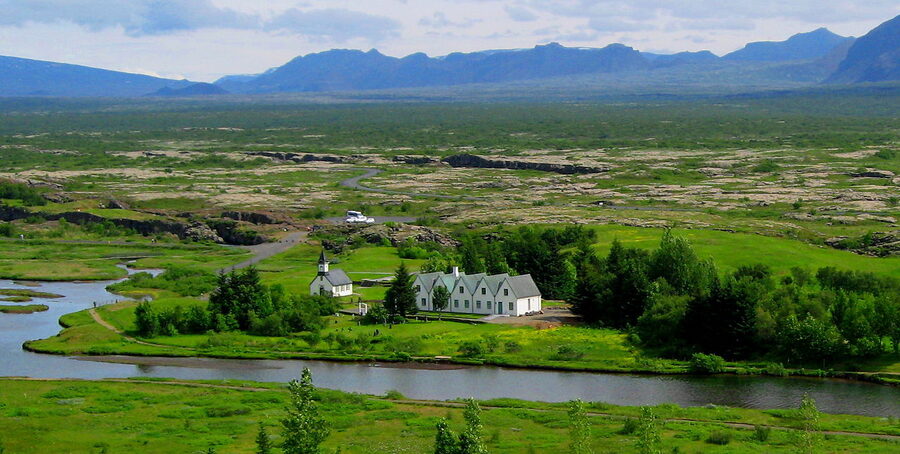
The headline sites that look completely different at midnight versus noon are Reynisfjara on the south coast, Skógafoss and Seljalandsfoss in the same area, Þingvellir on the Golden Circle, Kirkjufell on Snæfellsnes, Goðafoss in the north, and Hraunfossar in the west. All of them are crammed with day-trip buses by 11am and empty by 10pm. Plan your itinerary around being at the headline waterfalls in the evening rather than the morning, and the trip changes character.
Hiking at midnight
Walking at midnight is genuinely lovely in Iceland in midsummer and it is one of the things that catches first-time visitors most off guard. There is enough light to see your footing on rough trails, the temperature is cooler so you do not overheat, the bugs are quieter, and you have whatever trail you choose almost entirely to yourself. The Reykjadalur valley walk above Hveragerði (a 45-minute hike up to a hot river you can sit in) is fine at any hour. The Glymur waterfall hike in Hvalfjörður (4 hours return, the second-tallest waterfall in Iceland) is doable as a midnight walk if the weather is settled. The Skógafoss-to-Skógá river trail is a long stretch of waterfalls that becomes magical with low light from about 9pm.
The one thing to be sensible about is the weather. Iceland’s summer weather can change inside an hour and you do not want to be three hours up a trail in horizontal rain at midnight without proper layers. Check vedur.is before you set out, take a hard shell, take water, leave a note with someone of where you have gone. Standard hill-walking common sense, but more relevant in Iceland because the rescue teams are volunteers and you do not want to be the headline.
Hot pools at midnight
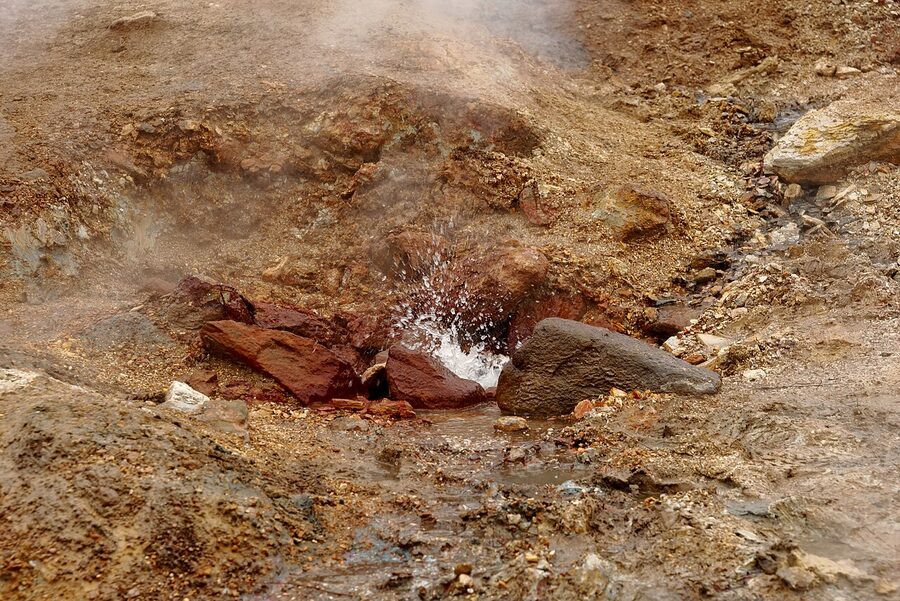
The geothermal pools in Iceland are open into the evening, but most close at 22:00. The municipal pools in Reykjavik (Sundhöllin in the centre, Laugardalslaug in the east) are open until 22:00 every day and are an institution. The Blue Lagoon runs to 22:00 in summer too and the last entry tends to be quieter than midday. The Sky Lagoon at Kópavogur runs until 23:00 in summer. None of those are technically “midnight” pools, but the sky is still bright when you leave.
For genuine midnight hot-pool soaking you want the wild ones. Reykjadalur, the hot river above Hveragerði, is open at any hour because it is a river in a valley, no gate, no fee. The walk up takes 45 minutes and the water sits at 36 to 39°C depending where you sit. Go at 11pm with a head torch, soak for an hour with the steam glowing in the low sun, walk back. Krossneslaug, a long way up in the Strandir Westfjords, is a swimming pool built into the cliff edge with the open Arctic in front of it, 24 hours, 1,000 ISK in the honesty box. There are a dozen others; the hot springs guide has the full list.
Driving the Ring Road at quiet hours
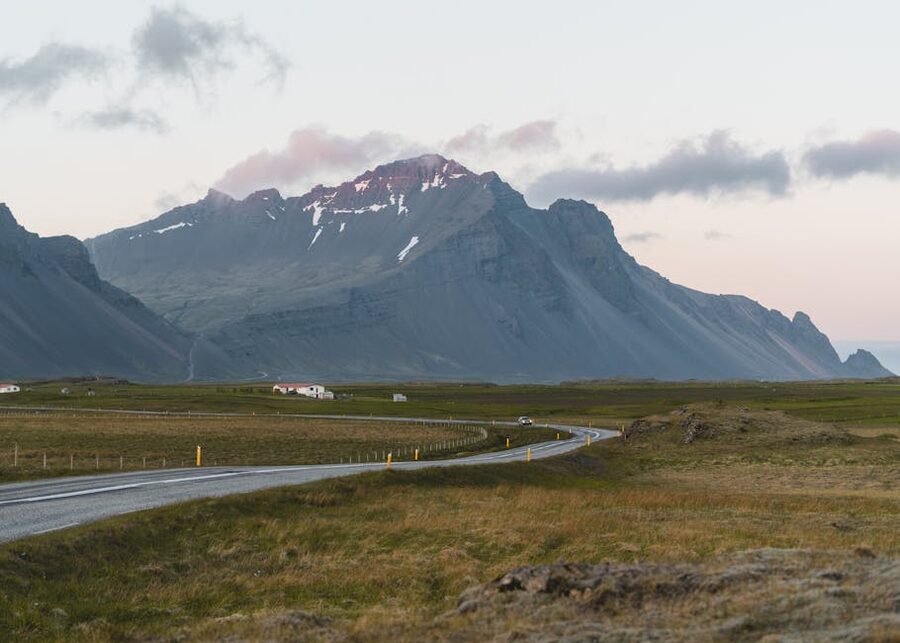
Driving the Ring Road is a different experience in summer. The roads are open, the gravel sections are dry, the days are long enough to cover serious distance and still arrive at your accommodation in light. If you can shift even one or two of your driving days to late-evening, the experience genuinely improves. Less traffic, more wildlife on the verge (foxes, sheep, the occasional reindeer in the east), better light, and the ability to stop at headline sites that are crammed at midday.
For the slow stretches, particularly the East Fjords between Egilsstaðir and Höfn, late-evening is the time to drive them. The road wraps around fjord after fjord and the low light hits the water perfectly. If you are renting a campervan from Happy Campers or KuKu Campers you have full flexibility on when to stop and where to sleep, which suits the midnight-sun rhythm perfectly. For standard car rental compare prices on northbound.is or book direct with Blue Car Rental or Lava Car Rental, all of which I have used and would use again.
Evening whale watching
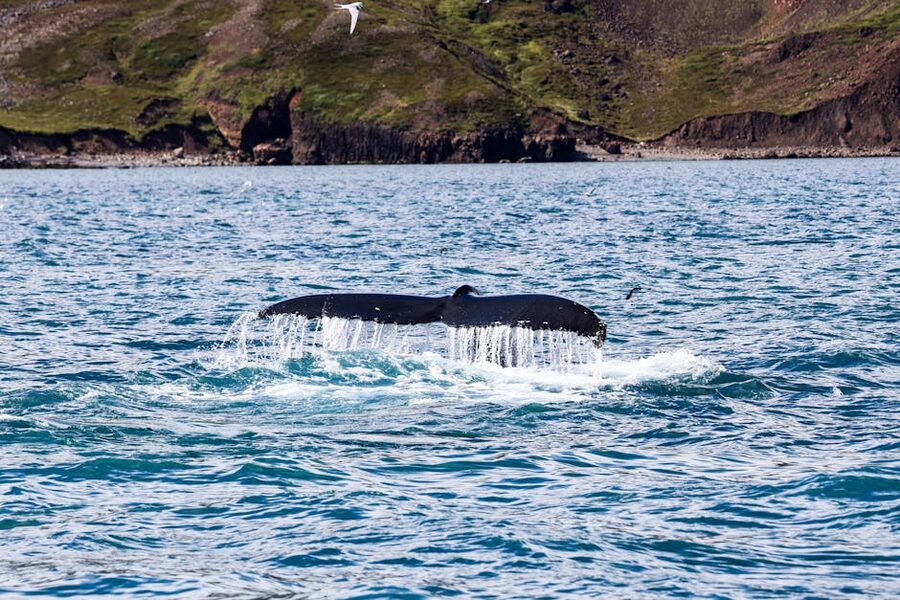
Most operators run an extra evening sailing in midsummer specifically to take advantage of the light. From Reykjavik, Elding runs a 20:30 midnight sun sailing from June to early August, three hours, calmer water than midday, the Reykjavik skyline lit gold on the way back. From Húsavík, North Sailing and Gentle Giants both run late evening departures in season; sighting rates in Skjálfandi Bay are the best in the country at around 95% in July. The full whale watching guide covers the boats and the species you are likely to see.
A Reykjavik summer night out
Reykjavik nightlife in summer has its own rhythm. Bars officially close at 1am Sunday to Thursday and 4:30am on Friday and Saturday, but in practice the weekend stretch goes until people give up around 5 or 6 in the morning. Walking home at 4am in full daylight, past people coming out of cafés, is one of the genuine experiences of an Icelandic summer. The bars on Laugavegur and Bankastræti are the busiest. Kex Hostel’s bar, Mikkeller and Friends, Kaldi, and the basement of Húrra are all good. None of this is quiet, none of it is sober, and at 3am the line for Bæjarins Beztu hot dogs by the harbour is real.
Summer 2026 festivals worth planning around
Iceland has a packed summer calendar and 2026 has more than usual on it. Three things to put in the diary if you are planning around them.
Suzuki Midnight Sun Run, 25 June 2026
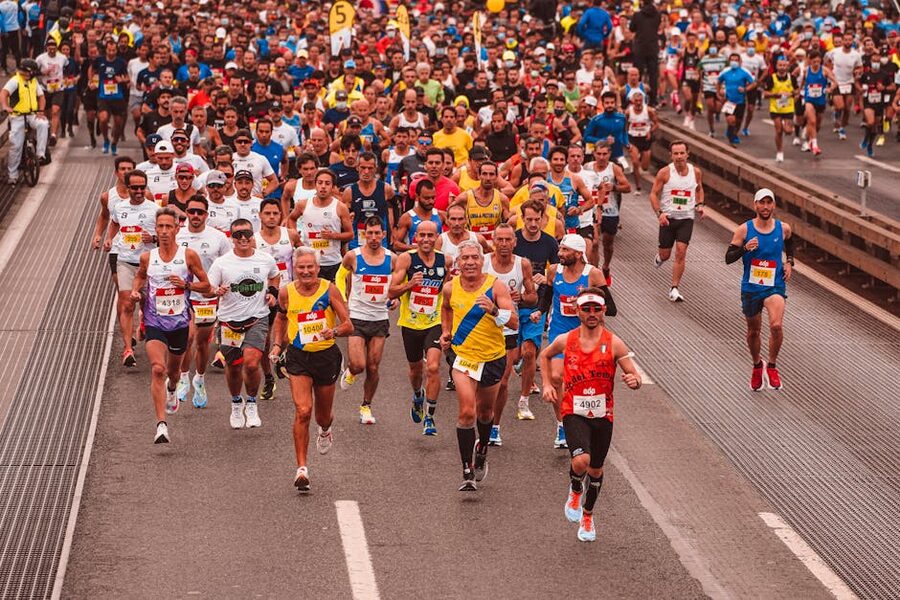
The Midnight Sun Run is a Reykjavik institution. It starts at 21:00 on 25 June 2026 in the Laugardalur valley, runs three distances (5km, 10km, half marathon), and finishes at the door of Laugardalslaug, the geothermal pool, which stays open late so the finishers can swim straight in. Around 4,000 people run it and it is one of the genuinely warm Reykjavik nights of the year. Registration is open at midnaeturhlaup.is. Sign up before May, the half-marathon slots go quickly.
Jónsmessa, 24 June 2026
The traditional Icelandic midsummer is Jónsmessunótt on the night of 23-24 June, named after John the Baptist but with a long pre-Christian back-story. The folklore is the good part. On Jónsmessa, the cows can talk. Seals come ashore and turn into people. If you roll naked in the dew at sunrise you will be cured of any ailment for the year. If you sit at a crossroads, elves will offer you riches but you must not speak. The herbs gathered that night are the most potent of the year. Most of this is not actively practised any more, but the summer-solstice bonfires and outdoor parties around the country are. The Árbær Open Air Museum in Reykjavik runs a midsummer festival on 24 June with the maypole raising at 13:00, and the Laufás heritage site near Akureyri runs traditional dancing in the evening. Most fishing villages mark it some way. Ask locally.
Total solar eclipse, 12 August 2026
This one is the once-in-a-lifetime fact. On 12 August 2026 a total solar eclipse will cross Iceland with the path of totality running over the Westfjords, Snæfellsnes, Reykjavik, and the Reykjanes Peninsula. The eclipse begins around 16:47 local time, totality starts in the Westfjords at 17:43, reaches Snæfellsnes (Hellissandur and Ólafsvík) at about 17:46 with up to 2 minutes 7 seconds of total darkness, and crosses Reykjavik with about 1 minute 5 seconds of totality at around 17:48. Iceland’s last total eclipse was in 1954. The next will be in 2196. If you are at all able to be in Iceland that week, be there.
Snæfellsnes is the prime viewing area because the totality is longest and the geography is photogenic. Hellissandur, Rif, Ólafsvík, and the Snæfellsjökull glacier itself are the headline locations. Accommodation in the area is already heavily booked. Book if you can. Booking.com has hotels at The Freezer Hostel in Rif, Hotel Snjófell at Arnarstapi, and Hotel Búðir. The official site at eclipse2026.is has the full details and the safety briefing on solar viewing glasses.
The other summer dates
The rest of the summer calendar in 2026 worth planning around: Iceland’s national day on 17 June, parades and outdoor events in every town. The Sjómannadagurinn (Seamen’s Day) maritime festival in Reykjavik in early June. Þjóðhátíð in the Westman Islands on the first weekend of August (1-3 August 2026), where Heimaey’s 4,500 residents are joined by 15,000+ visitors for three days of camping, bonfires, and singing in a natural amphitheatre. Reykjavik Pride in early August (estimated 8 August 2026), the parade pulls 100,000 in a country of 380,000. LungA arts festival in Seyðisfjörður mid-July. Bræðslan music festival in Borgarfjörður Eystri in late July. Menningarnótt or Culture Night in Reykjavik on 22 August 2026, the biggest one-night street festival of the year, free.
The practical stuff
How to actually sleep

The honest answer is that you will sleep less. Bring a sleep mask. Most Icelandic hotels and guesthouses have proper blackout curtains, but a meaningful minority have curtains that let light through at the edges, and a few campervan and rural-cabin options have skylights or thin curtains. A 5-pound silk eye mask solves it. Bring earplugs too if you are in a campervan, the wind can be loud against the panels even when it is calm by Iceland standards. Beyond that, lean into it. You will naturally drift to bed later, sleep shorter, wake earlier, and feel oddly fine. Locals do not pretend it is not a bit weird. Most of us sleep less in June and July and catch up in October.
Weather still happens
An Icelandic summer is not a Mediterranean summer. The mean July temperature in Reykjavik is around 11°C. On a still sunny day inland it might hit 18 or 20°C. On a windy drizzly day in the West Fjords it might sit at 8°C and feel cold the moment you stop walking. The light does not equal warmth. Pack layers. A merino base layer, a fleece or wool mid, a hard shell waterproof on top. Bring a hat. The wind is the variable that catches people out, not the temperature. Even a “nice” 14°C summer day with 30km/h gusts will feel cold. The full climate breakdown covers what the weather actually does month by month.
What you lose by coming in summer
Midnight sun comes with trade-offs against winter Iceland and they are worth being honest about. You lose the northern lights, completely, from late April through to about the third week of August when the first proper darkness returns. The aurora is up there, but the sky is too bright to see it. Anyone selling you a “summer northern lights tour” in July is selling you a boat ride. The full aurora forecast guide covers the actual season.
You lose the ice caves. The blue ice caves under Vatnajökull only form in winter when the meltwater drains and the ice settles. Summer ice cave tours exist, marketed at the man-made tunnel inside Langjökull (Into the Glacier), but the natural blue caves are November to March. You lose proper dark-sky stargazing until late August. You lose the snow covering the lava fields, which is a particular look. And you lose some of the silence; summer is the busy season and the headline sites in July and August are crowded between 10am and 6pm.
What you gain is everything that opens up. The highlands. The F-roads. The Westfjords boat schedule. The puffin season. The whale-watching peak. The 95% of the country that is unreachable in winter. The light itself. For a first Iceland trip, summer is the easier answer. For a second trip, winter is the harder, stranger, more dramatic version.
Sample itineraries built around the light
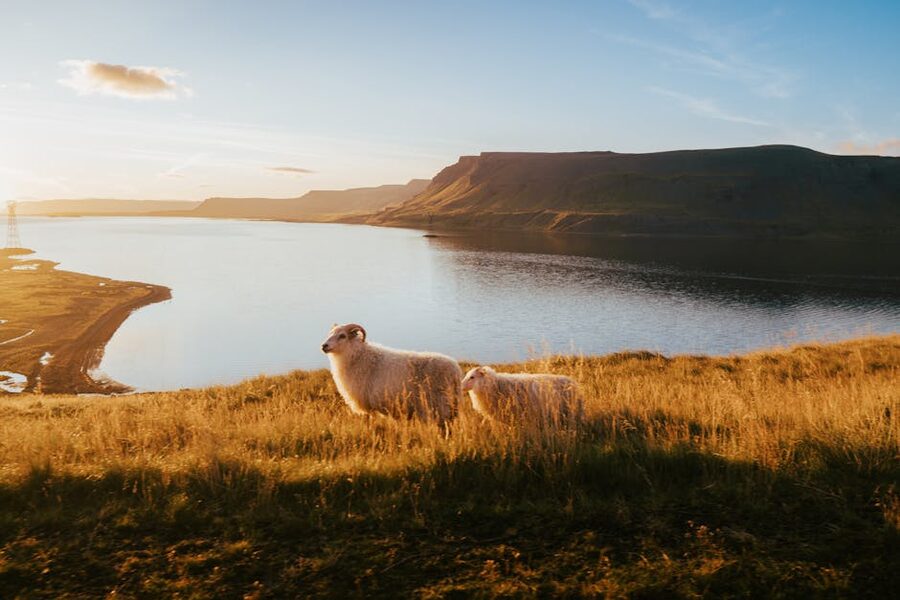
Two sample itineraries that lean into the midnight sun rather than fighting it. Both assume late June for peak light, both reverse the usual rhythm of the day to put the headline activities in the evening.
Five days, Reykjavik base, no driving
For a first Iceland trip without a rental car. Day 1: arrive Reykjavik mid-afternoon, settle in, walk Tjörnin pond at midnight to ease into the time zone. Day 2: full Golden Circle bus tour during the day, get back to Reykjavik for dinner, walk to Grótta lighthouse at 11pm for the sunset photographs. Day 3: full south coast bus tour to Vík and Reynisfjara, the long version pushes to Jökulsárlón which is around 14 hours including bus time. Day 4: Snæfellsnes peninsula day tour leaving 8am, returning around 9pm, then a quick walk into central Reykjavik for the late bars. Day 5: Sky Lagoon midday, Hallgrímskirkja tower in the afternoon, Elding evening whale watching at 20:30, departure the next morning.
Eight days, Ring Road plus Grímsey
For visitors with a 4WD and the time to circle. Day 1: Reykjavik, Snæfellsnes, overnight Stykkishólmur. Photograph Kirkjufell at 11pm. Day 2: north via the West Fjords or the easier Ring Road route, overnight Akureyri. Day 3: Akureyri to Dalvík for the early Grímsey ferry. Walk to Orbis et Globus on the Arctic Circle at midday, ferry back, overnight Akureyri. Day 4: Diamond Circle (Goðafoss, Húsavík for an evening whale tour, Mývatn), overnight Mývatn. Photograph Goðafoss at 10pm. Day 5: east via the Ring Road through the Eastfjords, overnight Egilsstaðir or Seyðisfjörður. Day 6: south to Höfn, glacier hike on Falljökull at Skaftafell, overnight Höfn or Vík. Photograph Jökulsárlón at midnight. Day 7: south coast headline waterfalls (Skógafoss, Seljalandsfoss, Reynisfjara), back to Reykjavik. Plan to be at the falls in the evening to skip the cruise-ship buses. Day 8: Reykjavik day, Sky Lagoon, departure.
If you have ten or twelve days, slot a day-and-a-half in the highlands at Landmannalaugar between days 4 and 5, and add a night in the Westfjords between days 1 and 2. Both add the dimension of the trip that the standard Ring Road misses.
A note on the puffin season overlap
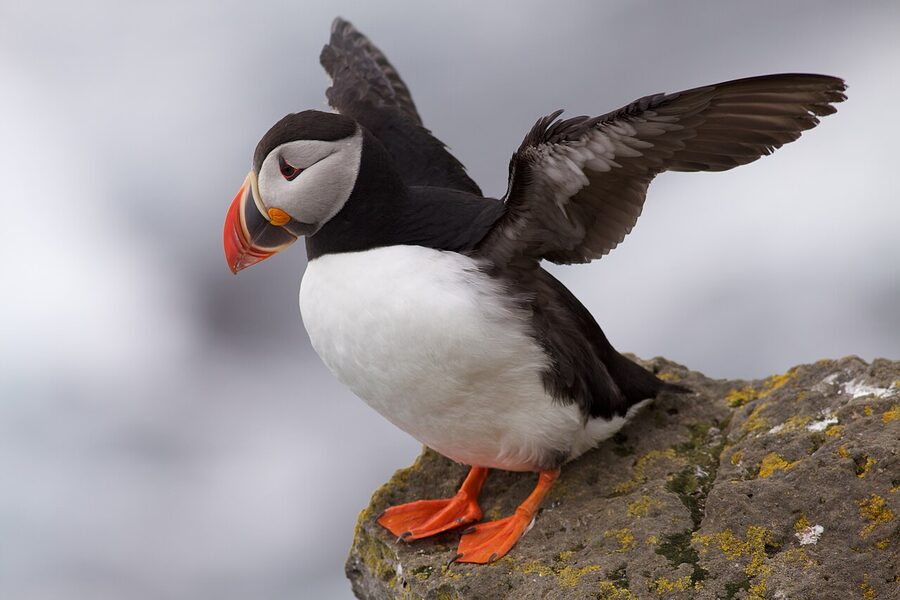
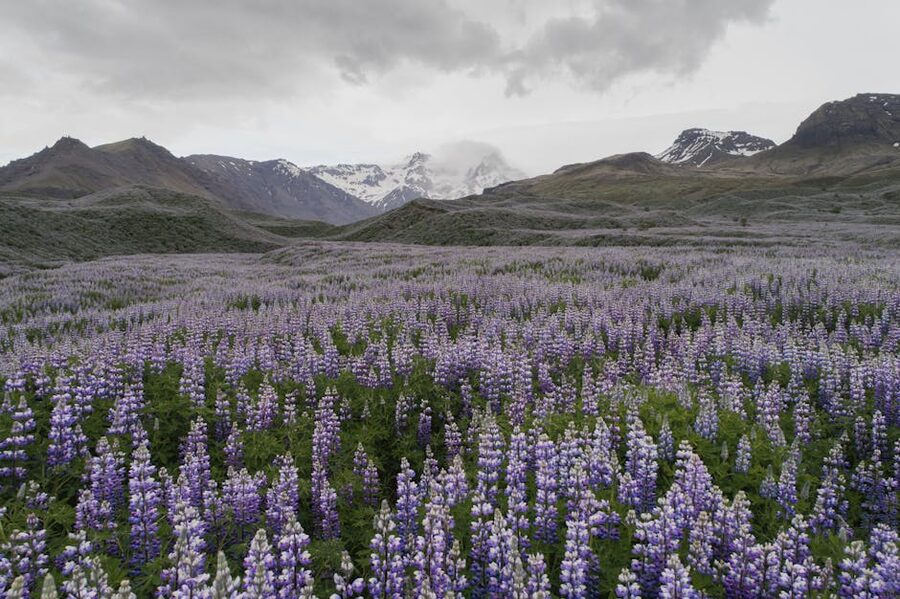
One quietly excellent thing about midsummer Iceland is that the midnight sun overlaps with the puffin season and the lupines and the highlands all at once. From around 20 June to 25 July you can have all of them in the same trip. Puffins on the cliffs, lupines purple across the hillsides, F-roads open, and a sun that grazes the horizon at midnight. After 25 July the puffins start their slow exit, by mid-August the lupines are past their best, and by 1 September the daylight has shrunk to 14 hours. The window when all of it is on at full strength is about five weeks long, June 20 to July 25 in most years. Build your trip around it if you can.
The take
The midnight sun is not the obvious headline attraction of Iceland. The aurora gets the postcards. The geothermal pools get the photographs. The glaciers get the cinema. The midnight sun is a quieter thing, but it is the one I think about most when I think about why summer here is different from summer anywhere else. The whole country slows down, stretches out, stays awake. The light does not so much beat down on you as wash over you for hours at a time. You sleep less and you do not mind. You walk home at 4am and the magpies are already up. You take the long way around because you can see where you are going.
If you have done the aurora trip and you are wondering what Iceland looks like on the other side of the calendar, this is the answer. The two sit on either side of the year and they are mirror images of the same Arctic geography. Both are remarkable. Both make Iceland Iceland. If you can only pick one, pick the season that suits the rest of your travel style. If you can do both, do them in the order that feels right and let one be the dark and the other the light.
For the rest of the picture, the summer overview covers the full season month by month, the when-to-visit guide walks the year, and the destinations hub has the regional pieces. Plan around the light, leave room for the weather, and bring the eye mask. Þetta reddast.

.jpg)

