
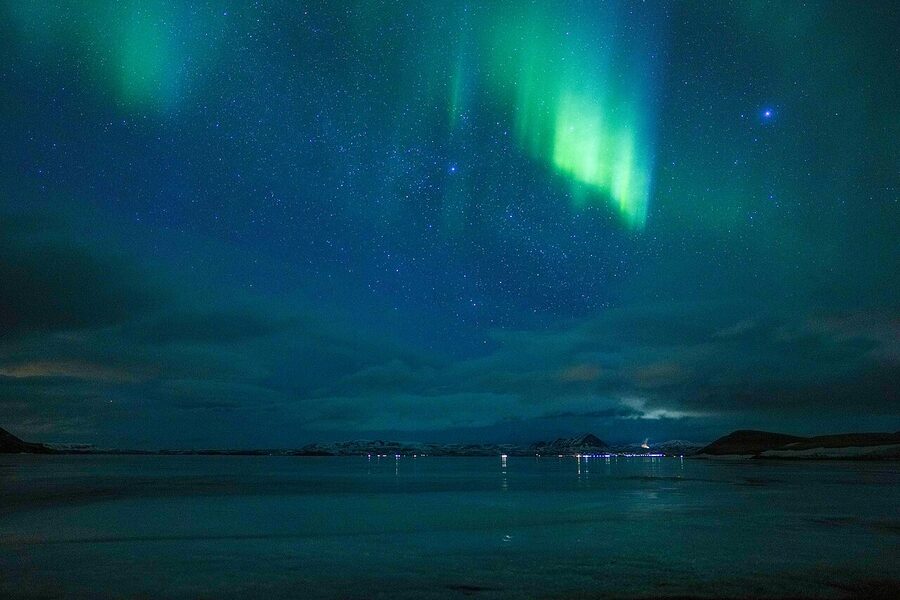
Winter is the version of Iceland that locals quietly prefer. The country goes dark by 4pm. The aurora season runs full. The ice caves under Vatnajökull open up. Hotels drop their prices by half outside Christmas and New Year. The cruise ships are gone, the highlands are sealed off until June, and Reykjavik settles back into the city it is when the tourists thin out. If you have been to Iceland in summer and you are wondering what the same country looks like with five hours of daylight and a metre of snow on the ground, this is the version.
The numbers tell the story before any of the rest of it. Reykjavik in December averages around minus one to plus two degrees, milder than most people expect because the Gulf Stream wraps the south coast in slightly warmer water than its latitude deserves. Daylight at the winter solstice on the 21st of December is roughly four hours and seven minutes, with sunrise around 11:23 and sunset around 15:30. Wind is the variable that catches people out. A still day at zero degrees is perfectly walkable in three layers. A 25-knot southerly with horizontal sleet at the same temperature is a different proposition. We get all of it, sometimes within the same afternoon. Þetta reddast, as we say. It works out.
This guide is the long version. Daylight, weather, what is open and what is sealed shut, what aurora hunting actually looks like at midnight outside Hella, what an ice cave tour at Vatnajökull involves, the festivals that visitors usually miss, costs (lower than people assume, except over Christmas), and a sample week I would point a first-time winter visitor at. If you want the year-round overview first, the when-to-visit guide walks every month, and the climate piece sets up the temperature and wind context. The flip-side article on Iceland in summer covers the long-daylight version, and the packing list walks through what to bring for the cold and the wind. This one is the dark, dramatic, snow-and-ice version.
In This Article
- When Iceland’s winter actually starts and ends
- What the daylight actually looks like
- What the weather actually does (the wind, mostly)
- The northern lights, what actually happens
- Where to base yourself for aurora hunting
- Ice caves under Vatnajökull
- The south coast in winter
- Glacier hikes and snowmobile tours
- Blue Lagoon, Sky Lagoon, and the local pools
- Reykjavik in winter
- Christmas and New Year in Iceland
- Þorri month and the Þorrablót feasts
- Winter Lights and the festival calendar
- Snæfellsnes in winter
- Akureyri and the north
- Þingvellir and the Golden Circle in winter
- What is closed in winter
- Driving in winter, the actual rules
- What it actually costs
- What to pack for winter
- A sample 5-day winter itinerary, late January
- A few closing thoughts
When Iceland’s winter actually starts and ends
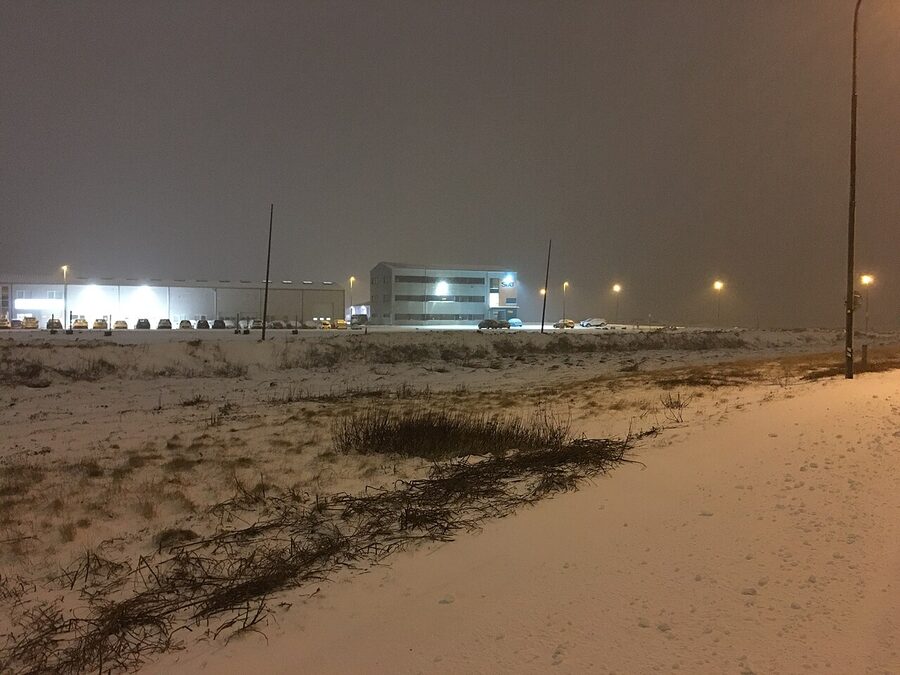
The official meteorological winter is December, January, and February. The travel season I would call winter is wider. November feels like late autumn for the first half then turns properly winter once the snow holds on the ground. March is technically still winter and often the snowiest month in Reykjavik, which surprises people. The first half of April is genuinely transitional and the F-roads are nowhere near opening. So if you are picking dates for a winter Iceland trip, anywhere from mid-November to mid-March is squarely in season, and late October or the back end of March can deliver a slightly cheaper version with some of the same conditions.
Here is how I think about it across those months. The aurora season runs from late August to mid-April but the practical core is October through March, when the dark hours stack up and the sky is most likely to give you a window. Ice cave season at Vatnajökull is November through March, occasionally pushing into early April depending on the year. December is the festival month, with Christmas markets, Christmas Eve dinner traditions, and the wildest civilian fireworks display in Europe on New Year’s Eve. January is the quietest, cheapest, darkest month of all, and my own favourite if you want the country to yourself. February brings Þorri month, the Winter Lights Festival, and a slightly bumped-up daylight curve. March is when the daylight starts feeling normal again, with sunrise around 8am and sunset around 6:30pm by the end of the month. By April most operators are still running winter tours but you have lost the deepest dark of the aurora season.
The window I would target if I were picking now is the back end of January or the first two weeks of February. You miss the Christmas-and-New-Year price spike, the days are starting to lengthen by a couple of minutes per day, the aurora season is still strong, and ice caves are usually at their best after a cold snap. February also gives you the Winter Lights Festival in Reykjavik, which is one of the genuinely good free things to do in the country.
What the daylight actually looks like
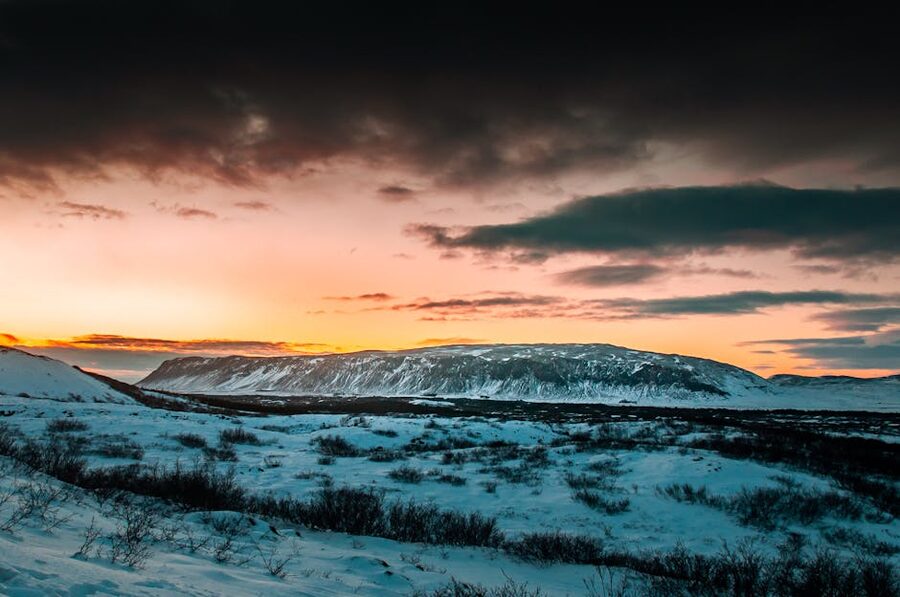
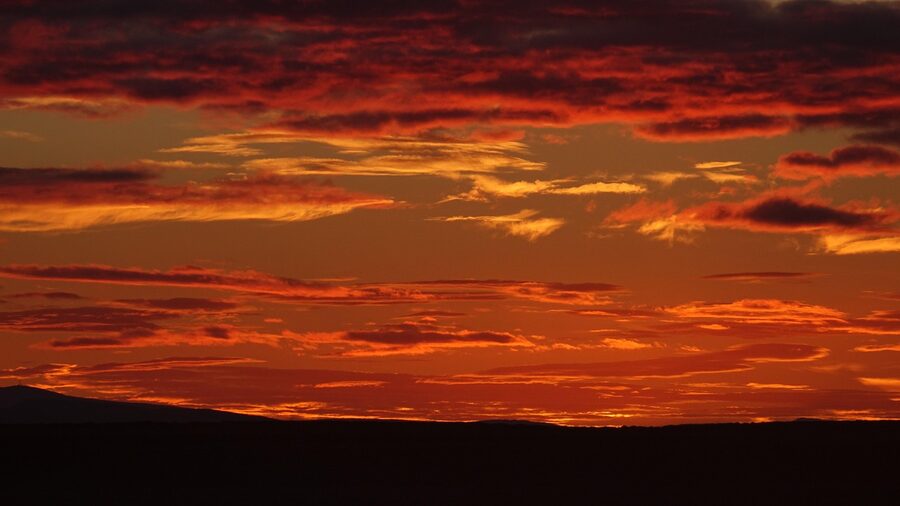
This is the part most people brace for and end up loving. In Reykjavik, the shortest day on the 21st of December gives you about 4 hours and 7 minutes of daylight. Sunrise around 11:23, sunset around 15:30. The numbers feel brutal on paper. In practice the country has another 90 minutes of usable twilight at each end, and what you actually get is a kind of slow continuous golden hour that runs from roughly 10am to 4pm. The light barely changes angle. The shadows stretch long for the whole day. Photographers love it.
By the 1st of January you are already gaining a couple of minutes per day. By the 1st of February sunrise is around 10am and sunset around 5pm, which feels expansive after the solstice. By the equinox on the 20th of March you have 12 hours of daylight again. The winter you remember being scared of, before you came, is really only deep from late November to mid-January.
The northernmost towns are darker than Reykjavik because they sit closer to the Arctic Circle. Akureyri loses about 40 minutes more daylight than Reykjavik at the solstice. Up at the north tip on Grímsey island, on the Arctic Circle itself, the sun briefly does not rise at all for a couple of days around the solstice. That polar twilight is its own thing if you are chasing the experience, though the practical tourist infrastructure is much thinner up there in winter.
The flip side of all this dark is that aurora becomes possible from late afternoon onwards. By 6pm in December it is fully dark and any clear stretch of sky between then and dawn is a candidate viewing window. The whole rhythm of a winter day in Iceland is built around this. Late breakfast, sightseeing in low slow light through the middle of the day, dinner early, and aurora-hunting from 8pm onwards. You get used to it inside two days.
What the weather actually does (the wind, mostly)
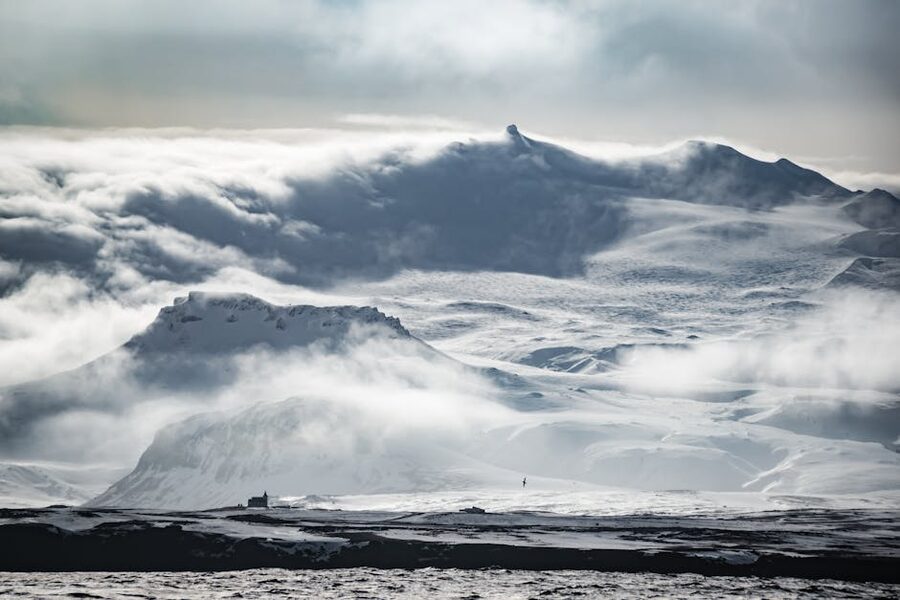
Reykjavik’s mean December temperature is about 0°C. January and February sit around minus 0.5°C. These are warmer than most people expect. The Gulf Stream is the reason. Compared to inland continental cities at the same latitude, the south of Iceland is genuinely mild. London in mid-January typically sits at around 5°C, Reykjavik at 0°C, Helsinki at minus 5°C, Edmonton at minus 14°C. So Iceland in winter is colder than London by a meaningful margin but warmer than Toronto or Helsinki by a much larger one.
What changes the experience is wind. A still day at zero degrees with low sun is genuinely pleasant in a winter coat. A 20-metres-per-second southwesterly with horizontal sleet at the same temperature feels like minus ten and is the version of Iceland that gets people complaining about the weather. Storms are common, especially on the south coast, where mid-Atlantic systems run in two or three times a month. They tend to last 18 to 36 hours and clear quickly. The Icelandic Met Office at vedur.is is the source you check every morning, and the road authority at road.is is the one for whether your planned drive is actually possible. Both update through the day. Both are excellent. Trust them.
Snow is most persistent in the north and east, less so on the south coast where the warmer Atlantic air tends to break it up. Reykjavik gets several short snow-and-melt cycles through the season rather than a single deep snowpack. Driving there is normal most days. Driving across the south coast to Vík and onwards to Höfn is generally fine but watch for storm windows. The Westfjords and the highlands are different stories, covered below.
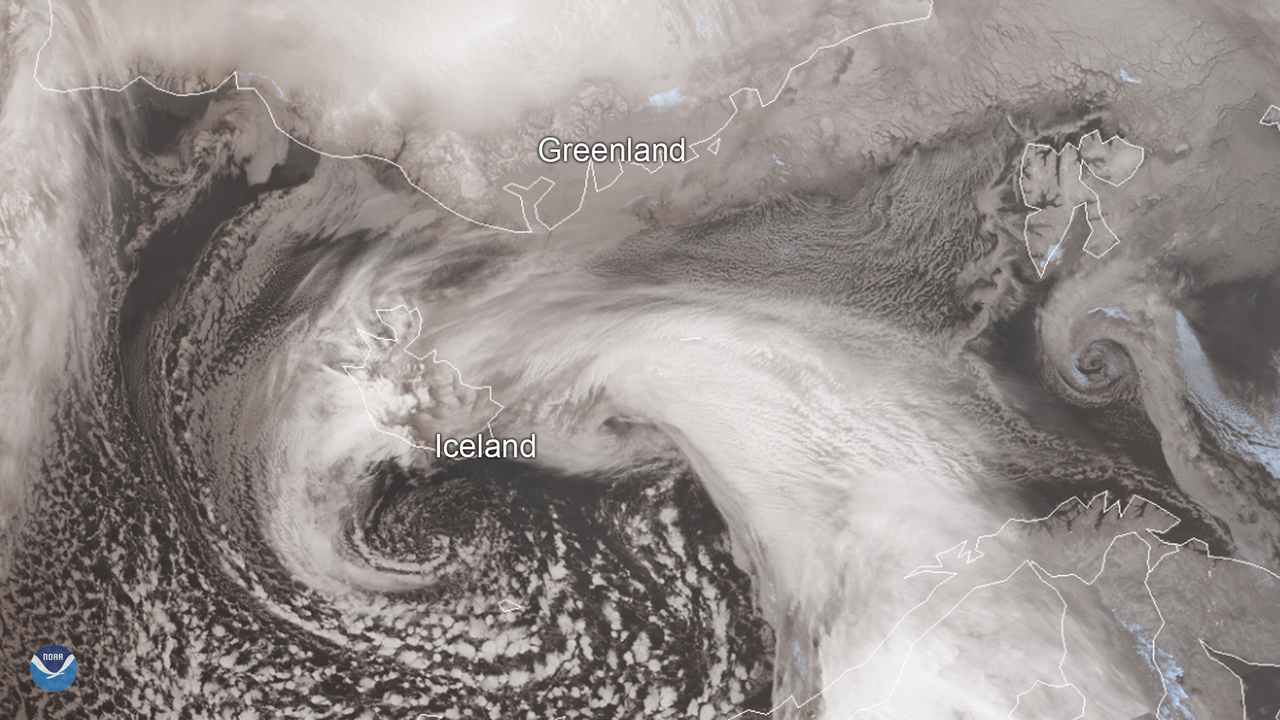
The practical rule I would offer for a winter trip: build at least one buffer day into a week-long itinerary. If you have booked a non-refundable ice cave tour on a Tuesday and a Wednesday departure flight, and a major storm is forecast for Tuesday afternoon, you want the option to swap. Operators will usually rebook for weather without a fuss but you cannot rebook a flight you have already missed.
The northern lights, what actually happens
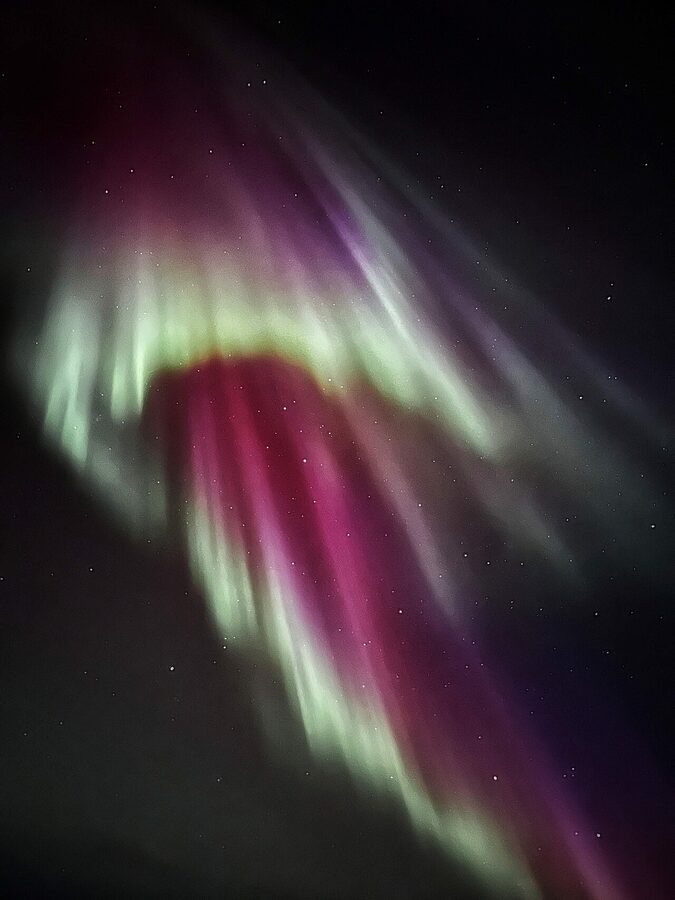
The aurora is the headline reason most people come in winter. The full northern lights guide covers the science and the season in detail, and the aurora forecast piece walks through how to read the official Vedur forecast. The short version for a winter visitor is this. The aurora is happening up there most nights between September and April. What stops you seeing it is cloud cover and city light. Cloud cover is the bigger of the two.
So aurora hunting in Iceland is really cloud hunting. The Vedur aurora forecast at en.vedur.is/weather/forecasts/aurora shows two layers: the KP index (how strong the solar activity is) on a 0-9 scale, and the cloud cover map for the next several hours. You want a clear hole in the cloud, ideally outside city light. The KP needs to be at least 2 to be worth looking at. KP 3 to 5 is excellent. Anything above 5 is rare and spectacular.
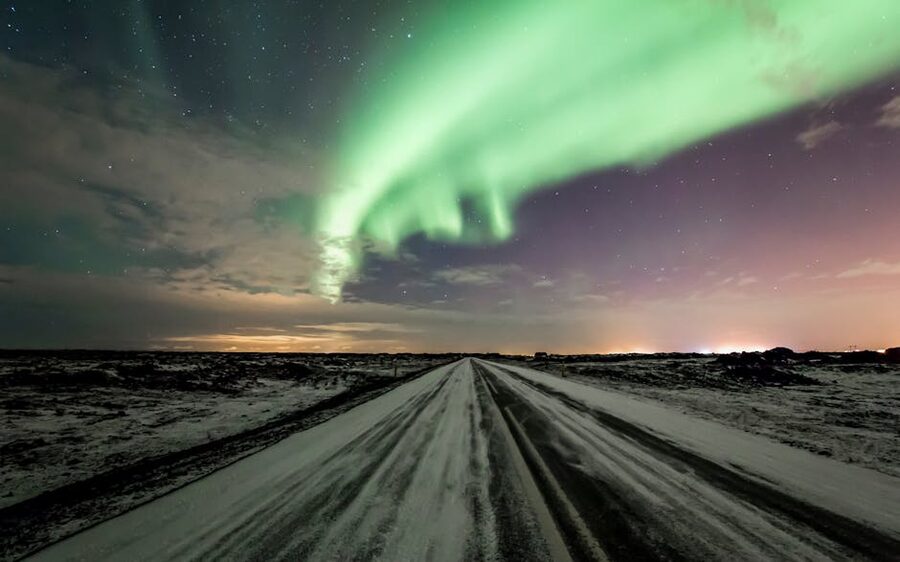
The practical evening looks like this. Check vedur.is at 5pm. If KP is 2 or higher and there is a clear gap in the cloud somewhere within an hour’s drive, get in the car around 7 or 8pm. Drive to the gap. A typical Reykjavik base will send you out toward Þingvellir, Hvalfjörður, or the Reykjanes peninsula, all 30 to 45 minutes out. Pull in at a safe layby, kill your headlights, give your eyes 10 minutes to adjust. Bundle up properly because you are going to be standing still in subzero wind. Bring a thermos. Bring a head torch with a red filter so you can see your gear without ruining your night vision.
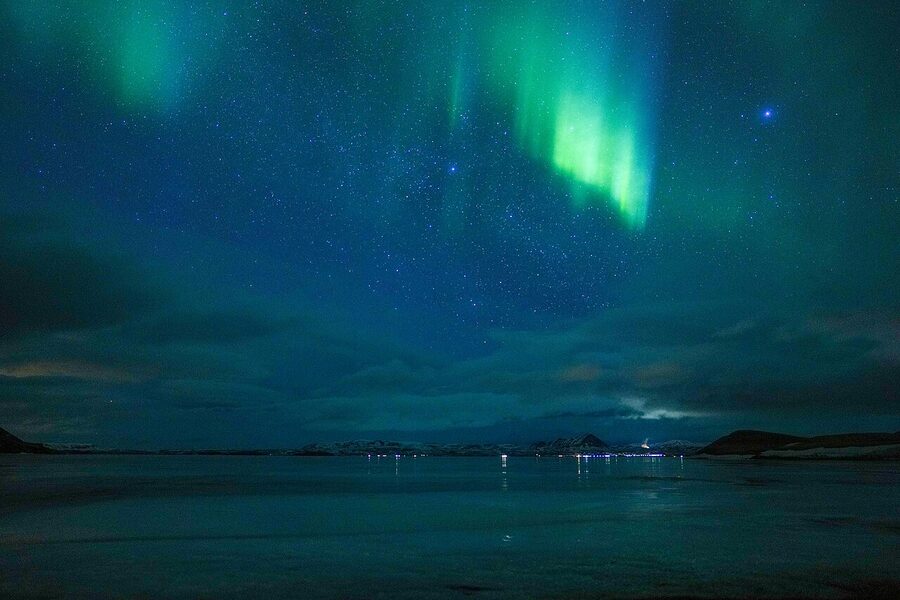
The aurora itself rarely arrives on cue. Sometimes you wait three hours and nothing happens, then it explodes for fifteen minutes at midnight. Sometimes it is gently going for the entire evening and the show is a slow ribbon along the northern horizon rather than a dramatic curtain overhead. Both are real winter experiences. The expectations to manage are: it is not always green to the naked eye (long exposure cameras pull more colour than your eye sees), it does not appear every clear night, and you may wait a long time. We do not promise it. The country that has the highest hit rate for aurora is the country with the most clear nights, which actually means inland and northern Iceland in deep winter, not the Reykjavik area where the marine air drives more cloud.
Where to base yourself for aurora hunting
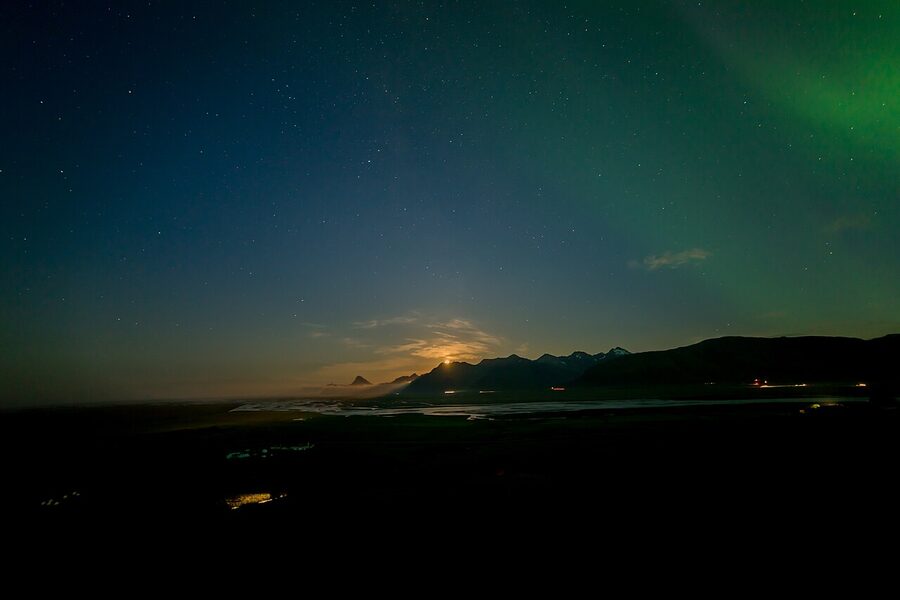
Reykjavik is fine as a base if you are willing to drive 30 to 45 minutes for darkness. If you want to stack the odds and you are happy to spend more, there are a few rural hotels that have built their entire identity around the aurora. Hotel Rangá at Hella, about 90 minutes east of Reykjavik on the south coast, is the famous one. They run an aurora wake-up service: press a button on your in-room phone, and reception calls you when the lights appear. They issue warm coveralls in the lobby. There is a heated outdoor observation deck. It is not cheap (rooms typically run from about 60,000 ISK in winter) but it is the best aurora-focused operation in the country.
The bubble hotels (Buubble has clusters in Reykholt and Hraunsel) are domes with transparent roofs you can sleep under. Marketing-driven, undeniably fun if the sky cooperates, painful if it cloud-locks. Hotel Húsafell in Borgarfjörður is a more substantial base inland from the south, with proper rooms, a hot pool, and very low light pollution. Hotel Skálakot at Hvolsvöllur is small, family-run, and dark.
If you would rather book the hunt as a tour from Reykjavik, multiple operators run nightly small-group bus and minibus aurora chases that read the cloud forecast and chase the gap. Reykjavik Excursions, Gray Line, and Arctic Adventures all run them. Plain platform links: getyourguide.com/iceland-l30 and viator.com/Iceland/d35 both list the available night tours. Most reputable operators will rebook you free of charge if your tour gets clouded out, which is the right reason to take a tour rather than self-drive on your first attempt.
Ice caves under Vatnajökull
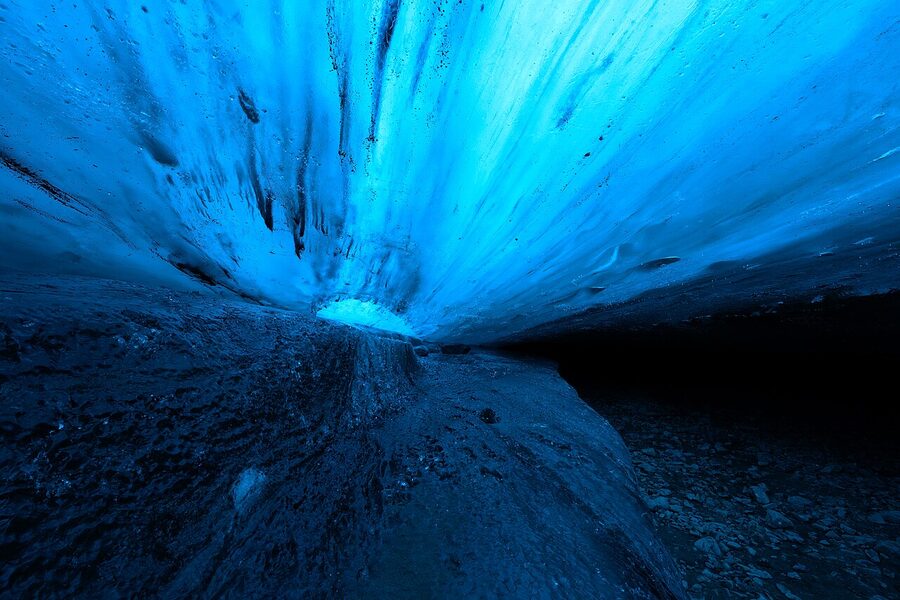
The natural ice caves under Vatnajökull, Europe’s largest ice cap, are the second headline reason to come in winter. They form fresh every season, melt out by April or May, and refill the following autumn as the meltwater channels freeze again. The full ice cave guide covers the geology and the operators in depth. The short winter-trip version goes like this.
The classic Crystal Ice Cave tour leaves from Jökulsárlón glacier lagoon on the south coast. You meet the operator at the lagoon car park, transfer to a super-jeep with massive low-pressure tyres, drive 25 to 40 minutes off-road across the glacial floodplain, and walk the last few hundred metres into the cave. Total tour time about three hours. Cost around 22,000 to 32,000 ISK per person depending on operator and season. Reputable operators include Local Guide (the family-run veterans, in business since the 1990s), Arctic Adventures, Glacier Adventure, and Ice Explorers. Pre-book in winter, especially on weekends. They sell out.
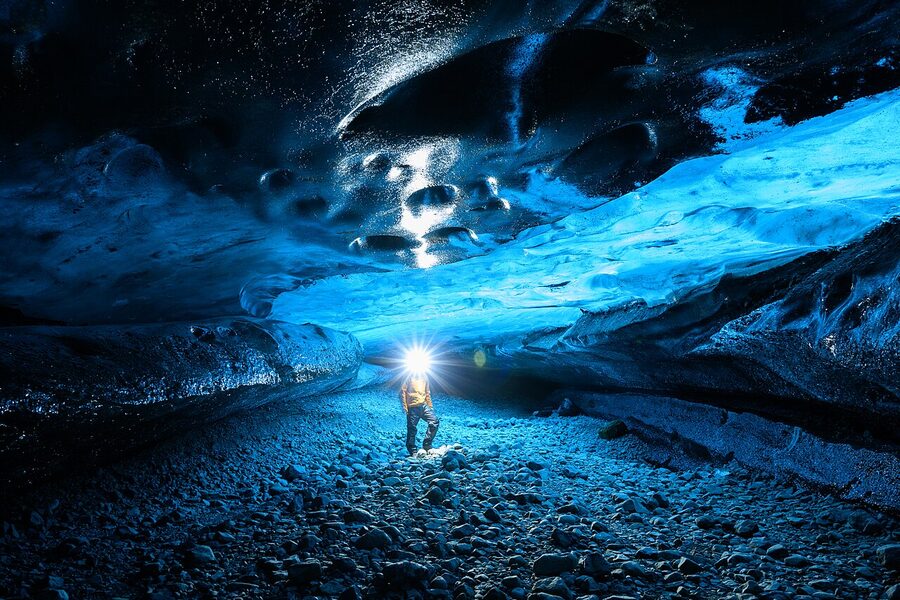
Caves vary year to year and within a year. Operators name them by the dominant ice colour or formation. The Crystal Cave is the most famous, with vivid blue, but a cave called Sapphire, another called Treasure Island, and others have been the headliners in different seasons. By February the operators usually know which caves are stable and which are off-limits because of meltwater or unstable roof. Listen to your guide. People have died inside collapsing caves. The legal route is always with a licensed operator. There is no DIY ice cave option.
Worth the money? In a word, yes. The ice cave is the closest thing winter Iceland has to an unreproducible experience. You cannot do this in summer, you cannot do this anywhere else in Europe at this scale, and the photographs do not exaggerate the colour. If you are flying long distance for a winter trip, build the ice cave around your itinerary, not the other way around.
The south coast in winter
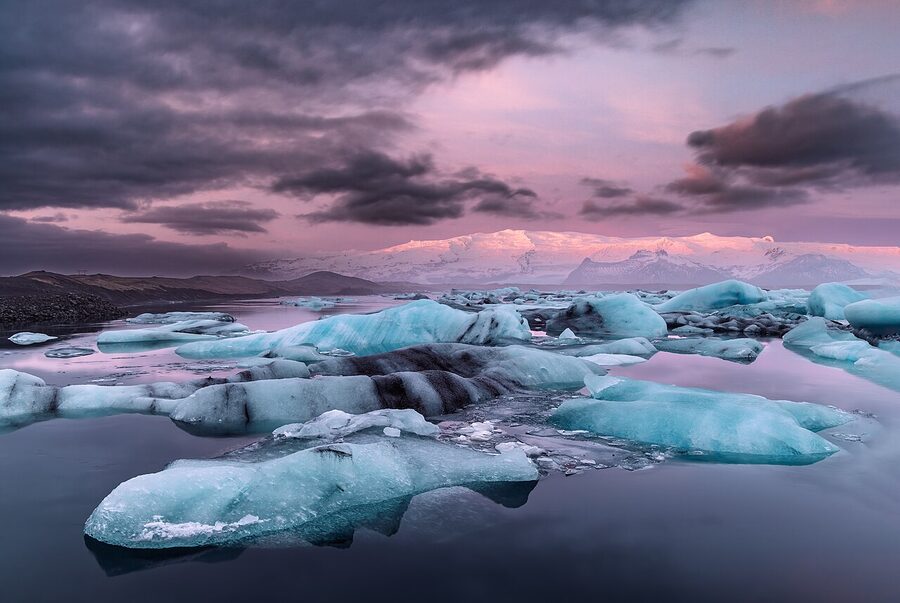
The south coast is the bread-and-butter winter day-trip and overnight route. Reykjavik to Vík is about 187 km on Route 1, around two and a half hours in good conditions. Vík to Jökulsárlón is another two hours. Most winter visitors do this as either a long single day from Reykjavik (10 to 14 hours, exhausting in the dark) or a two-day trip with an overnight in Vík or Höfn. The latter is the right call. You see the south coast in slow daylight on day one, sleep over, do the ice cave from Jökulsárlón on day two, and aurora-hunt from a dark sky base in the evening.
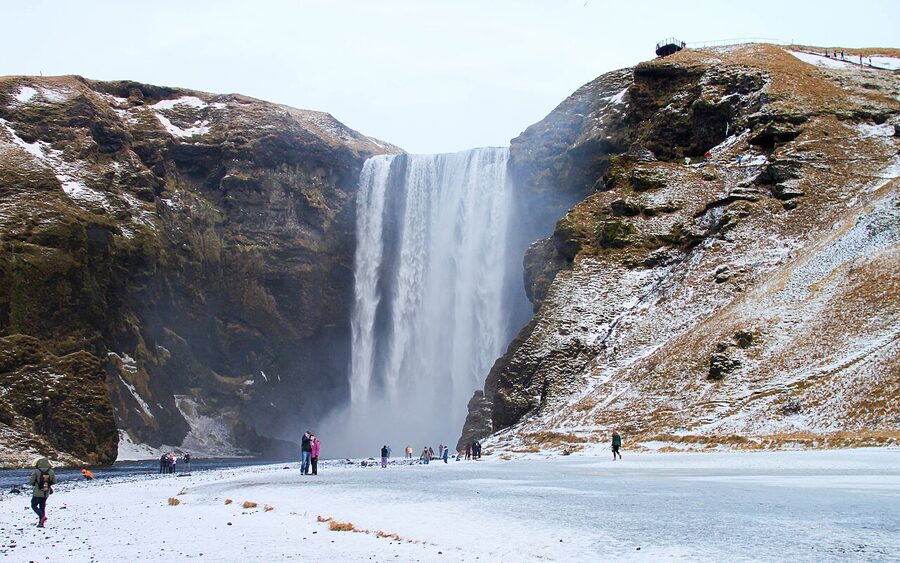
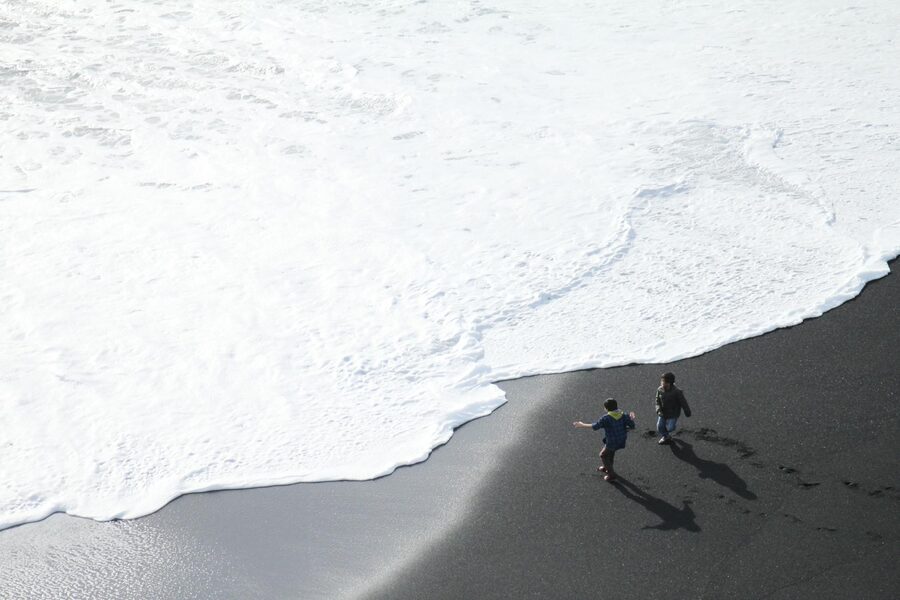
What you stop for along the way: Seljalandsfoss (the waterfall you can walk behind in summer; in winter the path is iced over and roped off, but the view from the front in snow is excellent), Skógafoss (the tall single-drop fall that holds its volume even when the sides are icy), Reynisfjara (the black sand beach with the basalt sea stacks; sneaker waves have killed several visitors here, stay well back from the surf), Vík, the Eldhraun lava field crossing, Skaftafell (the gateway to glacier hikes on Falljökull), Jökulsárlón itself, and Diamond Beach across the road from the lagoon.
Two things to know about the winter version specifically. The amphibious zodiac and boat tours at Jökulsárlón do not run November through April. The lagoon is partly frozen and the operators close. You can still walk the lagoon path and Diamond Beach, which is in some ways more atmospheric in winter than summer. Second, the south coast is where the storm risk concentrates. Sleet and high wind close Route 1 episodes a few times each winter, sometimes for half a day, sometimes overnight. Always check road.is the morning you set out and check it again before you commit to a long return drive in the dark.
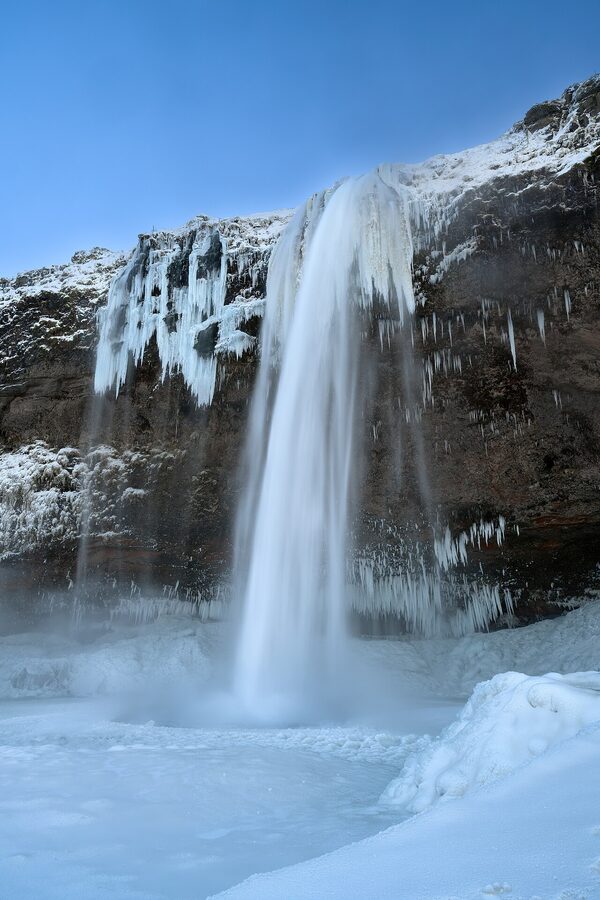
The full day tours guide covers which south coast bus tours run in winter and which only operate in summer. Bus operators run the south coast year-round but the winter version usually stops at Vík and turns back, because the daylight runs out before you can get to Jökulsárlón and back. To do the south coast properly in winter you really want to overnight.
Glacier hikes and snowmobile tours
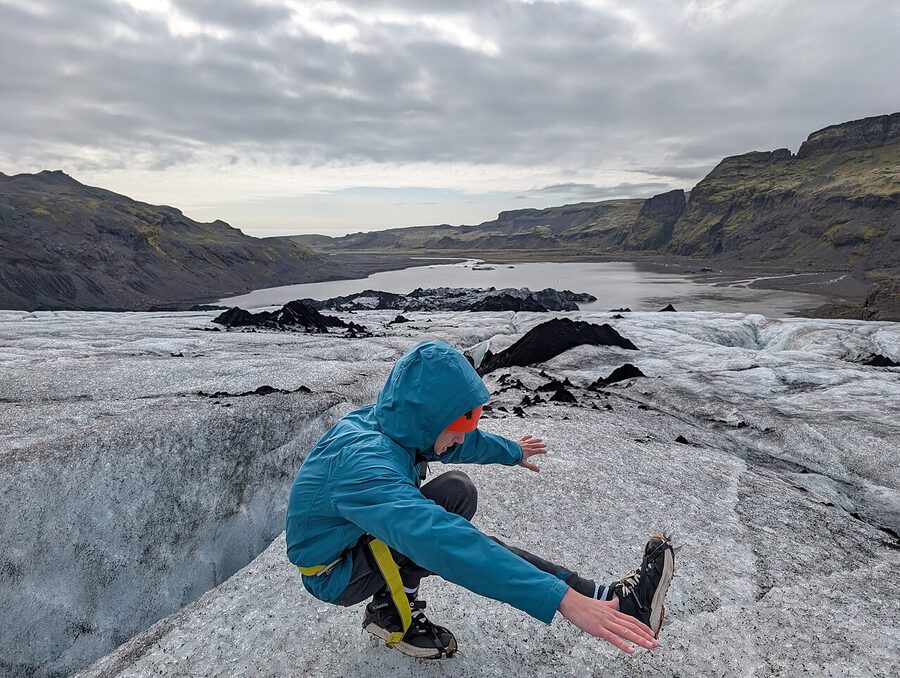
Two glacier-tour categories run all winter. Glacier hikes on Sólheimajökull (a tongue off Mýrdalsjökull, accessed via the south coast Route 1) and Falljökull (the Skaftafell area tongue off Vatnajökull) are guided three- or four-hour walks across the lower ice. The blue ice is in some ways more vivid in winter because there is less surface meltwater dulling it. Crampons and helmet are supplied. Tours run from around 12,000 ISK. Icelandic Mountain Guides, Glacier Adventure, and Arctic Adventures all run them year-round.
Snowmobile tours are the other category. They run on Langjökull (about two hours from Reykjavik, accessed via Húsafell or the Geysir area) and Mýrdalsjökull (above Vík). Mountaineers of Iceland is the longest-established operator, running out of Geysir to Langjökull. Arctic Adventures combines a Langjökull snowmobile run with an ice tunnel visit to Into the Glacier’s man-made tunnel. A typical snowmobile tour is around 90 minutes on the snow, around three to four hours total with the transfer, and costs around 30,000 to 40,000 ISK per driver. Less if you are riding pillion. Helmets, snowsuits, gloves, and boots are usually included. Bring layers underneath.
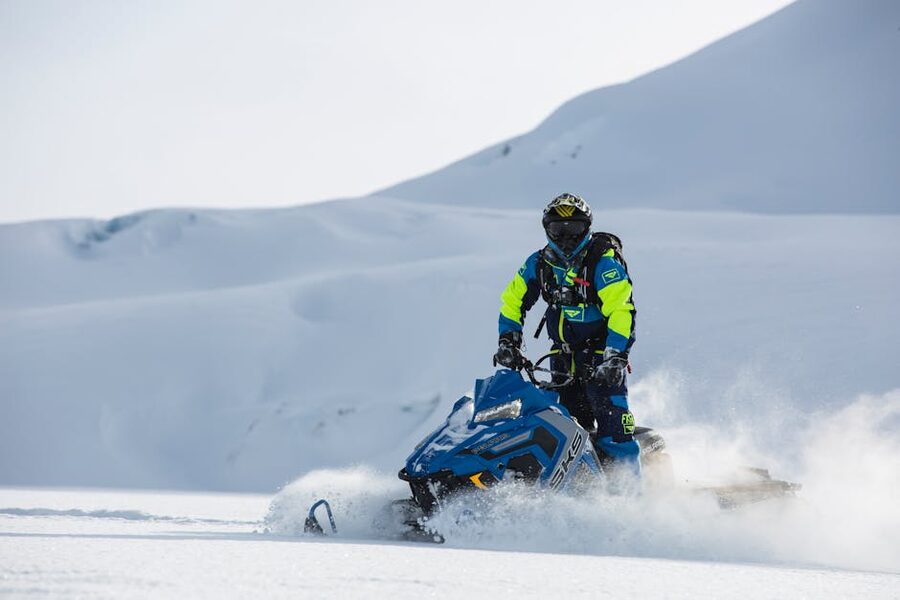
If you have to pick one ice-and-snow tour for a short winter trip, it is the ice cave. If you have a second day for an adventure, glacier hike on Sólheimajökull is the easier add. Snowmobiling is fun but more expensive per minute and slightly weather-fragile. The snowmobile combo with the Langjökull ice tunnel at Into the Glacier is a strong shoulder option if the natural ice caves are sold out, because Into the Glacier is a man-made tunnel that runs all year regardless of conditions.
Blue Lagoon, Sky Lagoon, and the local pools
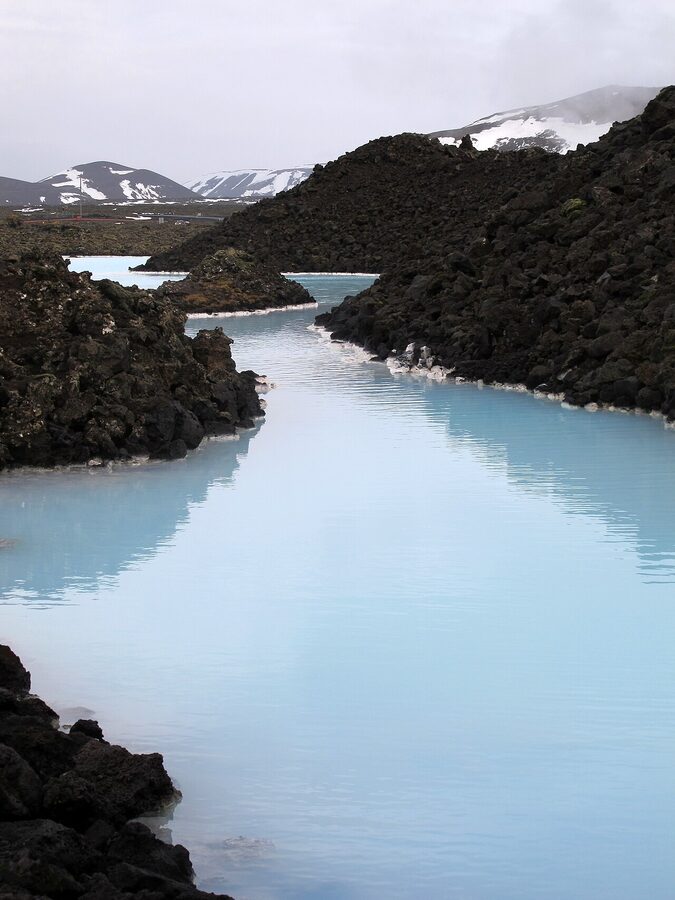
Geothermal bathing is, contrary to a common misconception, a year-round activity. It is arguably better in winter because the contrast between 38°C water and minus-something air is what makes it work. Steam billows. Snow falls into the water. If the aurora cooperates, you might be in the pool when the sky goes green. The full hot springs guide covers the rural and wild ones in detail. The headliners for a winter trip are the Blue Lagoon, Sky Lagoon, and the Reykjavik public pools.
The Blue Lagoon at Grindavík on the Reykjanes peninsula is the famous one. Pre-book at bluelagoon.com for a specific time slot. Comfort tickets from around 10,000 ISK in low season, more on weekends, more during the Christmas-NYE peak. The lagoon was closed several times in 2024 and 2025 for the Sundhnúkagígar volcanic activity that affected nearby Grindavík; check the current status on the official site before you book a flight around it. As of writing in 2026 it has been operating normally again, but the Reykjanes seismic activity is something to keep an eye on.
Sky Lagoon at Kópavogur, a 15-minute drive south of central Reykjavik, opened in 2021 and is the newer competitor. It is built into a basalt-rock cliff facing the Atlantic, the infinity-edge pool runs straight to the horizon, and the seven-step ritual (cold plunge, steam room, sauna, scrub, etc) is genuinely good. skylagoon.com for booking. From around 13,000 ISK in low season. The advantage over the Blue Lagoon for a Reykjavik-based winter visitor is that you can drive there in 20 minutes from town, swim until midnight, and aurora-hunt from the deck on a clear night.
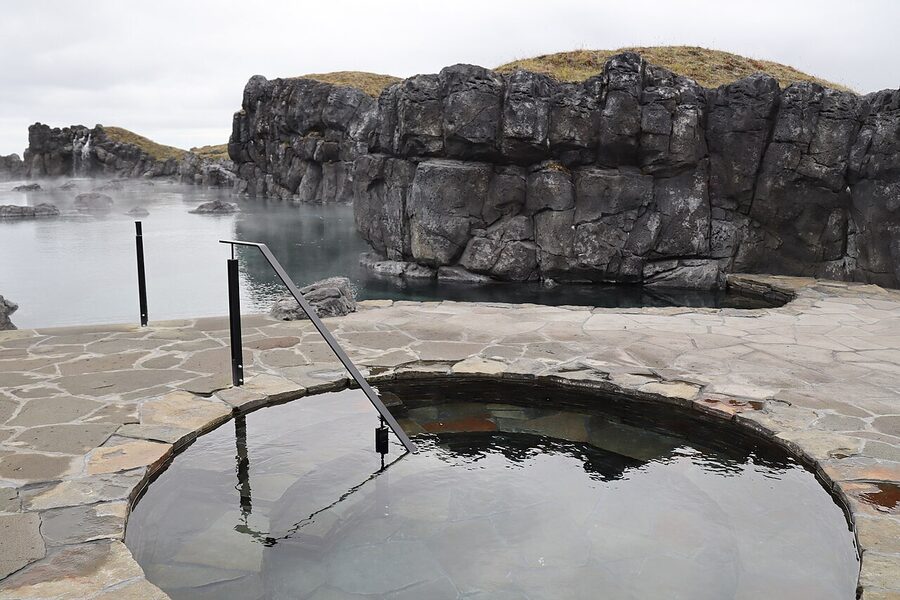
The locals’ answer to both is the public pools. Every Reykjavik neighbourhood has one and they all stay open through winter. Laugardalslaug is the biggest, with multiple hot tubs from 36°C to 44°C, an Olympic pool, slides, and a steam room. Vesturbæjarlaug in the west of the city is smaller and beloved. Both cost about 1,300 ISK for adults. Bring a swimsuit and a towel, shower naked before entering (this is non-negotiable, there are signs in five languages, and the locker-room attendants will tell you off), then enjoy the most underrated thing in Reykjavik. A Friday evening at Vesturbæjarlaug in January, snow on the ground, hot tub at 42°C, beer back at the bar afterwards: that is the version of winter Reykjavik most visitors miss.
Reykjavik in winter
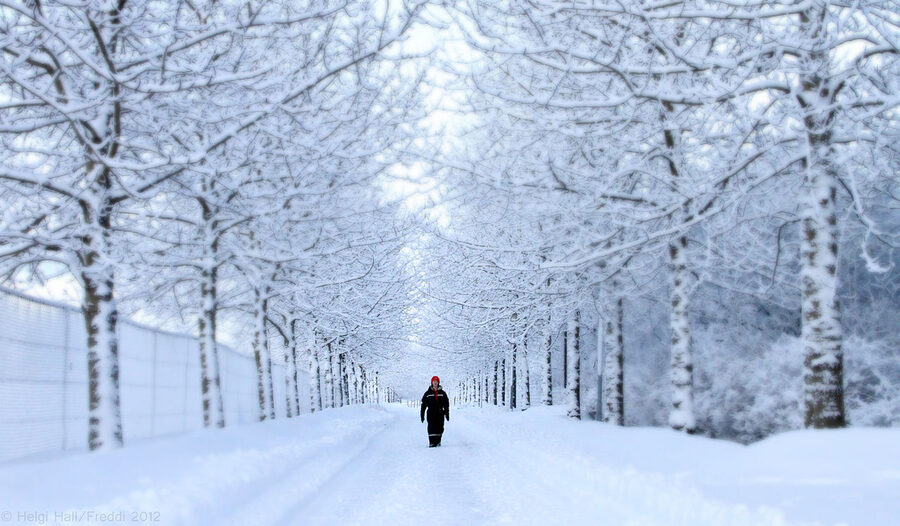
Reykjavik does not shut down in winter. The full Reykjavik city break guide covers the destination at length. The winter-specific things to know are these. The walking is easy in the central blocks once snow gets cleared, which it does promptly. Microspikes (around 4,000 ISK at any outdoor shop, including the 66°North on Bankastræti) are worth buying if you plan to walk the steeper streets like Skólavörðustígur up to Hallgrímskirkja. Many Icelanders use them daily.
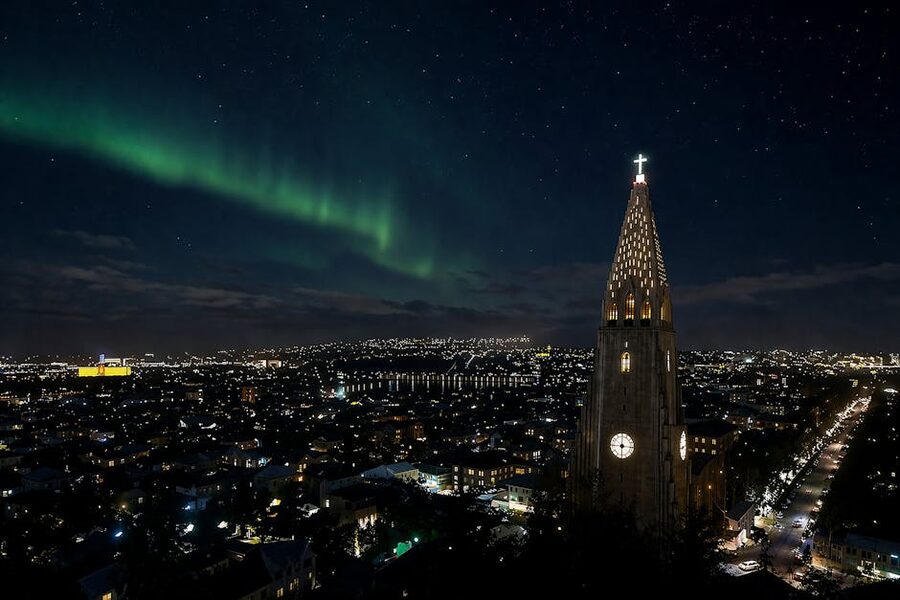
Hallgrímskirkja is open year round. The lift to the tower is 1,500 ISK and on a clear winter day the view across the city to Esja and out to Snæfellsjökull on the western horizon is genuinely worth it. Perlan, the dome on Öskjuhlíð hill, has a planetarium with a northern lights show that is decent if cloud is going to deny you the real thing. The Whales of Iceland indoor exhibit at the harbour has full-size whale models if your kids cannot face two more days of weather. The National Museum on Suðurgata covers the Viking-to-modern arc in a single building and is a good rainy-afternoon move.
For food, the central restaurants are open year round and busiest from Thursday to Sunday. Sjávargrillið on Skólavörðustígur for upscale seafood, Matur og Drykkur in the Old Harbour for a modernised take on traditional Icelandic dishes, the Bæjarins Beztu hot dog stand at the harbour for a 700 ISK pylsa with everything (Bill Clinton’s hot dog stand, as it is sometimes called) for the cheap end. The Bonus supermarket chain (look for the pink pig) is your friend for self-catering, particularly if you are basing in an Airbnb.
Christmas and New Year in Iceland
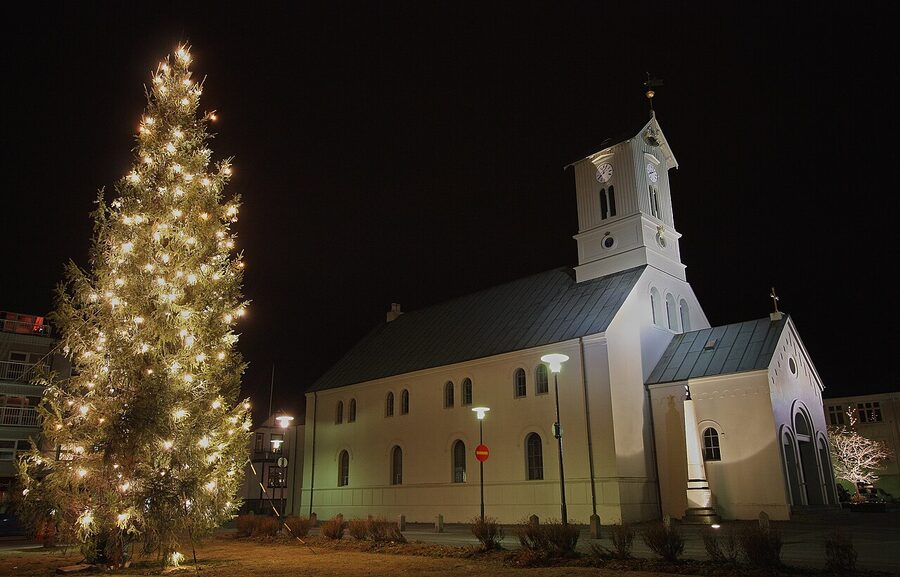
Iceland’s Christmas season is its own thing and worth a separate trip if you are interested. The full Christmas in Iceland piece covers the traditions in depth. For the winter visitor making a December booking, the calendar to know is roughly this. Advent starts late November. The Oslo Christmas tree is lit at Austurvöllur on the first Sunday of Advent. The thirteen Yule Lads (Jólasveinar) start arriving on the 12th of December, one per night, leaving small presents in shoes left on windowsills by Icelandic children. Christmas Eve at 6pm is when the country actually celebrates Christmas with a big family dinner of hangikjöt (smoked lamb) or hamborgarhryggur (smoked pork loin), often followed by exchanging books and reading them through the night during the jólabókaflóð, the “Yule book flood.”
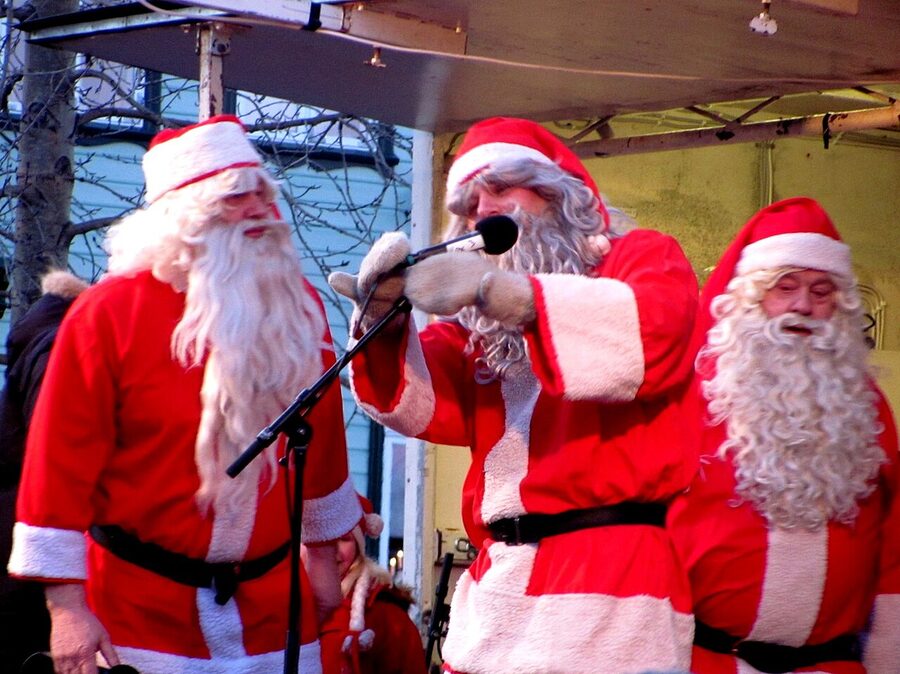
If you are visiting Reykjavik between the 18th of December and the 23rd, the Christmas markets at Hafnartorg and Ingólfstorg are open daily, with mulled wine, roasted almonds, and Icelandic crafts. The shop windows on Skólavörðustígur are at peak. Most restaurants and museums close on the 25th and 26th and run reduced hours on the 24th. Pre-book any restaurant for the 23rd to 30th window. Pricing for hotels in Reykjavik for the Christmas-to-New-Year week typically runs about 30 to 40 percent above the rest of January and February, and pre-book your accommodation by October.
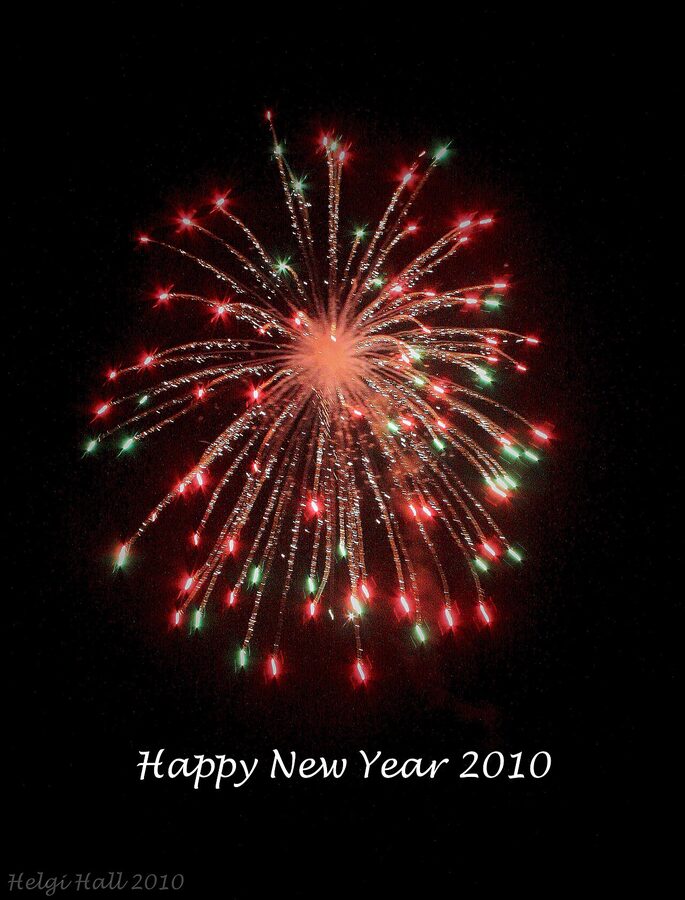
New Year’s Eve is the single biggest spectacle of the Icelandic calendar. There is no centrally organised display in Reykjavik. Instead, the city has roughly ten official bonfires (Áramótabrennur) lit on the evening of the 31st, around 8 to 10pm, where neighbourhoods gather for fireworks and Icelandic folk songs. By 10:30pm everyone heads home or to a viewpoint for the country’s traditional Áramótaskaupið, a satirical year-in-review TV show watched by basically everyone. From 11:30pm to about 12:30am the entire city erupts in private fireworks launched from every garden, balcony and street corner, paid for by the population (the proceeds traditionally go to the volunteer search-and-rescue ICESAR fund). Hallgrímskirkja, the Perlan dome, and the top of Skólavörðustígur are the main viewpoints. Bring a warm hat and earplugs if you are sensitive. The wave of explosives is unlike anywhere else in Europe.
Twelfth Night, Þrettándinn, on the 6th of January marks the official end of Christmas. Smaller bonfires light at locations like the Melaskóli school field and the Gufunesbær farm in Grafarvogur, with the Elf King and Queen visiting and singing songs about the elves. It is more low-key than New Year’s Eve but distinctly Icelandic, and worth catching if you are in the country.
Þorri month and the Þorrablót feasts
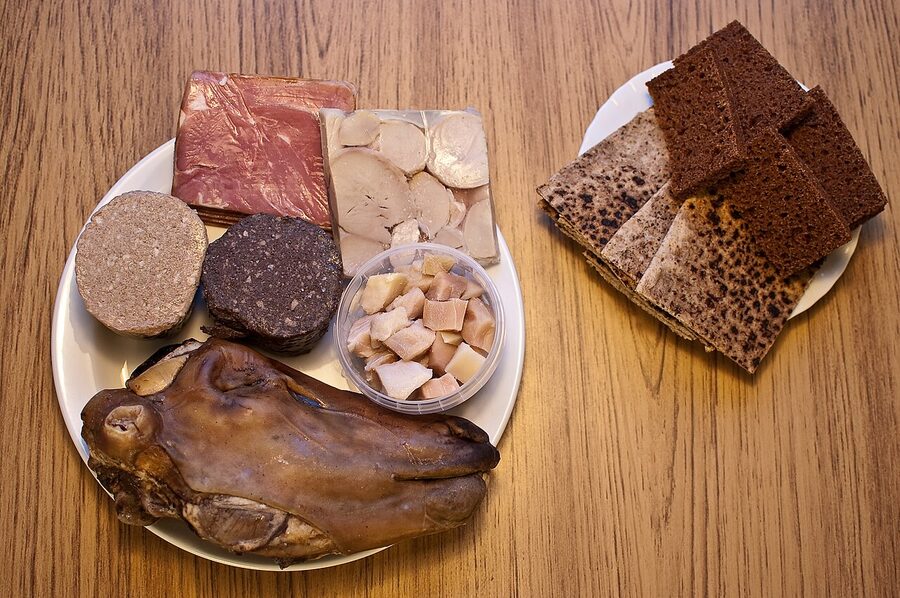
Þorri is the old Norse midwinter month, running from a Friday in late January to mid-February. In 2026 it starts on Friday the 23rd of January and runs to the 22nd of February. Through the month, communities across Iceland host Þorrablót feasts, which centre on a buffet of traditional preserved foods called þorramatur. Hangikjöt smoked lamb, harðfiskur dried fish, hákarl fermented Greenland shark, svið singed sheep’s head, rúgbrauð sweet rye bread, washed down with brennivín, the caraway-flavoured Icelandic schnapps unkindly nicknamed “black death”. Some of these dishes (the shark, in particular) are an acquired taste even for Icelanders. Most are good or very good.
Public Þorrablót feasts open to visitors are held in Reykjavik through the month. Restaurants like Þrír Frakkar, Café Loki opposite Hallgrímskirkja, and Múlinn at Hotel Holt offer þorramatur platters from the start of Þorri through to the end. If you are visiting Iceland in late January or February, eating a þorramatur platter is a meaningful way to experience an actual Icelandic tradition rather than a tourist-facing one. It is also a useful litmus test for what you will and will not eat. The fermented shark is genuinely strong. Try a small piece. Wash it down with brennivín. Move on. The smoked lamb and the rye bread are excellent and you will probably ask for seconds.
Winter Lights and the festival calendar
Beyond Christmas and New Year, the winter festival calendar has two strong dates worth working a trip around. The Iceland Airwaves music festival runs in the first week of November (5 to 7 November in 2026) at venues across central Reykjavik. It is the country’s main international music event and the lineup runs from local Icelandic acts to international indie and alternative names. Tickets for the festival pass run around 30,000 ISK and venues include Harpa concert hall, Gamla Bíó, and Iðnó. If you are coming for the cusp of winter and you like discovering new music, this is the move.
The Reykjavík Winter Lights Festival is the other big one, scheduled for 5 to 8 February in 2026 across all six municipalities of the capital area. It is free, runs over four days, and includes Light Trail installations from 6:30pm to 10:30pm nightly, a Museum Night on the Friday with about 40 museums opening 6pm to 11pm with free entry, and Pool Night on the Saturday with free swimming at Laugardalslaug, Vesturbæjarlaug, Grafarvogslaug, Dalslaug, and the geothermal beach from 5pm to 9pm. More than 150 events run across the four days. If you are picking February dates anyway, target this weekend. It is genuinely one of the best free experiences in the country.
There are smaller dates too. Bóndadagur, Husband’s Day, falls on the first day of Þorri (23 January in 2026) and women traditionally treat their husbands with cooked breakfasts and small gifts. Konudagur, Wife’s Day, falls on the first day of Góa (22 February in 2026) and runs the favour the other way. Both have spawned light commercial traditions of flowers and chocolate, but the older custom is a meal at home. Restaurants in Reykjavik fill up for both. Book ahead.
Snæfellsnes in winter
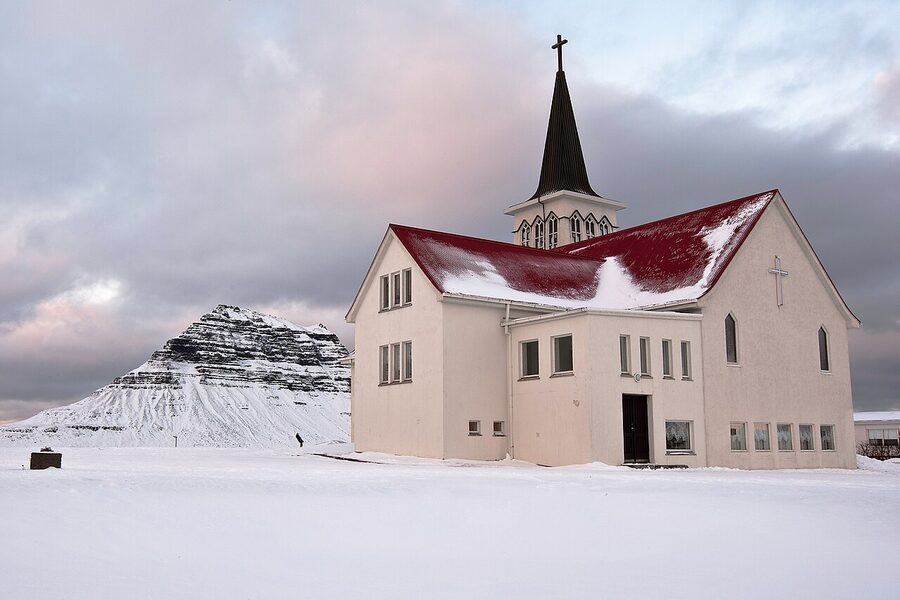
The Snæfellsnes peninsula is two hours west of Reykjavik and runs all year. In winter the loop is harder than in summer because the daylight is short and the western tip drives you into properly remote territory in the dark on the return, but it is doable as a day trip in good conditions. The headline is Kirkjufell, the Witch’s Hat mountain at Grundarfjörður, photographed from the Kirkjufellsfoss waterfall on the Highway 54 side. Add Búðakirkja (the small black wooden church on the south coast of the peninsula), Lóndrangar (basalt sea-stack pillars), and Djúpalónssandur (the black pebble beach) for a full day.
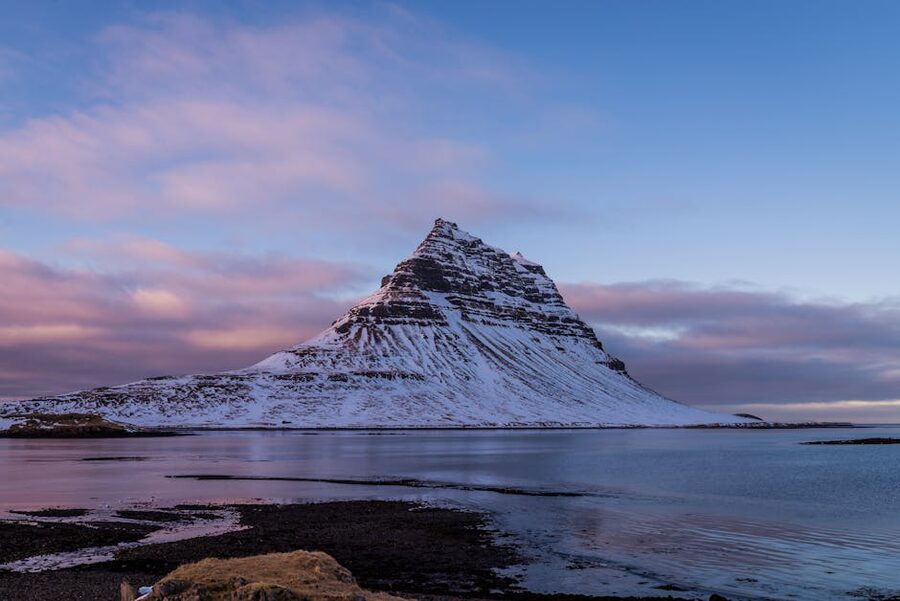
If you are self-driving, the Snæfellsnes loop in winter wants a 4WD with studded tyres and a forecast you have personally checked at vedur.is and road.is the morning of departure. The southern half of the peninsula has had Route 54 closed for storm conditions a few times each winter in the past several years. The northern half (the Grundarfjörður and Stykkishólmur side) tends to be more sheltered. If conditions are doubtful, day-trip bus tours from Reykjavik run year-round through reputable operators and you can outsource the driving stress.
Akureyri and the north
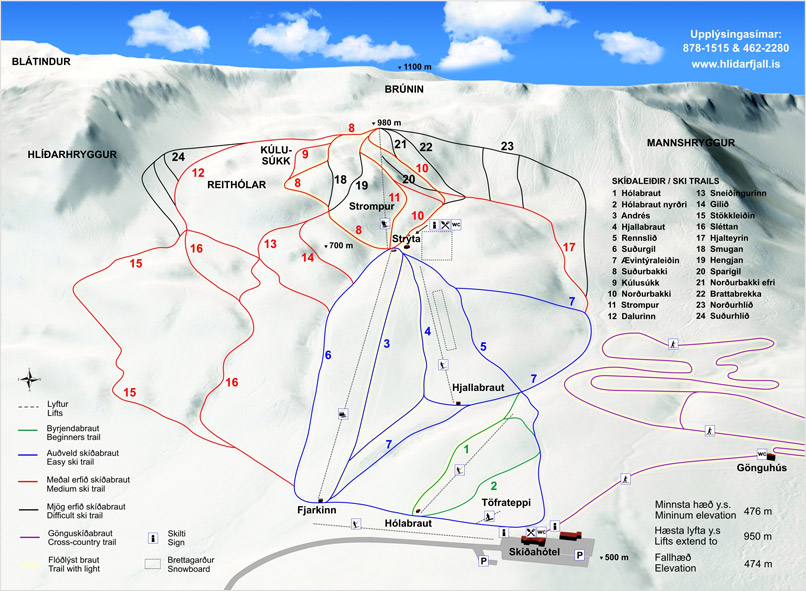
Akureyri, the country’s “northern capital” with a population of about 19,000, is a 45-minute domestic flight from Reykjavik (Icelandair runs several daily) or a five-hour drive on Route 1 in good winter conditions. It works as a base for a 3-night winter side trip. The town has the country’s biggest ski hill at Hlíðarfjall (with downhill runs and a chairlift, lift tickets around 7,500 ISK), the Akureyri Forest Lagoon (Forest Lagoon, an upscale geothermal pool with a steam-and-cold-plunge ritual that opened in 2022), and the Christmas Garden at Jólagarðurinn (a year-round Christmas-themed shop and garden in Eyjafjörður about 10 minutes south of town, free entry, kitsch but charming).
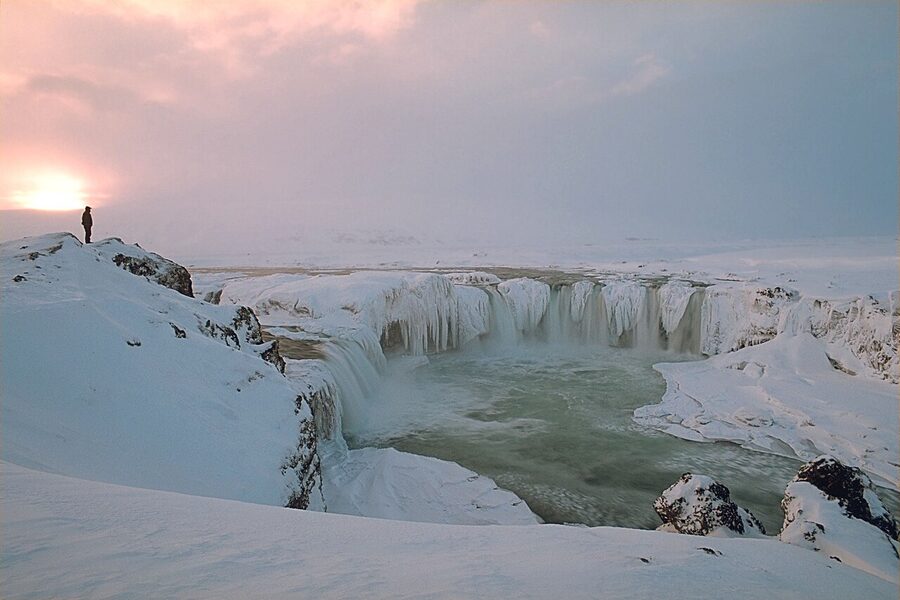
The bigger reason to go north is the aurora. Akureyri sits about 200 km farther north than Reykjavik and on average has clearer skies. From the town itself you have light pollution, but a 15-minute drive in any direction puts you in dark country with strong horizon views. Hotels in town include Hotel Kea on the main street and Hotel Akureyri in the centre, both around 25,000 ISK in winter. The Mývatn area an hour east, with the Mývatn Nature Baths (a smaller, quieter, much cheaper sister to the Blue Lagoon at around 6,500 ISK), the steaming Hverir geothermal field, and Goðafoss waterfall, is the standout day trip. Goðafoss in winter, half-frozen and largely empty, is one of the better waterfall photos in the country.
Þingvellir and the Golden Circle in winter
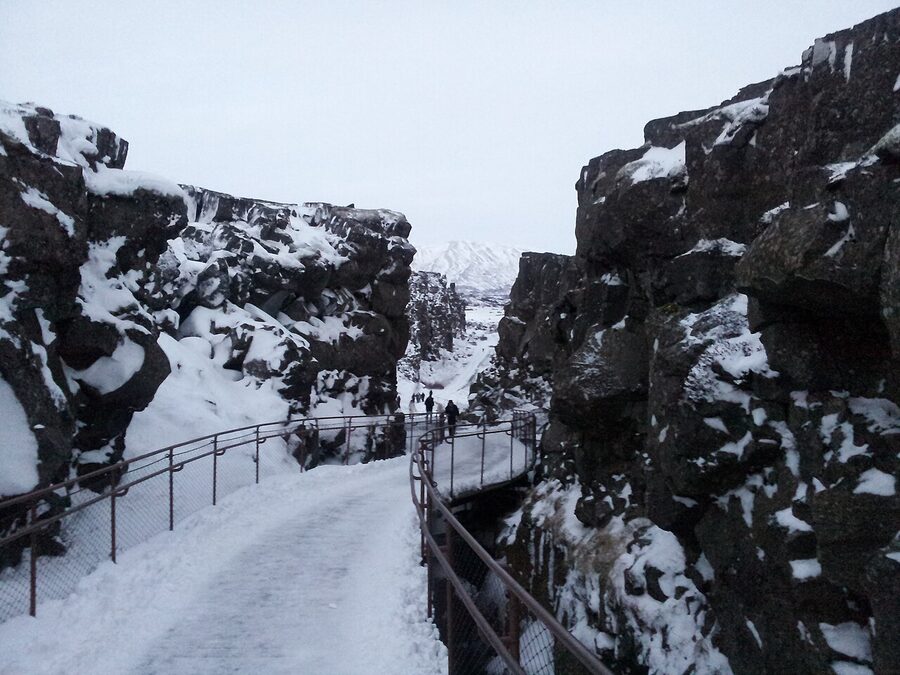
The Golden Circle loop runs all year. In winter it is shorter than the summer version but still very doable as a day from Reykjavik. The loop is Þingvellir National Park (the rift valley between the tectonic plates, the site of the original Alþingi parliament), Geysir (the geothermal area where Strokkur erupts every 5 to 10 minutes), and Gullfoss (the two-tier waterfall on the Hvítá river). You drive the loop in around six hours including stops, all on paved roads that get cleared promptly through the winter season.
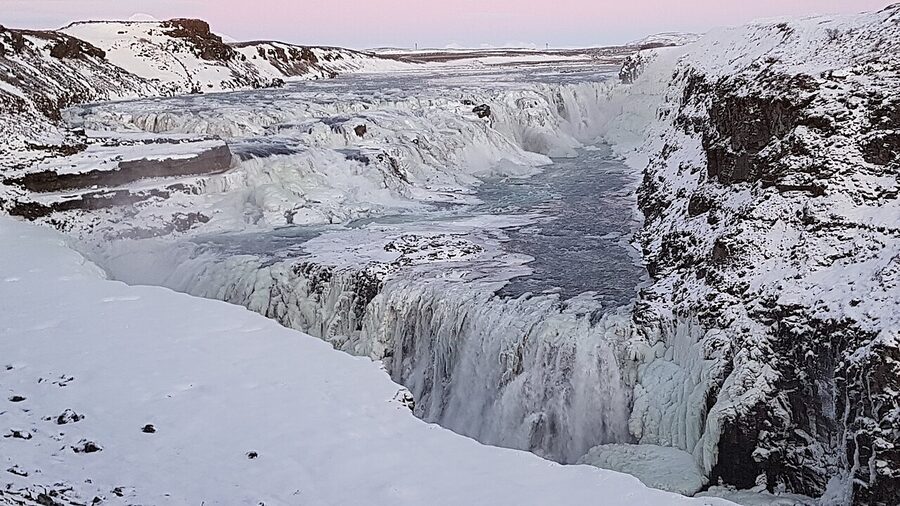
What is different in winter. Gullfoss in winter, partly frozen with ice sculptures hanging from the cliffs, is more visually striking than in summer. Strokkur erupts the same in any season but the steam against cold air makes the column look much taller. Þingvellir under snow gives the rift the quiet it deserves, with fewer crowds. The boardwalk through Almannagjá is gritted but the stairs at the southern end can be icy, take your time. The Silfra fissure dive operation runs year-round if you are tempted by the snorkel between the plates (covered in the Silfra guide) but the air temperature is what gets you, not the water (which sits at 2 to 4°C all year).
Worth a single day. If your schedule allows, combine the Golden Circle on day one with the south coast on day two, both as either drives or day-tour buses, and you have the two big self-contained loops out of Reykjavik in winter. Bus tours of both run year-round through Reykjavik Excursions and Gray Line, listed on getyourguide.com/iceland-l30.
What is closed in winter
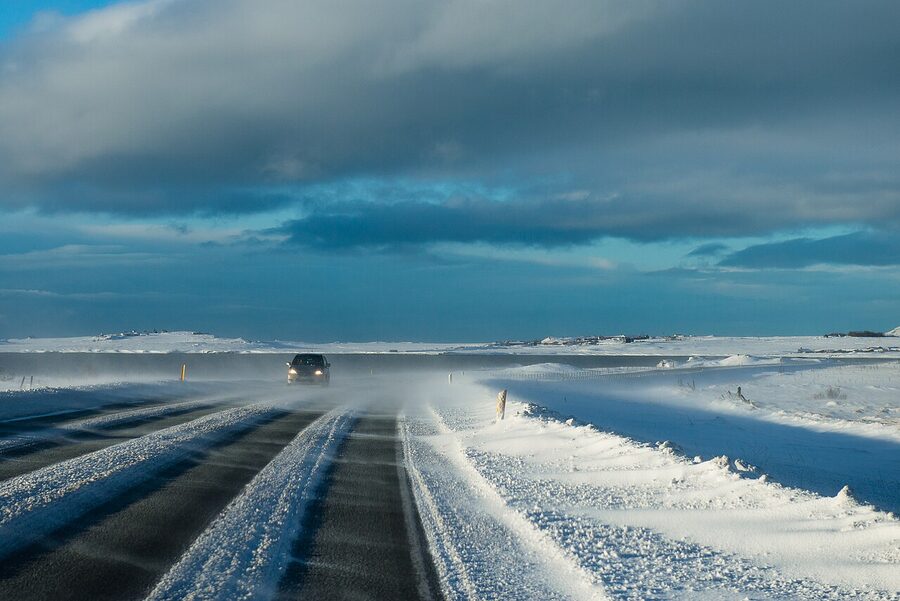
Setting expectations. A real chunk of Iceland is unavailable in winter. You should know which parts before you book.
The Highlands interior is closed. All F-roads (the gravel mountain tracks marked with an F prefix) are physically impassable from roughly October to mid-June and legally closed regardless of conditions. That means Landmannalaugar, Þórsmörk, Kerlingarfjöll, Askja, and the entire Sprengisandur and Kjölur traverses are not happening on a winter trip. The full highlands guide covers the region for when you do come back in summer.
Hornstrandir, the wild peninsula at the top of the Westfjords, is unreachable. The boats from Ísafjörður stop in early October and resume in late June.
Inside the Volcano (the descent into the Þríhnúkagígur magma chamber) only operates May to October. The single operator, Inside the Volcano, closes the lift for the winter.
Most of the Westfjords loop is impractical. Some sections of Route 60 close for winter, the Westfjords are isolated by storm closures regularly, and short daylight makes the long drives unrewarding. There are exceptions. Ísafjörður is reachable by daily Icelandair flight from Reykjavik and runs as a small winter base for skiing at Tungudalur and aurora hunting on the fjords. But a winter Ring Road that includes the Westfjords loop is not realistic.
Some seasonal operators close. Restaurants in remote villages on the south coast and East Fjords close from November to March. Ferry services to Vestmannaeyjar (the Westman Islands) thin out in winter though they still run, weather permitting; daily during the high winter has the same risk of cancellation that the south coast roads do. The puffin colonies are empty (the birds are out at sea from late August to early May).
The amphibious zodiac and boat tours at Jökulsárlón do not run November through April, as mentioned. Whale watching in summer is at peak with up to 95% sighting rates from Húsavík, but winter Húsavík thins to one or two sailings a week and you would not plan a trip around it. Reykjavik whale watching with Elding does run year-round, less frequently and with lower sighting rates than summer.
Driving in winter, the actual rules
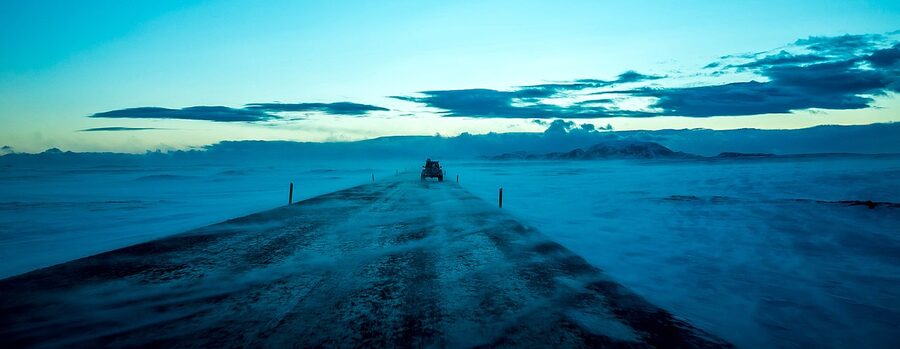
The full car rental guide covers vehicle types, insurance, and fuel networks. The winter-specific points are these. Studded tyres are legal in Iceland between the 1st of November and the 15th of April. Every reputable rental car will have them fitted by default in those months at no extra charge. You do not need to ask. Driving on studded tyres outside that window carries a 20,000 ISK per-tyre fine. Both studded and studless winter tyres must have at least 3 mm tread depth.
A 4WD is strongly recommended for any winter trip outside the immediate Reykjavik area. A small 2WD will technically get you down Route 1 in clear conditions, but the moment a storm blows through or you want to drive a side road to a waterfall or a hot spring, you will wish you had upgraded. Lava Car Rental, Blue Car Rental, Hertz, and the comparison engine at northbound.is/cars are the operators I would compare quotes from. Expect around 12,000 to 18,000 ISK per day for a small 4WD in low season (January and February), more in December and March.
The two websites you need to bookmark and check daily are road.is for road conditions and closures and vedur.is for weather. The road map at road.is is colour-coded by condition: green is dry, blue is wet, yellow is slippery patches, white is snow, pink is ice. Red is closed. If your route includes a red, you do not drive it. The map updates every 15 to 60 minutes.
Insurance is the other thing. The standard rental insurance does not cover sand and ash damage (a real winter risk in the Vík area when a southerly wind blows volcanic ash off the beach), gravel damage (much more common than people expect), water crossings (impossible to do legally in winter anyway), or damage from open doors caught by sudden wind gusts (this happens often and is not covered). The “premium” or “all in” insurance bundles vary. Read the small print before signing. safetravel.is has the official safety briefing for renters and is worth a read before your first day of driving.
Practical driving rules I would offer for a winter trip. Allow 30 to 50 percent more time than the map says. Do not drive in the dark unless you have to (most stretches of Route 1 outside Reykjavik are unlit). If conditions look bad, do not push through. The country has plenty of cafes and gas stations to wait one out. Refuel whenever you pass an N1 or Olís with a full attendant if your tank is below half. Some sections between towns are 60 km without a station.
What it actually costs
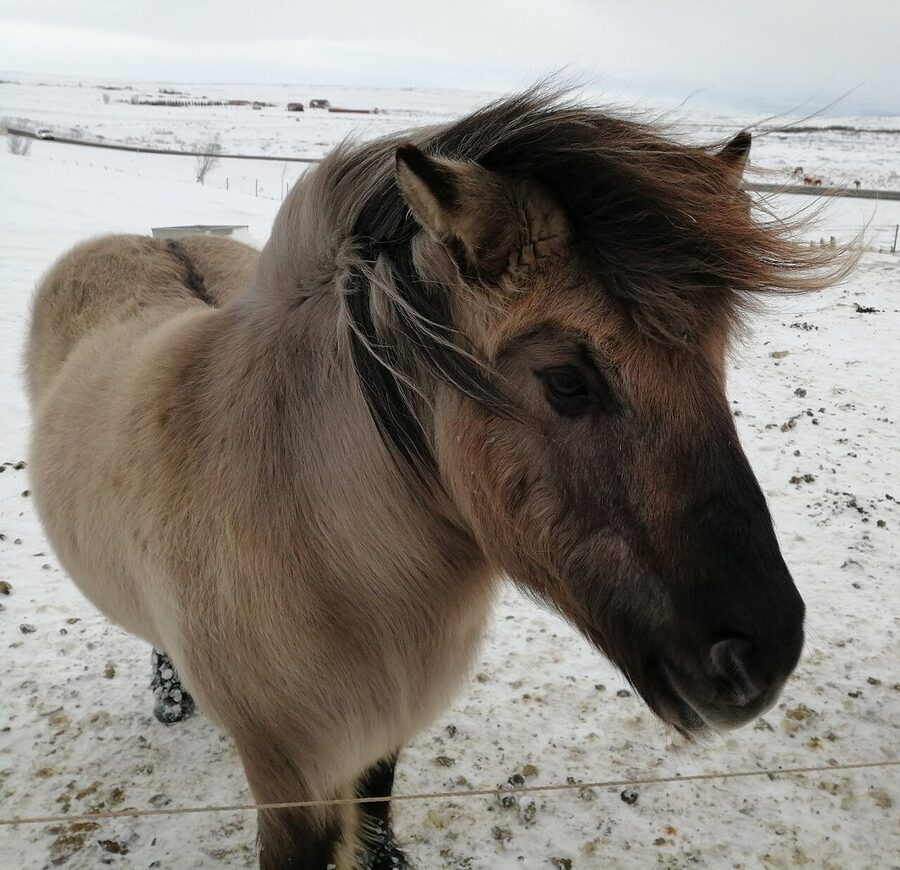
One of winter Iceland’s better-kept secrets is that it is meaningfully cheaper than summer Iceland for the chunk between January 5th and the end of March. Hotels in Reykjavik that run at 60,000 ISK in July often sit at 25,000 ISK in late January. Car rental is cheaper. Tour pricing is the same year-round but multi-day packages aimed at winter dropped 25 to 35 percent from their summer equivalents. Flights from US East Coast cities can run as low as $350 to $450 round trip in January when Icelandair is running its winter promotional fares. From the UK and continental Europe, EasyJet and Wizz Air run extreme low fares in January and February.
The Christmas-to-NYE window (roughly December 22nd to January 5th) is the exception. Hotels in Reykjavik bump 30 to 40 percent. Restaurants on the 23rd to 30th require pre-booking. Ice cave tours sell out on weekends. Car rental is at peak. If you have a flexible window, target the second half of January or the first half of February instead. Same conditions, much lower bill.
A working budget for a 7-day winter trip for two: round-trip flight from US East Coast on Icelandair around $400 each, 4WD rental for 7 days around 100,000 ISK total, mid-range hotels averaging 25,000 ISK per night for six nights = 150,000 ISK, food and fuel say 15,000 ISK per day = 105,000 ISK, four winter activities (ice cave, glacier hike, Blue Lagoon, snowmobile or whale watching) at average 25,000 ISK per person per activity = 200,000 ISK. Total around 555,000 ISK plus flights, which works out to roughly 4,000 USD for two for a week. Higher in the Christmas peak; lower in deep January.
What to pack for winter
The packing list is the simple part if you know cold-weather travel and a slightly steeper learning curve if you do not. Three rules dominate. Layer. Wind-proof outer. Waterproof everything that touches the ground or the sky.
The base layer is wool or synthetic. Cotton kills you in this weather because it absorbs sweat and stops insulating. A merino wool long-sleeve and long-johns are the foundation. The mid-layer is fleece or down. A 200-weight fleece or a light down jacket is enough for most days. The outer layer is a hard-shell waterproof and windproof jacket and over-trousers. This combination handles every weather Iceland throws at you in a single afternoon.
Footwear matters more than people expect. Waterproof hiking boots that can take a strap-on crampon (so the toe is not too narrow and the sole has at least 6 mm of tread) are right for ice cave and glacier tours. For walking around Reykjavik, leather boots with a grippy sole are fine, ideally combined with microspikes (around 4,000 ISK at 66°North or any outdoor shop in town) for icy stretches.
Hat, gloves, scarf or buff are non-negotiable. Two pairs of gloves are useful, a thin pair you can wear inside a thicker pair for handling cameras or phones outdoors. Sunglasses are not optional, the low winter sun reflects off snow and water with brutal intensity. Eye mask not needed (it’s dark). Headlamp with red filter is excellent for aurora hunting and walking before sunrise. A thermos for hot drinks is genuinely worth packing. So is a small power bank, because cold drains phone batteries fast.
One thing not to overpack: heavy “Arctic expedition” outerwear. Iceland’s winter is cold but it is mild compared to Quebec or Finland. A standard ski jacket or a London-grade winter coat layered over fleece works for the entire trip. Tourists arriving in proper down expedition coats are visibly oversold.
A sample 5-day winter itinerary, late January
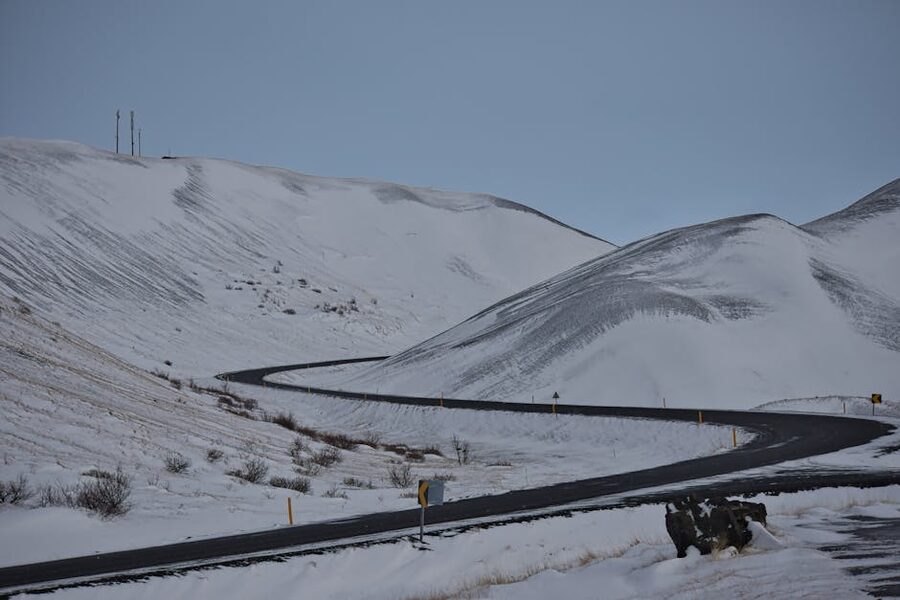
This is what I would do with a first-time visitor on a 5-night trip in late January.
Day 1. Land at Keflavík morning. Pick up 4WD rental. Drive 50 minutes into central Reykjavik. Check into a downtown hotel (Center Hotels or Reykjavik Lights are sensible mid-range picks around 25,000 ISK in January, or push to Hotel Borg if you are spending). Walk Skólavörðustígur up to Hallgrímskirkja, take the lift to the tower. Late lunch at one of the harbour cafes. Sjávargrillið or Matur og Drykkur for dinner. Aurora hunt from Grótta lighthouse on the western edge of town if KP and cloud allow.
Day 2. Golden Circle day trip. Self-drive the loop (Þingvellir, Geysir, Gullfoss) or join a small-group bus tour. Six to seven hours including stops. Back in Reykjavik for dinner and Sky Lagoon swim from 9pm to 11pm.
Day 3. South coast drive. Reykjavik to Vík with stops at Seljalandsfoss, Skógafoss, and Reynisfjara, around 3 hours of driving plus stop time. Overnight at Hotel Vík or similar around 22,000 ISK. Aurora hunt from the south coast viewpoints in the evening.
Day 4. Vík to Jökulsárlón (around 2 hours), pre-booked Crystal Ice Cave tour from the lagoon car park around 9am, around 3 hours including the cave. Diamond Beach across the road afterwards. Drive to Höfn for the night, around 1 hour. Dinner at Pakkhús for langoustine. Aurora hunt from outside town if conditions allow.
Day 5. Höfn back to Reykjavik (about 5 hours, leave by 9am, arrive mid-afternoon), morning Blue Lagoon stop on the way to Keflavík, evening flight out.
That schedule lands you ice cave, Golden Circle, full south coast, Diamond Beach, Sky Lagoon, Blue Lagoon, two aurora windows, and Reykjavik in the same trip. It is busy but doable. If you have a 7-night window, add a Snæfellsnes loop on day 3 (push the south coast to days 4 and 5), and a culture day in Reykjavik before flying out.
A few closing thoughts
The version of Iceland in winter that you should be selling yourself is not the brutal one. It is the slow one. The country gets quieter in winter. The locals get the place back. The Christmas markets, the public pools at 9pm under snow, the Þorrablót feasts in the back rooms of village halls, the ice cave at Vatnajökull with the lagoon just frozen behind you. Reykjavik is its real-world self when the cruise ships are gone and the cafes are full of writers in their second coffee. The aurora arrives if it arrives. The light around the solstice is otherworldly. The wind has opinions and you wear the layers.
The bookings to make four months ahead are a 4WD rental, an aurora-friendly hotel for at least one night, and a pre-booked ice cave tour if you are coming for one. The websites to check daily once you are there are road.is and vedur.is. The single tip I would offer that nobody puts on the brochure: get up early and walk a Reykjavik neighbourhood before sunrise on a snow morning. The streetlamp light on fresh snow at 9am is one of the quietly beautiful things about this season, and it is also when the bakeries are pulling kleinur out of the oven and you can buy one warm and walk back to the hotel with it. Þetta reddast.
_in_2020.08.jpg)


.jpg)
.jpg)

.jpg)


.jpg)
.jpg)