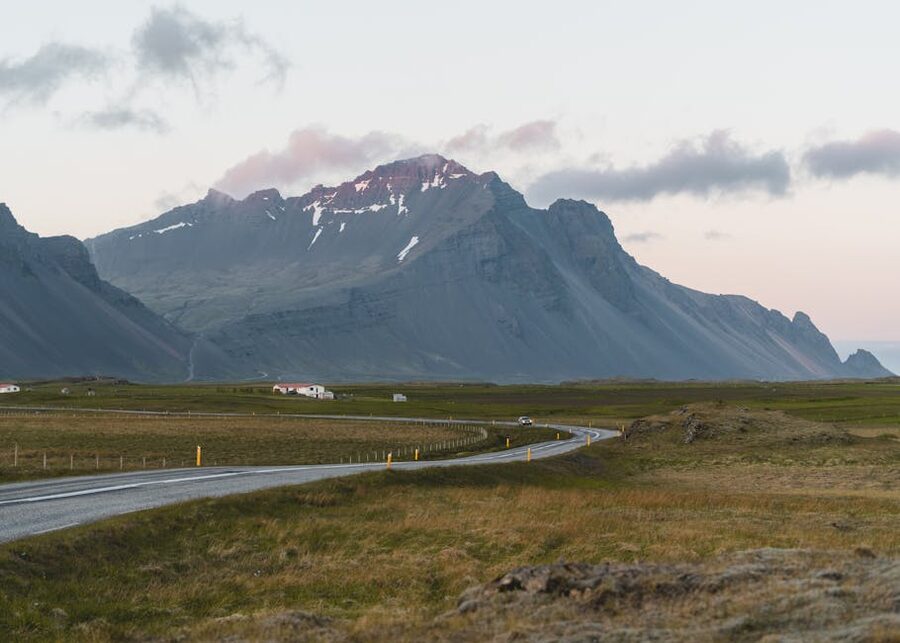
The first thing to understand about driving in Iceland is that the country is mostly empty. Outside Reykjavik you can drive for an hour and see two cars, three farms, and a fence that may or may not still belong to a working farm. The second thing to understand is that the weather has its own opinions. A clear morning becomes a sideways-rain afternoon, becomes a snow-on-the-pass evening, and by the time you reach Höfn the sky has cleared again and you wonder if the storm was a dream.
I drive Route 1 a few times a year. I have changed a tyre on a gravel verge near Vík with a Dutch couple’s headlights as my only light, gone wrong on an F-road I had no business being on, watched a rental Yaris ford a creek that was not on any map, and queued behind 30 sheep on the road into Borgarfjörður. None of these things ruined the trip. Most of them made it. But they did teach me what to tell visitors before they pick up their keys at Keflavík.
This is the long version of that conversation. What the roads are like, what they cost to drive on, what the rental insurance does and does not cover, when the F-roads open, and where the speed cameras hide. Þetta reddast (it’ll work out) is still the right attitude. But þetta reddast better with a four-wheel drive in October and a check of road.is at breakfast.
In This Article
- What Icelandic Roads Are Actually Like
- Route 1, the Ring Road, Without the Marketing
- F-Roads and the 4×4 Rule
- River Crossings and What You Should Not Try
- Winter Driving and What snjór og snjóbylur Means in Practice
- Choosing the Right Rental: 2WD, 4×4, or Camper
- Insurance, Decoded Without the Sales Pitch
- Fuel, PIN Codes, and Where to Fill Up
- The Rules Tourists Miss
- Single-Lane Bridges, the Ritual Nobody Explains
- Tunnels and Tolls
- Approach Roads to the Big Off-Route-1 Sights
- One-Week and Two-Week Anchors
- Where to Sleep Along the Ring Road
- If You’d Rather Not Drive at All
- The Common Rental Traps
- The Apps You Actually Need
- What I’d Tell My Brother Visiting in October
What Icelandic Roads Are Actually Like
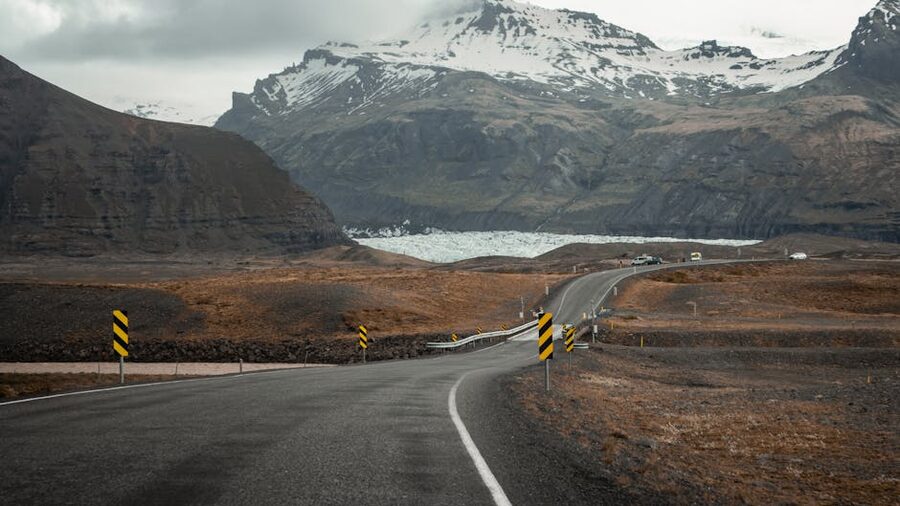
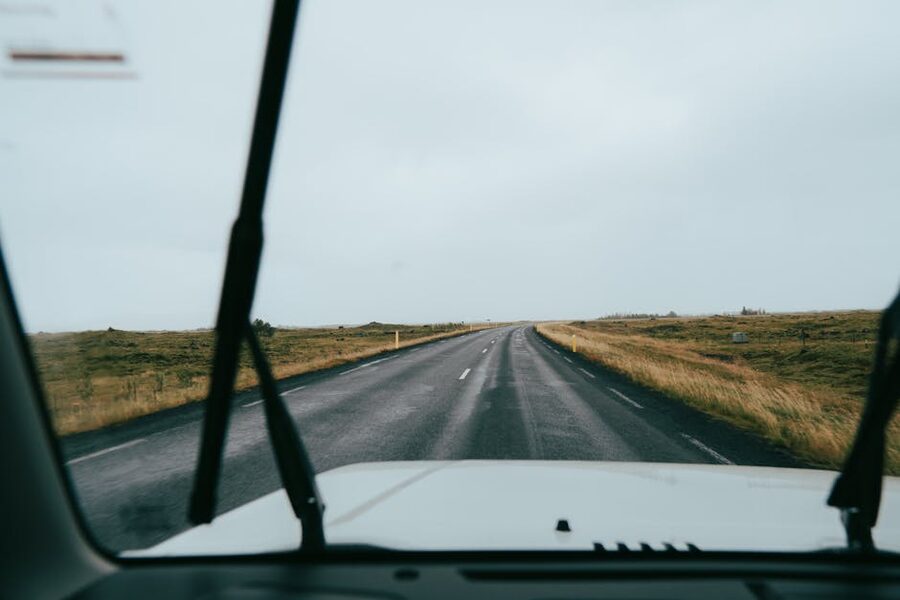
Iceland has roughly 13,000 km of public roads. Of those, only about a third are paved. Route 1, the Ring Road, is paved for almost its full 1,332 km loop, with a few short gravel stretches in the east that get repaved a section at a time. Off Route 1, the picture changes fast. Side roads to popular sights such as Dyrhólaey, Stokksnes, Reykjafjörður, turn to gravel within a kilometre of the asphalt. The further you get from the south coast, the more gravel you drive.
Gravel itself is not dangerous. What is dangerous is treating it like asphalt. The transition from paved to unpaved is rarely signed in a way that grabs your attention, and most accidents involving foreign drivers happen in the first 200 metres of gravel, when someone keeps the speed they had on the road before. The car loses the back end, oversteers, and ends up on its roof in a ditch. I have seen the photos. The fix is to slow down to maybe 60 km/h before the surface changes and watch the loose stones bounce off the underside of the bonnet for a minute before you trust them.
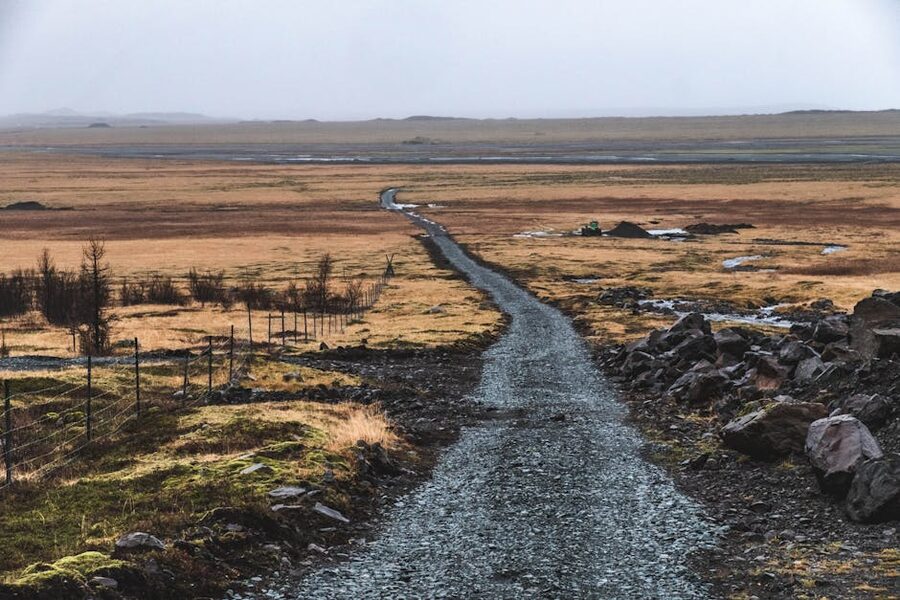
The other thing to know about Icelandic roads is that they are old. Built in the 1970s and 80s on permafrost that no longer behaves like permafrost, the asphalt rolls and ripples in places. You will hit a frost heave at speed and feel the suspension bottom out. You will see signs that say “Malbik endar” (asphalt ends) and “Blindhæð” (blind hill). Take both seriously. A blind hill in Iceland is a real blind hill, the road can dip away to a single-lane bridge or a sharp corner immediately after the crest, and locals know to tap the brakes before the rise.
Daylight is the next thing. From late May to mid-July the sun does not really set, which sounds great until you realise you are still driving at 1am because the light tricked you out of your bedtime. From November to February the opposite problem: the sun rises around 11 and is gone by half three, so any trip that needs daylight has to be planned around a four-hour window. In December I drive to Vík with the headlights on the entire way.
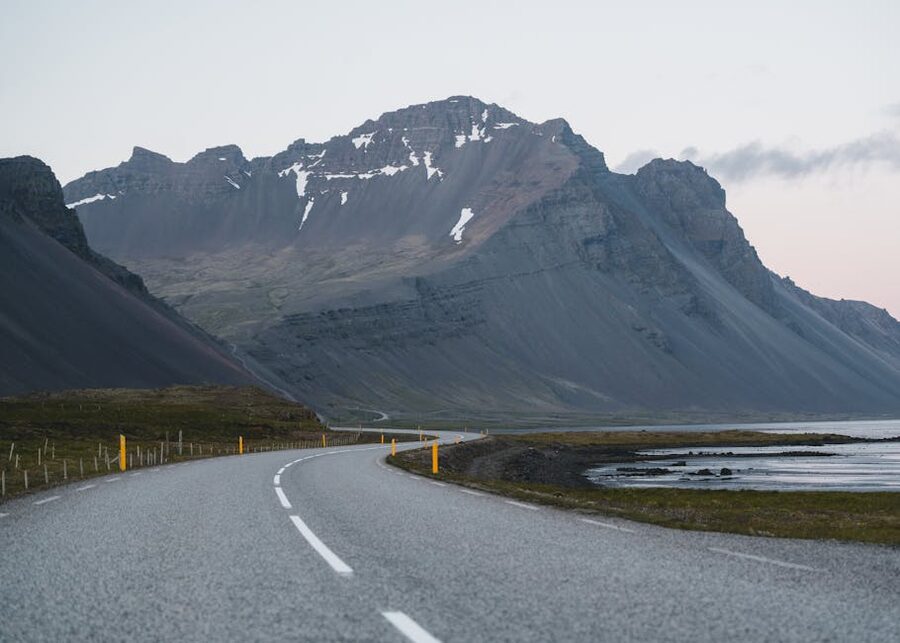
For weather, the only forecast worth trusting is the one the locals trust: vedur.is. The Icelandic Met Office puts out road-region forecasts in plain English, with wind speeds in metres per second (anything over 20 m/s and you should be inside drinking coffee), and pairs them with road.is for live road status. Both apps are free. Both are essential. Both have saved me from driving into a snjór og snjóbylur (snow and blowing snow) that closed Route 1 within an hour.
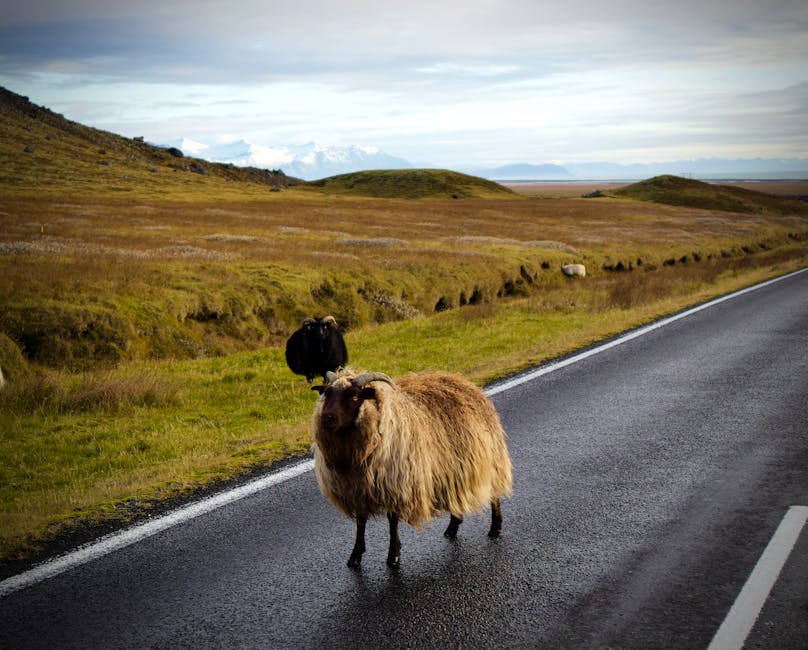
Sheep are the surprise hazard. From mid-May to early September Icelandic sheep are loose on the open hillsides, and “open” includes the verge of Route 1. They wander onto the road, particularly at dawn and dusk, particularly in the south and west. If you hit one, you owe the farmer the sheep. The going rate is somewhere around 50,000 ISK. Slow down when you see a flock anywhere near the road; if a lamb is on one side and the ewe is on the other, the lamb will cross to its mother whether you are coming or not.
Route 1, the Ring Road, Without the Marketing
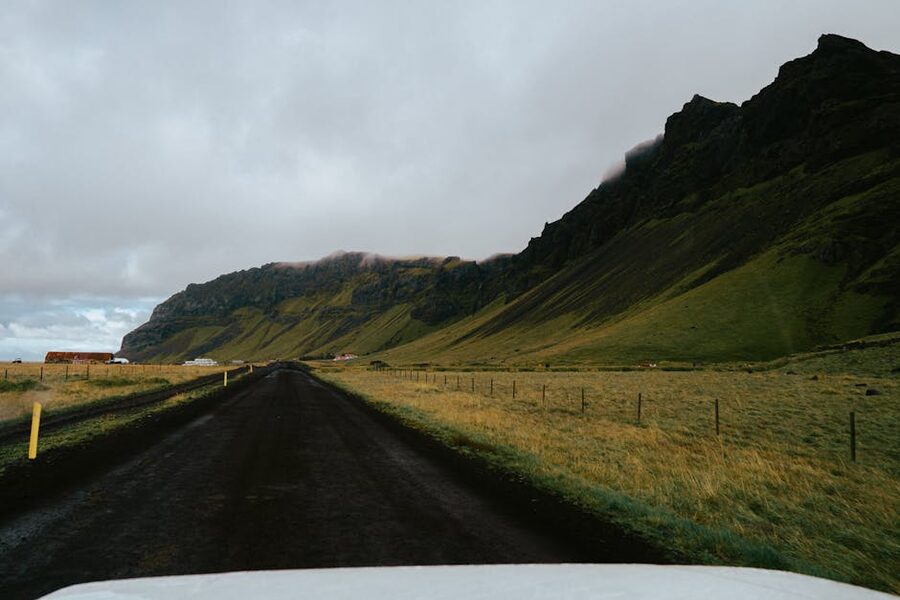
Route 1 loops the country in 1,332 km. Most rental brochures suggest seven days. That works if you do not mind driving four to six hours a day, and it works less well if you actually want to stop. My straight answer to “how long for the Ring Road?” is ten days minimum, twelve to fourteen if you want to fold in Snæfellsnes or the Westfjords on the way around. My full Ring Road piece walks the loop day by day; this is the driving-only version.
Here is how I’d actually pace it for someone driving for the first time:
- Day 1: Reykjavik to Vík (190 km, about 3 hours plus stops). South Coast highlights: Seljalandsfoss, Skógafoss, Reynisfjara. You will not feel rushed. More on the South Coast.
- Day 2: Vík to Höfn (270 km, 4 hours plus stops). The longest “wow” stretch in the country. Skaftafell, Jökulsárlón, Diamond Beach.
- Day 3: Höfn to Egilsstaðir via the East Fjords (270 km, but allow 5–6 hours). Slow-quarter Iceland. Single-lane tunnels, fishing villages, reindeer if you’re lucky. East Fjords detail here.
- Day 4: Egilsstaðir to Mývatn (165 km, 2.5 hours). Möðrudalur for the highest farm in the country, then geothermal weirdness around the lake. Mývatn area.
- Day 5: Mývatn to Akureyri (90 km, 1.5 hours). Goðafoss is on the way. Half-day driving, half-day in town. Akureyri guide.
- Day 6: Akureyri to a stop in the north or Hvammstangi (200 km, 3 hours). Optional Tröllaskagi loop if the weather is cooperating.
- Day 7: Back to Reykjavik via Borgarnes (300 km, 4 hours). Stop at Glanni waterfall and Deildartunguhver if you want one last detour.
That’s seven days of driving without a single rest day. If your trip is exactly seven days, that’s the loop, and you will be tired. If you have ten, add a full day at Mývatn and a full day at Skaftafell. If you have twelve, add Snæfellsnes or stretch it. My week-in-Iceland piece has three different ways to slice this depending on what you actually want to see.
What to skip on a tight Ring Road? The Tröllaskagi peninsula loop unless the weather is good, it adds two hours and the views fog out fast. The detour to Húsavík for a whale tour if you’ve already booked one in Reykjavik or Akureyri. The Sólheimajökull glacier walk if you’d rather save your time for a longer hike at Skaftafell. None of these are bad. They just don’t all fit in seven days. (Note also: Snæfellsnes is closer to Reykjavik than the Westfjords and easier to bolt onto a Ring Road plan if you have ten or more days.)
F-Roads and the 4×4 Rule
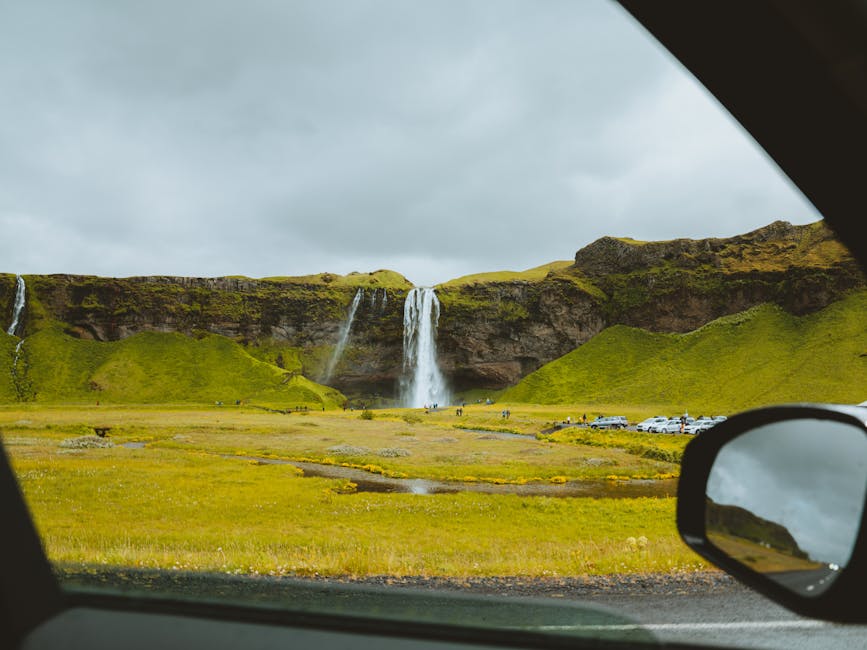
The F in F-road stands for “fjall” (mountain). These are the unpaved interior roads that cross the highlands, and they are the only way to reach Landmannalaugar, Þórsmörk, Askja, the Kerlingarfjöll hot springs, and most of the photogenic interior. They are also the single biggest source of foreign-driver fines in Iceland.
The rule is simple. F-roads are for 4×4 vehicles only, by Icelandic law. A 2WD car on an F-road is illegal, voids your insurance, and gets you a fine that runs from around 50,000 ISK at the polite end to 350,000 ISK or more if you damage the road, plus the towing bill if you break down (300,000 ISK to recover from the highlands is a normal number). Police do enforce this. They sit at the start of F-roads in summer with cameras.
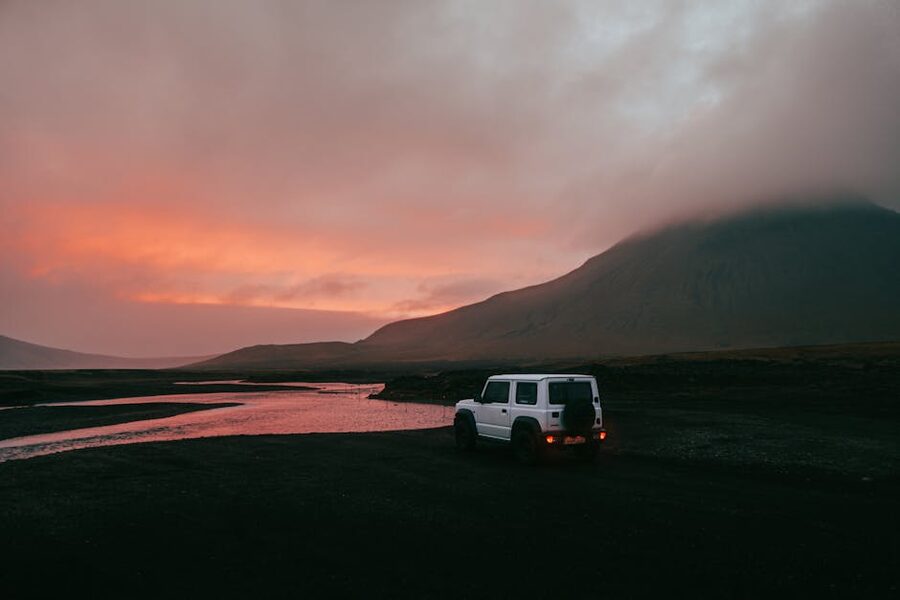
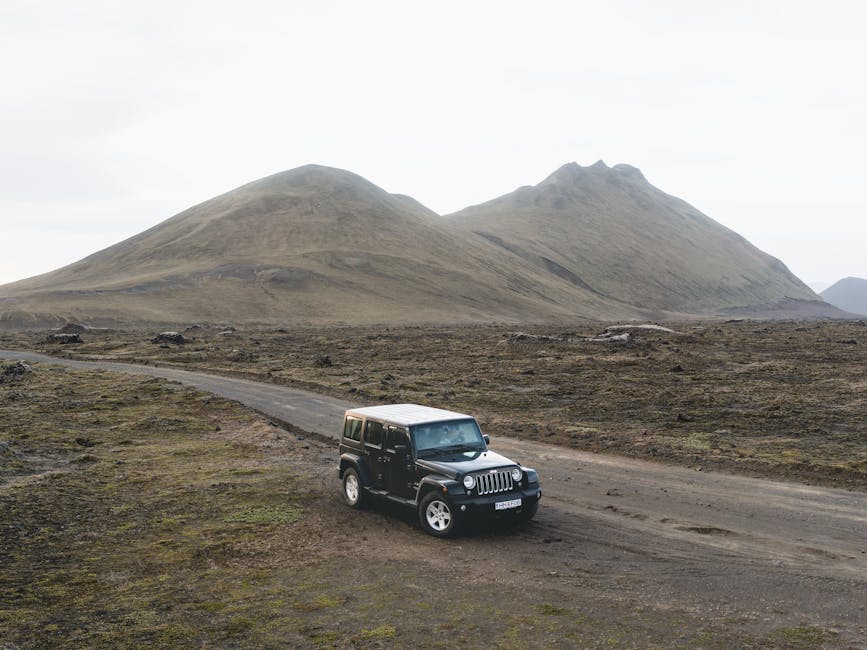
The other thing to know is what counts as 4×4. The legal definition is a vehicle with permanent or selectable four-wheel drive. A Suzuki Jimny qualifies and is the cheapest way onto F-roads. A Dacia Duster qualifies, with reservations on the bigger river crossings. A Toyota Land Cruiser or Hilux qualifies and can take almost anything. A “soft-roader” SUV with all-wheel drive that engages only when slip is detected, many crossover models, technically qualifies but the rental contract usually still bans it from rivers, and the underbody clearance is not high enough to be safe on rocky stretches. If you are unsure, ask your rental company in writing whether the specific car is approved for F-roads. Their answer goes in your inbox, where you can show it later.
Open dates matter too. F-roads are closed by snow most of the year. The Icelandic Road Administration opens them when the surface dries enough to drive without damaging it, which means most years:
- F35 Kjölur, the easiest F-road, sometimes opens early June.
- F26 Sprengisandur, usually mid to late June.
- F208 north (Landmannalaugar from the north), typically mid-June.
- F208 south, F210, F232, F261, late June to early July, depending on snowmelt.
- F88 to Askja, F894, F910 north of Vatnajökull, late June or July.
- F249 to Þórsmörk, opens mid-June, but the Krossá river crossing remains the most dangerous in the country and is for modified vehicles only.
The closing dates run mid-September to early October. Always check road.is the morning you plan to drive an F-road. They post live status with red, yellow, and green dots for each numbered route, and the data is updated through the day. My highlands piece goes deeper on which F-road suits which trip.
River Crossings and What You Should Not Try
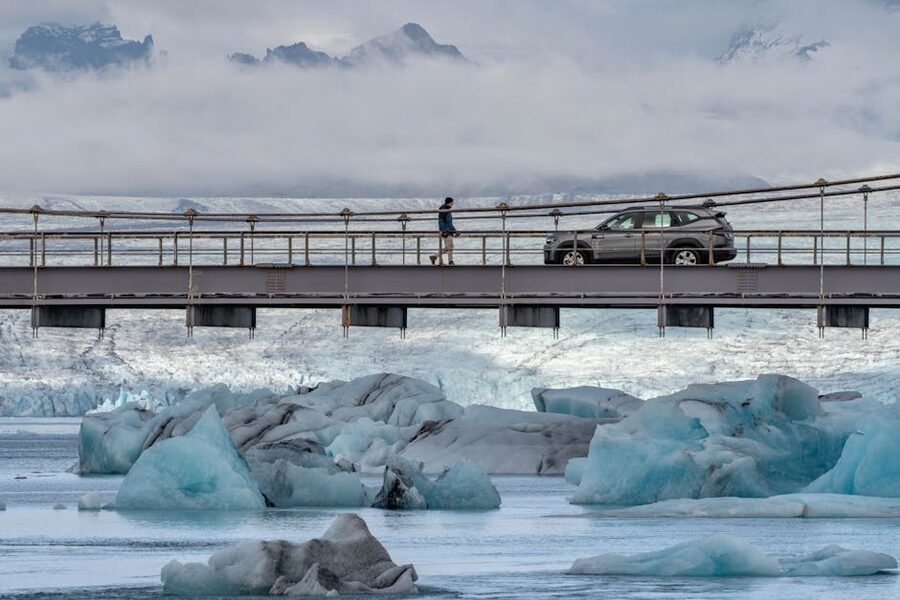
If your F-road has a river without a bridge, you have to drive across it. There is no other way. And no rental insurance in Iceland covers water damage to the engine, every contract excludes it explicitly. If you flood the engine, you pay for it. A Land Cruiser engine is not cheap.
The rule of thumb among Icelanders: do not cross any river deeper than the bottom of your front bumper. If the water is faster than you’d want to wade, do not cross. If a local 4×4 is parked at the edge waiting and the driver is shaking their head, do not cross. The Krossá river on F249 (the road into Þórsmörk) regularly catches even modified jeeps; the locals do that road in 38-inch-tyre super jeeps for a reason. If you are not in one, you should be on the bus.
For Landmannalaugar, the western approach via F208 has only one shallow crossing that is fine in any 4×4 in summer. The southern approach via F208 from Vík has multiple crossings up to 60 cm deep and is for committed drivers only. If in doubt, drive to the start of the crossing, get out, walk it. Stones the size of a fist, water under the knee, slow current, fine. Anything bigger or faster, stop. Reverse and find a different way.
Winter Driving and What snjór og snjóbylur Means in Practice
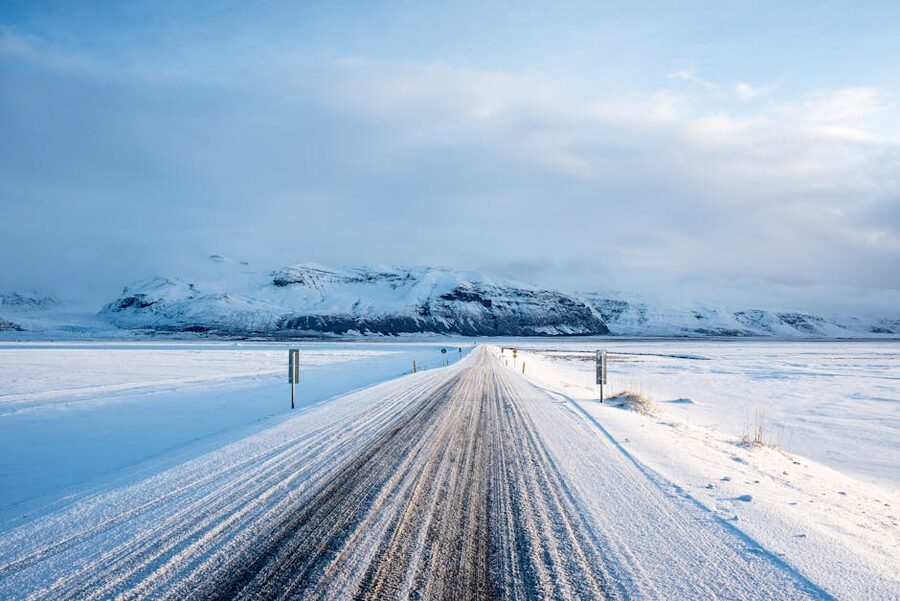
Iceland in winter is not a “drive carefully” country. It is a “watch the weather report at breakfast and rebuild your day around it” country. The Ring Road around the south can be dry in the morning and shut by noon if a low-pressure system rolls in. Strong gusts will rip a car door off (yes, this is a real warranty exclusion in your rental contract) and have flipped trucks on the open coast near Eldhraun. The wind in Iceland has more imagination than the wind anywhere else I have driven.
By law, all vehicles must be on winter tyres from 1 November to 14 April. Studded tyres are legal in the same window and recommended for anyone driving outside Reykjavik in deep winter. Studs help on glare ice; they don’t help much in fresh snow. If your rental does not include studded tyres and you’re going north or east in January, ask for them. Most rental companies offer them as a free or small-fee option. The fine for using studded tyres outside the legal window is 20,000 ISK per tyre.
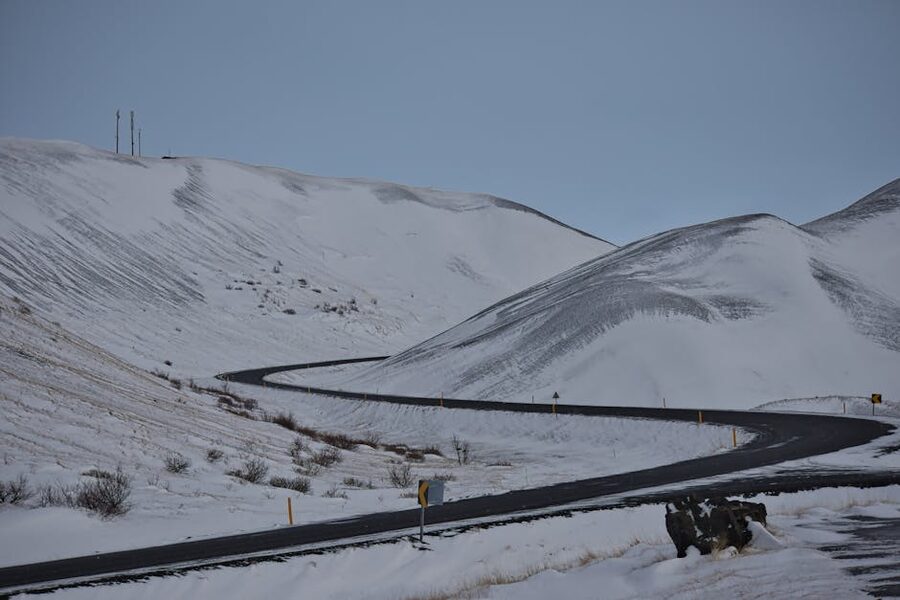
What “snjór og snjóbylur” forecasts mean in practice: snow and blowing snow. When you see this on vedur.is, the road may technically be open but visibility can drop to near zero in seconds, and the gritter trucks will close routes if conditions go past a threshold. The plain rule is: if the morning forecast for your driving region uses the word “óveður” (severe weather), don’t go. Stay in the guesthouse, drink the coffee, do laundry. Iceland has plenty of cosy days.
If you do get caught: pull over, hazards on, stay with the car. Search and rescue (ICE-SAR) find people in cars. They struggle to find people on foot in a whiteout. The 112 Iceland app, downloadable from the App Store or Google Play, sends your GPS location to emergency services with a single tap. My winter piece has the full survival kit for the season. The longer view, season by season, sits in my summer guide for the warm months.
Choosing the Right Rental: 2WD, 4×4, or Camper
The plain matrix:
- 2WD compact (Toyota Aygo, Kia Picanto, VW Polo): fine for the Ring Road in summer, fine for the Golden Circle and Snæfellsnes year-round. Not allowed on F-roads. Cheapest to rent and to fuel. Around 7,000–14,000 ISK per day in summer.
- 2WD mid-size (Toyota Yaris, Hyundai i20): same as above but more comfortable. 9,000–18,000 ISK per day.
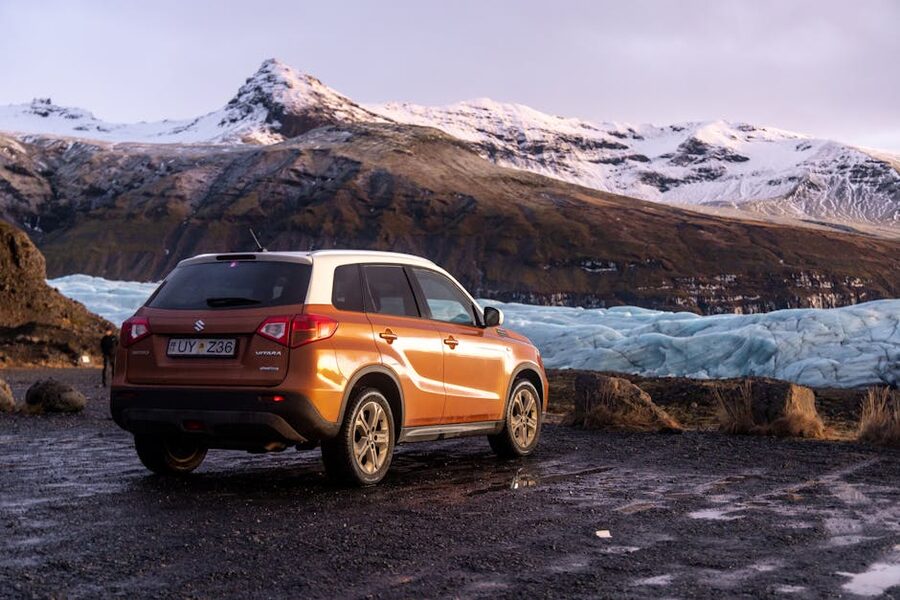
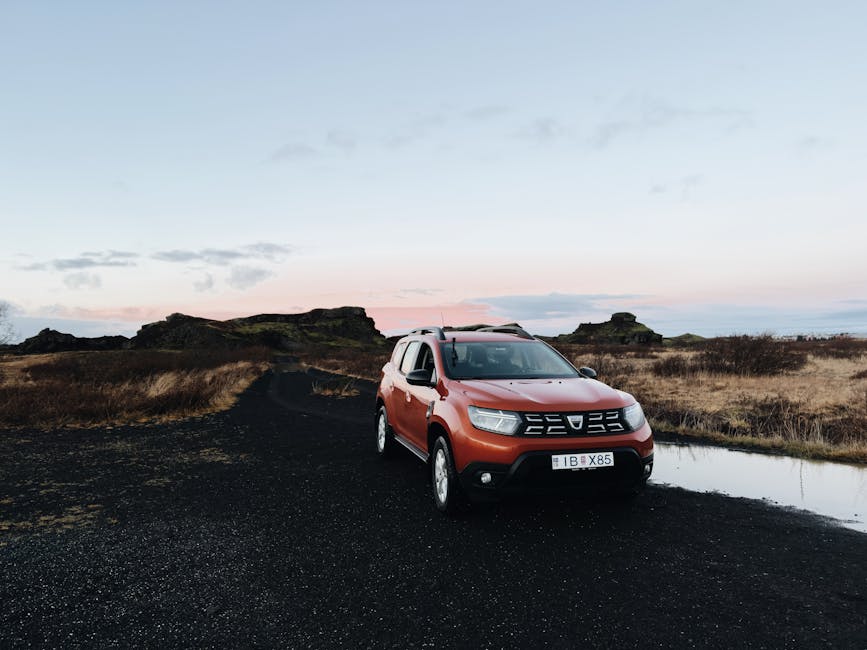
- Small 4×4 / SUV (Suzuki Jimny, Dacia Duster, Suzuki Vitara): the sweet spot for most travellers. Legal on most F-roads (check your contract for specific routes), comfortable on the Ring Road, manageable in winter. Around 14,000–28,000 ISK per day.
- Mid-size 4×4 (Toyota RAV4, Suzuki Grand Vitara): better river-crossing clearance, better in winter wind. Around 18,000–35,000 ISK per day.
- Big 4×4 (Toyota Land Cruiser, Hilux): for serious F-road use, longer river crossings, January in the highlands (which most travellers should not be doing). Around 28,000–60,000 ISK per day.
- Campervan: rolls accommodation and rental into one. Cheapest in shoulder season, most expensive in July. Around 18,000–40,000 ISK per day depending on size. My campervan piece has the full breakdown of when it makes sense.
Manual or automatic? Most modern rentals are automatic. Manual is sometimes cheaper but the supply is thinning. If you’ve never driven manual, do not learn on Icelandic gravel.
Petrol or diesel? Diesel is usually a few krónur per litre cheaper and gets better mileage on a Ring Road tour. Almost all 4x4s are diesel by default. Most small 2WD economy cars are petrol. The car will tell you on the inside of the fuel cap. Putting petrol in a diesel engine is a roughly 250,000 ISK mistake.
Who I’d actually rent from: Blue Car Rental for fleet age and customer service, Lotus for budget, Lava for mid-range, and Northbound as a comparison engine to see what’s actually available across companies. Hertz, Avis, Europcar, Sixt, and Budget all operate in Iceland too, generally a bit pricier with no real advantage unless your loyalty programme matters. My car-rental piece goes deeper on each. Multi-day operators like Nordic Visitor bundle the car with hotels and a route plan if you’d rather not assemble it yourself.
Insurance, Decoded Without the Sales Pitch
Every rental in Iceland comes with basic Collision Damage Waiver (CDW) and a deductible somewhere around 250,000–350,000 ISK. From there, the rental company will offer a stack of add-ons. Here is what each one actually does, and which I think are worth the money:
- SCDW (Super Collision Damage Waiver): reduces the CDW deductible to around 90,000–120,000 ISK. Worth it. About 2,500–4,000 ISK per day.
- Gravel Protection (GP): covers chips and cracks to windshield, headlights, and paint from gravel kicked up by other cars. A windshield replacement is around 200,000 ISK. If you are driving any gravel, take it. About 1,500–2,500 ISK per day.
- Sand and Ash Protection (SAAP): covers sandstorms and volcanic ash damage. The risk zone is the south coast east of Vík, especially around Eldhraun, in spring sandstorms or after an eruption. Damage runs 500,000 to 1,500,000 ISK. If you’re doing the south coast, take it. If you’re Reykjavik-only, skip. About 2,000–3,000 ISK per day.
- Theft Protection: Iceland is one of the safest countries in the world. Theft is rare. Skip unless it’s already bundled.
- Tyre and Windshield Protection: windshield is usually included in GP. A separate tyre policy can be useful on F-roads. Look at what GP covers first.
The cheapest way to handle insurance, if you book through a comparison engine, is to take SCDW + GP + SAAP from the rental company directly. Some travel credit cards include rental coverage that beats SCDW; check yours, but read the fine print on Iceland-specific exclusions (gravel, ash, off-road, river crossings) before you rely on it. The card cover is rarely as broad as you’d hope.
What no insurance covers, ever: water damage from river crossings, off-road driving, driving where the rental contract forbids it (most companies ban small 4x4s on F26 and F910), and damage from forgetting to grip the door in 25 m/s wind. The door clause is real. People underestimate it. Hold the door.
Fuel, PIN Codes, and Where to Fill Up
There are five major fuel chains in Iceland: N1 (the biggest, most coverage, slightly pricier), Olís (premium feel), Orkan (cheaper, fewer locations), ÓB (Olís’s discount sister, often unmanned), and Atlantsolía (cheapest, mostly capital region and a few rural pumps). Costco at Garðabær has the lowest petrol in the country if you happen to be a member.
As of January 2026, fuel prices are around 200–225 ISK per litre for petrol and 215–240 ISK per litre for diesel. The exact number moves with crude oil and the new road-tax structure that the government introduced this year. Fuel tax came off, a per-kilometre road tax went on for rental cars (currently around 7 ISK per km on passenger cars), so when you compare quotes pay attention to whether the per-km fee is bundled or separate. It usually shows up on the final invoice rather than the booking screen.
The thing every visitor needs to know is the four-digit PIN. Most pumps in Iceland are unattended and require a chip-and-PIN credit or debit card. If your card has a PIN, you put it in, the pump activates, you fill up, you take a printed receipt. If your card does not have a PIN (many US cards still don’t), you have two options. Either find a manned N1 or Olís during business hours and pay inside, which works without a PIN, or buy a prepaid N1 card at any N1 station for cash and use that as your fuel card for the trip. The prepaid is the safer bet if you’re driving the whole loop, because the manned stations close at six in some smaller towns. Read more on payments and notes in my currency piece.
Fuel-station spacing on the Ring Road is generous in the populated quarters and thin in the east. Egilsstaðir has fuel; the next reliable station heading west is at Möðrudalur or Mývatn, 100–165 km depending on route. Treat half a tank as empty when you leave a town in the east and the north.
The Rules Tourists Miss
A few traffic rules are different here, and the police do enforce them.
- Headlights on, always. Day and night, summer and winter. Modern rentals do this automatically. Forgetting it is a 10,000 ISK fine.
- Blood alcohol limit is 0.02 percent. Lower than most countries. Half a beer puts most people over. Iceland tightened this in 2018. The fine starts at around 100,000 ISK and can include licence suspension and jail. Don’t.
- No off-road driving, ever. Not on moss, not on lava, not on a beach, not on a “shortcut.” Fines start at 350,000 ISK and can hit 1,200,000 ISK if the damage is bad. The moss takes a century to grow back.
- Speed limits are 50 in built-up areas, 80 on gravel rural roads, 90 on paved rural roads. No motorways, no 100s, no exceptions. The cameras between Selfoss and Hveragerði on Route 1 are the most-photographed cameras in the country, and there’s a permanent set near Vík and another between Hveragerði and the Reykjanesbraut. They are signed in advance, but tourists routinely fail to slow because the road feels empty and fast. Speeding fines start around 5,000 ISK at 5 km/h over and climb sharply after that. Samgöngustofa, the transport authority, publishes the full schedule.
- Seatbelts in every seat. Children under 36 kg must be in an approved child seat. Rentals offer them for a fee.
- Phones hands-free only. Holding a phone is a 40,000 ISK fine.
- Right of way on roundabouts goes to the inside lane. This is the opposite of UK roundabouts. Watch for it in Reykjavik.
- You must yield to oncoming traffic on a single-lane bridge if they reached it first. See the next section.
Single-Lane Bridges, the Ritual Nobody Explains
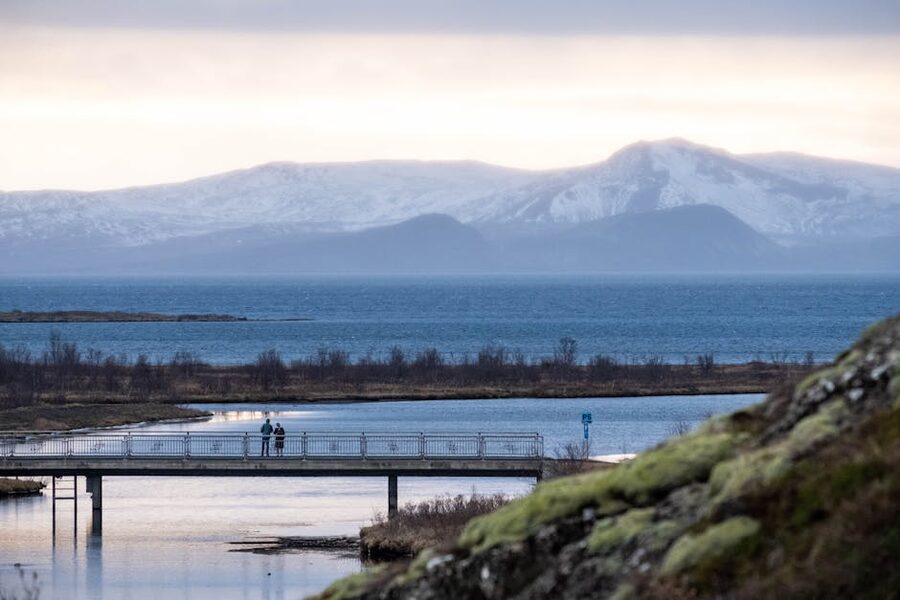
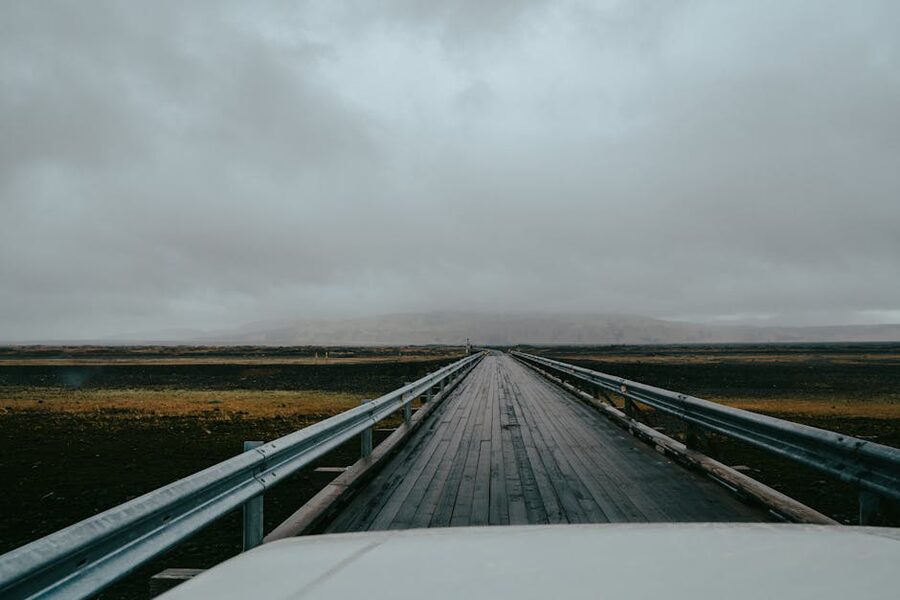
You will cross hundreds of single-lane bridges on the Ring Road. They are signed “Einbreið brú” (one-lane bridge) with a yellow diamond well before the bridge itself. The rule is simple: whoever arrives first goes. If you arrive at the same time, the courteous move is to flash your headlights to signal you are letting the other car go. If a truck or bus is approaching, always let them go, they need the time and the lane width.
The unwritten part: slow down well before the bridge. Pull-outs exist on most approaches for exactly this reason. Use them. Tourists have caused bad accidents by braking late on a single-lane bridge approach because the car coming the other way was already on the bridge and could not stop. The bridge is the priority. If you have to choose between speed and courtesy, choose courtesy.
The single-lane bridges in the east, particularly between Höfn and Djúpivogur, are some of the longest in the country and can take 30 seconds to cross at 30 km/h. Be patient. Locals are.
Tunnels and Tolls
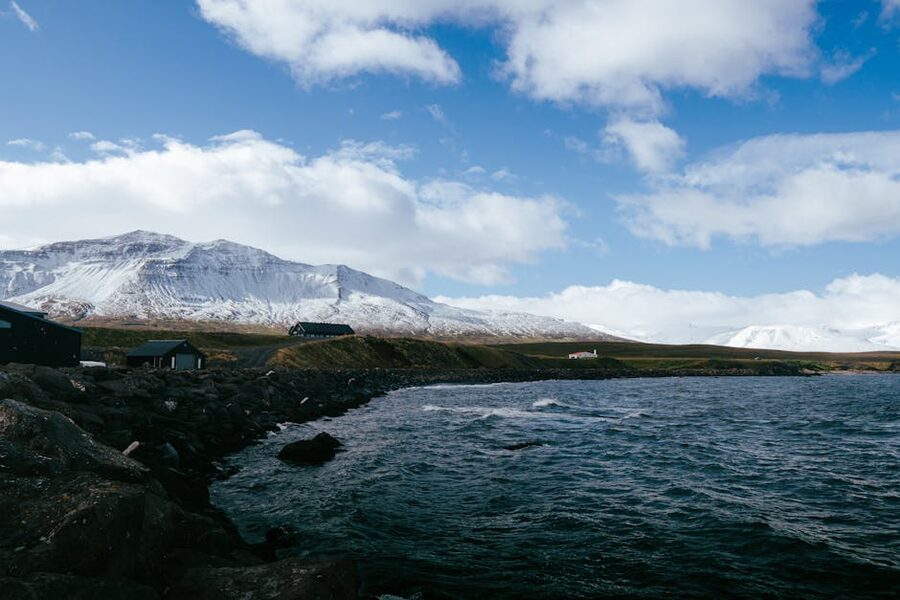
Most tunnels in Iceland are free. The two you should know about:
- Hvalfjarðargöng (under Hvalfjörður, on Route 1 just north of Reykjavik): free. The toll was abolished in 2018. You drive straight through. The previous toll booth is now a coffee stop.
- Vaðlaheiðargöng (between Akureyri and Húsavík, on Route 1): tolled. As of 2026, around 2,200 ISK per passenger car per trip, with discounted multi-trip cards available. Pay online at veggjald.is within 24 hours of crossing. If you don’t, the rental company will charge the toll plus an admin fee to your card. There is no toll booth; the system reads your plate. Pay the toll, save the receipt.
The east-fjord tunnel project, Fjarðarheiðargöng, started construction in 2025 with a roughly seven-year build, so it is not opening before about 2032. For now you still drive the mountain pass between Egilsstaðir and Seyðisfjörður, which gets closed in winter storms.
The single-lane tunnels in the Westfjords (Strákagöng, Múlagöng, Almannaskarðsgöng) work like single-lane bridges. There are pull-outs inside the tunnel. Whoever arrives first goes; the other waits in the next pull-out. They are weird the first time, ordinary the second. My Westfjords piece covers the tunnels in detail.
Approach Roads to the Big Off-Route-1 Sights
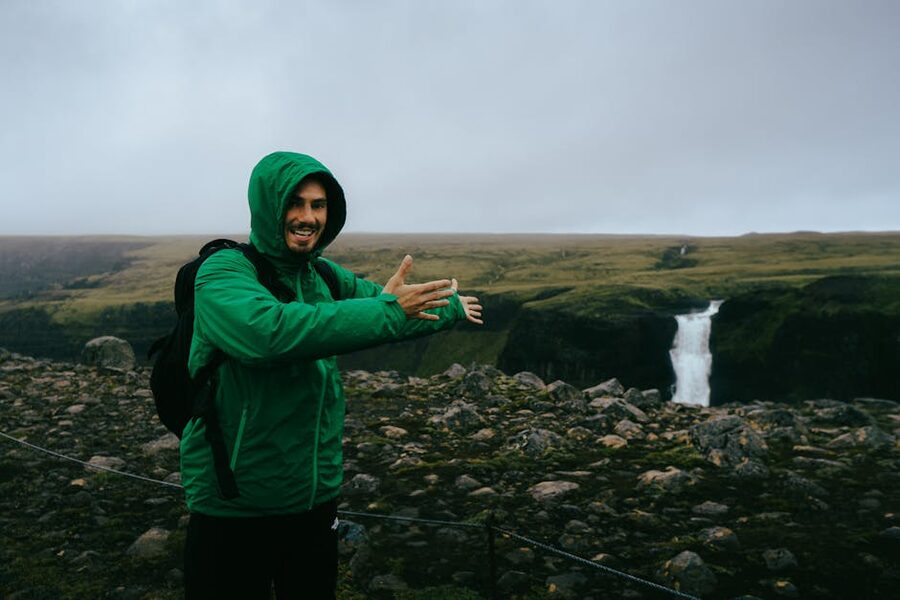
A few of Iceland’s most-photographed places sit at the end of difficult approach roads. Quick reality check:
- Landmannalaugar: F208 north or F225, both 4×4-only, both with at least one river crossing. Approach from Hella in the south or via F26 from the north. Bus service runs in summer if you don’t want to drive it.
- Þórsmörk: F249, 4×4-only, multiple rivers including the Krossá which catches even big jeeps. The bus from Hvolsvöllur (operated by the trekking companies) is the right answer for most travellers.
- Námaskarð / Hverir geothermal: Route 1 just east of Mývatn. Paved. Any car. Smells like rotten eggs.
- Dyrhólaey: off Route 1 just before Vík, 5 km of gravel that’s manageable in any car but closed for puffin nesting from 1 May to 25 June.
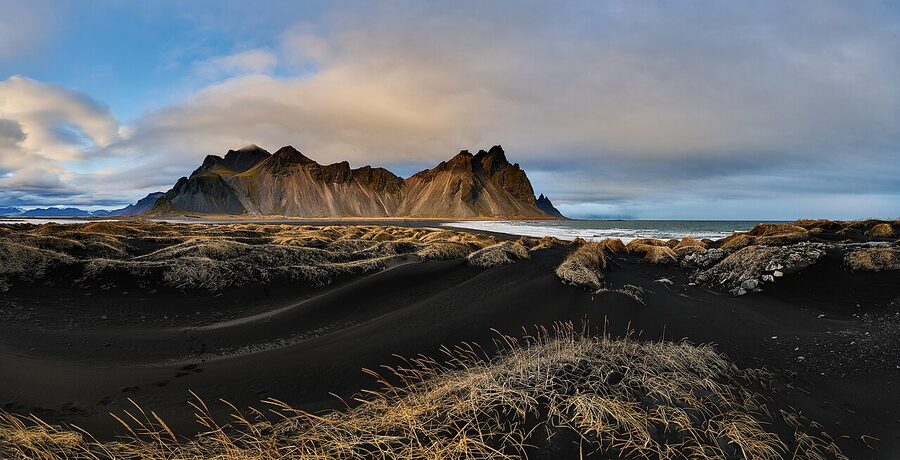
- Stokksnes / Vestrahorn: 4 km gravel access road, signed off Route 1 east of Höfn. Any car. Pay 1,000 ISK at the Viking Café for access.
- Reykjadalur hot river hike trailhead: Route 1 to Hveragerði, then 4 km of paved-then-rutted road to the trailhead car park. Any car in summer; 4×4 helpful in winter.
- Háifoss: 7 km of gravel from Route 32. Manageable in a 2WD in summer; closed October through May.
- Snæfellsjökull glacier base: Route 570 is paved most of the way, then turns to gravel near the trailhead. Closed in winter.
The pattern: most “famous” Iceland sights are on or just off Route 1. The ones that aren’t (Landmannalaugar, Þórsmörk, Askja, Kerlingarfjöll, Hornstrandir) are the ones that need real planning, real vehicles, and real time. If a glacier walk is what you came for, see my glacier-hike piece for which approach is which.
One-Week and Two-Week Anchors
If you have a week, do the Golden Circle plus the south coast as far as Höfn, then turn back. Trying to loop the whole Ring Road in seven days is doable but tiring, and you’ll skip Mývatn or rush the East Fjords. Better to walk Skaftafell and sleep two nights at Höfn than drive past at 90 km/h.
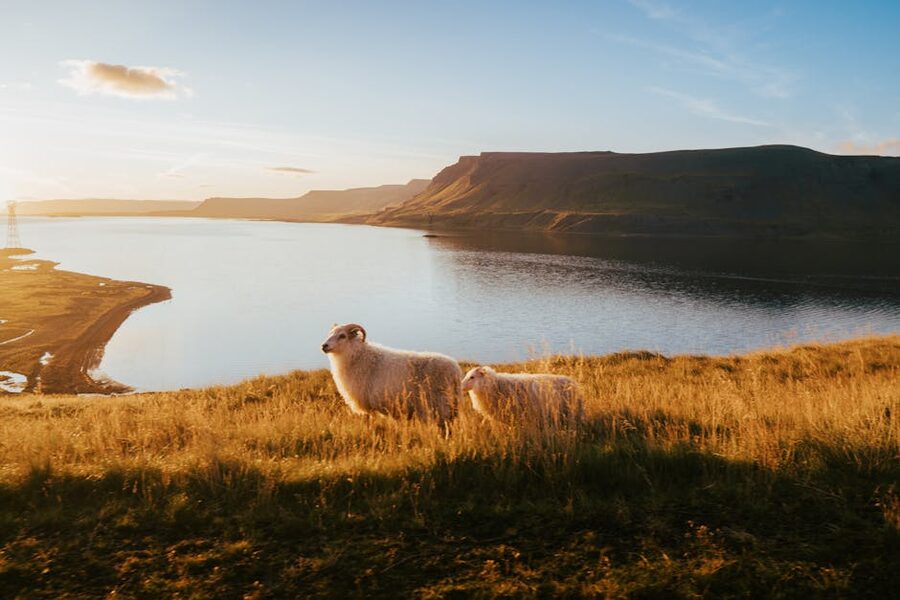
If you have two weeks, the loop is the loop. Add Snæfellsnes for two days at the start, slow your East Fjords pace, and put two nights at Mývatn instead of one. If you want the Westfjords, give them four full days and accept that you’ll see less of the south coast on this trip. The Westfjords don’t really fit anywhere else, they have to be their own decision.
For specific itineraries by trip length, my seven-day piece covers three takes on a week, and the Ring Road piece goes day-by-day for the full loop.
Where to Sleep Along the Ring Road
I won’t walk through every town because the Ring Road has hundreds of guesthouses and the picture changes year to year. But if you want a one-line shortlist for the standard seven-night loop, these are the places I’ve actually stayed and would book again:
- Reykjavik (Day 0 and Day 7): Hotel Reykjavik Grand for parking and a short walk to the centre, or Hotel Reykjavik Centrum if you want to be on the old harbour street. My Reykjavik piece goes deeper.
- Vík (Day 1): Hotel Vík í Mýrdal, central, plain, easy to leave from in the morning, or Hotel Katla by Keahotels if you’d rather sleep just outside town with a view.
- Höfn (Day 2): Hotel Höfn, harbourside, decent fish dinner, easy walk to the breakfast place.
- Egilsstaðir (Day 3): Hotel Valaskjálf, central, parking, the kind of breakfast you want before driving the East Fjords.
- Mývatn or Akureyri (Day 4–5): Hotel Akureyri, town centre, quiet evenings, walk to dinner.
- Borgarnes (Day 6, optional): Hótel Borgarnes, simple, easy night before the run back into Reykjavik.
Iceland’s smaller towns book up fast in summer, so reserve the Vík and Höfn nights three to four months out for July or August. Off-season the price comes down by half and same-day bookings are usually fine.
If You’d Rather Not Drive at All
Self-drive is not the only option. If you’d rather not deal with single-lane bridges, F-roads, fuel PINs, and weather watching, plenty of operators run the country end-to-end:
- Multi-day packages with a driver: Nordic Visitor and Hidden Iceland run small-group Ring Road trips. You sit in the front, somebody else watches the wind.
- Day tours from Reykjavik: if you only want to see the south coast, the Golden Circle, and Snæfellsnes, day tours via GetYourGuide, Viator, or Klook save you the rental, the insurance, the fuel, and the wind. Cheaper than the rental once you add up everything.
- F-road shuttles: the Reykjavik–Landmannalaugar bus and the Hvolsvöllur–Þórsmörk Highland bus take the river crossings off your plate entirely. They run mid-June to mid-September.
- Photography tours: see my photo-tour piece for who runs what.
The combination most people end up at: rent a 2WD or small 4×4 for the south coast and Ring Road, then book a day tour or shuttle for any F-road segment. That keeps the driving on roads you can read and lets the locals handle the parts where reading the road is the job. If you’d rather have someone build the whole thing for you, that route works too.
The Common Rental Traps
- Skipping Gravel Protection because “I’ll just stay on Route 1.” Even short gravel detours to viewpoints, photo stops, or accommodation will rack up paint chips. By the time you return the car, there’s a 50,000 ISK invoice waiting. Take the GP add-on for any trip that leaves Reykjavik.
- Picking up a 2WD and “just trying” an F-road. The fine, the towing bill, and the voided insurance is a worst-case 700,000 ISK day. Worse, the Land Cruiser that pulls you out has the police on speed dial. Pay for the Jimny if you want the highlands. If you don’t, take the bus.
- Driving on a beach. Yes, even if other people did it. There is no driving on Reynisfjara or Diamond Beach, and a fine starts at 350,000 ISK. Beaches in Iceland are not driving surfaces, they are protected. Plus, the tide takes cars.
- Returning the car with a different fuel level than the contract specifies. “Full to full” is standard but some budget rentals run “empty to empty.” Read the line. Returning empty when the contract says full is a 200 ISK per litre service charge on top of the fuel they put in.
- Not photographing the existing damage at pickup. Walk around the car with the rental agent and your phone, photograph every wheel, every panel, every chip. Make sure the rental record matches your photos before you sign. Foreign drivers get blamed for old damage all the time. Documentation prevents it.
- Underestimating ash damage near Vík. Spring sandstorms east of Vík sandblast paint and pit windshields. SAAP exists for a reason. If you’re doing the south coast in March, April, or May, take it.
- Crossing a river you “think” is fine. Engines flood faster than you’d believe. There is no insurance for this. If you have any doubt, drive 30 km out of your way.
- Booking the smallest 4×4 for “Iceland in January.” A Jimny is fun in summer. In a January sidewind on the Mýrdalssandur, you want a heavier vehicle. A short-wheelbase 4×4 with low weight is the most exposed thing you can drive in extreme wind.
The Apps You Actually Need
Four free apps and websites do the heavy lifting:
- road.is, live road status colour-coded by region. Updates through the day. The web version works on phones. The app is fine.
- vedur.is, the Icelandic Met Office. Wind speed, gust speed, snow forecast, aurora forecast, all in one place. Plain English, no agenda. My aurora-forecast piece walks through how to read it.
- safetravel.is, register your trip, especially if you’re going off-Ring-Road. Five minutes. ICE-SAR knows you’re out there. Not legally required; strongly worth it for highland and winter travel.
- 112 Iceland app, sends your GPS to emergency services with one tap, plus a “check-in” feature that records where you’ve been. Free on App Store and Google Play. Search “SafeTravel Iceland” or “112 Iceland.”
Honourable mentions: Google Maps works fine for the Ring Road but does not always show whether a road is open. Always cross-check with road.is before you commit to an F-road. The icetransit.is bus map is useful if you decide partway that you’d rather not drive a particular leg. The samgongustofa.is page covers traffic-law detail in English.
What I’d Tell My Brother Visiting in October
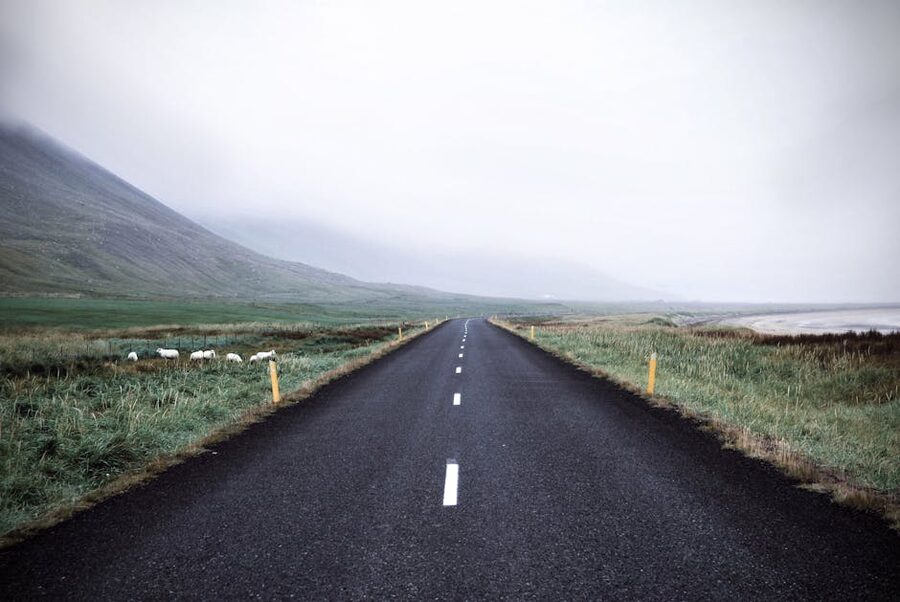
Take a small 4×4. SCDW, GP, SAAP, full insurance. Plan the loop in nine days, not seven. Don’t try the highlands; they’re closing. Stop at every N1 you see east of Vík. Watch the wind report on vedur.is at breakfast and don’t drive into anything over 18 m/s. Carry a paper map; coverage drops in the East Fjords. Photograph the car at pickup. Top up half-tank in every town. Slow down before gravel. Yield on bridges.
And keep one full day with no plan. The day Iceland surprises you is always the unplanned one. If you’d rather have someone else do the driving, that’s also a fine way to do it. Iceland is not a country you have to drive yourself to enjoy. But if you do, the country opens up in a particular way that the bus version doesn’t quite reach.
Drive carefully. Watch the weather. Þetta reddast.